
A lot of offices already have a break out space. It just doesn’t work very well.
It’s the corner with two soft chairs that no one uses. It’s the café bench beside the printer. It’s the open area that was meant for quick chats but became a noisy spillover zone. That’s usually the problem. The space exists, but it hasn’t been planned around the way people work.
Good break out spaces do a specific job. They reduce pressure on desks and meeting rooms. They give staff somewhere to talk, think, reset, or concentrate on work without leaving the office. When they’re designed properly, they also solve some of the biggest headaches in modern workplaces, especially noise, lack of privacy, and awkward underused floor space.
Table of Contents
- The 2026 Business Case for Breakout Spaces
- Choosing Your Perfect Fit Types of Breakout Spaces
- Designing Effective Breakout Spaces Key Considerations
- Your 2026 Breakout Space Implementation Roadmap
- Navigating UK Costs ROI and Regulations
- Inspiration UK Breakout Space Transformations
- Frequently Asked Questions About Breakout Spaces
The 2026 Business Case for Breakout Spaces
It is 10:30 on a Tuesday. A sales call is happening two desks from finance, two managers have taken over a meeting room for a quick catch-up, and the person who needs 40 minutes of quiet work is already looking for somewhere else to sit. That pattern shows up in offices across the UK. It is usually framed as a people problem. In practice, it is a layout problem.

Productivity gains come from giving work the right setting
A breakout space earns its place when it removes friction from the working day. Desks stay available for desk-based work. Meeting rooms stop being swallowed by one-person calls. Short conversations happen without spilling across the whole floor.
That is the core business case. Better zoning improves how the office functions hour by hour.
In live projects, the improvement usually comes from a mix of simple changes rather than one expensive intervention. A screened booth near team desks can absorb quick chats. A small enclosed pod can take call traffic out of open plan. If you are weighing up enclosed options, these meeting room pods for offices are often the fastest way to add acoustic separation without building permanent rooms.
The return is usually tied to space use, not just wellbeing
Clients often ask whether breakout areas are a nice extra or a justifiable spend. The answer depends on what problem the space is solving.
If the office already has enough meeting rooms but no informal touchdown space, adding soft seating may improve use of the existing floorplate at modest cost. If confidential calls are disrupting a 60-person open-plan area, the better answer may be pods, glazed screening, or architectural wrapping that creates clearer boundaries without a full strip-out. That route can be easier to phase, easier to cost, and in some leased offices, easier to get past landlord approvals than more invasive building work.
I usually advise businesses to judge return against three measures. Fewer complaints about noise. Better use of existing meeting rooms. Less wasted space caused by areas that look good but do not support any clear behaviour. Those are practical indicators a leadership team can track.
A refreshment point can also do more work than clients expect when it sits in the right place. Next to an informal collaboration zone, it gives people a reason to step away from the desk and speak briefly without booking a room. For teams planning that setup, this guide to coffee supplies for office morale and productivity is a useful reference.
UK businesses need a workable brief, not a trend-led one
The strongest breakout spaces are shaped by constraints as much as ambition. In the UK, those constraints can include lease terms, landlord consent for alterations, fire strategy, power and data routes, and whether the proposed changes trigger Building Regulations approval. Ignoring that reality is how straightforward fit-outs become expensive.
A practical brief asks sharper questions. Which activities are currently happening in the wrong place. What can be solved with furniture and acoustic treatment. What needs a pod, a glazed enclosure, or a more defined built element. Where can you improve the office without creating a long approval process or unnecessary downtime.
Good breakout space design is a business decision before it is a design decision. Done well, it gives staff more choice, protects focused work, and helps the office justify its cost per square foot.
Choosing Your Perfect Fit Types of Breakout Spaces
Not every break out space should look the same. That’s one of the most common mistakes in office planning.
A business might need a social hub, a quick meeting spot, a private call setting and a silent retreat. Trying to force all of that into one area usually creates confusion. The better approach is to choose a mix of space types based on behaviour, not trend boards.
Breakout Space Options at a Glance
| Space Type | Best For | Key Feature |
|---|---|---|
| Informal soft seating | Casual chats, waiting, relaxed teamwork | Comfortable and welcoming feel |
| High-backed booths | Semi-private conversations, laptop work, short meetings | Visual and acoustic screening |
| Modular meeting pods | Calls, focused work, private discussions | Enclosed acoustic separation |
| Quiet zones | Individual concentration and low-stimulation work | Clear behavioural boundaries |
Soft seating and social zones
This is the most familiar format. Sofas, lounge chairs, café tables and flexible seating can make an office feel more human very quickly. They work well near reception areas, team hubs and shared amenity spaces.
They also fail very quickly when they’re placed without a reason. If soft seating lands in a main circulation route, it becomes a waiting bay rather than a useful workspace. If it sits too close to desks, every conversation leaks straight into focused work areas.
Soft seating works best when the aim is social energy, informal check-ins, or a softer landing point for visitors and staff. It’s less effective for confidential conversations or concentrated solo work.
Booths and semi-private settings
Booths sit in the middle ground. They’re more structured than loose lounge seating but less enclosed than a pod.
That makes them good for teams that need quick chats without booking a room. A high-backed booth can create enough acoustic shelter for short meetings, catch-ups and one-to-one conversations. It also uses space well because it creates definition without major building work.
For businesses comparing booth-style solutions with fully enclosed options, this overview of pod meeting rooms helps clarify where each format fits best.
A useful breakout space doesn’t just look different from the open office. It behaves differently too.
Enclosed pods and quiet rooms
Pods solve a different problem. They create clear separation. That’s why they’re often the right answer in offices where calls, interviews, HR conversations or deep-focus tasks have nowhere suitable to go.
Their main strength is certainty. Staff know what the space is for. That removes the awkwardness that often comes with open breakout zones where no one is sure whether talking, typing or taking a Teams call is acceptable.
Quiet zones do a similar job but in a lighter way. These can be screened corners, library-style areas, or low-stimulation settings with stronger behaviour rules. They don’t need to be elaborate. They need to be respected.
A practical selection process usually comes down to three questions:
- What activity needs support most: Quick collaboration, private conversation, focused work, or decompression.
- How much privacy is needed: Visual separation may be enough in some cases. In others, acoustic control is essential.
- How permanent should the solution be: Freestanding and modular options suit changing headcounts and leased space better than heavy fixed construction.
A balanced office often combines all four types. The key is to avoid creating one generic break out area and expecting it to solve every workplace issue.
Designing Effective Breakout Spaces Key Considerations
At 10:30 on a Tuesday, the pressure points in an office are easy to spot. Someone takes a sales call two desks from finance. A manager tries to hold a sensitive one-to-one in a café-style area. Two people sit in a soft seating zone with laptops, but the table height makes proper work awkward within ten minutes.
That is usually where a breakout space succeeds or fails. The design has to support real behaviour under normal working pressure, not just look good on handover day.
That matters in fast-moving office projects across Bishop’s Stortford and the wider Essex market, where businesses often need spaces that work harder without giving away too much floor area. In leased offices, the design also needs to be realistic about approvals, programme and the chance that the layout will need to change again before the lease ends.
Start with the operational brief
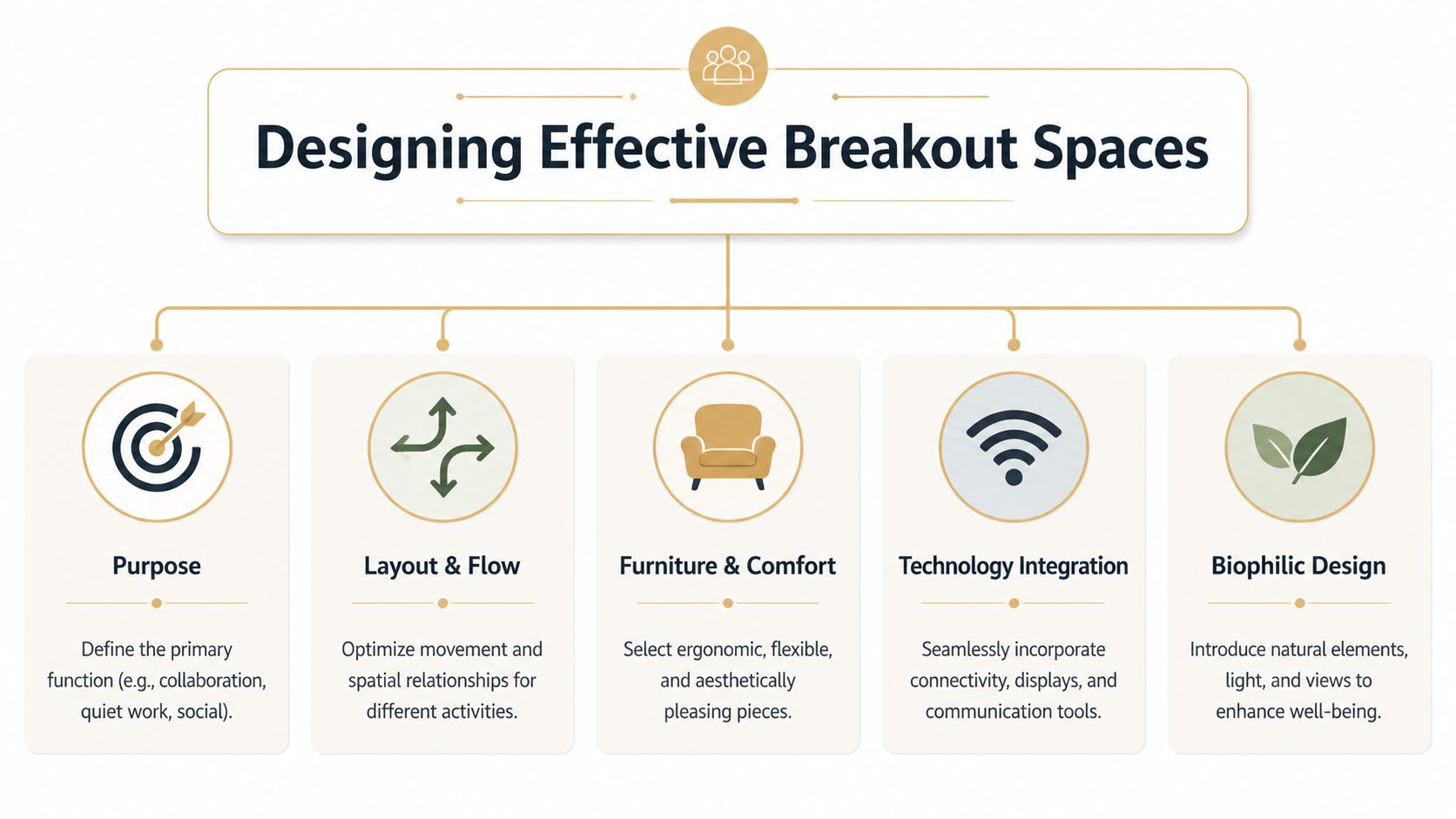
The strongest breakout spaces are planned like working infrastructure. They have a clear job, a known user group and a defined level of privacy, noise control and dwell time.
Furniture choices come after that.
A useful brief sets out a few practical points early:
- Primary activity: Short collaboration, quiet focus, private calls, informal meetings, or staff decompression.
- Likely duration: Five minutes, half an hour, or longer touchdown use.
- Occupancy pattern: One person, pairs, or small groups.
- Services needed: Power, data, display screens, ventilation, booking control, or acoustic treatment.
- Property constraints: Lease terms, landlord consent, fire routes, accessibility, and whether the solution needs to be reversible.
This is also the point to decide whether the space should be fixed or flexible. In UK leased offices, that decision affects cost and approvals more than many teams expect. A built partitioned room may trigger landlord review, building control considerations, updated fire drawings, and more disruption on site. A modular pod or an architecturally wrapped zone can often solve the same problem faster, with less mess and less commitment to the base build.
Get acoustics and circulation right
Acoustics usually decide whether people keep using a breakout space after the first few weeks. Open collaboration areas placed on main walkways tend to spread noise across the floor. Quiet booths next to printers, kitchens or entrance routes rarely stay quiet for long.
Placement does a lot of the work. So do the materials.
Soft finishes, acoustic screens, high-backed seating, ceiling treatment and changes in orientation all help reduce spill. Enclosed pods go further where calls or concentrated work need reliable separation. For offices already struggling with distraction, this guide on how to reduce noise in open plan office covers the basics in more detail.
Comfort is just as practical. Seat height, table depth, lighting level and power access all shape whether the area supports a quick pause or proper work. I often see social-style furniture specified for spaces that are expected to carry laptop work, one-to-ones and Teams calls. It looks polished, but it underperforms by the second week.
Design note: If people need signs to understand how a space should be used, the layout is probably doing too little.
Design for inclusion through predictability and choice
Inclusive breakout design should be easy to use, low in friction and consistent from one area to the next. That matters for everyone, and it matters even more for staff who are sensitive to noise, glare, visual clutter or constant interruption.
The previous version of this section quoted figures about neurodiversity features in UK refits, but the linked source did not clearly support those claims. The safer and more useful point is straightforward. Teams work better when they can choose between different sensory conditions instead of being pushed into one office setting all day.
In practice, that means designing for predictability and control:
- Consistent room logic: Similar spaces should work in similar ways.
- Lower sensory load: Use calmer lighting, restrained finishes and fewer competing visual signals.
- Genuine quiet options: Quiet space should be protected, not treated as overflow seating.
- Clear zoning: Flooring, lighting, screening and furniture layout should show whether a space is for talking, focusing or pausing.
- Adjustable elements where possible: Dimmable lighting, controllable ventilation and easy-to-understand booking or occupancy signals reduce friction.
There is a commercial angle here as well. If a breakout area supports focused work, private conversation and short recovery time properly, it reduces pressure on meeting rooms and lowers the need for expensive fixed alterations later. That is one reason many UK businesses now mix light-touch interventions, such as wrapped alcoves and acoustic screening, with modular pods that can move with the tenancy.
A good breakout space earns its floor area. It should solve a specific problem, fit the building, and remain workable when the office is busy, noisy and fully occupied.
Your 2026 Breakout Space Implementation Roadmap
Most workplace teams don’t struggle with ideas. They struggle with delivery.
A break out space project usually stalls for one of three reasons. The brief is vague, too many people approve too late, or the installation plan ignores the fact that the office still has to function while the work happens. A simple roadmap avoids most of that.
Get the brief right first
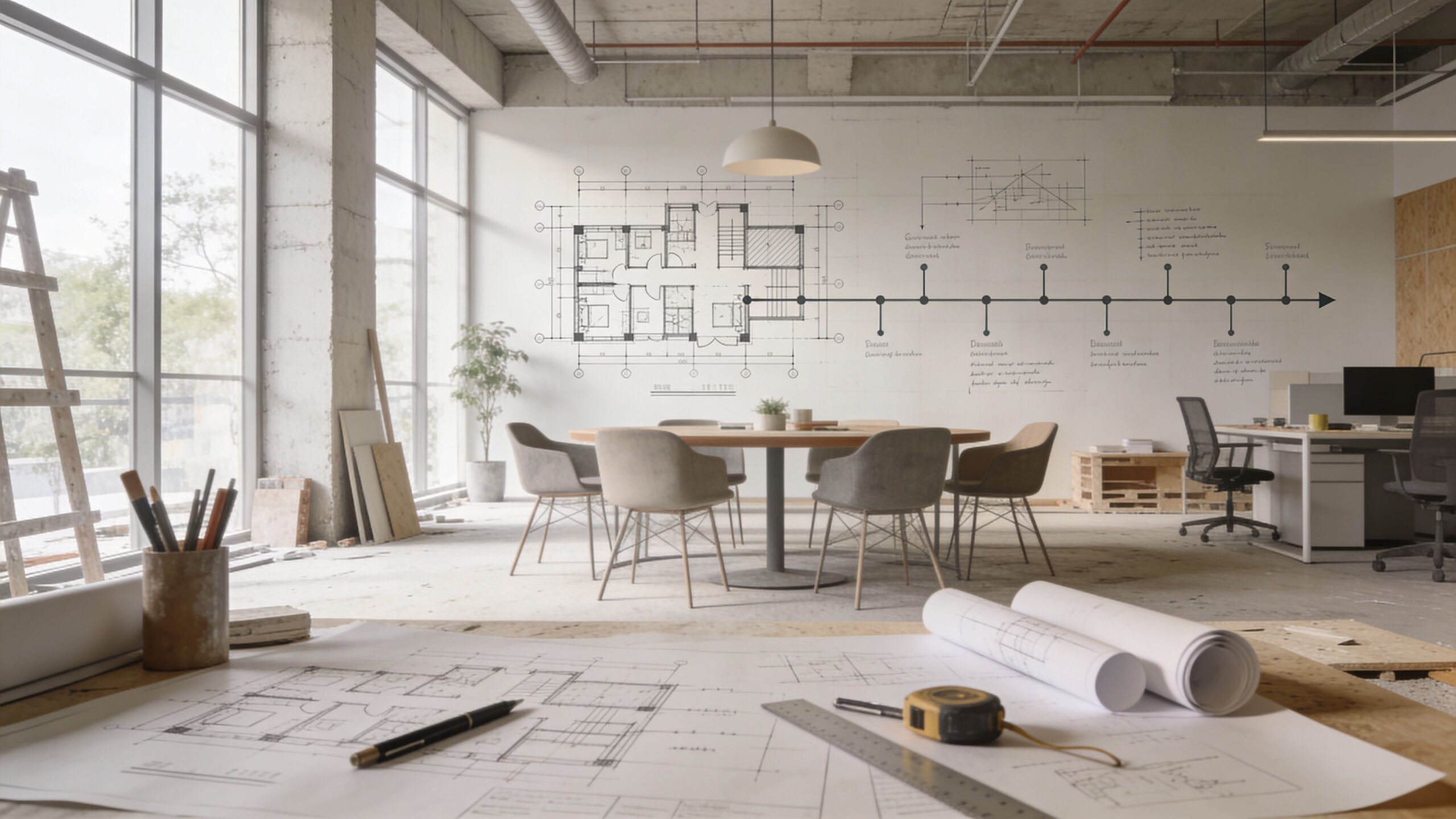
The strongest briefs are operational, not decorative. They identify what isn’t working now and what the new space must fix.
A useful starting brief usually includes:
Current pain points
Noise spill, lack of call space, underused corners, pressure on meeting rooms, or poor staff choice.Priority users
Team leaders, sales staff, visiting clients, focused workers, hybrid staff, or employees who need quieter low-stimulation settings.Practical constraints
Lease restrictions, landlord approvals, IT requirements, fire routes, budget range and programme timing.
This stage matters because it keeps the discussion tied to use. Without that, projects can drift into preference-led decisions that don’t solve the original problem.
Plan the works around the working day
Refurbishment always sounds easier on paper than it feels in a live office. The best implementation plans respect that.
Phasing helps. So does choosing solutions that can be installed with limited disruption. Teams should decide early which works need builders on site, which elements can be pre-fabricated, and which installations can happen outside core hours.
For busy offices in London and across Hertfordshire, that often means prioritising modular elements, temporary decant plans and clear staff communication before any physical work starts.
Staff tolerate change far better when they know what’s happening, why it’s happening, and where they’re meant to work while it does.
A clean delivery sequence often looks like this:
- Survey and measure: Confirm what can fit, what needs power, and what must stay accessible.
- Freeze the layout: Avoid last-minute changes once procurement starts.
- Coordinate trades: Furniture, flooring, partitions, electrical work and branding should be sequenced properly.
- Communicate internally: Tell staff what’s changing and how the space should be used once complete.
Handover and bedding in
A breakout space isn’t finished on install day. It needs a short bedding-in period.
That’s when teams find out whether the booth is being used for focus or calls, whether a quiet zone is too exposed, or whether a social area needs clearer boundaries. Small post-occupancy tweaks usually make a big difference. Moving a screen, changing signage, adjusting furniture mix, or tightening usage rules can turn a decent space into one that works.
The projects that run smoothly are rarely the fanciest. They’re the ones with a sharp brief, a realistic sequence and a team that treats workplace change as an operational exercise, not just a design exercise.
Navigating UK Costs ROI and Regulations
A typical UK tenant sees the opportunity in a breakout space straight away, then hits the practical questions. What will it cost. Will the landlord approve it. Will it create a reinstatement problem at lease end. Those questions decide whether a good idea gets signed off.
Cost approval is usually easier when the brief is tied to a property reality, not just a design ambition. Breakout spaces can make underused floor area work harder, but the spend changes quickly once acoustic treatment, power, data, lighting changes, bespoke joinery, or new partitions are involved. A soft seating area dropped into existing space sits at one end of the scale. An enclosed pod setup with upgraded finishes and service coordination sits at the other.
For early budgeting, I advise clients to split the conversation into fit-out cost, approval cost, and exit cost. That gives finance teams a clearer view of what they are committing to. Broad benchmarking tools can help at this stage. This UK office fit-out cost calculator is a useful starting point before detailed drawings and contractor pricing are in place.
What pushes the budget up
The main cost drivers are usually straightforward, but they are often underestimated in early discussions.
| Cost driver | What affects price | Typical risk if missed |
|---|---|---|
| Acoustic performance | Booth specification, wall build-up, ceiling treatment, floor finishes | Space looks right but does not control noise well |
| Services | Power, data, lighting, ventilation adjustments | Late electrical and M&E changes |
| Joinery and finishes | Bespoke storage, banquette seating, branded details, wrapped surfaces | Nice concept, poor cost control |
| Building interface | Fixings to floors, ceilings, glazing, core routes | Delays from landlord or building management review |
| Flexibility | Fixed construction versus modular pods and relocatable elements | Higher alteration and reinstatement exposure later |
Architectural wrapping is often a good example of where practical decisions improve value. If the layout already works, wrapping tired doors, tea points, storage runs, or wall finishes can refresh the breakout area without the cost and mess of full replacement. It does not solve every problem, but it can shift the visual quality of a space quickly while keeping programme and waste under better control.
Landlord approvals and compliance checks
In leased offices, the design only matters if it can be approved and built without creating a dispute later. Landlord consent may be needed for new partitions, glazing manifestations, mechanical or electrical alterations, signage, and anything fixed to the building fabric. On managed buildings, the house rules can be just as important as the lease.
Building Regulations also need checking where the works go beyond loose furniture. Partitions, fire strategy, means of escape, ventilation, energy impact, and accessibility can all come into scope depending on what is being installed and how permanent it is. Acoustic performance matters too, especially where booths or enclosed rooms are being used for calls and focused work.
This is why I often recommend comparing a traditional built solution against modular pods or demountable systems before the scheme is fixed. Modular products are not automatically cheaper, and they are not always the right aesthetic choice, but they can reduce disruption, shorten approval routes, and limit reinstatement exposure because less of the base build is altered.
A sensible internal cost plan should cover all three layers below, not just the supplier quote.
| Cost Area | What to check | Why it matters |
|---|---|---|
| Base installation | Supply, delivery, fitting | Core project cost |
| Building impact | Fixings, services, approvals | Can trigger landlord review |
| Exit risk | Removal, making good, reinstatement | Affects dilapidations exposure |
For a broader pricing benchmark, this guide to office refurbishment costs in 2026 helps frame likely spend before you move to detailed specifications.
Judging ROI properly
Return should be measured against a business problem. If staff are taking video calls in open-plan areas, the value of a pod or enclosed breakout zone is reduced noise and fewer booked meeting rooms being used by one person. If a client wants to bring people back to the office more often, the value may sit in giving teams better informal space for short collaboration without needing more desks.
Some returns are easy to spot on a plan. Others show up in operational friction. Less time spent hunting for a quiet call spot. Fewer complaints about noise. Better use of underperforming corners, widened corridors, or oversized breakout kitchens that currently do very little.
The stronger ROI cases usually have two features. They solve a current workplace problem, and they avoid locking the tenant into expensive fixed construction that becomes a liability later. That is where modular pods, demountable screens, and lower-impact finishes often earn their place in UK projects.
Inspiration UK Breakout Space Transformations
The most useful inspiration comes from real before-and-after thinking. Not mood boards. Not vague trends. Just practical changes that improve how the office feels and functions.
A tired open-plan floor can shift quickly when the right intervention matches the right problem.
Glass zoning without closing the office down
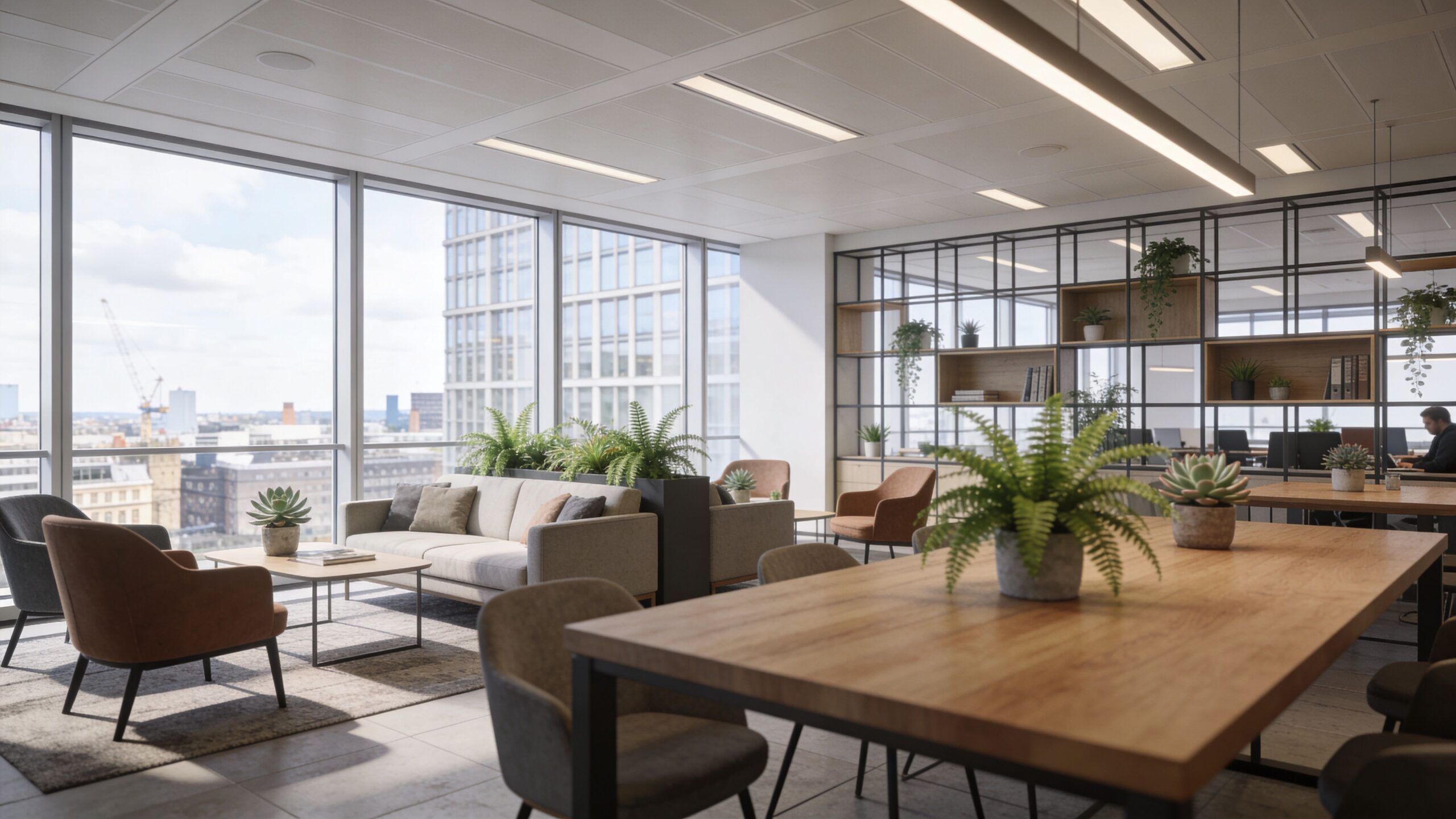
One common problem is the fully open office that needs more definition but can’t afford to lose light or visual connection. Glass partitions are a good answer there.
Before the change, a team area may feel noisy and undefined. Staff take ad hoc calls at desks, and visitors drift through the same space used for focused work. After zoning with glass, the office still feels open, but different activities get clearer edges.
This works especially well where a business wants a professional look without making the floor feel smaller. It can also support breakout areas that need some separation while keeping the main office readable and bright.
Architectural wrapping for a fast visual reset
Some offices don’t need structural changes first. They need a smarter surface-level refresh.
Architectural wrapping can transform tired joinery, walls, doors and feature elements without the mess of full replacement. That makes it useful in breakout areas where the layout is fine but the finish feels dated, patchy or disconnected from the brand.
On site reality: A space can feel new long before every component is replaced. Surface renewal often does more than clients expect when the bones of the layout already work.
This approach suits reception-side breakout zones, café points, touchdown areas and informal meeting corners. It can also help unify old and new elements when only part of the office is being refurbished.
Pods as a ready-made room inside the room
Pods are often the fastest route to privacy in a live office. They create a contained environment without the same level of invasive building work that fixed rooms can require.
That’s why products from manufacturers such as Vetrospace, BlockO and Framery keep appearing in workplace projects. They offer a practical “room within a room” option for calls, one-to-ones and quiet work.
A typical transformation looks like this in real terms:
- Before: Desks absorb every call and short meeting.
- Change: One or more acoustic pods are placed near active teams.
- After: Privacy improves, noise spill reduces, and formal meeting rooms are freed up for the meetings that actually need them.
That’s often the best kind of office improvement. It doesn’t just look better. It removes a daily friction point that staff have been working around for months.
Frequently Asked Questions About Breakout Spaces
Clients usually ask very practical questions about break out spaces. That’s a good sign. It means the discussion has moved past the idea stage and into delivery.
The answers below focus on the issues that tend to affect timing, layout decisions and whether a scheme is worth pushing forward.
Common Questions
| Question | Answer |
|---|---|
| How much space should a breakout area take up? | It depends on the activity it supports and how often people will use it. A useful rule is to start with demand, not leftover floor area. If the office needs private call space, a compact pod or booth may do more than a large lounge area. |
| Are break out spaces only for large offices? | No. Smaller offices often benefit even more because every desk and meeting room has to work harder. A compact booth, a screened corner, or one enclosed pod can solve several daily problems without major construction. |
| Can a rented office have breakout spaces? | Usually yes, but lease terms and landlord approvals need checking early. Freestanding and modular options are often easier to approve because they reduce impact on the base build and can be removed more cleanly later. |
| How long does installation take? | Timing depends on whether the solution is loose furniture, partitions, pods, or a wider refurbishment package. Modular products and pre-planned sequencing usually reduce disruption. Programmes should always be agreed around business operations rather than treated as a standard fit-out slot. |
| Do break out spaces need power and data? | In most cases, yes. If people will work there for any length of time, charging and connectivity matter. This should be planned at concept stage, because retrofitting services later is far more awkward. |
| What’s the biggest design mistake? | Creating a space with no clear purpose. If people can’t tell whether an area is for social use, calls, focus or short meetings, they’ll either avoid it or use it in ways that annoy everyone nearby. |
| How should maintenance be handled? | Keep it simple. Choose durable finishes, easy-clean upholstery, and furniture that can be moved or reconfigured without specialist work. A breakout space that looks worn after a short period will quickly lose support internally. |
| Should every office have a quiet breakout zone? | In most cases, yes. Not every employee works best in open, social settings all day. A calmer area supports concentration and gives the workplace a broader range of useful settings. |
A final point is worth keeping in view. Break out spaces work best when they’re treated as part of the workplace strategy, not as spare furniture in spare space. If the layout, acoustics and intended behaviour all line up, even a modest intervention can change how the whole office feels.
Ready to transform your workspace? Speak to the GIBBSONN Interiors team today. Looking for bespoke pod solutions or interior support? They’re here to help. Contact Us