
The old office plan is already out of date. By 2023, 85% of UK employers had adopted hybrid models, according to a British Chambers of Commerce survey, up from a time when only 16% of UK workers regularly worked from home in 2019 as noted in this UK workplace shift summary. That change didn’t just alter where people work. It changed what an office needs to do.
A workplace transformation strategy now has to work much harder. It has to support focused work, quick team sessions, private calls, client visits, staff wellbeing, and the practical reality of budgets, procurement, and lease obligations. Many organisations know the current space isn’t doing the job anymore, but they stall because the project feels too big and too risky.
The best results come from treating workplace change as a delivery plan, not just a design exercise. That means making smart decisions early about how people work, what the space must support, how the build will happen, and what financial consequences sit further down the line.
Table of Contents
- Introduction
- Your Starting Point Laying the Right Foundations
- Designing Your Future Workplace for 2026
- Powering Your Space with Smart Technology
- The Delivery Playbook Procurement and Build
- Bringing Your People on the Journey
- Measuring Your Return and Future-Proofing
- Conclusion
Introduction
A workplace transformation strategy only works when it deals with actual circumstances. Staff habits change. Teams grow and shrink. Technology dates quickly. Lease obligations remain in the background until they become expensive. A good plan connects all of that from the start.
Too many office projects begin with finishes and furniture. Then the hard questions arrive later. Who needs privacy? How will teams book space? What happens to the old partitions at lease end? Can the build happen without disrupting day-to-day operations? Those questions shouldn’t be left to the middle of the job.
Practical rule: If a workplace plan doesn’t cover people, delivery, technology, and lease risk, it isn’t finished.
That’s why the strongest projects start with clear foundations, move into a design that supports real work, and stay disciplined through procurement, build, change, and review. Whether the brief is a focused refit in Bishop’s Stortford or a wider estate rethink in Hertfordshire, the same principle applies. A successful office isn’t merely attractive. It performs.
Your Starting Point Laying the Right Foundations
The first mistake many teams make is assuming they already know what the office problem is. They usually know the symptoms. Meeting rooms are always full. Desks sit empty on some days and feel cramped on others. Calls spill into circulation areas. Staff say they want more collaboration, then spend half the day looking for quiet.
Read the space before changing it
A proper starting point is a diagnostic review. That means looking at how the workspace is used, not how it was meant to be used when the fit-out first went in.
A useful review usually includes:
- Space use checks: Walk the floor at different times and on different days. Empty desks may point to hybrid patterns, but they can also reveal that certain zones are unpopular because of noise, glare, or poor layout.
- Staff feedback: Short surveys and focused workshops often uncover friction that a floor plan can’t show. People will explain where they avoid working and why.
- Operational constraints: Check access routes, service zones, power, data points, fire strategy, landlord approvals, and any business-critical spaces that can’t go offline.
That early discovery work is what turns guesswork into a strategy. For organisations that want a structured front-end process, a workplace strategy consultant can help shape the brief before design work begins.
Set goals that can survive board scrutiny
A vague target such as “make the office better” won’t help once the project starts costing money. The brief needs working measures behind it.
Good goals are usually tied to business issues. A team struggling with attendance may need a stronger destination office. A business with client-facing space may need better privacy and presentation. A growing company may need more adaptable layouts rather than more fixed desks.
Useful measures often include:
Use of space
Track whether underused areas become active after the change.Staff experience
Ask whether people can find the right setting for focused work, team work, and confidential calls.Operational disruption
Agree what level of disruption the business can tolerate during works.Lifecycle cost
Consider not just the installation cost, but also maintenance, reconfiguration, and eventual reinstatement.
The strongest briefs are specific enough for contractors to price properly and flexible enough to adapt when site realities appear.
Bring people in early
Resistance usually starts when staff feel change is being done to them rather than with them. Senior leadership, facilities, IT, HR, and daily users all see different parts of the same problem. If one group is left out, that gap tends to show up later as delay or pushback.
This doesn’t mean opening every design decision to a vote. It means bringing in the right voices at the right moments. Leadership needs to sign off purpose and budget. Facilities need to flag operational realities. IT needs to shape infrastructure choices. Staff need a simple route to give feedback on what helps and what gets in the way.
A workplace transformation strategy becomes much easier to deliver when the brief reflects both business goals and everyday working habits. That early alignment saves time later, and it avoids the expensive cycle of redesigning after complaints arrive.
Designing Your Future Workplace for 2026
Good workplace design starts with a simple question. What does each part of the office need to help people do? Once that question leads the process, layout decisions become clearer.
Build for different types of work
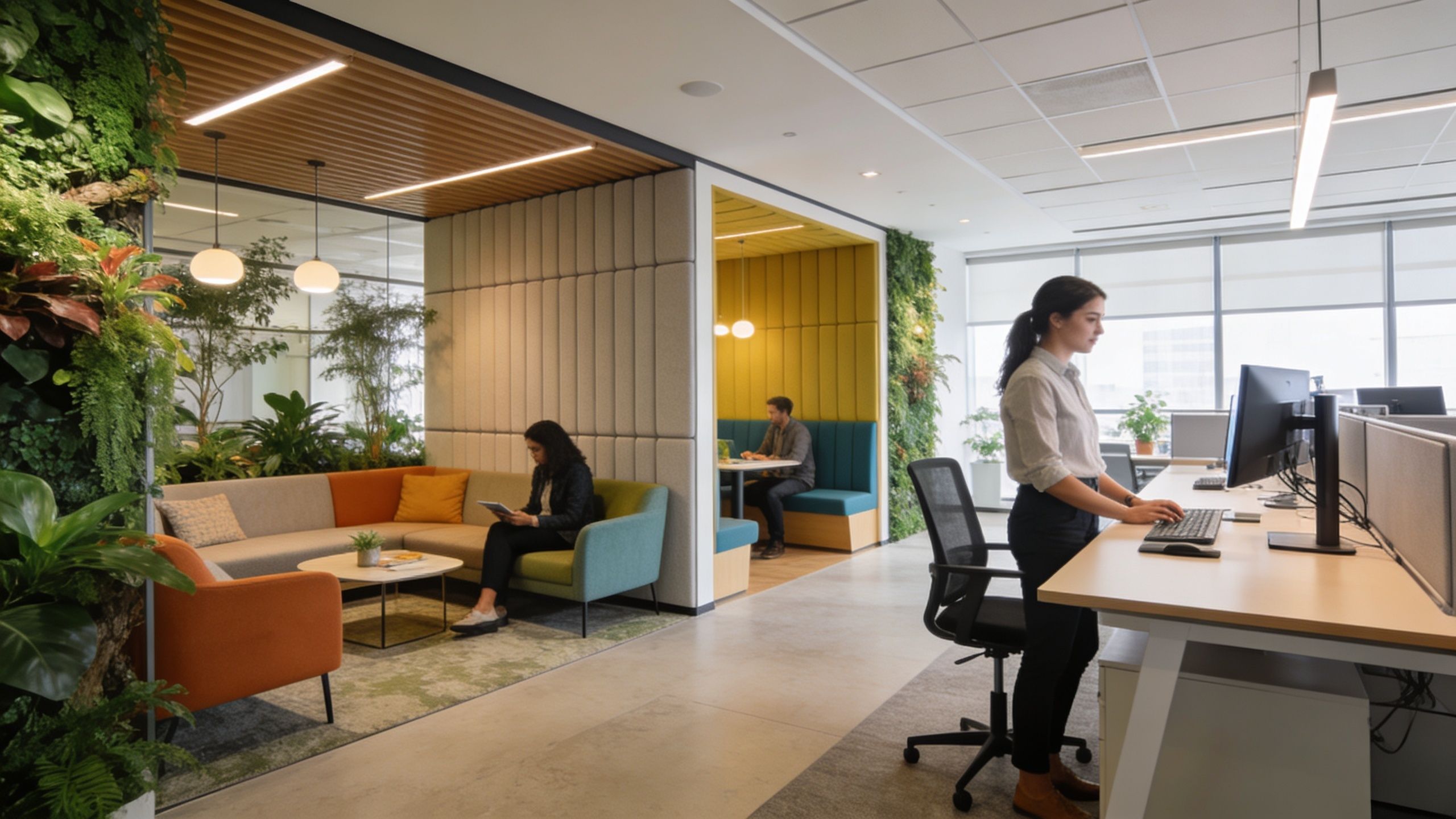
One open-plan floor rarely supports every task well. Deep concentration, informal catch-ups, online calls, private conversations, and project work all need different conditions. That’s why many successful schemes move towards a more varied layout instead of rows of identical desks.
A practical mix often includes:
- Quiet settings for focused individual work
- Open collaborative zones for quick team interaction
- Bookable enclosed rooms for meetings and sensitive discussion
- Acoustic pods for calls and short solo tasks
- Soft seating areas for informal conversation and visiting clients
That mix matters because the office now has to give people something useful that home working often can’t. A workplace with no variety quickly becomes frustrating, even when it looks polished.
For employers trying to make the office feel worth the journey, design is now tied directly to retention. A 2023 CIPD report found that 62% of UK HR professionals prioritise workplace redesign to combat return-to-office fatigue, with attention on ergonomic solutions and varied work zones, according to the CIPD hybrid workplaces report.
Wellbeing has to show up in the plan
Wellbeing in workplace design isn’t a decorative extra. It shows up in practical choices. Glare control matters. Acoustics matter. Seating matters. Storage matters. The route from entrance to workstation matters.
Small decisions often have a bigger effect than feature pieces. A well-placed glazed meeting room can improve privacy without making a floor feel boxed in. Better zoning can reduce noise drift. Ergonomic task chairs and properly considered desk settings support comfort through the day. Planting, natural materials, and calmer finishes can soften a hard commercial environment without turning the office into a lounge that nobody uses properly.
For competitive hiring markets, that physical experience carries weight. A well-resolved office in Cambridge or elsewhere can help an employer present itself as organised, modern, and considerate of staff needs.
This short video helps show how workplace thinking has shifted from static layouts to more responsive environments.
Digital and physical design have to match
A room only works if the tools inside it support the way people work. That’s where the physical plan has to line up with what a digital workplace means. If a meeting room looks sharp but calls fail, the room fails. If touchdown spaces don’t have power where people need it, they’ll sit somewhere else.
That’s why design should deal with furniture, partitions, finishes, booking logic, power, data, acoustic control, and video call use as one joined-up system. The best workplaces don’t just look updated. They remove friction.
Powering Your Space with Smart Technology
Most office technology problems aren’t caused by a lack of products. They come from poor integration. New rooms get added without checking bandwidth. Pods arrive without proper power planning. Booking tools get introduced, but nobody aligns them with actual room use. Then staff blame the office when the actual problem sits behind the walls.

Don’t start by ripping everything out
There is a common assumption that outdated technology means a full reset. In many buildings, especially older stock, that approach creates more disruption than value. A better workplace transformation strategy often upgrades in phases.
That matters because poor workplace tech is already a live issue. A 2025 UK Cabinet Office survey found that 41% of public sector workers rated their workplace technology as ineffective, highlighting the importance of integrating technology planning into physical change, as reported in this workplace technology findings summary.
A phased approach can involve keeping viable infrastructure, improving power distribution, tightening Wi-Fi coverage, replacing weak meeting room hardware, and adding adaptable elements such as smart booking points or enclosed call spaces. This is often more realistic than stripping everything back at once.
A room with simple, dependable tech will outperform a more expensive room with complicated systems that staff avoid.
Choose technology that supports the room
Each space type needs its own level of support. A boardroom has different demands from a touchdown bench or a two-person pod. The technology plan should reflect that instead of forcing one standard everywhere.
Examples include:
- Meeting rooms: Reliable display, camera, microphone, and straightforward controls
- Open collaboration areas: Convenient power, screen sharing, and enough acoustic separation
- Focus and call pods: Ventilation, power, lighting, and plug-and-play connectivity
- Reception and client areas: Smooth-operating presentation tools and discreet infrastructure
Products from manufacturers such as Vetrospace and Framery can solve privacy and noise issues quickly, but they still need proper planning around circulation, sightlines, ventilation, and digital access.
Maintenance matters after handover
Technology decisions don’t end at installation. Offices need a maintenance plan that keeps the environment working once teams move in. Booking tablets need updating. Meeting room hardware needs checks. Moving parts in pods and partitions need attention. Finishes need protection in high-use areas.
That’s where planned support becomes part of the strategy, not an afterthought. A sensible commercial maintenance services plan helps preserve both performance and appearance, which is especially important in busy estates and older buildings across Essex. A workplace that slips into small failures quickly loses staff confidence.
The Delivery Playbook Procurement and Build
A smart strategy can still fail on site. Poor procurement, unclear scope, weak sequencing, and late decisions will undo a good design very quickly. Delivery needs the same discipline as the front-end brief.
Procurement decisions shape the whole job
The procurement route affects budget control, programme certainty, coordination, and how much risk the client carries. Some organisations prefer a traditional fit-out route with more separate packages and more direct control. Others want a tighter, more integrated process where design, supply, and installation are coordinated around live business operations.
A practical place to start is understanding how procurement in construction influences every later stage. It affects when products are ordered, how substitutions are managed, and whether site issues become short delays or major setbacks.
The right route depends on the building, programme pressure, landlord constraints, and how much disruption the occupier can absorb. There isn’t one correct answer for every project. There is only the route that best matches the business reality.
Delivery Methods at a Glance
| Factor | Traditional Fit-Out | Modular Solutions |
|---|---|---|
| Speed on site | Often depends on more wet trades and longer sequencing | Usually better for phased installation and quicker deployment |
| Future changes | Alterations can be more invasive | Reconfiguration is often simpler with demountable systems and pods |
| Lease-end position | Reinstatement can be harder if elements are fixed permanently | Easier to remove, adapt, or reuse when planned well |
Modular solutions aren’t right for every space, but they often help where businesses need flexibility, lower disruption, or a cleaner lease-end route. Demountable glass partitions, acoustic pods, and architectural wrapping can all support change without forcing a full rebuild.
Delivery note: The cheapest line in a tender return isn’t always the cheapest project once downtime, rework, and reinstatement are counted.
Treat dilapidations as part of strategy
Dilapidations are often ignored until a lease is ending. That is far too late. A workplace transformation strategy should consider reinstatement and lease obligations from day one, especially if the client is occupying leased space.
68% of commercial lease disputes in the UK involve dilapidations claims, averaging £250,000 per property, according to the reported UK dilapidations findings. That figure changes the conversation. It means end-of-lease planning isn’t a legal footnote. It’s a financial design issue.
A few decisions can make a major difference later:
- Use demountable elements where possible: Glass partitions and modular rooms can be removed more cleanly than heavily built-in alternatives.
- Keep records of changes: Drawings, approvals, finishes schedules, and product details matter when reinstatement scope is reviewed.
- Check what really needs replacing: Architectural wrapping can refresh surfaces without the waste and cost of full replacement.
- Review landlord obligations early: Not every existing condition has to be restored in the same way, but assumptions need testing before works begin.
For fast-moving occupiers in London, that whole-life view can protect future budgets as much as it improves present-day use. The best delivery plans balance programme, practicality, and the eventual exit path.
Bringing Your People on the Journey
A transformed office only succeeds if people use it well. The physical build may finish in weeks, but behaviour change takes longer. Staff need to understand what changed, why it changed, and how to get value from the new environment.
Adoption is a project in its own right
Cultural resistance remains one of the biggest reasons workplace change underperforms. According to a BCG study, 75% of UK digital workplace transformations fail to meet their objectives, with cultural resistance as a primary cause, while successful projects lead to 2.5x higher employee engagement, as highlighted in this UK change management summary.
That finding reflects what many organisations already feel during change. Staff don’t reject every improvement. They reject confusion, poor communication, and rules that make no sense in practice.
A phased launch works better than a big reveal
A full overnight switch can look efficient on paper, but it often creates avoidable stress. Teams walk into a finished space with new etiquette, new technology, and unfamiliar settings, then spend the first few weeks frustrated.
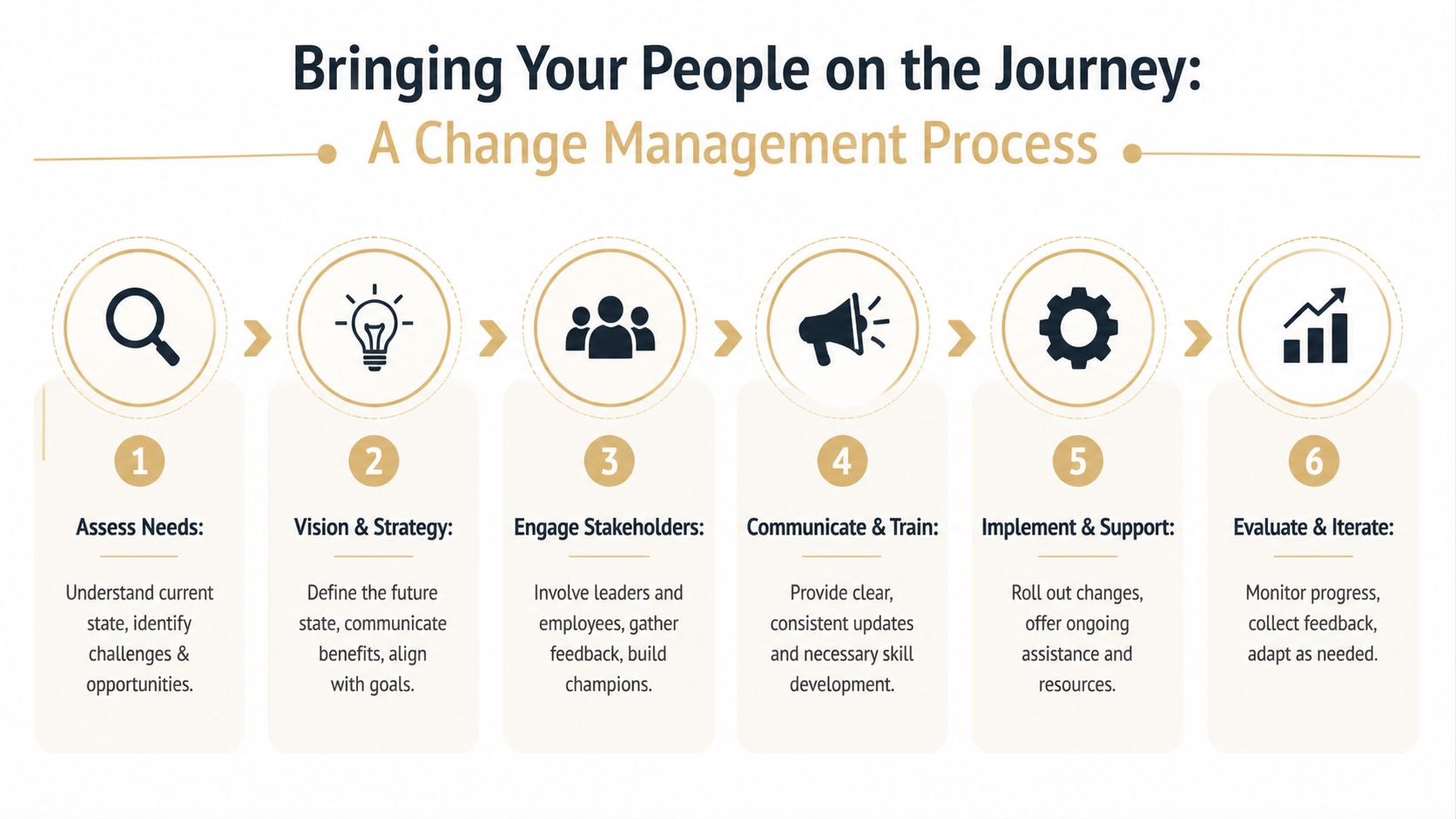
A steadier approach tends to work better:
Introduce the purpose early
Explain what problems the project is solving. People are more open to change when the reasoning is concrete.Create local champions
Department leads and engaged staff can help model good use of the new spaces.Roll out in stages where possible
Phased occupation allows feedback to shape later areas and reduces disruption.Keep messages simple
Staff need clear guidance on booking rooms, using pods, storing personal items, and choosing the right type of workspace.
People don’t need a long manifesto. They need clear guidance they can use on day one.
Support the new habits
The move into a new workplace should come with practical support. That includes induction sessions, concise user guides, floorwalkers in the early days, and responsive fixes when a process isn’t landing properly.
Digital basics matter too. For example, dependable connectivity underpins almost every workplace behaviour, and many teams also look at resources on secure Wi-Fi solutions for employee output when reviewing the wider user experience around collaboration and day-to-day productivity.
The best change process listens after launch. If a collaboration zone is too noisy, adjust it. If meeting rooms are overbooked, review the mix. If staff avoid a space entirely, find out why. Change management isn’t a speech at handover. It’s ongoing operational tuning.
Measuring Your Return and Future-Proofing
The office doesn’t prove its value on handover day. It proves its value in the months that follow. That is when leadership wants to know whether the investment changed anything meaningful.
Measure what changed, not just what was spent
A proper review looks at performance, not just cost. The right measures depend on the original brief, but most organisations should examine a mix of business, space, and people outcomes.
A useful review often covers:
- Space effectiveness: Are the right spaces being used for the right tasks?
- Staff feedback: Do people feel the office supports focus, collaboration, privacy, and comfort better than before?
- Operational impact: Has the new environment reduced friction around meetings, calls, storage, or circulation?
- Retention and attraction signals: Does the office help present the business well to staff and visitors?
Not every return can be turned into a neat formula, and that’s fine. Some of the most valuable gains show up in smoother team working, easier recruitment conversations, stronger client impressions, and fewer daily frustrations.
Use post-occupancy reviews properly
A post-occupancy review should happen after people have had time to settle in. Too early, and the response is mostly about novelty or disruption. Too late, and recurring issues may already be embedded.
A practical review usually combines:
- Staff pulse feedback
- Walkthrough observations
- Room and zone usage checks
- Operational feedback from facilities and IT
- A snagging list for anything that needs adjustment
Small refinements matter. A workstation bank may need better screening. A pod may need a booking rule. A breakout area may need more power points. Those aren’t signs of failure. They’re part of making the space work properly in real conditions.
The best workplace transformation strategy leaves room for fine-tuning after occupation. Real use always reveals more than drawings can.
Future-proofing comes from flexibility
No office stays perfect forever. Teams change. Technology moves on. Policies shift. That’s why future-proofing is less about prediction and more about flexibility.
Practical future-proofing often means choosing components that can adapt without major demolition. Demountable partitions, modular meeting pods, movable furniture, and finishes that can be refreshed rather than replaced all help extend the life of the investment.
This is especially important for businesses with changing headcount, evolving hybrid patterns, or complex estates. A workplace that can be re-zoned, repaired, and updated without major upheaval will hold value far better than one built around rigid assumptions. That long-view mindset is what turns a one-off refit into a durable workplace strategy.
Conclusion
A strong workplace transformation strategy isn’t just about making an office look current in 2026. It’s about building a space that supports real work, respects budget realities, and stays adaptable when the business changes. The most reliable results come from clear foundations, practical design, disciplined delivery, thoughtful change management, and honest review after occupation.
A well-planned project can improve how people work and how they feel at work, while also protecting the business from avoidable cost later on.
Ready to transform your workspace? Speak to the GIBBSONN Interiors team today. Looking for bespoke pod solutions or interior support? We’re here to help. Contact Us