
Ever looked at your office’s overflowing bins and seen pound signs? That’s not just rubbish; it’s wasted money. In 2026, getting a grip on office waste management isn’t just a ‘nice-to-have’ green idea. It’s a sharp business decision that directly impacts your bottom line, boosts your brand reputation, and keeps you on the right side of the rules.
Table of Contents
- Why Smart Waste Management Is a 2026 Business Goal
- Getting to Grips with Your Waste: The Simple Audit
- Designing a Low-Waste Office Layout for 2026
- How to Get Your Entire Team on Board in 2026
- Getting to Grips with UK Waste Rules and Your Duty of Care
- Minimising Waste During a 2026 Office Fit Out
- Your Office Waste Questions, Answered
Why Smart Waste Management Is a 2026 Business Goal
This isn’t another lecture full of complicated words. This is a practical plan for getting your office waste sorted, literally. We’ll walk you through how to understand what you’re actually throwing away and how to build a system that your staff will use without a second thought. It’s about turning a business cost into a real win.
Think of this as your guide to a leaner, more responsible workplace. This is especially true for businesses in places like Essex, where being a good local employer really counts. And for companies based in London, a solid waste strategy is essential for handling the city’s unique costs and rules.
Following these practices isn’t just about ticking boxes. It’s about following industry best practices for improving facility hygiene and sustainability and showing you’re a forward thinking business.
“The goal is to make recycling and waste reduction an intuitive, automatic part of the workday, not another task on a to do list.”
Ultimately, focusing on smart office waste management is an investment in your company’s future. It sends a powerful message of responsibility to clients, employees, and your community. It’s a key piece of the puzzle, and you can see how it fits into the bigger picture in our guide to creating a truly sustainable office space.
Quick Wins for Your Office Waste in 2026
You don’t need a huge budget or a six month project to start seeing results. Start making a difference today with these simple, high impact changes that we’ve seen work time and time again.
Table: Quick Wins for Your Office Waste
Start making a difference today with these simple, high impact changes.
| Quick Win | What to Do | Why It Works |
|---|---|---|
| Remove Desk Bins | Replace all personal bins with central recycling stations. | This one change forces staff to sort waste correctly, massively boosting recycling rates. |
| Go Digital First | Make printing reports or agendas the exception, not the rule. | Cuts paper, toner, and energy costs. Reduces the biggest source of office recycling. |
| Reusable Kitchenware | Stock the kitchen with proper mugs, glasses, and cutlery. | A simple swap that gets rid of a huge amount of single use plastic and paper waste. |
These small adjustments are surprisingly effective. They create new habits and make sustainable choices the easiest option for everyone in the office, setting a strong foundation for your wider waste reduction strategy.
Getting to Grips with Your Waste: The Simple Audit
Before you can truly get a handle on your office’s waste management, you need a clear, honest picture of what you’re actually throwing away. A waste audit might sound like a big, complicated job, but it’s really just a short term project to understand your team’s habits. Think of it as a snapshot of what’s really ending up in your bins.
It all starts with a simple, week long collection. Instead of your usual contractor pickup, you’ll be gathering everything your office produces. Get your team ready with some gloves, a clear space to work, and a set of scales, you’re about to uncover some valuable insights.
Sorting and Analysing the Findings
Once you have a week’s worth of bags, the real discovery begins. The goal is to separate everything into different piles based on material. This is where you move from guesswork to hard data about your office’s buying habits.
You’ll likely find your waste falls into a few key groups:
- Paper and Cardboard: This covers everything from printer paper and old notebooks to the packaging from all those office deliveries.
- Dry Mixed Recycling: Think plastic bottles, drinks cans, and glass jars from the kitchen area.
- Food Waste: Often the surprising one! This includes coffee grounds, teabags, and any food left over from lunches.
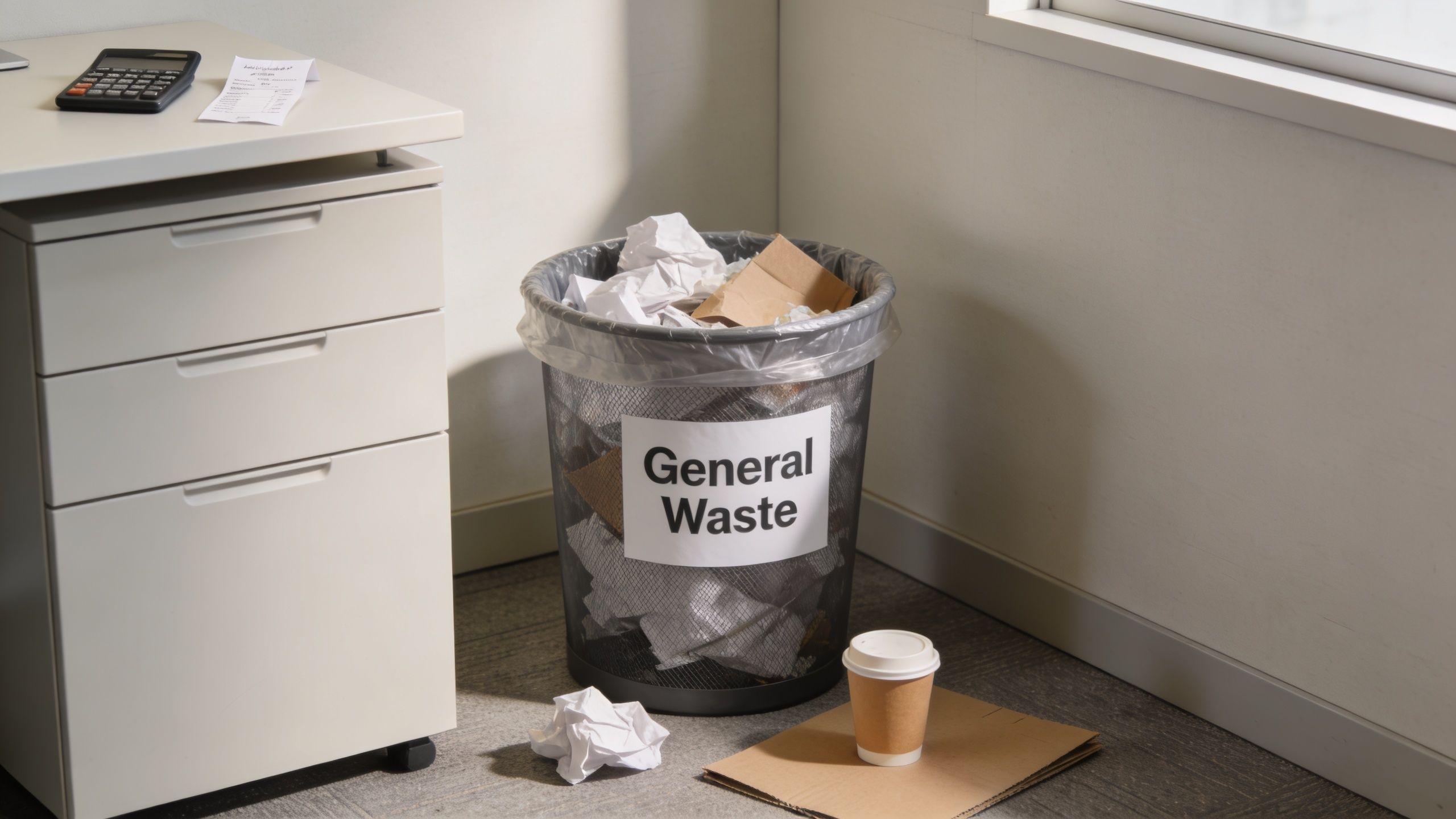
- General Waste: This is the catch all for anything that doesn’t fit elsewhere, like non recyclable snack wrappers and single use coffee cups.
After you’ve sorted it all, weigh each category and log the numbers. This data is where the magic happens. You might find that a huge 60% of what you thought was ‘general waste’ is actually clean, recyclable paper. Or you might realise food waste is a much bigger financial and environmental drain than anyone suspected.
For businesses in growing commercial areas like Braintree, digging into these numbers is the first step towards making some serious cost savings.
“An audit turns guesswork into facts. It gives you a clear baseline, so you can set realistic reduction targets and celebrate your progress when you see the numbers go down.”
This whole process shines a light on your ‘waste hotspots’. More importantly, it gives you the evidence you need to build a smarter, more targeted waste management strategy that actually works.
Designing a Low-Waste Office Layout for 2026
You’d be surprised how much your office layout influences what ends up in the bin. A well designed space doesn’t just look good; it can make recycling second nature and waste reduction an almost effortless part of the daily routine. When you’re planning a fit out or a refurb, thinking about the flow of your office is one of the most powerful ways to reshape your team’s habits for the better.
It all begins with creating central, easy to use recycling hubs. One of the most effective moves we’ve seen is getting rid of individual under desk bins. While it seems like a small change, it actively encourages staff to walk to these central points and, more importantly, to think about which bin they’re using. A professional framework can be a great starting point for assessing your workspace, just as this guide via Neat Hive Cleaning shows for deep cleaning.
Strategic Zoning for Better Habits
This is where the magic really happens. Setting up dedicated zones for different waste streams is a game changer for office waste management. Think about it: specific bins for paper right next to the printers, food waste caddies in the kitchen, and mixed recycling containers in high traffic shared areas. The aim is to make the right choice the easy choice.
Before you can design the perfect layout, you need to know what you’re dealing with. A proper waste audit gives you the hard data you need, and this visual guide breaks down a simple process for doing just that.
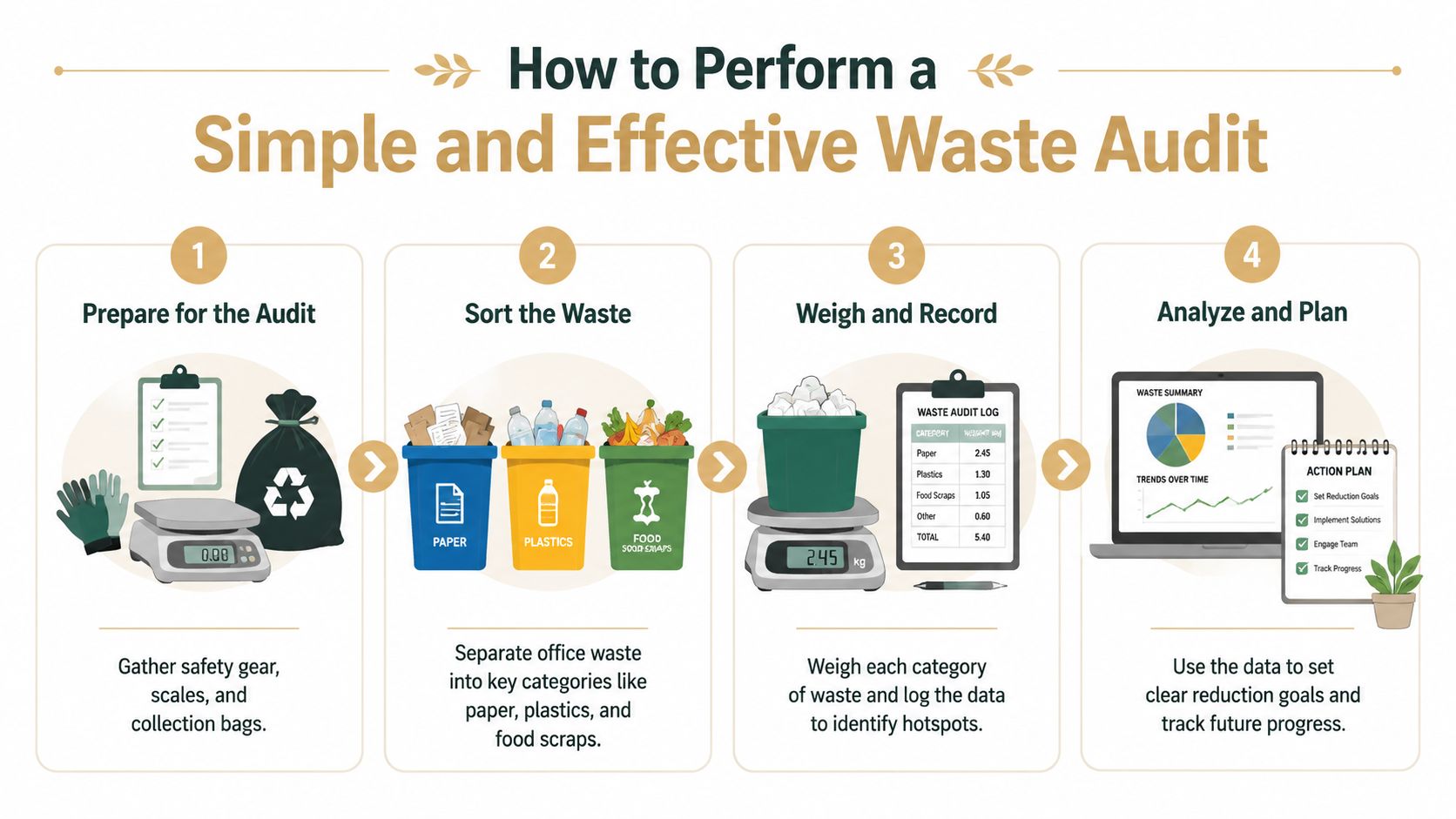
As the infographic shows, it’s only by sorting and weighing your waste that you can get a true picture of what’s being thrown away. This data is the foundation for making smart, effective changes to your office design.
This approach is especially powerful for tackling the mountain of paper waste that still plagues so many UK offices. According to Statista, the UK waste management market was valued at approximately £10.9 billion in 2023 and is forecast to grow in the coming years. Paper is one of the most controllable parts of any company’s waste stream. Old habits like printing documents for every meeting add up, proving that thoughtful design is essential for nudging behaviour in the right direction.
“A simple move like putting all printers in one central location not only reduces paper usage but also cuts down on energy and toner costs. It’s a small change with a big impact.”
A forward thinking partner like Gibbsonn Interiors can help businesses design a workspace that is both beautiful and highly sustainable. Of course, the materials you choose are just as important as the layout. For more on that, take a look at our guide on choosing environment-friendly materials for your 2026 office.
How to Get Your Entire Team on Board in 2026
You can design the most sophisticated office waste management system, with perfectly zoned bins and flawless processes, but its success ultimately rests on one thing: your people. A plan is just a document until your team brings it to life. Getting everyone genuinely invested is the real key to making your sustainability ambitions a reality.
This all begins with open, honest communication. Forget a quick, easily missed email. We’ve found that a short, engaging kick off meeting is far more effective. This is your chance to explain not just what is changing, but more importantly, why it matters, to the business, to the environment, and to them. Sharing the real results from your waste audit can be a powerful motivator.
Making It Part of the Culture
For any change to have a lasting impact, it needs to be woven into the very fabric of your company. It’s not a one off project; it’s a new way of operating.
A brilliant way to do this is by appointing ‘Green Champions’. These are enthusiastic volunteers from across different departments who act as advocates, lead by example, and keep up the momentum long after the initial launch.
Simple, clear signage is another must have. Think clear pictures and straightforward language. Studies have consistently shown that well designed bins with intuitive instructions drastically improve sorting accuracy. Your goal should always be to make the sustainable choice the most effortless one.
“Celebrating your wins is vital. When you hit a reduction target, share the good news! A simple update showing how much you’ve saved in costs or diverted from landfill makes everyone feel part of a successful team effort.”
This kind of engagement is especially powerful for businesses in competitive regions like Hertfordshire, where a positive and purpose driven workplace culture is a significant advantage. Don’t forget to celebrate your progress publicly. Share the milestones, give a shout out to your Green Champions, and turn waste management into a collective success story that everyone can feel proud of.
Ready to transform your workspace and get your team engaged? Speak to the Gibbsonn Interiors team today.
Getting to Grips with UK Waste Rules and Your Duty of Care
Managing your office waste properly isn’t just about being green, it’s a legal requirement. In the UK, every business, no matter its size, has a legal ‘Duty of Care’ for the waste it produces. This means you’re responsible for what happens to your rubbish from the second it’s created until it’s finally recycled or disposed of.
That responsibility doesn’t just vanish when the collection lorry pulls away. Getting these rules wrong can lead to some eye watering fines, so it pays to know where you stand. It’s a major focus for businesses we work with across Essex and in bustling commercial centres like Chelmsford.
What Does the Duty of Care Mean for You?
So, what are your core responsibilities? It’s not as complicated as it sounds.
First off, you need to store your waste safely and securely. Think about using the right kind of containers, ones that won’t leak all over the floor or get blown away by a gust of wind.
Crucially, you must make sure your waste is collected by a licensed waste carrier. Don’t just take their word for it; always ask to see their registration documents. You should also get a waste transfer note for every single collection that leaves your office. This simple piece of paper is your proof that you’ve handed the waste over legally.
“For UK businesses, the direction of travel is regulatory. Organisations that treat office waste as a managed operational stream are better placed to reduce landfill, cut collections, and improve compliance. In a refit, better bin placement and clearer signage can make a measurable difference.”
The rules around office waste management are only getting tighter. You can dive deeper into the official guidance on the government’s website about how to dispose of business or commercial waste. The smartest move is to treat waste as a key part of your day to day operations.
Ready to get your workspace compliant and transform how you handle waste? Speak to the Gibbsonn Interiors team today.
Minimising Waste During a 2026 Office Fit Out
An office fit out or refurbishment presents a golden opportunity to design waste out from the very beginning. This is your chance to move beyond just basic recycling and weave genuine sustainability into the fabric of your new workspace. It’s a process that demands careful thought about every single choice you make, from construction right through to completion.
Choosing the right partners is a critical first move. Look for suppliers and contractors who have proven, sustainable practices. The focus should also be on reusing materials wherever possible, think about repurposing old furniture or giving fixtures a new lease of life. We’ve put together some excellent guidance on our page dedicated to office furniture recycling for your 2026 project.
Smart Planning During Construction
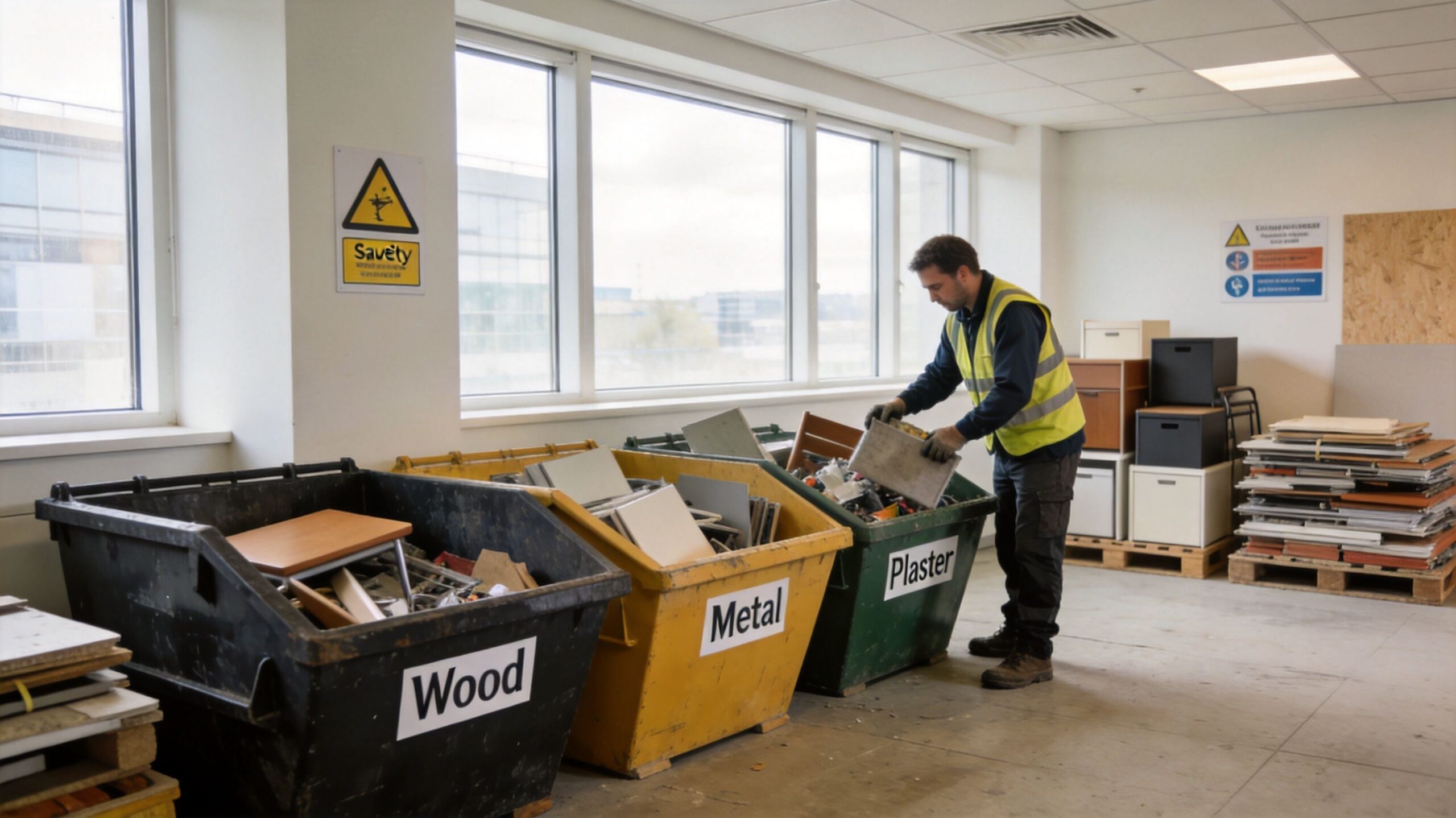
Properly separating construction debris is absolutely essential if you want to maximise your recycling rates. On a practical level, this means having separate, clearly labelled skips on site for materials like wood, metal, plasterboard, and general waste. For landlords and tenants, especially in areas like Cambridge, managing waste effectively during end of lease work is also a major consideration.
The data speaks for itself: a huge amount of what ends up in landfill could have been recovered. For example, a 2018 government report found that 67% of materials in UK commercial and industrial waste streams could have been recycled or recovered. This really highlights the scale of the opportunity here. A well planned project doesn’t just slash your landfill costs; it significantly boosts your company’s green credentials.
“The goal is to turn waste from a hidden cost into a measurable win. A successful fit out makes sustainability an integral part of your new workspace, not an afterthought.”
As you plan your workspace adjustments, it’s worth considering how structural changes can influence your overall efficiency. For those exploring more modular or non traditional construction methods, you can find some excellent shipping container insulation and electrics advice online. This kind of forward thinking is the key to truly effective office waste management.
Ready to transform your workspace? Speak to the Gibbsonn Interiors team today.
Your Office Waste Questions, Answered
Over the years, we’ve heard a lot of the same questions come up when businesses start getting serious about their waste. Let’s tackle some of the most frequent ones we hear from clients, cutting through the jargon to give you practical answers.
How Much Does Poor Waste Management Really Cost?
The price tag is often much bigger than business owners realise. It’s not just about what you pay your waste contractor for each collection, though, naturally, the more you throw away, the more that costs. Landfill tax rates are also constantly climbing, making general waste a significant and growing expense.
But the hidden costs are what really sting. Think about the value of all that paper, cardboard, and metal you’re just throwing out; that’s a revenue stream you’re literally putting in the bin. Then there’s the reputational damage. In today’s market, a poor environmental record is a very real problem that can turn off customers and talent.
What Is the Single Most Effective Thing I Can Do?
If you only have the capacity to make one change, make it this: get rid of individual under desk bins. It sounds almost too simple, but it’s a game changer.
These personal bins are a magnet for mixed waste. They make it far too easy for people to toss recyclables and general rubbish together without a second thought. When you replace them with clearly signed, central recycling points, you introduce a moment of consideration. This small shift in habit is proven to send recycling rates soaring.
We Are a Small Office. Does This Really Apply to Us?
Absolutely. The core principles of smart office waste management scale to fit any business, no matter the size. In fact, we often see smaller businesses, like those we work with in places such as Bishop’s Stortford, implement changes far more quickly and see an immediate impact.
It’s not just good practice; it’s a legal requirement.
“Your legal ‘Duty of Care’ applies to every single business in the UK, no matter how small. Starting good habits now will save you money and make it easier to manage as your business grows.”
Ready to transform your workspace? Speak to the Gibbsonn Interiors team today.
Looking for bespoke pod solutions or interior support? We’re here to help.