The way we work has fundamentally shifted and your office needs to keep pace. The era of uniform desk rows and siloed departments is over. A successful modern workplace is no longer just a building with desks; it is a dynamic, engaging and healthy destination that actively supports your team’s wellbeing and your organisation’s strategic goals. It has evolved into a central hub for collaboration, innovation and nurturing company culture. As we look towards 2026, understanding and implementing the latest modern office design trends is crucial for attracting and retaining top talent, enhancing productivity and future-proofing your business operations.
For facilities managers, corporate leaders and SMEs across the UK, from the bustling heart of London to the innovation hubs in Cambridge and the growing business communities in Bishop’s Stortford, creating a workspace that people genuinely want to be in is a powerful competitive advantage. This guide moves beyond theory to provide actionable insights. We will explore the ten most significant trends shaping the contemporary office, from biophilic principles and sustainable circular design to technology integration and activity-based working. Prepare to discover how to transform your office from a simple place of work into an exceptional environment that drives success.
Table of Contents
- Hybrid Working Spaces & Activity-Based Working (ABW)
- Acoustic Innovation & Private Meeting Pods
- Biophilic Design & Nature Integration
- Sustainable & Circular Office Design
- Wellness-Focused & Ergonomic Office Design
- Technology-Integrated & Smart Office Spaces
- Flexible, Modular & Reconfigurable Office Spaces
- Brand-Aligned & Identity-Driven Office Design
- Diversity, Inclusion & Accessible Office Design
- Hospitality-Inspired & Experience-Focused Office Design
- 10-Point Comparison of Modern Office Design Trends
- Bringing Your Modern Office Vision to Life
1. Hybrid Working Spaces & Activity-Based Working (ABW)
The traditional office with its rows of assigned desks is becoming a relic. The rise of flexible work schedules has cemented its replacement: Activity-Based Working (ABW). This is one of the most significant modern office design trends driven by the need to create workplaces that support a hybrid workforce.
ABW ditches the one-size-fits-all approach. Instead of assigned seating it offers a diverse ecosystem of zones, each tailored to a specific task. An employee might start their day in a quiet focus pod for deep work, move to a collaborative bench for a team brainstorm and finish with informal emails in a comfortable lounge. This model empowers staff to choose the best environment for their immediate needs, boosting productivity and autonomy.
Implementing ABW Effectively
For UK SMEs, this trend is not just about following giants like Google or Microsoft. It’s a strategic move to optimise expensive office space. With staff splitting time between home and the office, a fully assigned-desk layout is often half-empty and inefficient. ABW ensures every square metre serves a purpose, supporting the varied activities that bring people into the office: collaboration, social connection and focused tasks away from home distractions.
A recent study highlighted in the Harvard Business Review confirms that successful hybrid offices are designed for specific activities, not just for accommodating headcount.
To implement ABW successfully:
- Audit First: Begin with a thorough space utilisation audit to understand how your current office is actually used.
- Engage Your Team: Use surveys and workshops to learn what your employees need to be productive and comfortable.
- Zone Clearly: Design distinct areas for different activities. Use furniture, acoustic panels and lighting to create clear visual and functional boundaries.
- Invest in Tech: Implement an intuitive desk and room booking system. This removes friction and anxiety about finding a suitable space.
The GIBBSONN Interiors Approach
At GIBBSONN Interiors we help businesses in Hertfordshire, Essex and London transition to dynamic, activity-based workplaces. We start by analysing your team’s unique work patterns and business goals. Our design process ensures a balanced mix of zones, from individual focus pods to vibrant collaborative hubs, all underpinned by smart technology and ergonomic furniture. By creating a destination workplace we help you maximise your property investment and build a resilient, future-proof office.
2. Acoustic Innovation & Private Meeting Pods
The open-plan office revolutionised collaboration but created an unintended consequence: noise. Constant background chatter, ringing phones and impromptu meetings make deep focus nearly impossible. This is why acoustic management has become one of the most critical modern office design trends. It’s not about silence but about control, creating an environment where both focused work and vibrant collaboration can coexist without conflict.
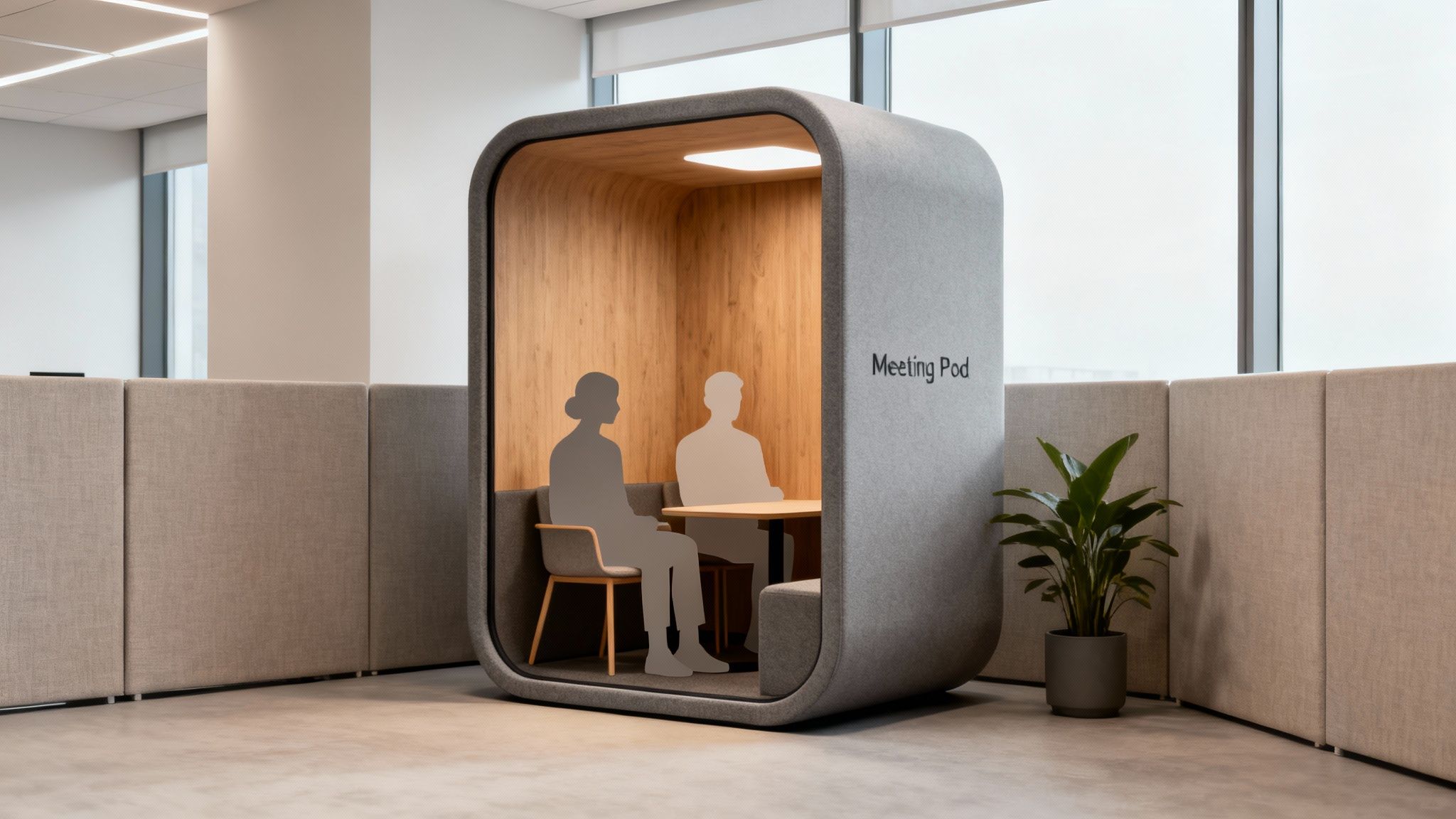
Enter the rise of acoustic furniture and most notably, private meeting pods and phone booths. These self-contained, sound-absorbing structures provide on-demand privacy and quiet within a busy open-plan layout. They are the perfect solution for confidential calls, one-to-one video meetings or simply an hour of uninterrupted concentration.
Implementing Acoustic Solutions Effectively
For UK businesses, especially in high-density areas like London or Cambridge, pods offer a flexible and cost-effective alternative to building permanent meeting rooms. Companies like Unilever and Cisco have successfully integrated them into their open-plan offices to augment traditional spaces. This is not just a corporate trend; NHS trusts are also using pods for confidential patient-related calls, proving their value across sectors.
Successful acoustic design is a combination of elements. Effective noise reduction in the workplace involves more than just adding a few pods; it’s a holistic strategy.
To implement acoustic solutions successfully:
- Conduct an Audit: Start with a professional acoustic survey to identify noise hotspots and reverberation issues.
- Think Beyond Pods: Use a layered approach. Combine pods with acoustic wall panels, ceiling baffles and high-backed furniture to absorb sound throughout the space.
- Prioritise Pod Placement: Position phone booths and meeting pods near high-traffic or collaborative zones to make them easily accessible without disrupting quiet areas.
- Specify for Purpose: Ensure any pod you select has adequate ventilation, lighting, power and a high acoustic rating (a 30dB+ reduction is a good benchmark) to be truly effective.
The GIBBSONN Interiors Approach
At GIBBSONN Interiors we specialise in creating acoustically balanced environments for businesses across Hertfordshire and Essex. We do not just supply pods; we design comprehensive acoustic strategies tailored to your floor plan and work culture. We partner with leading manufacturers like Framery and BlockO to provide high-performance solutions that integrate seamlessly into your design. From initial sound audits to the installation of modular pods and absorptive panels, we deliver a workplace where your team can finally hear themselves think.
3. Biophilic Design & Nature Integration
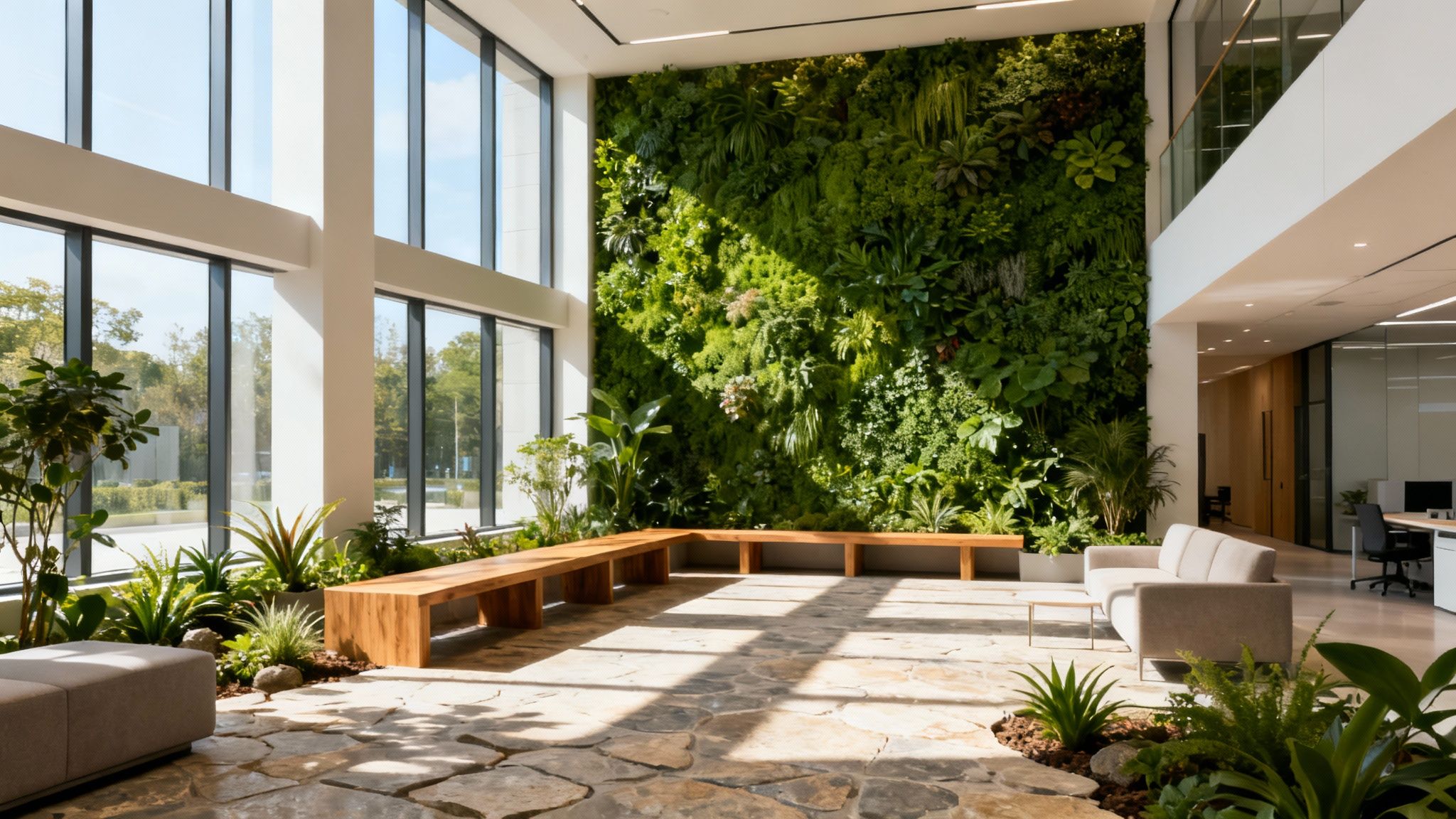
Bringing the outside in is no longer a niche preference; it’s a fundamental component of high-performing workplaces. Biophilic design is the practice of incorporating natural elements into the built environment. This is one of the most impactful modern office design trends because it directly addresses human wellbeing by tapping into our innate connection with nature.
The concept goes far beyond simply adding a few potted plants. It involves a holistic approach that integrates natural light, living green walls and natural materials like wood and stone. The goal is to create a sensory-rich environment that reduces stress, boosts creativity and improves cognitive function. Research shows that exposure to nature in the workplace can increase productivity by up to 15% and significantly improve air quality.
Implementing Biophilic Design Effectively
For UK businesses, particularly those in urban centres like London or Braintree, biophilic design offers a powerful antidote to sterile, artificial office settings. It enhances the employee experience, making the office a more desirable place to be. Global giants like Amazon, with its iconic Spheres, have popularised the concept, but the principles are highly scalable for SMEs.
A report by sustainability experts Terrapin Bright Green outlines the tangible economic benefits of biophilic design, from reduced absenteeism to improved staff retention.
To successfully integrate nature into your office:
- Maximise Natural Light: Prioritise layouts that allow daylight to penetrate deep into the floor plan. Use glass partitions instead of solid walls where privacy is not a key concern.
- Use Natural Materials: Incorporate wood flooring, stone-effect feature walls and furniture with natural textures and finishes.
- Install Strategic Greenery: Start with a high-impact living wall in a reception or breakout area. Select low-maintenance, air-purifying plants and consider a professional maintenance service.
- Create Views of Nature: If possible, arrange desks and social spaces to offer views of outdoor green spaces. Even a small outdoor terrace can provide immense value.
The GIBBSONN Interiors Approach
At GIBBSONN Interiors we believe that a connection to nature is essential for a healthy and productive workforce. We specialise in integrating biophilic principles into office designs across Hertfordshire and Essex. Our team helps you select the right natural materials, design effective lighting schemes and incorporate stunning plant installations that align with your brand and budget. We create spaces that not only look beautiful but also support the mental and physical wellbeing of your employees, making your office a true destination.
4. Sustainable & Circular Office Design
Beyond aesthetics, today’s offices must demonstrate environmental responsibility. Sustainable and circular design has moved from a niche interest to a core component of modern office design trends. This approach goes beyond recycling bins, embedding environmental principles into every choice from materials and furniture to energy consumption.
The goal is to create spaces that are healthier for people and the planet. This involves prioritising reclaimed, recycled and responsibly sourced materials like FSC-certified timber and low-VOC (volatile organic compound) paints. It also champions circular economy principles where products and furniture are designed for repair and reuse to minimise landfill waste. This trend directly supports corporate ESG (Environmental, Social, and Governance) commitments and resonates powerfully with an eco-conscious workforce.
Implementing Sustainable Design Effectively
For UK businesses, adopting sustainable practices is both an ethical choice and a commercial advantage. It can reduce long-term operational costs and enhance brand reputation. Leading organisations like Patagonia and Microsoft have set a high bar, using reclaimed materials and targeting net-zero carbon refurbishments.
To implement sustainable design successfully:
- Prioritise a Lifecycle View: Assess the environmental impact of materials from creation to disposal before making selections.
- Specify Certified Materials: Insist on products with recognised certifications like FSC for timber, and choose low-VOC or zero-VOC paints, adhesives and finishes.
- Embrace Modularity: Select modular furniture that can be easily reconfigured, repaired or reused as your business needs change.
- Plan for Deconstruction: Design your fit-out with its end-of-life in mind, making it easy to recover and recycle materials rather than sending them to landfill.
The GIBBSONN Interiors Approach
At GIBBSONN Interiors we integrate sustainability into the core of our fit-out projects across London, Hertfordshire and Essex. We believe a responsible design process minimises environmental impact while maximising value for our clients. We work with our supply chain to source sustainable materials, specify energy-efficient systems like LED lighting with occupancy sensors and meticulously plan our projects to minimise construction waste. By focusing on longevity and circular principles we help you create a workplace that is not only beautiful and functional but also fundamentally better for the planet. Learn more about creating sustainable office spaces.
5. Wellness-Focused & Ergonomic Office Design
The pandemic fundamentally shifted our expectations of the workplace, placing employee health and wellbeing front and centre. This has accelerated the rise of wellness-focused design as a non-negotiable part of modern office design trends. It’s no longer enough for an office to be functional; it must actively support the physical and mental health of its occupants.
This approach goes far beyond simply providing comfortable chairs. It involves a holistic strategy that considers everything from air quality and lighting to layouts that encourage movement. The understanding that a healthy, comfortable employee is a productive one has moved ergonomic standards from a specialist requirement to a universal expectation. Companies now recognise that investing in wellbeing is a direct investment in their people.
Implementing Wellness-Focused Design
For UK SMEs, prioritising wellness is a powerful tool for attracting and retaining top talent. It demonstrates a culture of care that resonates deeply in today’s competitive job market. Post-pandemic, organisations like the NHS have been actively implementing enhanced ergonomic standards, proving this is a critical consideration across all sectors. This trend is about future-proofing your workplace against absenteeism and creating an environment where staff can thrive.
Effective implementation requires a multi-faceted approach. Explore more on the importance of wellbeing in the workplace to understand its full impact.
To create a genuinely wellness-focused office:
- Prioritise Ergonomics: Invest in high-quality, adjustable sit-stand desks, monitor arms and supportive seating.
- Optimise Lighting: Ensure desk areas receive at least 500 lux of light and use glare-control solutions. Maximise natural light where possible.
- Encourage Movement: Design layouts with visible, appealing staircases. Introduce standing meeting areas to break up sedentary work patterns.
- Manage Air Quality: Install monitoring systems that provide real-time feedback on air quality.
- Support Mental Health: Designate quiet zones, tech-free lounges or reflection rooms where employees can de-stress and refocus.
The GIBBSONN Interiors Approach
At GIBBSONN Interiors we integrate wellness into the very fabric of our office designs. We work with clients across Essex, Hertfordshire and London to create spaces that are not just aesthetically pleasing but are also ergonomically sound and conducive to mental clarity. We specify and install certified ergonomic furniture, design intelligent lighting schemes and plan layouts that promote a healthy, active work life. By focusing on the holistic wellbeing of your team we deliver a workspace that boosts morale, reduces stress and enhances productivity.
6. Technology-Integrated & Smart Office Spaces
The modern office is no longer just a physical space; it’s a connected digital ecosystem. Integrating smart technology is one of the fastest-growing modern office design trends, transforming static buildings into responsive, intelligent environments. This involves weaving digital systems like occupancy sensors, environmental controls and automated booking platforms into the very fabric of the workplace.
A smart office leverages data to enhance the employee experience and optimise operational efficiency. Imagine a workspace where lighting and temperature adjust based on who is in the room, where an app guides you to a free desk and where meeting rooms are booked seamlessly through your calendar. This is the reality for forward-thinking companies using technology to create friction-free, personalised and highly efficient work environments.
Implementing Smart Office Technology Effectively
For UK businesses, smart technology offers a powerful return on investment by providing data-driven insights into space utilisation. This helps facilities managers in places like Cambridge or Stansted make informed decisions, reducing wasted energy on empty floors and reconfiguring underused areas. It moves space management from guesswork to a precise science.
As tech giants like Microsoft have demonstrated, integrated systems are the backbone of a successful hybrid model. A platform that combines room booking with collaboration tools removes the logistical hurdles that can discourage staff from coming into the office.
To implement this trend successfully:
- Start with an Audit: Before investing, conduct a thorough audit of your existing technology and infrastructure to ensure compatibility.
- Prioritise Integration: Choose platforms that integrate seamlessly with your current systems, such as Google Calendar or Outlook, to maximise adoption.
- Focus on User Experience: Select intuitive, mobile-first apps. If the technology is difficult to use it will be ignored.
- Plan for Support: Ensure your IT team is prepared for the rollout and has a clear plan for ongoing maintenance and user support.
The GIBBSONN Interiors Approach
At GIBBSONN Interiors we demystify smart office technology for our clients across London, Essex and Hertfordshire. We believe technology should serve people, not the other way around. Our approach focuses on integrating systems that solve real-world problems, from eliminating meeting room clashes to reducing your building’s carbon footprint. We partner with leading tech providers to design and install robust, user-friendly solutions that make your office smarter, more efficient and a more enjoyable place to work.
7. Flexible, Modular & Reconfigurable Office Spaces
In a fast-paced business environment, agility is everything. The rigid, permanent office layout is giving way to a far more dynamic approach: flexible and modular design. This is one of the key modern office design trends for businesses that need to adapt quickly to organisational change, team growth or shifting work patterns.
Modular design uses demountable partitions, moveable furniture and adaptable systems to create spaces that can be reconfigured without major construction. A large open-plan area could be transformed into several team offices in a day, or a series of focus rooms could be merged into a project space with minimal disruption. This “plug-and-play” model future-proofs the office, ensuring the physical environment can evolve alongside the business.
Implementing a Modular Design
For UK businesses, particularly those in high-growth sectors, this trend offers a practical solution to uncertainty. Instead of committing to a costly and disruptive refit every few years, a modular approach allows for cost-effective adjustments. As leading furniture provider Steelcase notes, adaptable spaces are critical for supporting the continuous change that defines modern work.
To implement a flexible design successfully:
- Plan Ahead: Integrate modular infrastructure like demountable partitions and flexible power/data systems into the initial fit-out design.
- Choose Wisely: Invest in high-quality modular furniture and partition systems from reputable manufacturers that are designed for longevity.
- Document Everything: Create a clear plan of the current layout, including measurements and furniture positions, to streamline future changes.
- Empower Your Team: Train facilities staff on reconfiguration procedures to make the process efficient.
The GIBBSONN Interiors Approach
At GIBBSONN Interiors we specialise in designing and implementing flexible and modular office spaces for clients across London, Essex and Hertfordshire. We specify best-in-class demountable partition systems and source versatile furniture that allows your workspace to change as your needs do. Our planning process considers not just your current requirements but also your future growth potential, ensuring your office is a long-term asset, not a short-term solution.
8. Brand-Aligned & Identity-Driven Office Design
The modern office is no longer just a place to work; it’s a powerful tool for brand storytelling. Moving beyond generic corporate aesthetics, this trend transforms the physical workspace into a three-dimensional expression of a company’s culture, values and mission. This is one of the most impactful modern office design trends because it embeds brand identity into the very fabric of the workplace.
An identity-driven design uses colour palettes, materials and graphics to communicate what a company stands for. For a financial firm this might mean a sophisticated design with rich textures that conveys trust. For a creative agency it might be a quirky, playful environment that reflects their brand personality. The goal is to create an authentic space that strengthens employee connection to the company’s purpose.
Implementing Brand-Aligned Design Effectively
For UK SMEs, creating a brand-aligned office is a strategic investment in culture and marketing. It helps differentiate your business and fosters a strong sense of belonging among employees. A workspace that genuinely reflects company values makes staff feel like they are part of something bigger, which can boost morale and retention.
As detailed by Work Design Magazine, a branded environment should be an authentic reflection of the company’s ethos, not just a superficial application of logos.
To implement this trend successfully:
- Define Brand Attributes: Start with workshops to identify the core values, personality and mission you want the space to communicate.
- Translate to Design: Create a clear design guide that translates brand ideas into tangible elements like materials, colours and furniture styles.
- Use Colour Strategically: Apply your brand colours thoughtfully as accents rather than overwhelming the entire space. Use them to guide wayfinding or highlight collaborative zones.
- Incorporate Custom Elements: Commission bespoke artwork or environmental graphics that tell your company’s story or celebrate its history.
The GIBBSONN Interiors Approach
At GIBBSONN Interiors we believe your office should be your most powerful brand asset. We specialise in helping businesses across London, Essex and Hertfordshire translate their unique identity into a compelling physical environment. We begin with a deep-dive brand discovery process, working with your team to understand your culture and business goals. Our designs weave your brand narrative into every detail, from reception to breakout spaces, creating a workplace that inspires your team and impresses your clients.
9. Diversity, Inclusion & Accessible Office Design
A truly modern office is one where every single employee feels they belong and can perform at their best. This is where inclusive and accessible design becomes a cornerstone of modern office design trends, moving far beyond basic compliance. It’s about creating environments that are genuinely welcoming to everyone, regardless of physical ability, neurodiversity, age, gender or cultural background.
This approach means proactively designing spaces that serve the widest possible range of human needs. This includes sensory-friendly quiet zones for neurodivergent employees, accessible routes for wheelchair users, gender-neutral facilities and quiet rooms for prayer or reflection. Forward-thinking companies like Microsoft and Google have demonstrated that this is a business and ethical imperative.
Implementing Inclusive Design Effectively
For UK businesses, embracing inclusive design is a powerful way to attract and retain a diverse talent pool. It sends a clear message that the organisation values every individual. An inclusive workplace is not just about ticking boxes on an equality act checklist; it’s about fostering a culture of belonging that is physically manifested in the office layout.
This means designing spaces that are intuitive and comfortable for everyone. By considering diverse needs from the start you avoid costly after-the-fact adjustments and build a workplace that is fundamentally more human-centric.
To implement inclusive design successfully:
- Consult Genuinely: Engage directly with neurodivergent staff and employees with disabilities to understand their specific needs and barriers.
- Go Beyond Compliance: Aim for best-practice universal design principles, not just the minimum legal requirements.
- Create Sensory Zones: Design dedicated spaces with controlled lighting, acoustics and minimal sensory input for focused work or respite.
- Standardise Adjustability: Make ergonomic, height-adjustable desks and seating a standard feature, not a special request.
- Ensure Inclusivity: Provide gender-neutral toilets and private multi-faith or reflection rooms to support all employees.
The GIBBSONN Interiors Approach
At GIBBSONN Interiors we believe that great design is inclusive design. We help businesses across London, Hertfordshire and Essex create workplaces that are accessible and welcoming to all. Our process begins with a deep dive into your company culture and the diverse needs of your team. We partner with you to integrate universal design principles seamlessly into your office fit-out, ensuring every space from the reception to the meeting rooms is thoughtfully considered. By focusing on sensory comfort and accessibility we design workspaces that foster a true sense of belonging.
10. Hospitality-Inspired & Experience-Focused Office Design
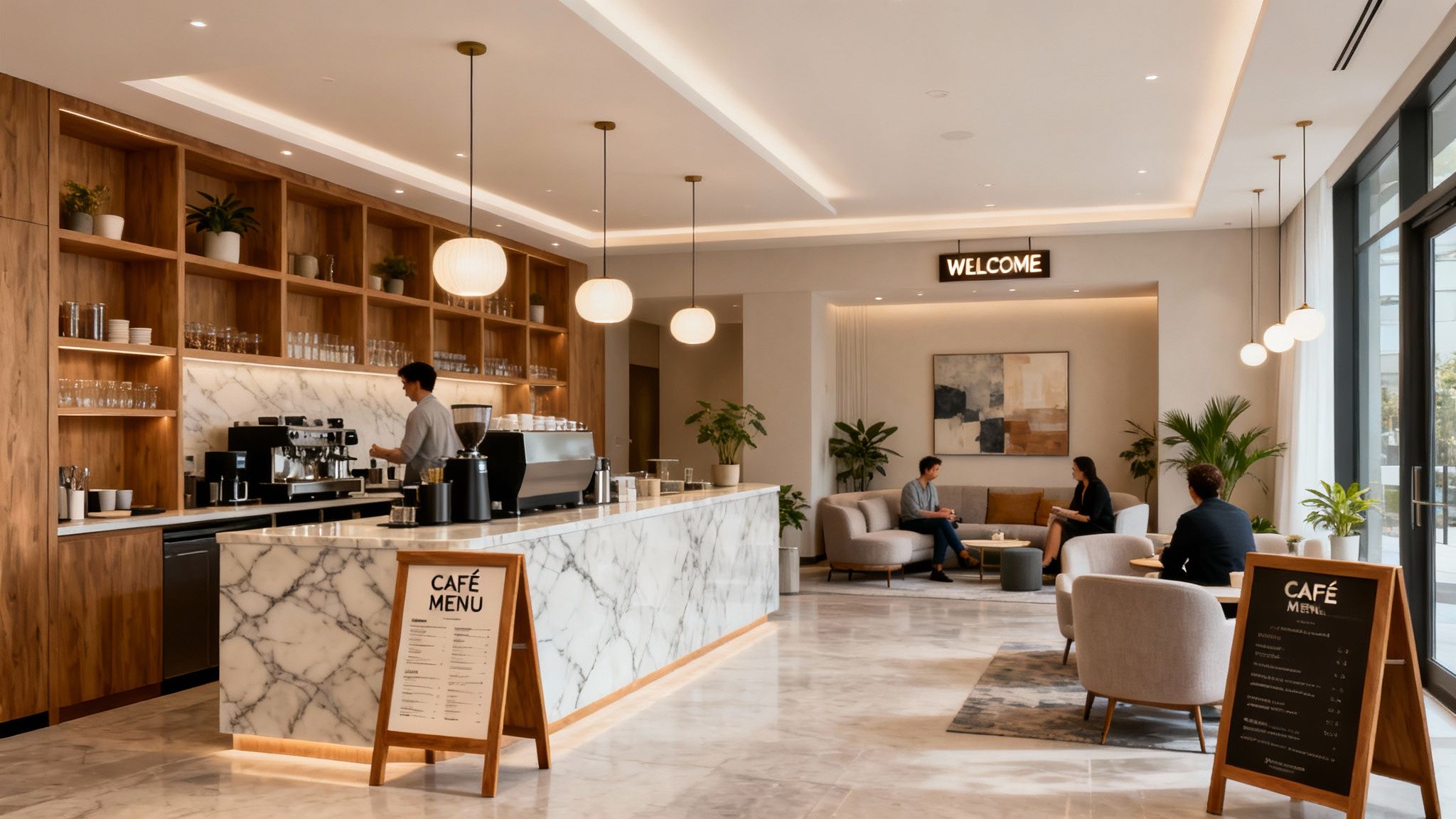
To compete with the convenience of home the modern office must become a destination. This shift has given rise to one of the most impactful modern office design trends: drawing inspiration from the hospitality sector. This approach transforms the workplace from a purely functional space into an experience-focused environment, borrowing cues from boutique hotels and artisan coffee shops to create a place where employees genuinely want to be.
This trend is about more than just aesthetics; it’s a strategic move to boost employee engagement and retention. It involves integrating high-quality amenities like barista-style coffee bars, comfortable lounges with premium finishes and even concierge-style services. The goal is to create a welcoming, supportive and stimulating atmosphere that fosters a strong sense of community.
Implementing Hospitality-Inspired Design
For UK SMEs, adopting a hospitality mindset does not require a five-star budget. It’s about being intentional with the employee journey from the moment they walk in. The reception area, for example, sets the tone. Replacing a formal desk with a welcoming ‘host’ point and comfortable seating immediately shifts the dynamic. This approach is confirmed by workplace strategists at Steelcase, who note that amenity-rich spaces are crucial for attracting talent in a hybrid world.
To implement this trend effectively:
- Elevate the Welcome: Focus on the reception area first. Use warm lighting, comfortable furniture and perhaps a high-quality coffee machine to make a strong first impression.
- Create Social Hubs: Design breakout spaces that feel more like a local café than a corporate canteen. Use varied seating and quality furniture.
- Focus on the Details: Small touches make a big difference. Invest in premium finishes, curated artwork, plants and even a signature scent to create a high-end experience.
- Invest in Service: Train front-of-house staff in hospitality standards. A friendly, helpful welcome is just as important as the physical design.
The GIBBSONN Interiors Approach
At GIBBSONN Interiors we specialise in creating destination workplaces that feel both premium and authentic. We help businesses in Essex, Hertfordshire and London integrate hospitality principles to build a stronger company culture. We start by understanding your brand and what makes your team tick, then design welcoming reception areas and vibrant social hubs that make your office the heart of your organisation. By focusing on creating positive daily experiences we deliver spaces that not only look incredible but also improve employee satisfaction.
10-Point Comparison of Modern Office Design Trends
| Trend / Design | 🔄 Implementation complexity | ⚡ Resource requirements | 📊 Expected outcomes |
|---|---|---|---|
| Hybrid Working Spaces & Activity-Based Working (ABW) | Medium–High | Moderate–High | Improved utilisation, higher autonomy |
| Acoustic Innovation & Private Meeting Pods | Low–Medium | Moderate | Better speech privacy, reduced distraction |
| Biophilic Design & Nature Integration | Medium | Moderate | Reduced stress, ~15% productivity lift |
| Sustainable & Circular Office Design | Medium–High | High upfront | Lower carbon footprint, ESG benefits |
| Wellness-Focused & Ergonomic Office Design | Medium | Moderate–High | Reduces health issues, lower absenteeism |
| Technology-Integrated & Smart Office Spaces | High | High | Data-driven optimisation, energy savings |
| Flexible, Modular & Reconfigurable Office Spaces | Medium | Moderate | Rapid reconfiguration, lower future costs |
| Brand-Aligned & Identity-Driven Office Design | Medium | Moderate–High | Stronger employee identity, recruitment boost |
| Diversity, Inclusion & Accessible Office Design | Medium–High | Moderate | Greater inclusion, improved belonging |
| Hospitality-Inspired & Experience-Focused Office Design | Medium–High | High | Enhanced employee experience, better retention |
Bringing Your Modern Office Vision to Life
The landscape of the workplace has fundamentally shifted and the trends we’ve explored are not fleeting fashions. They are strategic responses to a new era of work. From the dynamic flexibility of Activity-Based Working to the essential human connection offered by biophilic design, these modern office design trends represent a profound change in how we perceive the purpose of the office. It’s no longer just a building with desks but a central hub for collaboration, innovation and culture.
The common thread weaving through these trends is a commitment to a people-first approach. The most successful workspaces of tomorrow will be those that prioritise employee wellbeing, offer genuine choice and provide the tools for teams to do their best work. As a facilities manager in Chelmsford or a business owner in Bishop’s Stortford, embracing these concepts is no longer a luxury, it’s a competitive necessity.
Your Key Takeaways and Next Steps
To move forward from inspiration to implementation, it’s crucial to distil these ideas into a clear action plan.
- Flexibility is Paramount: The one-size-fits-all office is obsolete. The future is modular, reconfigurable and adaptable to the needs of hybrid teams.
- Wellbeing Drives Productivity: A healthy team is a productive team. Integrating biophilic design, providing ergonomic furniture and creating quiet zones are direct investments in your company’s performance. The Royal Institute of British Architects (RIBA) consistently highlights the link between thoughtful design and occupant health.
- Technology is the Enabler: A truly modern office uses technology to create a seamless experience, from smart booking systems to high-quality audiovisual equipment.
- Sustainability is Non-Negotiable: Conscious design is now a cornerstone of corporate responsibility. Prioritising recycled materials and energy-efficient systems reduces your environmental impact and enhances your brand reputation.
The most crucial step is to audit your current space against your company’s future goals. Don’t simply replicate your old layout. Engage with your team to understand their needs and challenges. Survey your employees, analyse space utilisation data and identify the friction points in their daily work. This research will ensure your investment in a new office design delivers tangible returns.
Whether your priority is installing acoustic pods in a busy London hub or undertaking a full sustainable fit-out in Essex, the journey begins with a clear vision. By strategically combining these modern office design trends you can create more than just a beautiful space. You can build a destination, a dynamic, supportive and inspiring environment that empowers your team and propels your business forward.
Ready to transform your workspace?
Speak to the Gibbsonn Interiors team today.
Contact Us