
An office manager signs off a bright new open-plan layout. The desks look great, daylight moves right through the floorplate, and the client tour goes well. Then the first week of real use begins. Sales calls spill into shared space, boardroom chats carry into the corridor, and the room that looked calm in a render suddenly sounds busy.
That's usually the point when glass doors and windows stop being a style choice and start becoming a specification problem. In a commercial fit-out, the right glass setup has to do several jobs at once. It has to let light through, support privacy, meet building standards, work with the programme on site, and still make sense when the lease ends.
Table of Contents
- Your 2026 Office Balancing Openness and Focus
- Choosing Your System 2026 Glass Door and Window Types
- Beyond the Pane Glazing Materials and Finishes
- Performance Matters Acoustic and Fire Safety Standards
- Solving for Privacy and Security in Your 2026 Office
- The Project Lifecycle Installation Costs and Dilapidations
- Your Specification Checklist and Procurement Guide for 2026
Your 2026 Office Balancing Openness and Focus
Most clients want the same thing at the start. They want an office that feels open, modern, and easy to move through. They also want quiet spaces for calls, private meetings, and concentrated work. Those two aims can sit together, but only if the glass doors and windows are chosen with a clear purpose.
A simple example proves the point. A leadership team may want a full-height glazed boardroom because it keeps the floor looking bigger and makes the office feel connected. That works well until confidential discussions begin. If the partition looks sleek but the acoustic performance is weak, the room becomes a display box rather than a useful workplace tool.
That's why good glass specification starts with behaviour, not appearance.
Practical rule: if a room needs private speech, the partition has to be chosen for performance first and aesthetics second.
In growing businesses across Hertfordshire, this usually comes down to three workplace needs:
- Open collaboration: teams need sightlines, shared light, and simple wayfinding.
- Focused work: people still need places where they can think without constant interruption.
- Flexible use: rooms often shift between solo work, quick calls, formal meetings, and client visits.
Glass partitions solve that tension better than solid stud walls in many fit-outs because they preserve light and visual connection. But they only solve it properly when the detail is right. A frameless screen in a breakout area can be ideal. The same screen used for a sensitive meeting room can be the wrong product entirely.
For businesses reviewing premises in places such as Bishop's Stortford, the smarter move is to treat each glazed element as part of a working system. Doors, frames, seals, glazing build-up, manifestation, and hardware all affect the final result. Miss one part and the whole package underperforms.
Choosing Your System 2026 Glass Door and Window Types
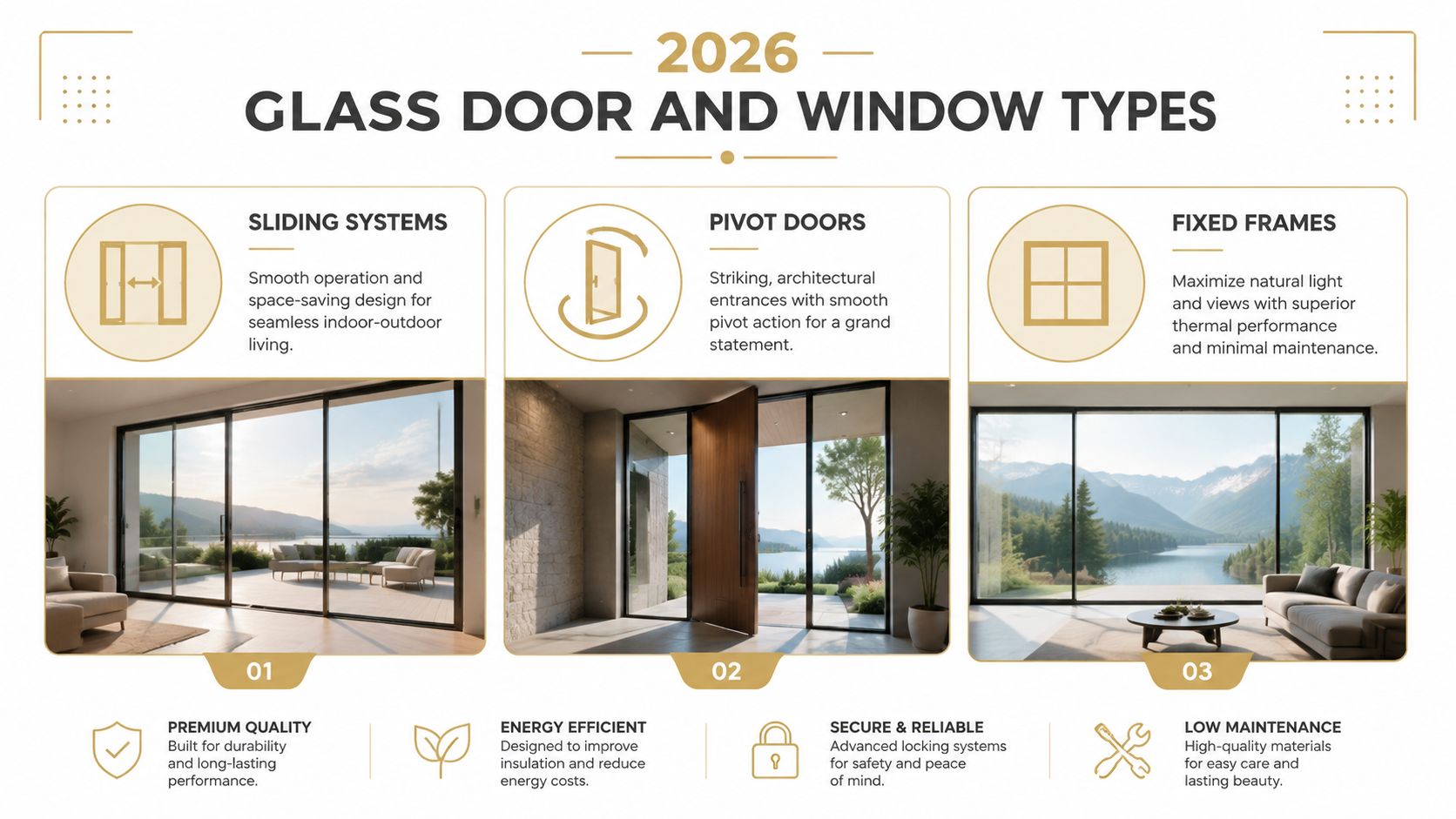
The first decision is the system itself. Clients often jump straight to glass type, but the operating style and frame choice shape almost everything that follows. They affect sightlines, swing clearance, acoustic potential, maintenance, and how much tolerance the installer has on site.
Frameless systems
Frameless glazing gives the cleanest look. It suits reception areas, executive spaces, and meeting rooms where the design brief calls for minimal visual interruption. The attraction is obvious. Light passes through easily and the office feels larger.
The trade-off is performance. Frameless systems can work well, but they leave less room for heavy-duty acoustic detailing than framed alternatives. Door edges, head details, and perimeter seals matter more because there's less structure available to hide technical upgrades.
For many clients, frameless works best where appearance leads and privacy demand is moderate.
Framed systems
Framed systems are more forgiving and often more durable in daily use. They suit meeting suites, cellular offices, and areas where repeated door use, stronger acoustic control, or tighter coordination with ceilings and walls matters.
A slim frame can still look smart. It also gives the manufacturer and installer more control over seals, interfaces, and door performance. In practice, that often means fewer surprises once the office is occupied.
A partition that looks slightly heavier on day one often performs better on day one hundred.
This is one reason many fit-out teams favour framed systems for rooms where clients will judge the office by how it sounds, not just how it photographs.
Sliding doors
Sliding glass doors help when space is tight. They remove the swing arc, keep circulation routes cleaner, and can make a compact room easier to use. They're often a sensible answer in smaller offices or where furniture layout leaves limited clearance.
But they are not a cure-all. Sliding systems usually need careful thought around privacy, sealing, and user habits. If a room needs a stronger acoustic seal, a sliding door may not be the strongest option. It can still be right, but it needs an honest discussion early.
For anyone reviewing window styles alongside internal layouts, this guide to the benefits of casement windows gives a useful comparison on operation and ventilation thinking, even though the project context there is domestic rather than commercial.
Pivot doors
Pivot doors make a statement. They suit client-facing areas, high-spec boardrooms, and spaces where the entrance itself is part of the design language. They can look refined and architectural, especially with taller glazed openings.
The catch is that pivot doors need room, accurate setting out, and a floor and ceiling build-up that can accept the hardware. They also demand careful coordination with access control, hold-open requirements, and adjacent finishes.
A pivot door can be brilliant in the right place and awkward in the wrong one.
Glass Partition System Comparison 2026
| System Type | Best For | Key Consideration |
|---|---|---|
| Frameless | Reception areas, breakout zones, design-led meeting rooms | Looks minimal but needs careful detailing to avoid weak acoustic performance |
| Framed | Boardrooms, private offices, heavily used rooms | Slightly stronger visual line, but usually more practical for seals and durability |
| Sliding | Tight layouts, compact rooms, areas with limited door swing space | Saves space, though privacy and sealing need close attention |
| Pivot | Feature entrances, premium meeting spaces, statement rooms | Strong visual effect, but needs precise coordination and space around the opening |
A useful starting point is to match the room purpose to the system, then refine the glazing from there. Clients comparing options for a wider workplace programme often start with office partition systems before narrowing down the exact door and glazing build-up.
Beyond the Pane Glazing Materials and Finishes
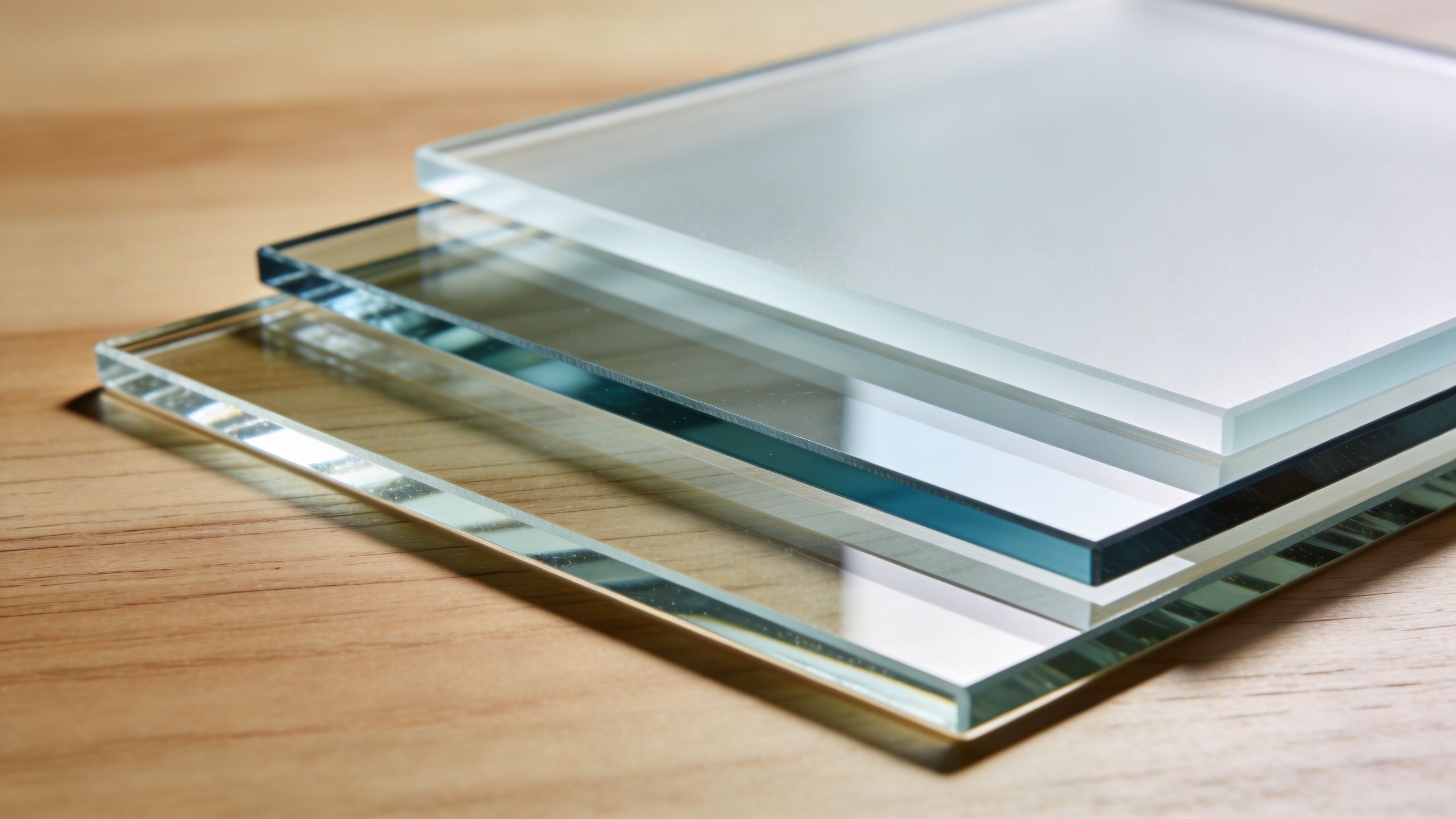
Once the system is chosen, the next question is the glass itself. The glass decision significantly impacts whether commercial projects gain long-term value or incur avoidable problems. The right pane build-up changes heat loss, user comfort, speech privacy, and safety.
Single, double, or triple glazing
Single glazing still appears in older stock, especially in buildings that haven't had a meaningful refurbishment for years. It's usually the weak point when clients complain about cold spots, external noise, or poor comfort around glazed lines.
The key historical shift is well worth knowing. The concept of double glazing began in Scotland in the 1870s, and modern units have moved far beyond that early approach. A modern double-glazed unit with a Low-E coating can reduce heat loss by up to 75% compared to old single glazing and cut energy bills by 20-30% according to this history of window development and thermal coatings.
For most commercial external applications, double glazing is the normal baseline. Triple glazing can be the right answer where thermal performance is especially important, but it brings more weight, more depth, and sometimes more cost and coordination pressure. It should be selected for a reason, not because it sounds better on paper.
Toughened and laminated glass
Clients often hear these terms early, and they aren't interchangeable. Toughened glass is heat-treated so that, if it breaks, it shatters into smaller pieces. Laminated glass includes an interlayer that helps hold the pane together.
In practical fit-out work, laminated glass often earns its place when acoustic control matters, while toughened glass is commonly chosen where impact safety and door leaf use are key. Some assemblies combine both characteristics, depending on the need and the system design.
What matters most is that the safety choice follows the location. A glazed door, a full-height screen beside circulation, and an external window line do not always need the same specification.
On site reality: if the design team leaves glazing decisions too late, the installer ends up solving a performance problem that should have been fixed at design stage.
Finishes that change how glass works
Low-E coatings matter because they help manage heat transfer without turning the office into a dark box. In commercial refurbishments, they can improve comfort while keeping the look clean and modern.
Tinting, solar control film, and surface treatments also come into play when glare becomes a problem, especially on elevations with strong daylight. For clients weighing up that route, it's worth taking time to learn about tinting from The Tint Guy so the discussion starts with the effect on privacy, glare, and appearance rather than just colour.
Material choices also need to sit within the wider fit-out approach. Projects trying to reduce waste and improve long-term performance usually benefit from pairing glazing decisions with broader environment-friendly material choices, especially where replacement cycles and maintenance are under review.
A good rule is simple. Don't buy glass doors and windows by thickness alone. Buy them for the job they need to do.
Performance Matters Acoustic and Fire Safety Standards
Design intent means very little once a room is occupied. If speech leaks, if a corridor line feels exposed, or if compliance questions appear during approval, the problem is no longer visual. It becomes operational.
What acoustic ratings actually mean
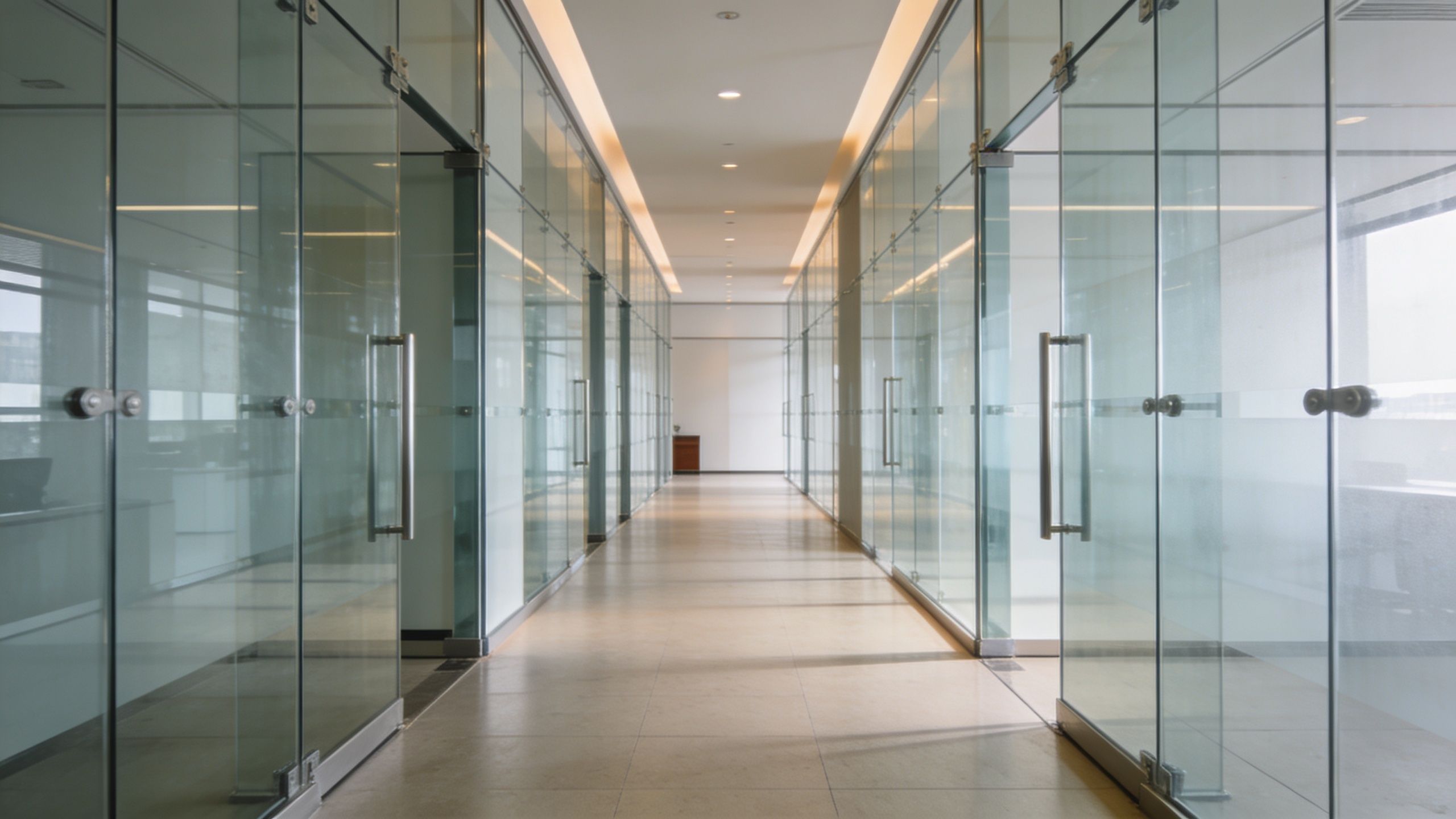
In plain terms, acoustic ratings tell a client how much sound a partition can resist. For office use, speech privacy is usually the issue that matters most. A meeting room that still broadcasts conversation into open plan hasn't done its job.
UK acoustic guidance used in commercial fit-outs points to a minimum Rw 40 dB for meeting room partitions. A standard 6mm glass pane offers around 31 dB, while specialised acoustic laminated glass can achieve over 42 dB, as set out in the UK government guidance on acoustic design standards. That gap is why so many attractive glass meeting rooms disappoint in use.
The number alone doesn't tell the whole story, though. Acoustic performance relies on the full assembly. Glass type matters, but so do perimeter seals, door drops, frame interfaces, ceiling void treatment, and flanking paths around the partition.
An office partition with a poor acoustic rating is just a visual barrier. For true productivity, you need a system rated to at least Rw 40 dB to block out distracting speech and create a space for deep work.
For clients planning private rooms, pods, or enclosed touchdown areas, properly specified acoustic office partitions should sit near the top of the brief, not as an add-on after furniture planning.
Why specification fails on site
The common mistake is buying a glass partition by appearance and assuming performance will follow. It won't. A great-looking room can fail acoustically because of tiny gaps at the head track, weak door seals, or services passing through the ceiling void without proper treatment.
Three checks usually reveal whether a proposal is realistic:
- Door detail: the door set must match the partition performance. The best glass in the world won't rescue a weak door edge.
- Perimeter condition: junctions to slab, raised floor, and walls need proper closure. Untreated gaps undo good specification fast.
- Room purpose: confidential calls, HR meetings, and finance reviews need a different standard from a casual project room.
Fire safety needs an early decision
Fire-rated glazing is one of the least forgiving areas of the job. It needs to be resolved early because it affects frame type, door hardware, certification, and adjacent construction. Late changes usually cost time and money.
The broad principle is straightforward. Some glazed elements are there to hold a fire line and protect escape routes. Others are not. A fit-out team has to know which is which before ordering starts. That means checking the fire strategy, the tenancy layout, and the route through the building.
This also links back to thermal compliance where glass doors and windows form part of the building envelope. Under Approved Document L2A for new non-domestic buildings, windows must achieve a maximum U-value of 1.4 W/m²K and doors 1.8 W/m²K, as outlined in the UK Part L requirements for non-domestic buildings. Clients don't need to memorise the numbers, but the project team does.
In short, acoustic and fire performance can't be value-engineered by guesswork. They need deliberate design choices, tested products, and proper installation.
Solving for Privacy and Security in Your 2026 Office
Privacy is the part clients worry about most when they first consider glass doors and windows. That concern is fair. Clear glazing can make a space feel exposed if the design doesn't reflect how people work.
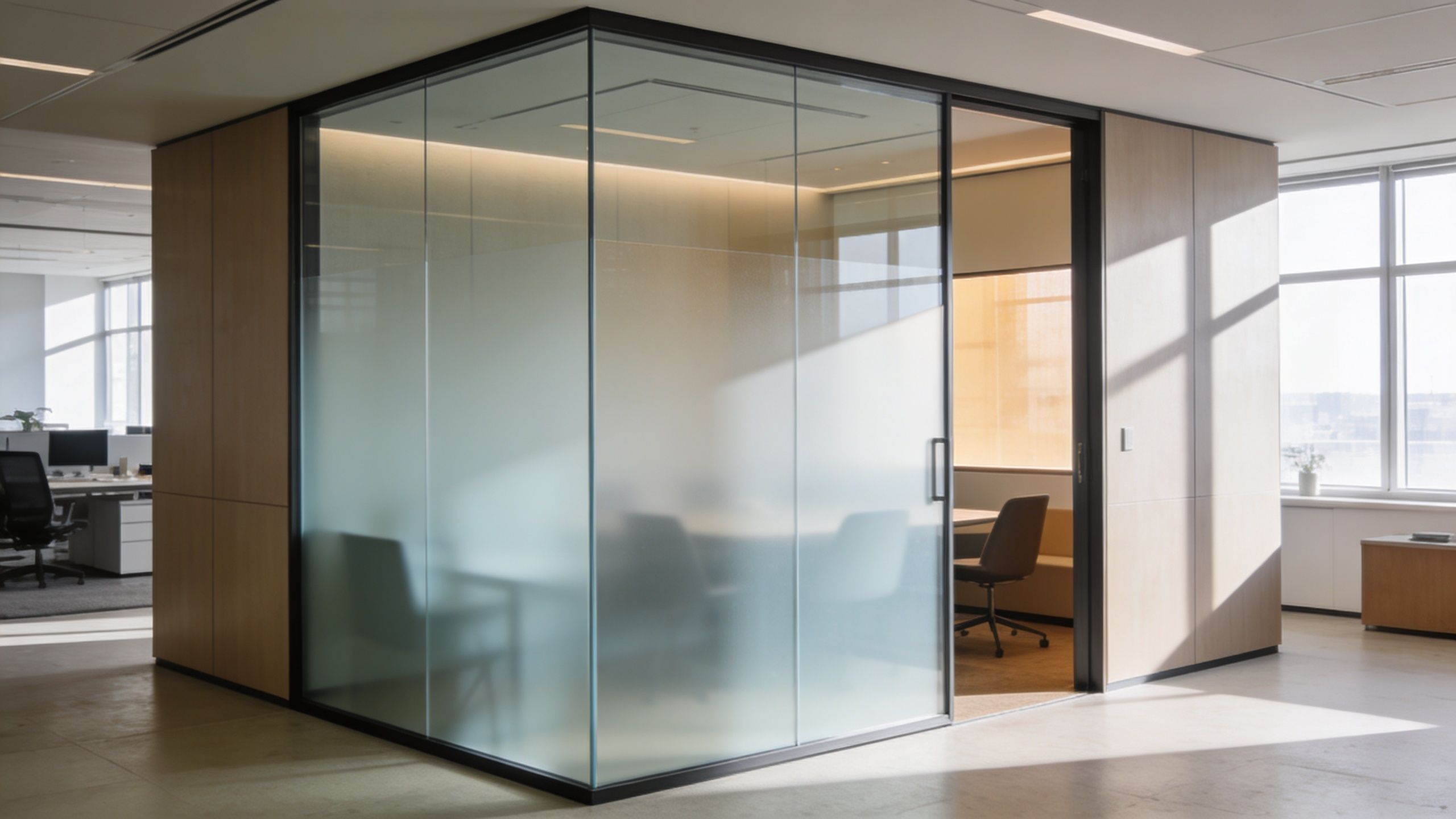
Privacy without losing light
The simplest fix is often film. Frosted bands, graduated manifestation, and full-height obscure treatments can all soften views without turning the room into a closed box. They're quick to apply and relatively easy to change later if the office layout shifts.
Etched effects and printed graphics do more than hide people. They can also support branding, break up large glazed runs, and reduce the awkward feeling of being fully visible in every meeting. For many offices, that balance is enough.
Then there are built-in options with a more integrated finish:
- Ceramic fritting: this gives a permanent pattern fused into the glass. It's durable and suits spaces where a film might feel temporary.
- Integral blinds: sealed within a glazed unit, these help when users want a familiar privacy control without surface maintenance.
- Switchable glass: useful where a room alternates between open display and private use, though the budget and control setup need early review.
Layering products for better results
The best privacy strategy is usually layered rather than singular. A boardroom might use acoustic laminated glazing, a framed door set, manifestation at eye level, and blinds or switchable glass where sensitive reviews happen. A casual project room may only need partial frosting.
That layered thinking is why many clients also look at enclosed pod systems when the base building can't easily support more construction work. Products from Vetrospace, BlockO, and Framery show how glazing, ventilation, acoustic treatment, and privacy can work as one package rather than separate parts.
This product video gives a useful sense of how enclosed glazed spaces can support privacy within an open office:
Security is part of the same conversation. In most offices, the issue isn't forced entry in the domestic sense. It's controlled access, line of sight, and making sure private activity isn't unnecessarily exposed. A finance room, HR room, or senior leadership area may need selective screening as much as it needs a good lock.
Privacy works best when people don't have to think about it. If staff are adjusting themselves around the room, the room isn't doing its job.
The Project Lifecycle Installation Costs and Dilapidations
A low quote can look attractive in procurement. It rarely tells the whole story. Glass packages succeed or fail over the life of the tenancy, not just on the day the order is placed.
The quote is only the starting point
The headline figure usually covers the visible items. Glass, frames, doors, ironmongery, and installation labour are easy to see. What clients need to probe are the hidden pressures around them. That includes setting out, coordination with ceilings and flooring, making good, access restrictions, programme risk, and whether the existing structure can accept the new load and fixing detail.
A cheap glass partition can become expensive if it arrives before the floor is ready, if site dimensions shift, or if the ceiling package wasn't coordinated. Those are avoidable problems, but only if the delivery team treats the partition as part of the fit-out, not as an isolated product order.
What catches clients out at lease end
The bigger blind spot is often the end of the lease. Bespoke glazed partitions installed during a tenancy can trigger reinstatement obligations, and the RICS dilapidations guidance warns that removal and making good can easily run into thousands. That's not a minor footnote. It can reshape the true cost of the project.
The legal detail turns on the lease, the licence for alterations if one exists, and how the works were documented at the time. Some clients assume that a high-quality upgrade will always be welcomed by the landlord. That assumption is risky. A landlord may still require reinstatement, especially if the installed layout doesn't suit the next tenant.
For occupiers planning projects in Cambridge, where office space is often under close scrutiny, it makes sense to review these points before the design is frozen:
- Licence position: check whether landlord approval is needed and what the approval says about removal.
- Fixing method: a demountable system can be easier to alter or remove than heavily bespoke construction.
- Making good scope: ask what happens to floors, ceilings, decorations, and services if the partition comes out.
- Record keeping: keep as-built information and approvals organised. Missing paperwork causes trouble later.
A better way to budget
A sound budget has two layers. The first is the capital cost to buy and install the glass package. The second is the lifecycle view, which includes maintenance, adaptability, and lease-exit exposure.
That's why a more expensive system can still be the better value choice. If it performs properly, lasts well, and can be reconfigured or removed with less damage, it may protect the business far better than a cheaper first cost option.
Clients don't need to fear bespoke glazing. They just need to buy it with the full project path in view, from first sketch to final handback.
Your Specification Checklist and Procurement Guide for 2026
Good procurement starts with clear questions. If a client can answer what the room is for, how private it needs to be, and what constraints sit in the building, most poor-fit products fall away quite quickly.
Questions worth asking before approval
Use this as a working shortlist when reviewing proposals for glass doors and windows:
- What is the room used for? A collaboration booth, formal boardroom, and call room should not share the same default spec.
- What acoustic level is required? If speech privacy matters, ask for the tested partition and door performance, not just the glass description.
- Does the glazing need to support thermal compliance? This matters especially for external elements and refurbishment works affecting the building envelope.
- What safety glass is being proposed? The supplier should explain why the selected glass suits the location and the use.
- How is privacy handled? Film, fritting, blinds, and switchable glass each solve different problems.
- How will the system connect to floor and ceiling conditions? Good drawings here often prevent expensive snagging later.
- What happens at lease end? Ask whether the system is demountable, what making good is likely to involve, and what the lease says.
Client check: if a quotation lists attractive finishes but says little about seals, interfaces, and compliance, it isn't detailed enough yet.
Choosing the right delivery partner
A strong fit-out partner should be able to do more than price a partition line. They should understand programme, approvals, coordination with other trades, and the practical side of occupancy once the office goes live.
That matters even more in fast-moving commercial locations such as London, where access rules, programme pressure, and landlord requirements can shape the whole installation. The right partner should be comfortable with technical detail, but also able to explain trade-offs in plain English.
Look for a team that can show consistent commercial work, manage design and build in one line of responsibility, and deal with the less glamorous parts of the job such as surveys, tolerances, sequencing, and handover information. Those are the areas that usually separate a smooth project from a stressful one.
A glass package should look good, perform properly, and leave no nasty surprises behind. If all three boxes are ticked, the office will feel the benefit every day.
Ready to transform your workspace? Speak to the GIBBSONN Interiors team today. Looking for bespoke pod solutions or interior support? We're here to help. Contact Us