
The flooring usually gets ignored until it starts causing trouble. The carpet tiles are stained near the tea point, the vinyl by reception is lifting at the edges, chairs don’t roll properly, and every footstep seems louder than it should. At that point, replacing the floor isn’t just a decorating job. It becomes a business decision about downtime, staff comfort, maintenance, and how long the next solution will last.
That’s why smart office flooring options need a harder look than most buyers give them. A floor has to work with the way people move, clean, meet, and concentrate. It also has to stand up to real office wear, not just look good on a sample board. For anyone weighing up refurbishment choices, it also helps to compare ideas outside the UK market, such as these flooring solutions for Denver businesses, because many of the practical trade-offs are the same.
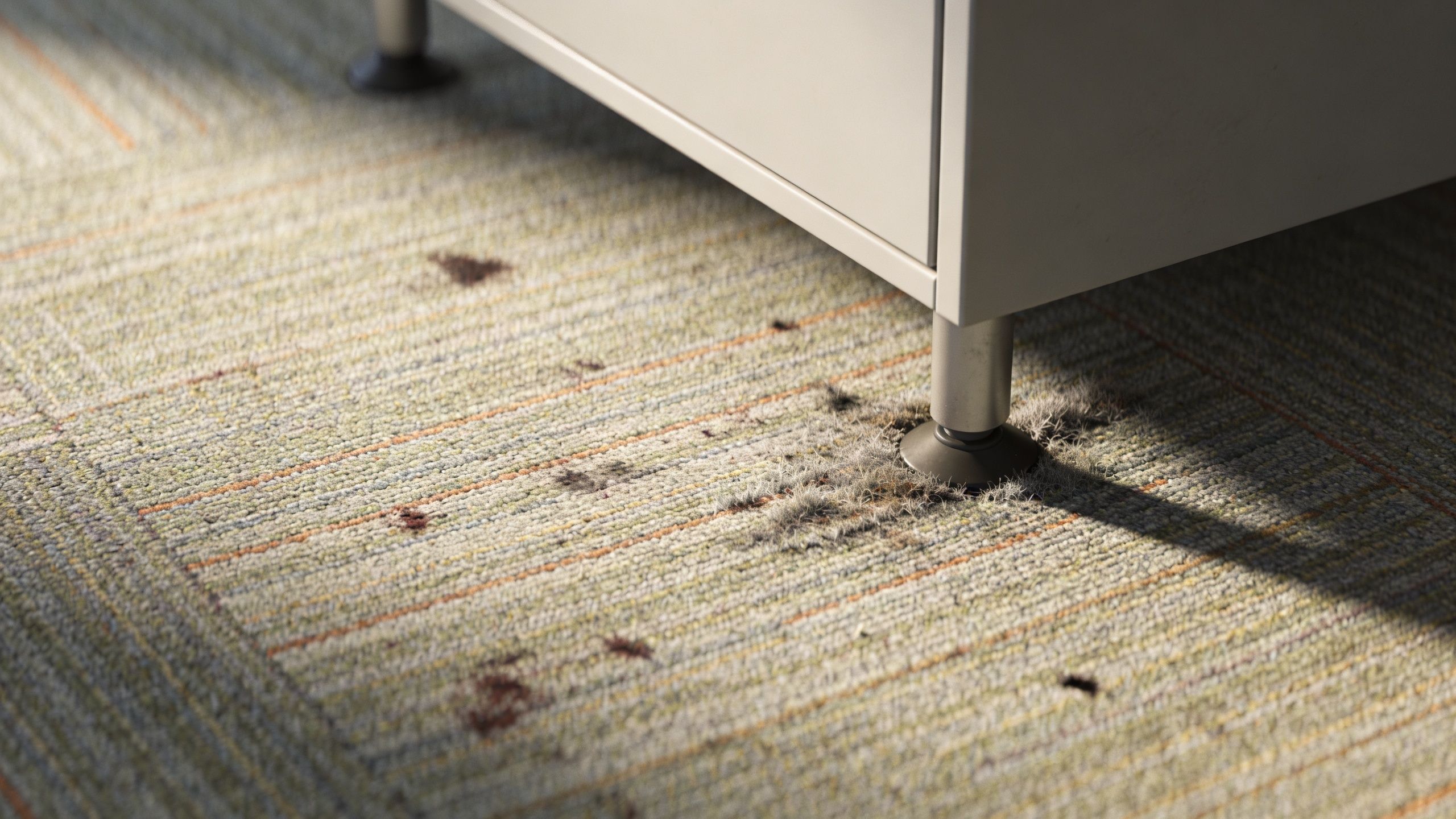
Table of Contents
- Your 2026 Guide to Choosing the Right Office Flooring
- The Main Contenders An Overview of Office Flooring Types
- How to Compare Performance Durability Acoustics and Maintenance
- A Closer Look at Today’s Most Popular Flooring Choices
- Understanding the True Cost A UK Budgeting Guide for 2026
- Installation Refurbishment and Dilapidations Tips
- Making the Right Choice for Your Workspace
Your 2026 Guide to Choosing the Right Office Flooring
Most office flooring options look sensible at tender stage. The problems show up later. Hard floors can sound sharp and busy. Soft floors can stain faster than expected. Premium finishes can become a headache if the building stays occupied during the works.
That’s why the right choice isn’t about picking the nicest finish. It’s about matching the floor to the space, the traffic, the cleaning regime, and the life of the tenancy. A reception area has different needs from a meeting room. A call-heavy open plan office needs a different answer from a client-facing studio.
A good flooring decision usually balances four things:
- Durability: Can it cope with castor chairs, footfall, deliveries, and daily movement?
- Acoustics: Does it help calm the room, or does it make every sound bounce around?
- Maintenance: Can the cleaning team keep it looking presentable without specialist work?
- Cost over time: Will the cheapest option now become the most expensive later?
Practical rule: If a flooring sample is being chosen only on colour and finish, the project is already off track.
The UK commercial market has also moved in a clear direction. Commercial flooring sales rebounded to £5.34 billion in 2022, up 13.1% from roughly £4.5 billion in 2021, and resilient flooring became the dominant category, accounting for roughly 55% of commercial hard surface sales and more than 30% of total commercial flooring sales according to Floor Covering News. That shift matters because it shows what businesses are choosing when performance and upkeep are part of the brief.
The Main Contenders An Overview of Office Flooring Types
There isn’t one perfect answer for every workplace. Good office flooring options are usually mixed across the same fit-out. A quieter area might suit carpet tiles, while the breakout zone and circulation routes need something harder wearing. That’s common in projects from central London to business parks across Hertfordshire.
Carpet tiles
Carpet tiles are still one of the safest commercial choices. They help with sound, they soften the feel of a space, and individual tiles can be swapped out if one area gets damaged or stained.
They suit open-plan desks, meeting rooms, touchdown spaces, and anywhere staff spend long periods working rather than passing through. They’re also useful when a designer wants zoning without building walls.
Luxury vinyl tile
Luxury vinyl tile, often shortened to LVT, works well where the floor needs to look sharp and stay practical. It’s a common answer for receptions, corridors, tea points, and multi-use office areas.
LVT gives the visual effect of timber or stone without the same upkeep burden. For clients comparing decorative finishes in domestic settings too, this guide on how to transform your home flooring shows how surface style can shift a room quickly, although commercial use needs tougher specification and far stricter installation planning.
Wood flooring
Real wood and engineered wood give warmth and status. They can look excellent in executive offices, boardrooms, and client-facing areas where brand image matters.
The downside is that timber is less forgiving in busy office environments. Chairs, dragged furniture, and grit from outside can mark it quickly. It also asks more from the cleaning and maintenance plan.
Harder looking doesn’t always mean harder wearing. That catches people out.
Rubber polished concrete and epoxy
Rubber flooring is practical in gyms, back-of-house support spaces, and some wellbeing areas. It’s resilient underfoot and takes impact well, though it won’t suit every brand style.
Polished concrete and epoxy floors create a crisp industrial finish. They can work well in creative studios, showrooms, and stripped-back workplaces. They’re easier to clean than carpet, but they can feel hard underfoot and usually need acoustic support elsewhere in the scheme.
Raised access flooring
Raised access flooring is less about the visible finish and more about function. It’s useful in tech-heavy offices where cabling, power, and future reconfiguration matter.
In many cases, the raised floor carries a finish on top, such as carpet tile or LVT. That gives flexibility. The infrastructure stays adaptable while the visible floor can be refreshed zone by zone.
How to Compare Performance Durability Acoustics and Maintenance
A floor should be judged like any other building component. It needs to perform. Looking only at finish, colour, or unit rate usually leads to the wrong choice.
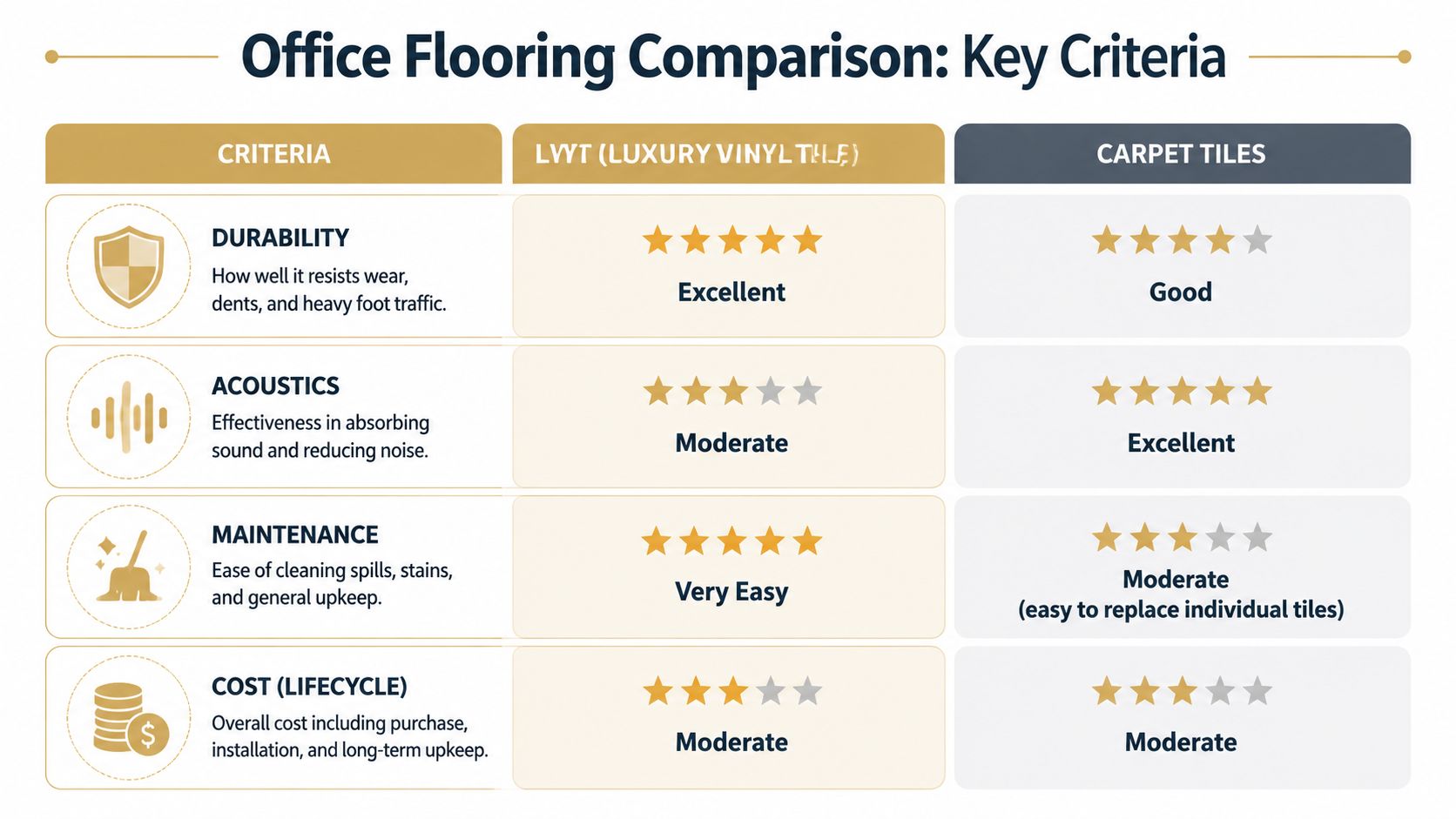
Durability starts with traffic not colour
Durability needs to be matched to the actual zone. Under the EN 13329 AC rating system, AC3 is for lighter use, AC4 is for moderate to heavy traffic, and AC5 is for severe traffic. For office use, reception areas and high-traffic corridors should be specified at AC4 to AC5, with wear layers of at least 20 mil, based on guidance from Changlong Flor.
That matters in busy workplaces, including high-footfall offices in Cambridge. The same guidance notes that lower-rated flooring in these areas can fail within 3 to 5 years, while correctly specified flooring can deliver a 10+ year lifecycle. It also highlights the need for suitable slip resistance and low-gloss finishes to support HSE compliance.
Acoustics change how the office feels
Noise complaints often start with layout, but flooring plays a big part. Hard surfaces reflect more sound. Soft surfaces absorb more of it. That affects concentration, comfort, and how private conversations feel in shared space.
Good acoustic performance doesn’t come from one product alone. Flooring, partitions, ceilings, and enclosed meeting spaces need to work together.
Poor office acoustics are one of the top workplace complaints, and flooring is often overlooked as part of the fix, as discussed in this article on reducing noise in open plan office spaces. Hard flooring may still be the right answer in some areas, but it usually needs support from other acoustic measures such as soft finishes, glass partition strategy, or meeting pods.
Maintenance is an operating issue
Maintenance gets treated as a cleaning problem. It’s really a budget and appearance problem. If a floor marks easily, traps dirt, or needs specialist treatment, the cost sits with the occupier long after the installer has left.
A practical comparison usually looks like this:
- Carpet tiles: Better for acoustics and comfort, but they need regular cleaning and faster attention to staining.
- LVT: Simple day-to-day cleaning and good stain resistance, which suits tea points and circulation routes.
- Timber: Looks premium, but dents, scratches, and finish wear are harder to hide.
- Concrete or epoxy: Easy to clean, but less forgiving for sound and standing comfort.
A Closer Look at Today’s Most Popular Flooring Choices
A team comes back into a refurbished office on Monday. By Wednesday, facilities are already hearing two complaints. The floor near the tea point is marking, and the open-plan desk area sounds louder than expected. That is usually the result of choosing on appearance and supply cost, while missing total cost of ownership and acoustic performance.
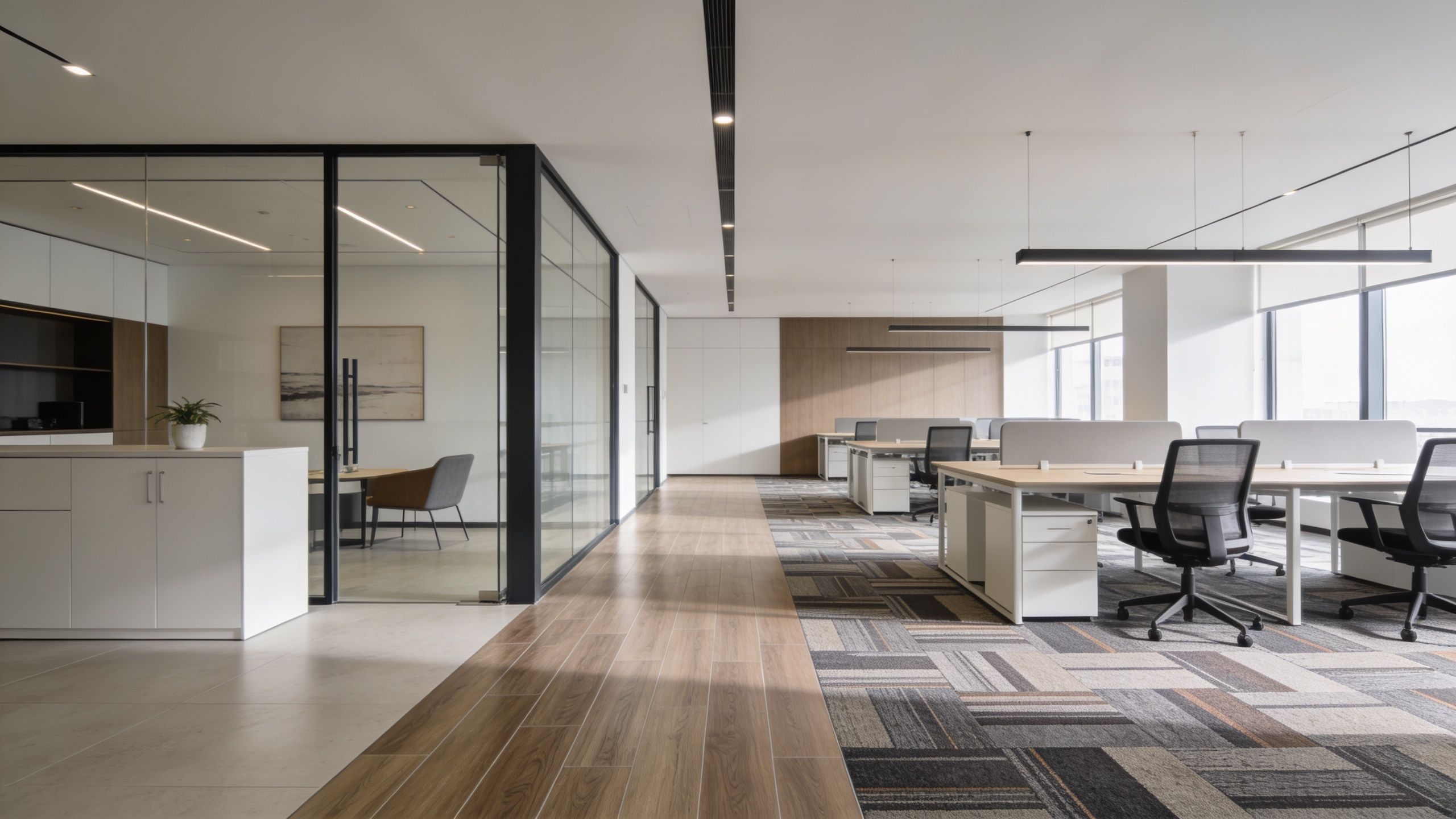
The products specified most often are still LVT and carpet tiles. For most UK office refurbishments, that makes sense. They cover the majority of needs, but they solve different problems and create different costs once the office is in use.
Why LVT keeps getting specified
LVT works well in offices that need a clean, hard-wearing finish with limited maintenance disruption. Reception areas, corridors, breakout spaces, and tea points are the usual candidates because cleaning is straightforward and spill resistance is better than carpet.
It also gives a lot of visual control. Timber effects can warm up a space without the repair issues that come with real wood, and stone-look formats can sharpen up front-of-house areas without bringing in a colder, higher-maintenance material.
The trade-off is acoustic. LVT reflects more sound than carpet, so it rarely helps an open-plan floorplate feel calmer on its own. In practical terms, that can mean more perceived noise, more distraction, and a greater need to spend elsewhere on ceilings, wall finishes, screens, or enclosed rooms.
Rigid core SPC versions can be useful in refurbishment work where subfloors are less than perfect. In older buildings, including workplaces in Braintree, that can reduce subfloor preparation and help keep programme pressure under control. It is still a harder finish underfoot, so it suits circulation and shared amenity areas better than quiet desk zones.
Why carpet tiles still earn their place
Carpet tiles tend to be the safer specification for focused work areas. They absorb more sound, soften footfall, and make large open-plan offices feel less busy acoustically. That usually improves the day-to-day experience for staff faster than a design presentation suggests.
They also perform well from a replacement and dilapidations point of view. If one area is damaged or stained, individual tiles can be swapped out without replacing the full floor. That matters over the life of a lease, especially in offices where churn, desk moves, and reconfiguration are common.
There is a maintenance cost, and it should be judged objectively. Carpet tiles need regular cleaning to keep their appearance, and poor maintenance shows quickly in traffic lanes. Even so, in many offices the lower noise level and easier local repair make them the better ownership decision over several years.
From a sustainability point of view, replacement cycles matter as much as product choice. A floor that stays serviceable for longer and allows local repairs will often support better outcomes than one that looks cheap at the start. This guide to environment-friendly material choices for refurbishment projects is useful if that forms part of the brief.
For desk-heavy offices, carpet tiles often reduce complaints about noise and comfort more effectively than a harder floor with a stronger visual finish.
For readers who want a quick visual summary of how commercial flooring systems are assembled and compared, this short video is useful:
Quick comparison
| Flooring type | Best use | Main trade-off |
|---|---|---|
| LVT | Receptions, corridors, breakout areas, mixed-use office zones | Lower acoustic absorption, so other noise-control measures are often needed |
| Carpet tiles | Open-plan desks, meeting rooms, quiet work areas | Higher cleaning input and more visible staining in heavy traffic zones |
| SPC rigid core LVT | Fast refurbishments and uneven subfloors | Harder feel underfoot and limited acoustic benefit |
Understanding the True Cost A UK Budgeting Guide for 2026
The biggest flooring mistake is focusing on supply price alone. That number matters, but it’s only the first part of the bill. The better question is what the floor will cost to own over time.
What total cost of ownership really means
Total cost of ownership, or TCO, includes installation, maintenance, repair, cleaning demands, and how often the floor may need replacing. Many guides talk about value but don’t give UK-specific TCO thinking, even though that’s what facilities managers and landlords need to justify spend and avoid false economy, as noted in this discussion of why TCO matters in flooring decisions.
That matters in refurbishment budgets across Chelmsford and wider Essex, where the cheapest starting figure can hide a more expensive operational outcome. A floor that needs more frequent replacement, heavier cleaning, or disruptive repairs can cost more than a better specified option that looked pricier on day one.
There’s also a sustainability angle. Choosing longer-life materials and reducing premature replacement often supports better project outcomes overall. This guide to environment friendly material choices is useful when that sits alongside budget planning.
Office Flooring Total Cost of Ownership TCO Snapshot
Because many suppliers don’t provide a clear like-for-like UK lifecycle comparison, the table below is best used as a budgeting framework rather than a fixed price list.
| Flooring Type | Initial Cost per m² Supply & Fit | Estimated 10-Year Lifecycle Cost |
|---|---|---|
| Carpet tiles | Varies by specification, backing, and site conditions | Moderate to high if cleaning and tile replacement are frequent |
| LVT | Varies by wear layer, format, and subfloor condition | Moderate when maintenance is simple and replacement is localised |
| Timber or engineered wood | Usually higher than standard commercial soft finishes | Higher where refinishing and visible wear become issues |
A smart budget doesn’t ask, “What is the cheapest floor?” It asks, “What floor will still make sense after years of use?”
Installation Refurbishment and Dilapidations Tips
Even a well-chosen floor can become a problem if the installation plan is poor. Occupied offices don’t have the luxury of long shutdowns, and end-of-lease projects rarely have spare time in the programme.
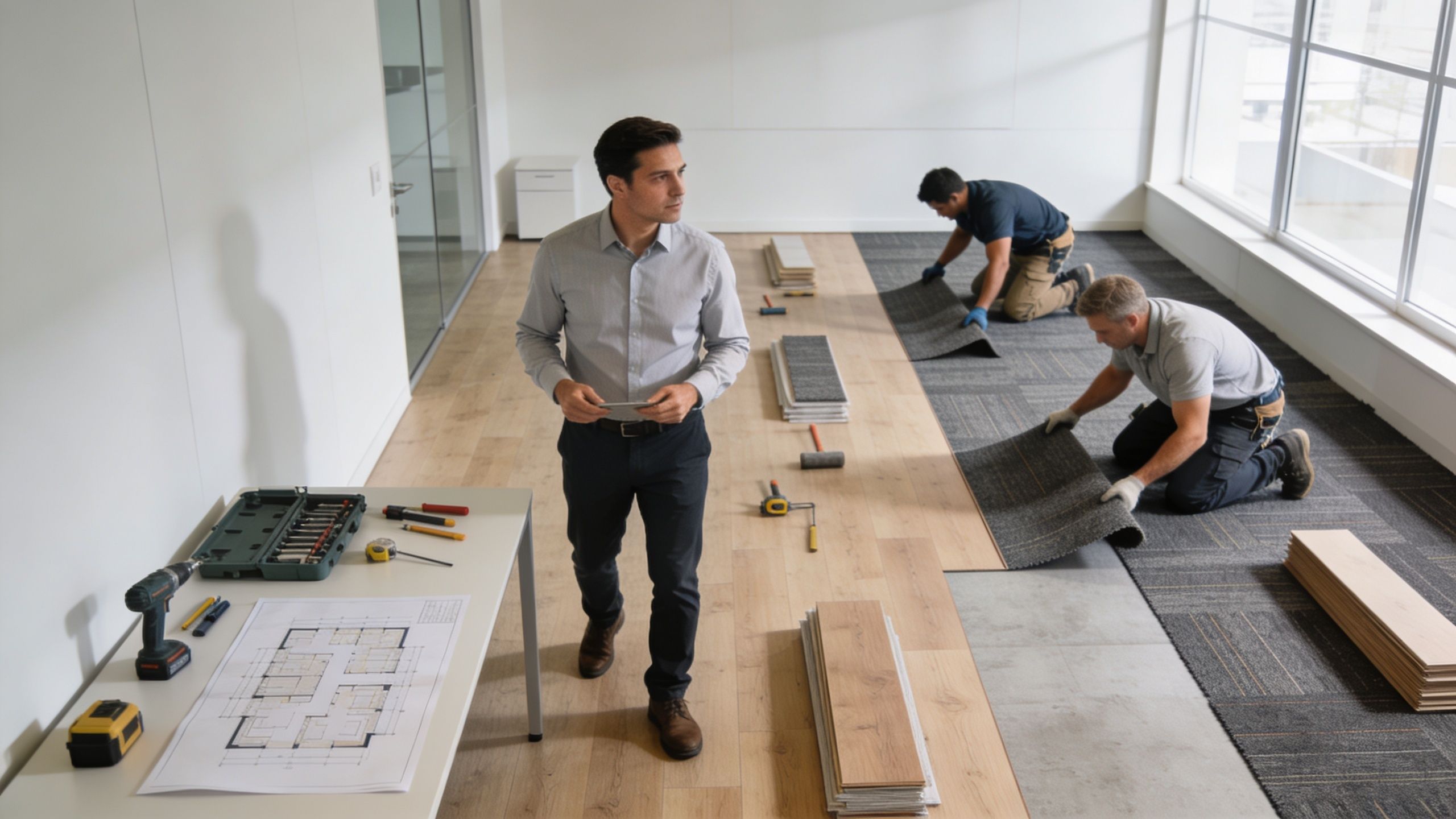
How to keep disruption under control
Programme matters almost as much as specification. Modern rigid core click systems, especially SPC, can reduce on-site labour by 40 to 60% compared with traditional glue-down methods, according to Flooring Inc. That makes them useful for occupied refurbishments where work needs to happen in phases or outside normal hours.
The same source notes that these floors can often be laid over existing hard surfaces, saving £15 to £25 per m² by avoiding subfloor removal and preparation. Where the substrate is stable enough, that can cut mess, speed up handover, and limit disruption to staff.
A sensible delivery plan usually includes:
- Phased working: Keep one side of the office live while another zone is stripped and refitted.
- Out-of-hours access: Use evenings or weekends for noisy cuts, removals, and adhesive-sensitive work.
- Furniture sequencing: Move teams in planned waves instead of clearing the entire floor plate at once.
- Mock-up approval: Check colour, joint detail, and transition strips before the main install starts.
What matters for end of lease works
Dilapidations change the brief. The goal often isn’t to create the most expressive finish. It’s to leave a compliant, durable, commercially sensible floor that satisfies lease obligations without wasting money.
That’s why durability, local repairability, and straightforward replacement matter so much. Modular systems can help because damaged sections can be changed without replacing the full area. Anyone dealing with this stage should understand the wider process behind a dilapidation survey and what it covers.
This is often the difference between a clean handover and a last-minute scramble in places such as Bishop’s Stortford and across Hertfordshire.
Making the Right Choice for Your Workspace
A typical mistake in office refurbishments is choosing flooring on the sample board, then paying for it later through complaints about noise, faster wear, or an earlier-than-planned replacement cycle. The better choice usually comes from weighing total cost of ownership against day-to-day performance.
That changes the conversation. Carpet tiles often make the most sense in desk-heavy areas because they soften footfall, help control background noise, and allow localised repairs without lifting a whole floor. LVT usually earns its keep in circulation routes, breakout areas, and other harder-working zones where cleaning speed, stain resistance, and long-term wear matter more than acoustic softness. Timber, polished concrete, and specialist finishes can suit the right scheme, but they need a clear brief and a realistic view of upkeep, underfoot comfort, and sound reflection.
Acoustics deserve proper attention because staff notice them every day. A floor that looks sharp but increases reverberation can make calls harder, meetings less comfortable, and open-plan space more tiring to work in. Combining acoustically rated flooring with other measures can improve the result, as outlined in this piece on office acoustics and flooring considerations.
The right floor should reduce disruption, hold up under cleaning and traffic, and avoid creating unnecessary replacement costs in three or five years.
If you are weighing refurbishment options and want a flooring choice that stands up commercially as well as visually, the Gibbsonn Interiors team can help.