
An office usually stops working long before the lease ends. Staff start taking calls in corridors because meeting rooms are always full. Teams complain about noise, but the bigger problem is that the layout fights the way people work. Visitors walk into a tired reception and get the wrong impression in seconds.
That’s where office interior design stops being a cosmetic exercise and starts becoming an operational one. A well-planned workplace supports focus, movement, collaboration, privacy, technology, brand, and day-to-day maintenance. If even one of those is ignored, the whole space feels harder to use than it should.
Table of Contents
- Your Workspace Is More Than Just Desks and Chairs
- The Core Principles of Modern Office Design for 2026
- Choosing Your Workspace Style Office Layouts Explained
- Smart Space Planning and Effective Workflow Analysis
- The A to Z of Your 2026 Office Fit-Out Project
- Budgeting and Timelines for Your Office Refurbishment
- Innovative Materials and Future-Ready Office Solutions
- How to Choose the Right Office Fit-Out Partner
- CTA
Your Workspace Is More Than Just Desks and Chairs
A workplace is a tool. If it’s badly designed, people waste time working around it. They book the wrong rooms, avoid busy zones, struggle with glare, and lose concentration because quiet work has nowhere to happen.
That’s why office interior design has a direct effect on how a business runs. It shapes first impressions, supports team habits, and often decides whether a space feels organised or frustrating. Good design also helps a business adapt when headcount changes, departments shift, or a lease event forces reconfiguration.
A practical fit-out starts with three questions.
- How do people work: Not what the org chart says, but what happens across a normal week.
- What gets in the way: Noise, poor storage, weak meeting provision, awkward circulation, and dated finishes usually sit at the top of the list.
- What has to stay flexible: Growth plans, hybrid attendance, landlord obligations, and future technology all matter.
Some offices need a complete rethink. Others need a smarter layout, better zoning, and targeted upgrades such as partitioning, acoustic pods, or wrapped surfaces instead of a full strip-out.
Practical rule: If staff are creating their own workarounds, the space isn’t supporting the business properly.
That’s why the strongest projects don’t begin with furniture boards or paint colours. They begin with operational decisions. The layout, finishes, technical design, and delivery plan all need to serve the same end result. A workplace that’s easier to manage, easier to use, and more likely to hold up over time.
The Core Principles of Modern Office Design for 2026
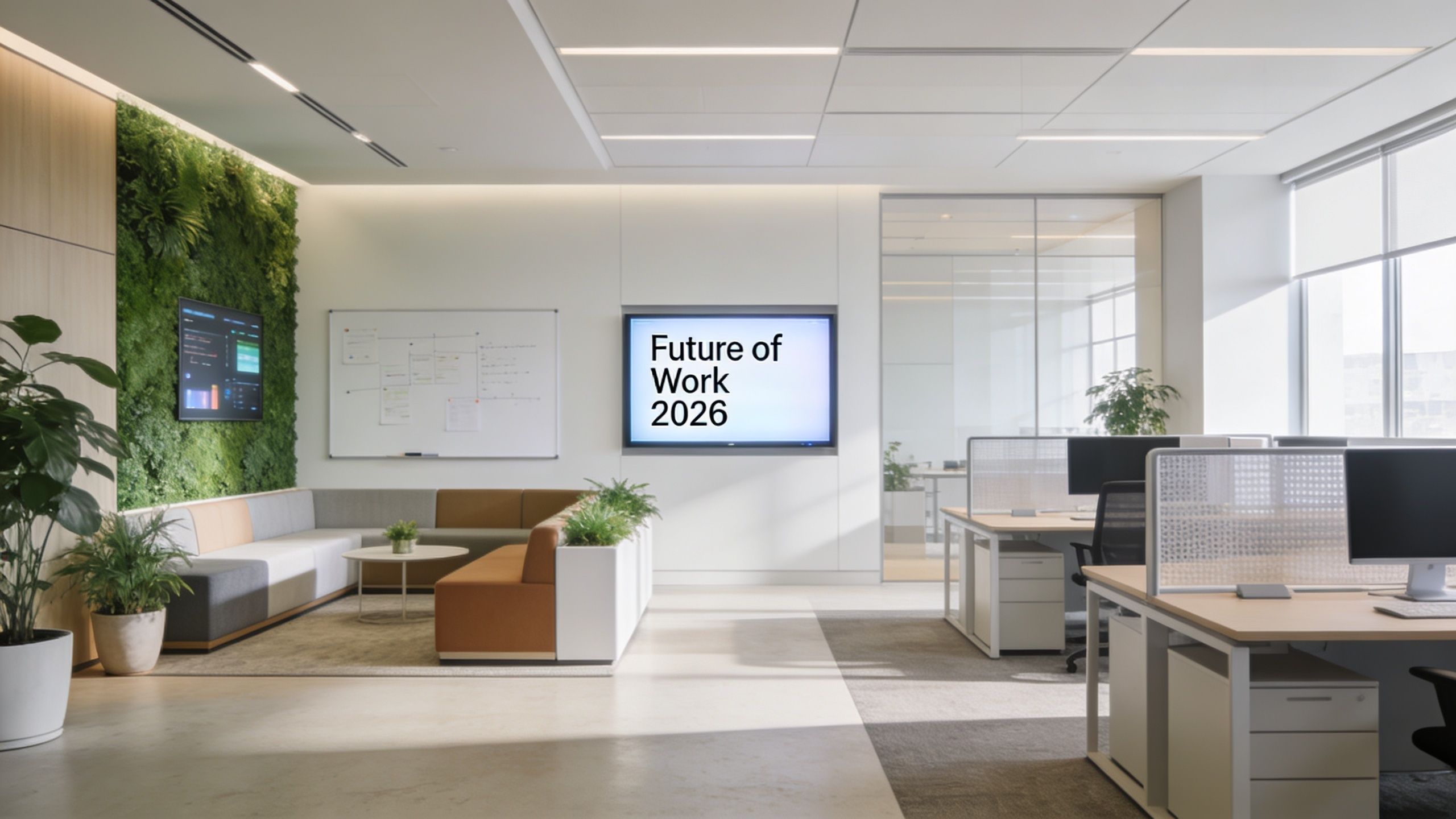
Modern office interior design works when it solves real problems without making new ones. A space can look sharp in a render and still fail on noise, privacy, circulation, cleaning, or day-to-day usability.
Design for people first
Ergonomics is bigger than task chairs and monitor arms. It includes sightlines, natural light, posture changes, access to quiet space, and how far people have to walk to do simple things. A reception team has different needs from a finance team. A design that treats every department the same usually underperforms.
Geometry matters too, even if the evidence base is still limited. Published guidance notes that shapes and patterns can influence feelings such as focus, creativity, or calm, and that the placement of furniture, partitions, and walkways shapes behaviour through geometry, as discussed in Haiken design insights on shapes and workplace behaviour.
That doesn’t mean curved forms are always better, or angular layouts are always worse. It means layout choices affect how a workplace feels long before anyone talks about finishes.
Acoustics and privacy need deliberate planning
Noise remains one of the fastest ways to make an office feel tiring. Open areas often work well for energy and visibility, but they rarely solve focused work on their own.
Research and practice both point to the same issue. The intersection of neurodiversity accommodation and acoustic privacy is critical. M Moser notes that “when we design for neurodiversity, quality focus options are essential” and that focus pods “reduce noise and provide a comfortable and quiet space” in their guidance on focus spaces for neurodiverse workplaces.
A practical acoustic plan usually combines several moves rather than one expensive fix.
- Separate noisy and quiet functions: Don’t place collaboration benches beside heads-down teams.
- Use enclosed spaces well: Small rooms, pods, and screened booths reduce spill if they’re located properly.
- Control support areas: Tea points, printers, and touchdown zones create more disruption than many teams expect.
Security also affects flow and zoning. For teams balancing front-of-house access, delivery control, and restricted work areas, these Wisenet Security access control insights are useful when planning how people move through a workplace without making it feel hostile.
Brand and flexibility should work together
The best branded offices don’t shout. They express the company through materials, graphics, tone, and spatial choices. A legal practice may need calm order and privacy. A creative team may want more informal touchdown space and visual energy. A strong office doesn’t copy trends that don’t fit the culture.
Flexibility matters just as much. Furniture, partitioning, and room settings should allow for change without major disruption. That’s especially relevant for businesses reviewing commercial interior design trends for changing workplaces, where adaptability now matters as much as appearance.
A rigid layout often feels efficient on day one and expensive by year two.
Choosing Your Workspace Style Office Layouts Explained
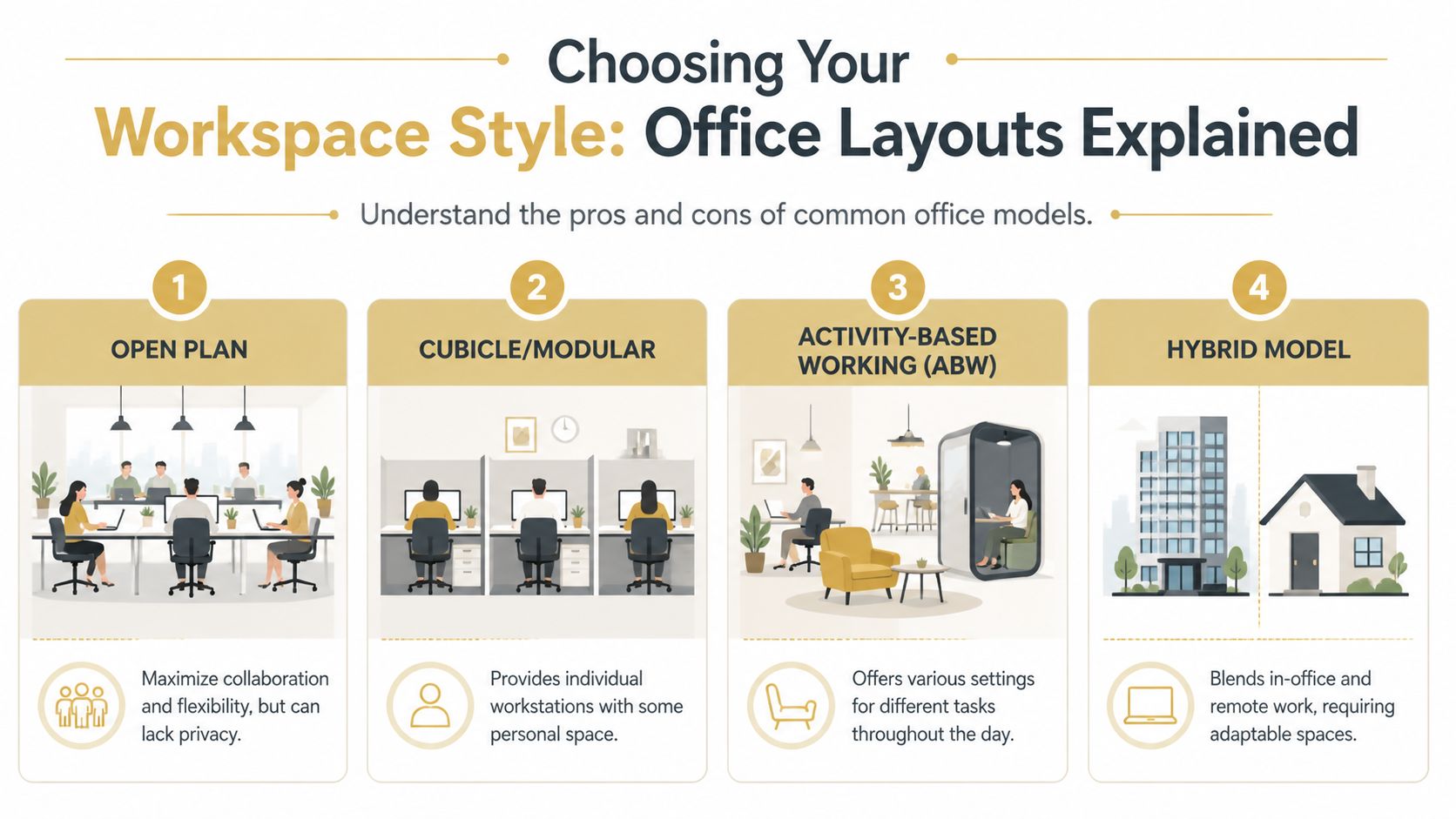
Most layout mistakes happen because a business chooses a style before it understands the work. Open plan, cellular, and activity-based working all have a place. The wrong choice is the one that ignores how teams spend their day.
Open plan
Open plan suits businesses that need visibility, easy communication, and flexible desk arrangements. It’s often the simplest format to reconfigure. It can also help a smaller floorplate feel less boxed in.
The trade-off is obvious. Privacy drops quickly, sound travels, and teams that need concentration often end up booking rooms just to get basic quiet.
Cellular offices
Cellular layouts still work well in the right setting. They suit confidential conversations, senior leadership functions, specialist work, and businesses where calls happen all day.
The downside is reduced flexibility. Too many fixed rooms can waste space and make collaboration feel formal. A law firm or consultancy may still prefer this model because privacy has operational value, not just status value.
Activity-based working
Activity-based working, often shortened to ABW, gives people different settings for different tasks. That can include desks, focus booths, meeting rooms, lounges, project tables, and phone spaces.
Done well, it feels efficient and modern. Done badly, it creates confusion because staff don’t know where they’re meant to sit, store things, or take private calls. A business in Bishop’s Stortford might choose ABW to encourage movement between collaboration zones and focus settings, especially where teams split their week between office and remote work. Across Essex, that model tends to work best when there are clear behavioural rules and enough enclosed space to support it.
Office layout models at a glance
| Layout Type | Best For | Key Challenge |
|---|---|---|
| Open Plan | Collaborative teams and adaptable desk layouts | Noise and lack of privacy |
| Cellular | Confidential work and frequent private calls | Reduced flexibility |
| Activity-Based Working | Mixed tasks and hybrid work patterns | Needs strong rules and varied settings |
A hybrid model can also sit across these formats. Many workplaces now blend assigned teams, shared desks, enclosed rooms, and touchdown areas. The point isn’t to follow a label. It’s to build the right mix.
The layout should fit the work. Staff shouldn’t have to reshape their day around a floor plan that looked good in a presentation.
Smart Space Planning and Effective Workflow Analysis
A floorplan can look tidy on paper and still fail in use. That usually happens when the design starts with furniture blocks instead of movement, task patterns, and pressure points.
Start with movement not furniture
Workflow analysis is the study of how people, information, and activity move through the workplace. It looks at where teams sit, where they meet, where they store materials, and where friction appears during a normal day.
A practical review often picks up issues such as these.
- Pinch points at entries and corners: These create slow movement and frustration at busy times.
- Misplaced support spaces: Printers, lockers, tea points, and waste stations can pull too much traffic through quiet areas.
- Poor adjacencies: Teams that collaborate often are placed too far apart, while teams needing separation are too close.
Observation matters significantly. If sales and operations speak constantly, they should be near each other. If HR handles confidential conversations, it shouldn’t sit beside a noisy touchdown area.
Use UK planning benchmarks properly
Space planning also needs hard benchmarks, not guesswork. According to the British Council for Offices, the UK benchmark is 10m² per person for individual desks, with 20 to 30% of total floor area for circulation and 10 to 20% for breakout zones, as outlined in this office space planning guide.
That matters because many office problems come from trying to overfit a floorplate. On paper, extra desks may look efficient. In practice, poor circulation makes the office feel cramped, meeting pod doors clash with walkways, and staff end up taking calls in escape routes or kitchen corners.
Meeting rooms need the same discipline. The same guidance states 2 to 2.5 square metres per person for meeting spaces within UK office planning. That’s a useful check when a room looks acceptable in CAD but feels unusable once chairs, screens, and door swings are in place.
For facilities teams reviewing occupancy, churn, and move plans, a simple headcount exercise isn’t enough. A better starting point is a space test, then a workflow check, then a usage plan. This is also where guides on how to calculate office space per person become useful because they turn broad layout ideas into workable numbers.
The A to Z of Your 2026 Office Fit-Out Project
Fit-out projects go wrong when the process is fragmented. One consultant draws the concept, another handles technical information, a contractor prices from partial details, and nobody owns the gaps. That’s where delays and rework start.
From brief to concept
A proper project starts with workplace consultancy and briefing. That means understanding headcount, team structures, building constraints, storage needs, meeting behaviour, landlord obligations, and what success should look like once the project is finished.
Concept design follows. This stage tests layouts, zoning options, room mixes, finish direction, and the broad look and feel. It should also reveal what doesn’t fit. If the floorplate can’t support the desired number of enclosed rooms without hurting circulation, it’s better to know early.
At this point, one document matters more than many clients realise. A clear project brief. Without it, approvals drift and every stakeholder judges the scheme on a different basis. For teams planning that early stage, an office refurbishment project plan template helps organise decisions before they become site issues.
Detailed design and delivery
Detailed design is where office interior design becomes technical. Drawings move beyond mood boards into dimensions, partitions, power, lighting, data, finishes, furniture, and compliance.
M&E plans are central here. They are the “nervous system” of the office, detailing HVAC, lighting, power, and data networks. Proper M&E drawings, using standard scales such as 1:50 or 1:100 and meeting local codes, help prevent costly site changes and support future-ready infrastructure, as explained in this guide to reading office interior design drawings.
That technical layer decides whether a meeting room has the right air supply, whether desk power lands where it should, and whether AV works without visible cable mess. Retrofit buildings make this harder because existing services, columns, and ceiling constraints rarely align neatly with new plans.
Site reality check: The later an M&E problem is found, the more expensive it becomes to fix.
Procurement and approvals come next. That includes product lead times, landlord sign-off, building management requirements, and health and safety planning. Some finishes are easy to substitute. Specialist glazing systems, pods, and bespoke joinery usually aren’t.
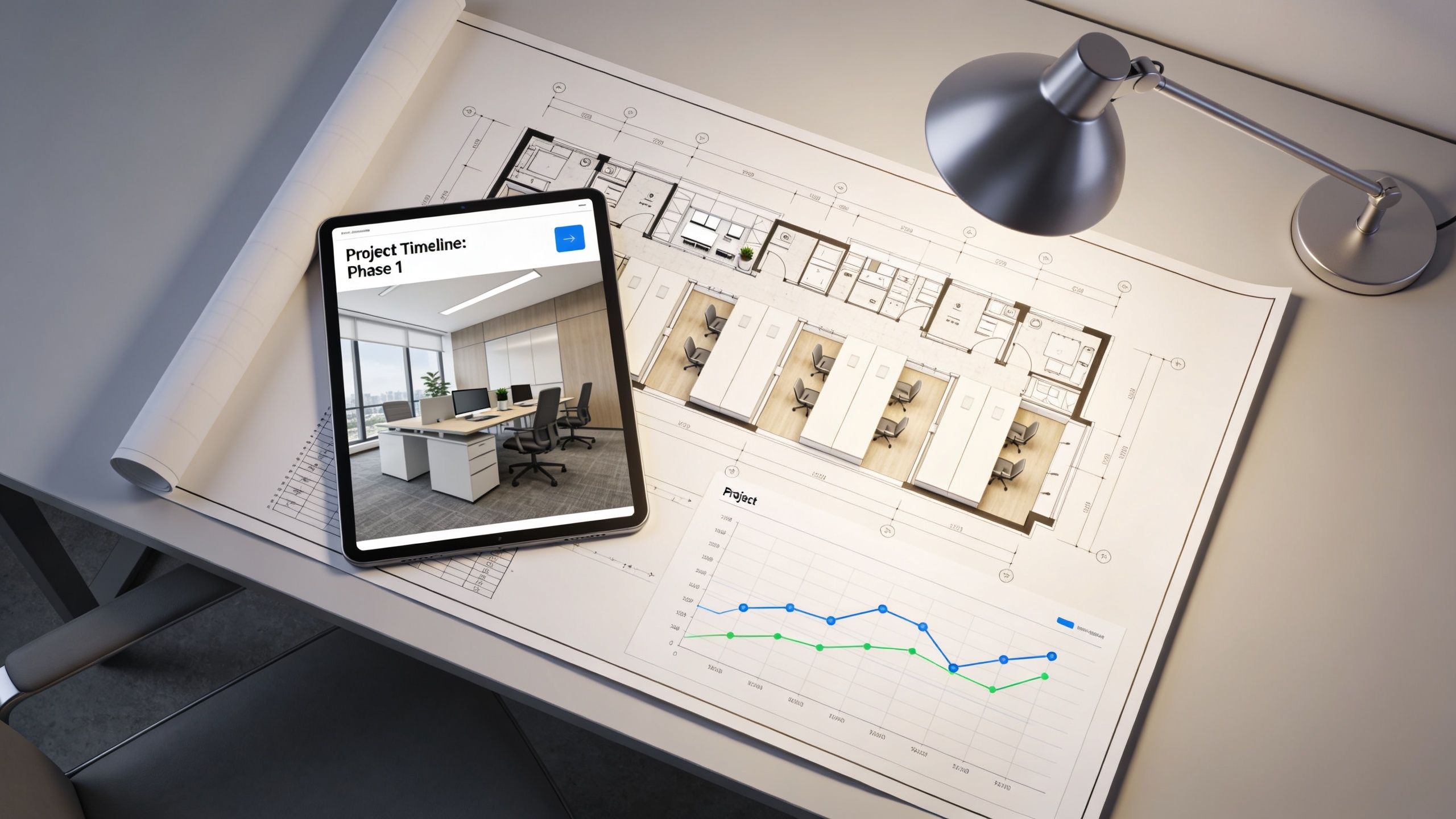
A quick visual example helps make that process easier to picture.
Handover and post-occupancy support
On-site works cover strip-out, construction, partitioning, flooring, decorations, M&E installation, furniture placement, and final snagging. A well-run programme also plans for live-office disruption, access windows, deliveries, and commissioning.
Handover should include more than keys and manuals. Staff need orientation. Facilities teams need asset information and maintenance detail. Post-occupancy support matters because even a good scheme needs fine tuning once people start using it.
A single point of accountability is useful here, especially for projects across Hertfordshire where coordination between design, procurement, and installation often decides whether the move feels controlled or chaotic.
Budgeting and Timelines for Your Office Refurbishment
Budget questions usually come too late. By the time a design is approved, expectations are fixed, and value engineering becomes painful. A better approach is to build cost awareness into decisions from the start.
What pushes a budget up or down
The biggest cost drivers are scope, specification, building condition, and technical complexity. A Cat A space usually starts from the landlord shell and core position. A Cat B fit-out adds the workplace layer that staff use, such as rooms, finishes, furniture, branding, and specialist settings.
Budgets tend to move when these items change.
- Partitioning strategy: Full-height glazed rooms, acoustic doors, and fire-rated elements cost more than open touchdown areas.
- Services intensity: Power, data, lighting changes, and HVAC alterations can outweigh decorative items quickly.
- Finish level: Flooring, joinery, feature walls, and bespoke reception elements all shape spend.
- Programme pressure: Fast-track delivery often costs more because sequencing becomes tighter and procurement choices narrow.
Without verified cost benchmarks, the right advice is qualitative. A light refresh may focus on finishes, furniture reuse, and selected reconfiguration. A deeper refurbishment involving major M&E change, room creation, and branding will sit in a different budget category altogether.
What affects programme length
Timelines depend on design sign-off speed, product lead times, landlord approvals, building access rules, and whether the office stays live during works. A small refresh may move quickly if decisions are firm. A larger reconfiguration can slow down because technical coordination and approvals take time before site work even starts.
The most common causes of delay are not dramatic. They are late decisions, unclear briefs, and products chosen before buildability is checked.
A realistic programme usually allows time for:
- Briefing and surveys
- Concept design and revisions
- Technical design and approvals
- Procurement
- Site works and snagging
- Move-in and adjustment
A rushed brief rarely creates a fast project. It usually creates redesign, reselection, and delay.
For facilities managers, the smart position is simple. Set a budget range early, define what must be included, and separate essentials from desirables before procurement begins.
Innovative Materials and Future-Ready Office Solutions
Some of the best office upgrades are not the loudest ones. They solve practical problems without fanfare. They improve privacy, speed up delivery, or refresh tired surfaces without forcing a full rebuild.
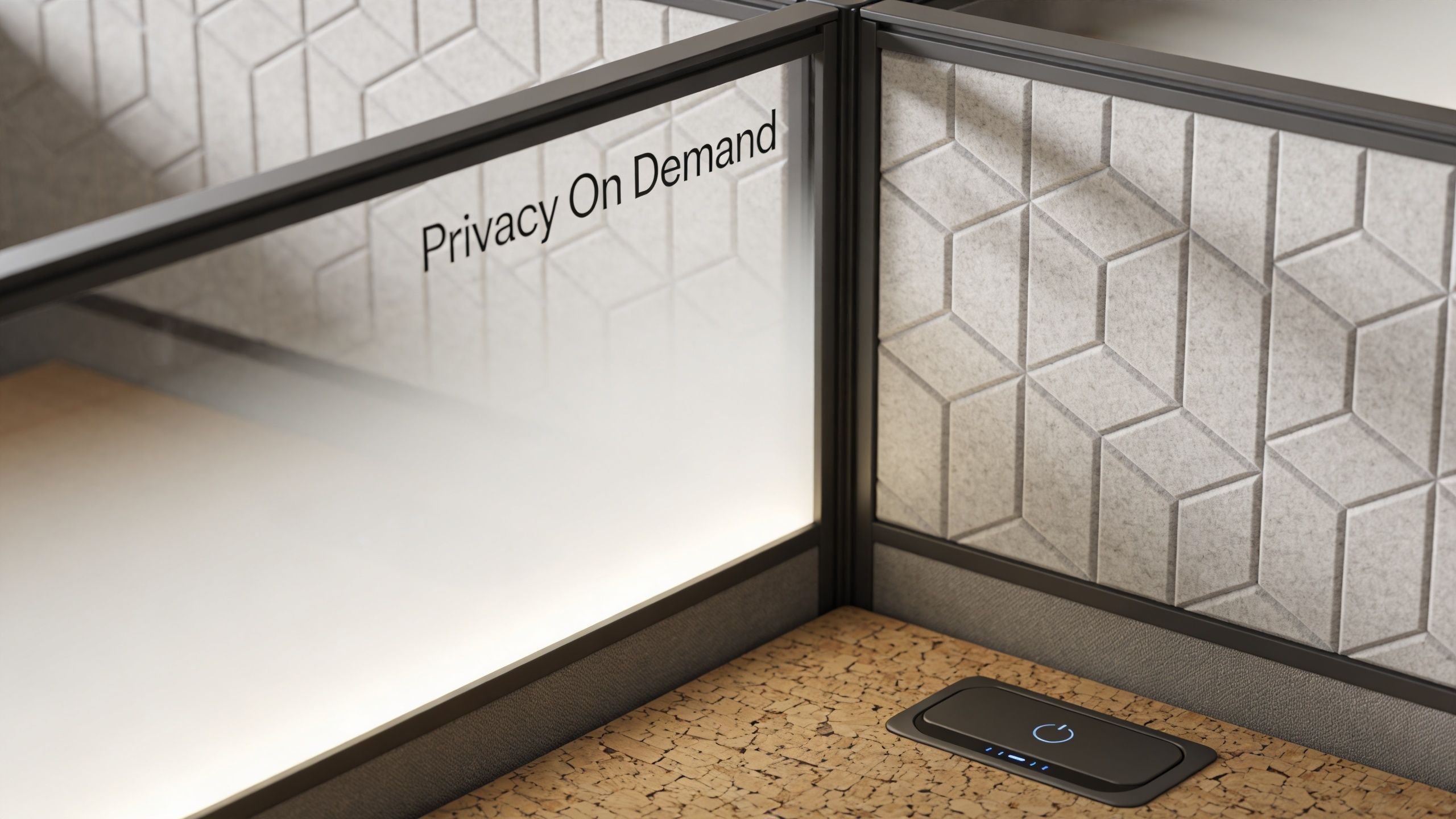
Glass partitions and modular rooms
Glass partitioning remains one of the most useful tools in office interior design because it creates defined rooms without throwing away natural light. It can also help a floorplate feel ordered while keeping visual connection across teams.
The trade-off is that glass doesn’t solve everything on its own. If privacy is important, specification matters. Door seals, frame details, manifestation, and room placement all affect the result. A glazed room beside a noisy tea point won’t feel private just because the wall is transparent.
This is also where integrated solutions have a place. GIBBSONN Interiors provides workplace reconfiguration elements such as glass partitions and modular meeting pod systems as part of broader fit-out and refurbishment work. Those kinds of products suit businesses that need enclosed space without fully rebuilding the office.
Pods and surface renewal
Modular pods have become a practical answer to a common problem. Teams need private space, but they don’t always want permanent construction. Manufacturers such as Vetrospace, BlockO, and Framery all offer options for meetings, calls, and focused work.
Pods work best when they’re treated as part of the layout, not dropped in as an afterthought. Door swings, ventilation, visibility, cleaning access, and circulation still matter. A pod placed in the wrong spot can block movement and create the very congestion it was meant to solve.
Architectural wrapping is another useful option, especially where budgets or dilapidation timelines are tight. Rather than replacing every worn surface, teams can refresh counters, doors, partitions, and joinery quickly with the right wrap system. It’s often a sensible choice when an office needs to look better fast, or when end-of-lease obligations need a controlled, targeted approach.
Visual storytelling matters too, especially in reception, social areas, and brand zones. For businesses updating graphics regularly, these changeable picture frames offer a practical way to refresh displays without constant replacement of fixed installations.
A corporate headquarters in London may use all three approaches at once. Glass fronts for leadership rooms, pods for confidential calls, and architectural wrapping to update old joinery without major downtime.
How to Choose the Right Office Fit-Out Partner
A fit-out partner affects more than the build. The right one shapes the brief, challenges weak assumptions, spots technical risks early, and keeps decisions connected from design through handover.
What to check before appointing anyone
A glossy portfolio isn’t enough. Facilities managers need to know how the contractor works once the project becomes real.
Use a shortlist like this.
- Relevant project history: Look for offices with similar constraints, not just attractive photos.
- Clear delivery model: Check who handles design, technical coordination, procurement, and site management.
- Communication standards: Ask how changes, approvals, risks, and programme updates are reported.
- Health and safety discipline: This matters even more in live environments and shared buildings.
- Aftercare: Handover support and snag resolution should be defined before the contract is signed.
What a good partner does differently
A good partner doesn’t just agree with the brief. They test it. If a headcount target is unrealistic, they say so. If a preferred product creates maintenance or acoustic problems, they explain the trade-off before it reaches site.
They also understand commercial reality. Some businesses need a flagship workplace. Others need a controlled refresh that handles landlord obligations, reduces disruption, and leaves room for future change. Both can be valid. What matters is whether the proposal matches the operational need.
Choose the team that can explain the compromises clearly, not just the one that promises the nicest render.
That usually points to a partner with a structured process, technical depth, and enough practical experience to keep design ambition aligned with programme, budget, and compliance.
Ready to Transform Your Workspace for 2026?
A great office isn’t an expense; it’s an investment in your people and your future. From an initial idea to a fully realised, productive environment, the GIBBSONN Interiors team is here to guide you every step of the way.
Speak to our experts today to discuss your office interior design project and discover how we can help you create a space that inspires.
Book Your Free ConsultationReady to transform your workspace? Speak to the GIBBSONN Interiors team today. Looking for bespoke pod solutions or interior support? Contact Us to book a consultation and start shaping a workplace that works better.