Unlocking the Benefits of Workplace Design for 2026
Your office is more than just a place to work; it’s the heart of your business. The benefits of workplace design reach far beyond simple looks, directly influencing everything from staff productivity and wellbeing to your company’s bottom line. A thoughtfully planned space is a powerful tool, one that helps solve real business challenges.
Table of Contents
- Boost Productivity with Smarter Office Design
- Improve Wellbeing and Reduce Staff Absence
- Bring Your Brand and Company Culture to Life
- Attract and Keep the Best People
- Designing a Workspace That Grows with You
- Your Workplace Design Questions Answered
Why Workplace Design Matters More Than Ever in 2026
Let’s be honest, an office isn’t just four walls and a roof; it’s the engine room of your business. When done right, workplace design becomes a strategic asset that solves real problems, from lagging productivity to attracting the very best talent. This guide will unpack the real-world benefits in simple, practical terms.
Forget dry theories. We’re focusing on how a well-planned space can genuinely boost morale, spark collaboration, and strengthen your company culture. Think of this as your roadmap to creating an environment where your team can truly thrive, whether you’re based in Bishop’s Stortford or anywhere across Hertfordshire.
Here’s a quick, scannable summary of the key advantages we’re about to explore. This table breaks down how investing in your workspace delivers a real impact on your business.
A Quick Look at the Benefits of Workplace Design
| Benefit Area | Impact on Your Business |
|---|---|
| Productivity & Focus | Creates zones for deep work and collaboration, reducing distractions and boosting output. |
| Wellbeing & Morale | Improves mental and physical health, leading to happier staff and lower absenteeism. |
| Brand & Culture | Physically represents your company values, making your culture tangible for everyone. |
| Talent Attraction | Acts as a powerful recruitment tool, showing top candidates you’re an employer of choice. |
| Flexibility & Growth | Adapts to changing team sizes and work styles, future-proofing your investment. |
As you can see, the ripple effects are significant. Throughout this guide, we’ll dive into how smart changes to your office can deliver a clear return on investment.
Learn more about how a professional office design and build process can transform your commercial space.
Boost Productivity with Smarter Office Design
We’ve all been there. Trying to focus in a noisy open-plan office, hunting for a quiet corner to take an important call. A badly designed workspace isn’t just frustrating; it’s a direct drain on your bottom line. The link between smart office design and what your people can achieve is undeniable.
A well-thought-out office isn’t about flashy furniture or chasing trends. It’s about creating an environment where people can simply do their best work, without fighting against their surroundings. This means tackling distractions head-on, cutting out wasted time, and giving your team the specific spaces they need to focus and collaborate.
Creating Zones for Focus and Collaboration
Noise is one of the biggest productivity killers in modern offices. The constant hum of conversations, ringing phones, and people walking by makes deep, concentrated work feel almost impossible. The solution? Creating different zones for different tasks.
By dividing the office into dedicated areas for quiet work, collaborative meetings, and socialising, you empower your staff to choose the right environment for the job at hand. Even small additions can make a huge impact. Installing high-quality acoustic meeting pods from specialists like Vetrospace or BlockO instantly creates soundproofed sanctuaries for private calls and intense focus.
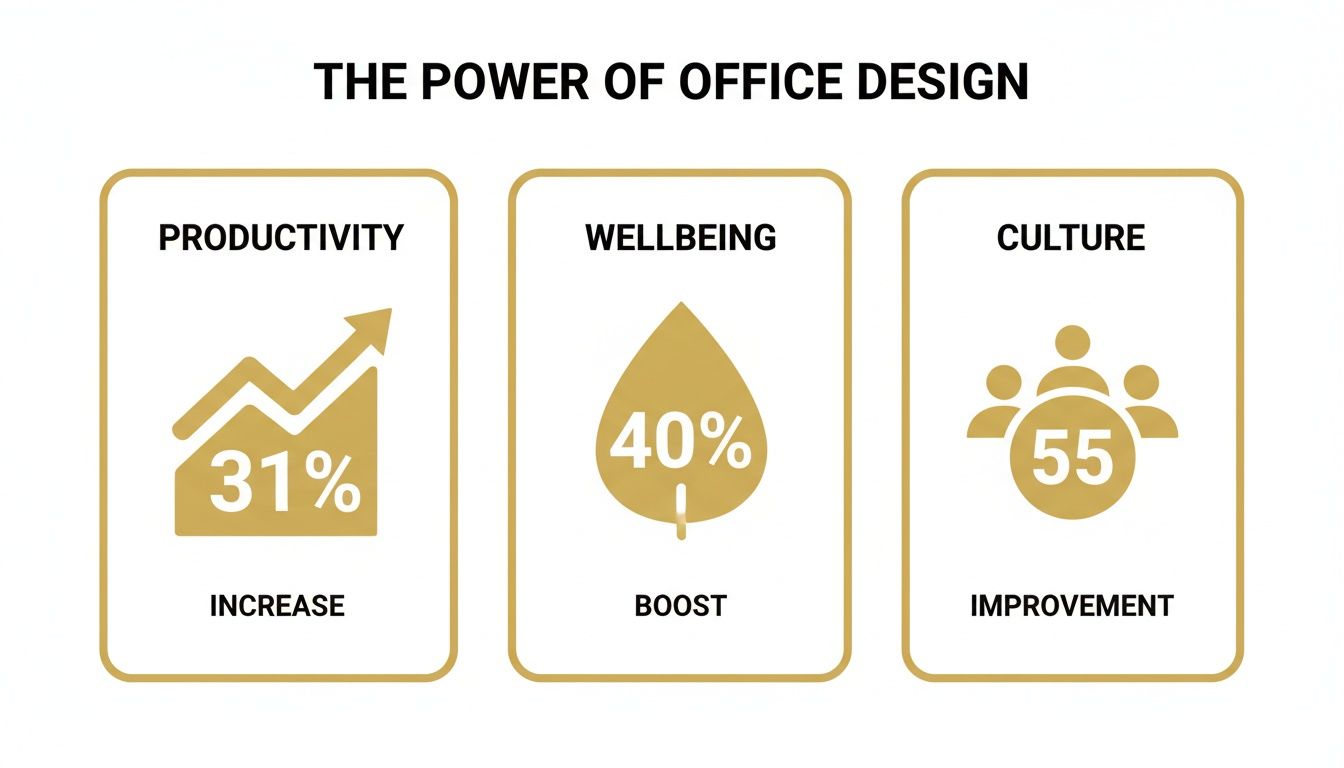
As you can see, a better workspace doesn’t just nudge the needle a little. It delivers serious, measurable improvements across the board.
The Real Cost of Poor Office Design
The financial hit from a subpar office is staggering. It’s no secret that UK workplace productivity has faced challenges, with poorly designed offices costing businesses an estimated £135 billion annually in lost output. The research is clear: employees believe they could be 19% more productive with a better layout, a problem amplified by the fact that 80% of UK offices are open-plan.
This is where practical, targeted changes come into play. Take ergonomic furniture. It’s not just about comfort; it directly tackles musculoskeletal issues, a leading cause of sick days. The Health and Safety Executive reported a staggering 6.6 million lost workdays due to these problems in 2022/23. Better chairs and adjustable desks can make a real dent in that number.
Lighting and Layout: The Unsung Heroes of Output
Never underestimate the power of good lighting. Poor lighting is a direct cause of eye strain, headaches, and fatigue, all of which sap productivity. The first step should always be to maximise natural light. Where that’s not an option, installing lighting that mimics natural daylight is proven to boost mood and alertness.
The physical layout of the office also plays a massive part. A logical flow means people aren’t wasting precious minutes navigating a confusing space. It sounds obvious, but placing teams that collaborate frequently near each other is a simple win that’s often overlooked. By addressing these core elements, noise, ergonomics, light, and layout, you’re not just redecorating. You are making a strategic investment in a more productive future for your business.
Want to explore this further? We break it down in our guide on how to improve workplace productivity.
Improve Wellbeing and Reduce Staff Absence
A truly great workplace isn’t just about the desks and chairs; it’s about the people. The real power of workplace design is unlocked when it actively supports the mental and physical health of your team. This means moving beyond looks to create an environment that genuinely reduces stress, prevents physical strain, and makes everyone feel valued.
Thinking about employee wellbeing isn’t just a fluffy concept, it’s a core business strategy. When people feel good in their workspace, their morale skyrockets, they are more engaged, and they take fewer sick days. This translates directly into a healthier, more stable, and more productive workforce.
Bringing Nature Indoors with Biophilic Design
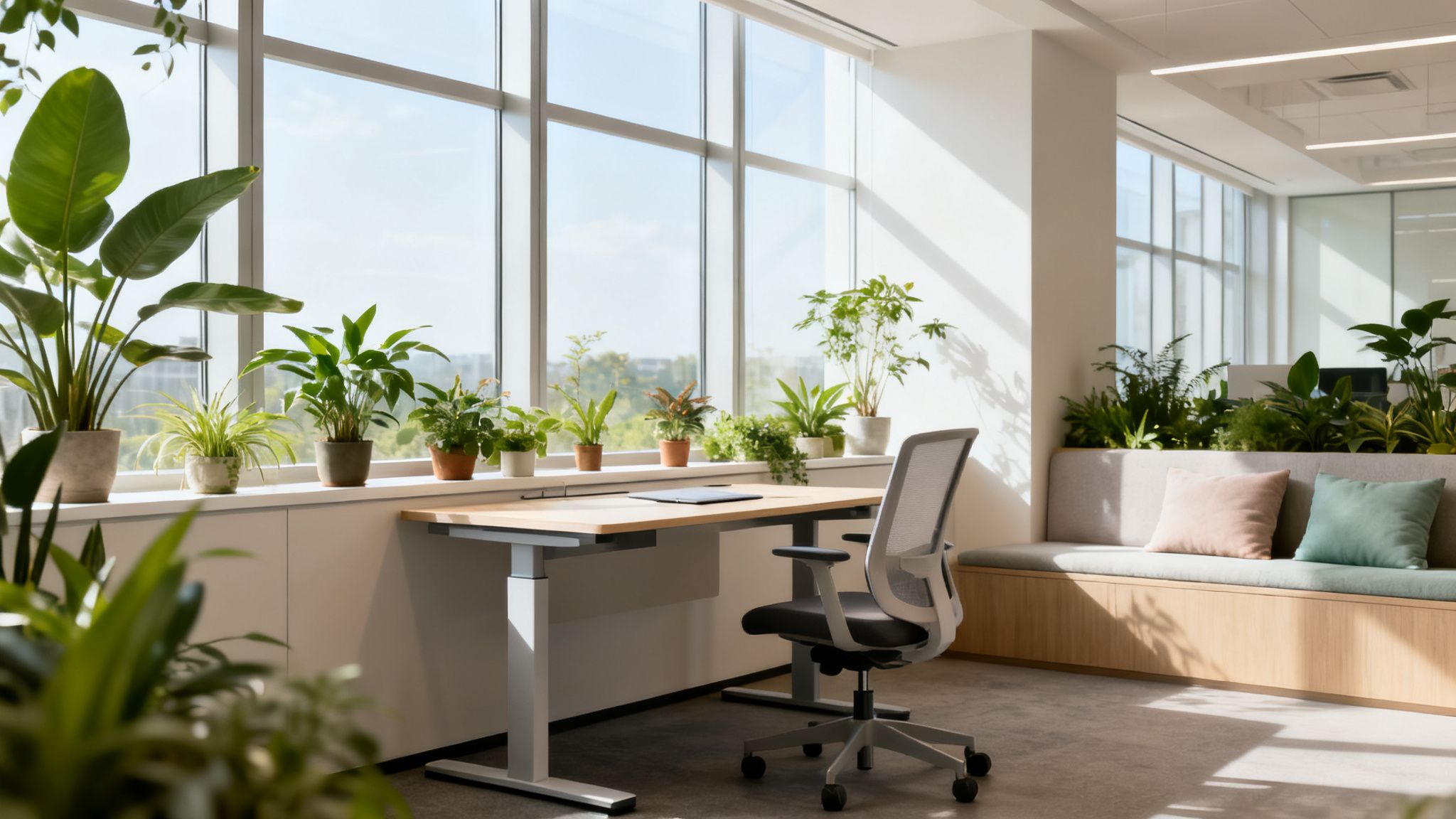
One of the most effective ways we see clients boost wellbeing is through biophilic design. It’s a simple idea with a profound impact: bring elements of the natural world into the office. Think abundant natural light, plenty of plants, and the use of materials like wood and stone.
It might sound straightforward, but the results are astonishing. Study after study shows that connecting with nature, even indoors, lowers stress and improves air quality. In fact, just adding greenery has been found to deliver a 15% boost in wellbeing and a significant lift in creativity.
The Importance of Good Lighting and Ergonomics
Nothing drains productivity and morale like physical discomfort. Two of the biggest culprits we encounter are poor lighting and bad seating. Constant screen glare from badly positioned lights leads to eye strain and headaches, while unsuitable chairs are a direct cause of back pain and other musculoskeletal problems.
The good news is that these issues are entirely preventable with a bit of thoughtful design.
- Maximise Natural Light: We always look to position desks near windows and use glass partitions to let light flow deep into the space.
- Invest in Ergonomic Seating: Provide properly adjustable chairs that offer good lumbar support. This isn’t a luxury; it’s a fundamental necessity for preventing long-term health issues.
- Provide Adjustable Desks: Sit-stand desks are fantastic. They give employees the freedom to change their posture throughout the day, which is brilliant for circulation and energy levels.
The scale of this problem is huge. Data from the Health and Safety Executive for 2022/23 revealed that musculoskeletal disorders caused 6.6 million lost workdays in the UK. Tackling this head-on with better workplace design offers a clear and significant return on investment.
Creating Inclusive Spaces for Everyone
A truly healthy work culture is an inclusive one. As our understanding of neurodiversity grows, it’s become essential to design workspaces that cater to everyone’s needs. The once-popular open-plan office can be a sensory nightmare for neurodivergent employees, often leading to burnout and anxiety.
The solution is to provide choice and control. This means offering a variety of spaces, from quiet zones for deep focus to collaborative areas for teamwork. Simple additions, like our acoustic pods or designated quiet rooms, can make a world of difference. They allow every member of the team to find an environment where they can work comfortably and effectively, building a stronger, more resilient, and supportive culture for the entire organisation.
We explore this topic in much more detail in our article on promoting wellbeing in the workplace.
Bring Your Brand and Company Culture to Life
Your office space tells a story. From the moment someone walks through the door, whether they’re a client, a potential new hire, or your own team, it’s making a statement about who you are as a business. It’s your first and most lasting impression, making it one of the strongest tools you have for showing the world what you stand for.
When your workspace genuinely reflects your brand, it builds trust and cements your identity. It’s a physical promise that you’re consistent, professional, and live by the values you talk about. This is often an overlooked benefit of great workplace design, but it’s incredibly powerful.
Weaving Your Brand into the Fabric of Your Workspace for 2026
Bringing a brand to life is about so much more than just putting a logo on the reception wall. A professional office fit-out weaves your identity into the very DNA of the space. This is where we get to be both creative and strategic.
- Colour Palette: We can use your brand colours in ways that are either subtle or bold. It might be a striking feature wall, the upholstery on the furniture, or even woven into acoustic panelling. The goal is to create a cohesive and memorable visual experience.
- Materials and Textures: The materials you choose speak volumes. A tech firm in a competitive hub like Cambridge might lean towards sleek glass and metal to project innovation. A creative agency, on the other hand, could opt for natural wood and softer textures to feel more grounded and approachable.
- Custom Graphics and Signage: Think beyond the logo. We can use custom graphics that reflect your mission or company values. This could take the form of inspiring wall art, subtle frosted glass designs, or even custom architectural wrapping on doors and other surfaces.
When these elements come together, they create an immersive brand experience. They make the space uniquely yours and leave a lasting, positive impression on everyone who walks through it.
Designing a Layout That Nurtures Your Desired Culture
If your brand is your identity, your company culture is your personality. It’s the way your team works together, communicates, and solves problems. And the physical layout of your office has a huge say in shaping that culture.
For instance, if collaboration and open communication are what you’re aiming for, an open-plan design dotted with breakout areas and shared spaces is perfect. These zones are brilliant for encouraging those spontaneous chats and brainstorming sessions that break down departmental silos.
But what if your work demands deep, uninterrupted focus? A design that carves out space for private offices or dedicated quiet zones becomes essential. We can integrate modular pods from leading brands like Framery to give people that much-needed quiet space without completely walling off the open environment.
Ultimately, the right design supports the culture you want to build. It can either grease the wheels for the behaviours you value or create friction that holds your team back. By intentionally designing a space that echoes your ideal culture, you empower your team to work in a way that aligns perfectly with your business goals, a vital edge for companies across Essex.
Attract and Keep the Best People
In today’s fierce job market, your office space has become one of your most persuasive recruitment tools. Top candidates aren’t just scanning salary bands; they’re searching for a company that genuinely invests in its people and offers a brilliant place to spend their working day.
A modern, flexible, and thoughtfully equipped workspace sends a powerful signal: you value your team’s wellbeing and are committed to their success. When a potential hire walks through your door for an interview, the environment immediately tells a story about your company culture. A vibrant, welcoming office can easily be the deciding factor that makes them choose you over a competitor.
Creating a Workspace People Want to Be In for 2026
The expectations of the modern workforce have shifted dramatically. A simple desk and chair just don’t cut it anymore. People are looking for a workspace that truly supports a dynamic, hybrid way of working, a reality for businesses across Essex, where the competition for skilled professionals is particularly intense.
A great office environment becomes a tangible perk, a real benefit that helps you stand out. This means providing a variety of amenities and spaces that cater to different needs throughout the day.
- Comfortable Breakout Zones: These are absolutely essential. They’re the go-to spots for informal meetings and collaboration, but also give staff a place to relax and recharge away from their screens.
- Private Pods for Calls: With video calls now a daily fixture, providing quiet, private spaces is non-negotiable. High-quality acoustic pods from specialists like Vetrospace offer the perfect, self-contained solution.
- Spaces for Hybrid Work: A flexible layout with hot-desking options and easily reconfigurable furniture is crucial for supporting teams that split their time between the office and home.
When you offer these kinds of facilities, you’re showing your team that you understand and respect the way they need to work today.
Reducing Staff Turnover with a Proud Workplace
Attracting great people is only half the battle; the real challenge is keeping them. A brilliant office environment makes your current team proud to work there, a key factor in cutting down the high cost of staff turnover.
When employees genuinely enjoy their surroundings, feel comfortable, and have the right tools to do their jobs well, their satisfaction and loyalty skyrocket. A workplace that people love becomes a cornerstone of your company culture. It builds a sense of community and belonging, making everyone feel more connected to the business and their colleagues. This positive atmosphere doesn’t just lift morale; it directly impacts your bottom line by minimising the expense of constantly recruiting and training new staff.
Investing in your workspace is a direct investment in your people. It demonstrates a long-term commitment to their wellbeing and professional lives, helping you build a loyal, motivated team that is eager to drive your company’s growth.
Designing a Workspace That Grows with You
The way we work is constantly on the move. Your business today might look completely different in a year or two, with new teams, new projects, and new tech shaping your needs. This is precisely why one of the biggest benefits of workplace design is creating a space that isn’t just right for now, but is ready for whatever comes next.
Thinking ahead with an agile and adaptable workspace is one of the smartest investments you can make. It’s about designing for tomorrow’s needs, not just getting by today. This forward-thinking approach means you can sidestep the costly, disruptive overhauls that happen every time your business evolves.
The Power of Modular and Flexible Solutions in 2026
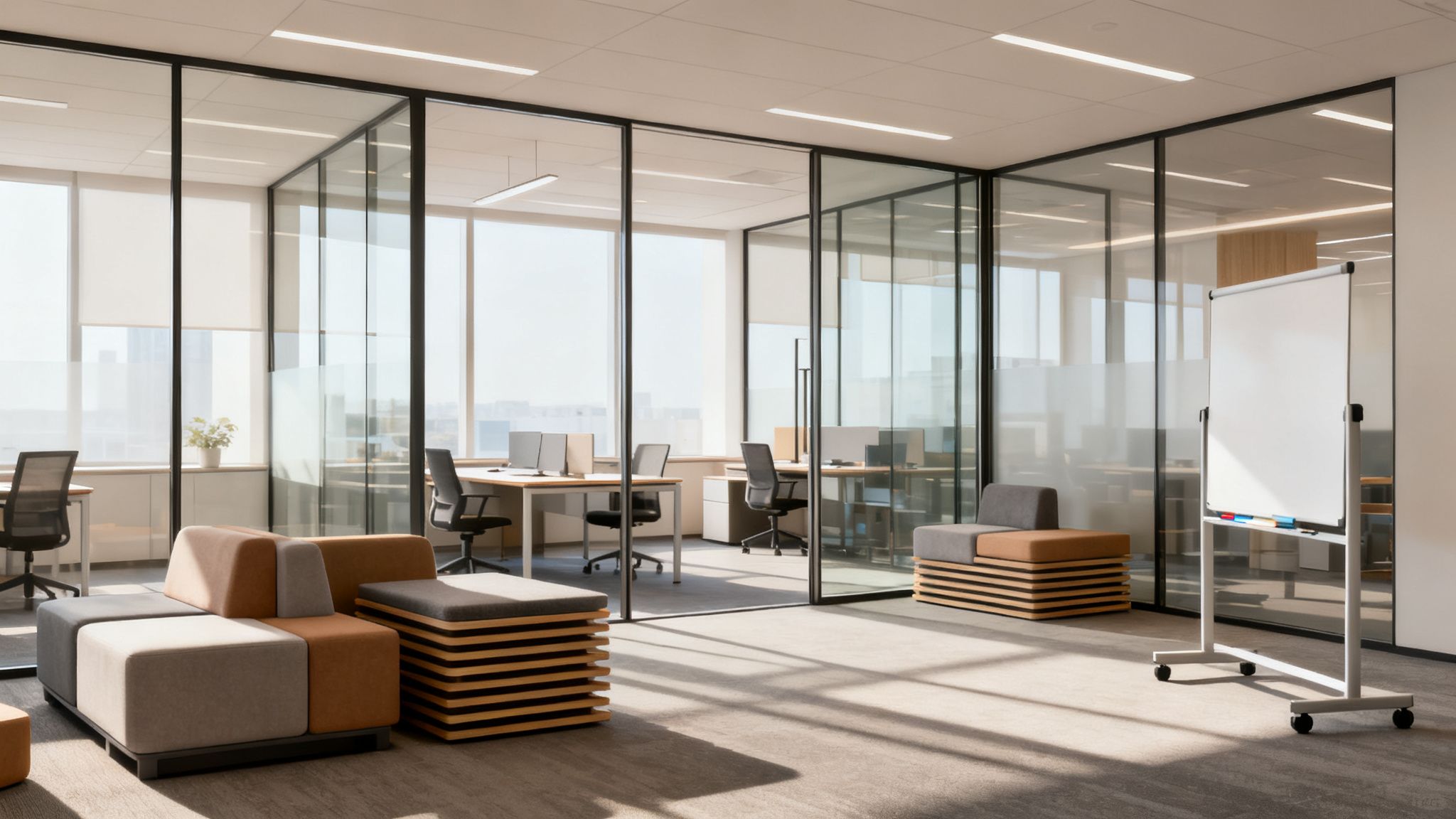
The real secret to a future-ready office lies in flexibility. Instead of building rigid, permanent structures, we focus on modular solutions that can be changed, moved, and reconfigured with minimal fuss. This is where smart design truly proves its worth.
Think of it like building with LEGO bricks instead of cementing everything in place. You can create the perfect layout you need today, knowing you can easily take it apart and build something new tomorrow.
- Moveable Glass Partitions: These are an absolute game changer. You can create private offices or meeting rooms when you need them, then open the space right back up when your needs shift. They offer excellent acoustic privacy without sacrificing that all-important natural light.
- Versatile Furniture: Lightweight, movable furniture, like modular sofas and desks on castors, allows your team to rearrange spaces themselves for different tasks, from an impromptu team workshop to a formal client presentation.
- Zoned Spaces: Rather than one huge, undefined open-plan area, we create different zones for different activities. This might include quiet pods for focused work, collaborative hubs for teamwork, and social spaces for breaks, all of which can be adapted as the business grows.
This approach ensures your workspace can handle team growth, shifts in working patterns, and new technology seamlessly. It’s a key consideration for any business planning an office fit-out, whether in a dynamic hub like Bishop’s Stortford or a quieter part of Hertfordshire.
Long-Term Value and Return on Investment
A traditional, fixed office layout can quickly become a serious headache. When a team expands or a new department is created, you’re often faced with expensive construction work and significant downtime. A flexible design, on the other hand, delivers far better long-term value.
The initial investment in modular solutions pays for itself over and over again. You save a fortune on future renovations and, crucially, avoid the productivity losses that come with major workplace disruption. It’s simply a smarter way of thinking about your space that provides a much better return on your investment.
Comparing Traditional and Flexible Office Designs
The table below breaks down the core differences, highlighting just how restrictive a traditional setup can be compared to a modern, agile environment.
| Feature | Traditional Office Design | Flexible Workplace Design |
|---|---|---|
| Layout Changes | Requires costly and disruptive construction work. | Can be easily reconfigured with minimal downtime. |
| Growth | Often leads to cramped conditions or a costly office move. | Accommodates new team members by reallocating space. |
| Long-Term Cost | High, due to repeated renovation expenses. | Lower, as the initial investment is built to last and adapt. |
By embracing a flexible model, you’re not just getting a new office; you’re gaining a strategic asset that will support your business for years to come.
Your Workplace Design Questions Answered
Thinking about a major office transformation can feel a bit daunting. It’s a big step, and you’re bound to have questions before you dive in. That’s completely normal. To help clear things up, we’ve put together some straightforward answers to the queries we hear most often from clients in places like Braintree and across Essex.
The goal here is to demystify the process and give you the confidence to move forward. A professional office fit-out should be a smooth and rewarding experience, not a source of confusion.
How Long Does an Office Fit-Out Take in 2026?
This is always one of the first questions, but the honest answer is: it really depends on what you’re planning. A simple refresh with new furniture and a lick of paint could be wrapped up in a couple of weeks. But if you’re looking at a full-scale redesign with structural changes and brand-new layouts, you’re naturally looking at a longer timeline, often several months.
A few key things shape the schedule:
- The size of your space: More square footage simply means more work and planning.
- The complexity of the design: Bespoke joinery, custom features, and complex tech requirements all add to the timeline.
- Lead times for materials: That perfect desking system or specialist flooring might have a longer delivery window.
We’re firm believers in transparency, so we always map out a clear, detailed project timeline from the get-go. You’ll know exactly what to expect and when.
What Is a Realistic Budget for a Workplace Redesign?
Just like the timeline, there’s no one-size-fits-all answer for the budget. It all comes down to the scope of work, the quality of finishes you choose, and how much new tech or furniture is needed. We’ve worked with every kind of business, from small start-ups in Stansted to large corporate HQs, and we’re experts at designing solutions that give you the maximum impact for your investment.
The most important thing for us is being upfront. During our first chat, we’ll talk about your goals and what you’re comfortable spending. From there, we build a detailed proposal that breaks down every single cost. No hidden fees, no surprises. And remember, this isn’t just an expense; it’s an investment in your people’s productivity, their wellbeing, and your company’s future.
Can We Stay in the Office During the Work?
In most cases, absolutely. We specialise in delivering projects with the least possible disruption to your day-to-day business. It’s all about smart planning. We can carry out the work in phases, sectioning off areas so your team can keep working comfortably and safely.
We can also schedule the noisier, more disruptive tasks for evenings or weekends when the office is empty. Our project managers are masters of logistics and will coordinate everything to ensure the process is as seamless as possible, keeping you in the loop every step of the way. Our aim is always to transform your space with minimal impact on your operations.
Ready to transform your workspace? Speak to the Gibbsonn Interiors team today.