
Forget trying to squeeze more out of your people. If you want to boost workplace productivity you need to create a space that actually helps them be efficient.
It’s about a smarter approach. One that blends intelligent office design, comfortable furniture and the right tech to cut out the noise. This lets people get on with what they do best whether that’s deep focus or collaborative magic. It’s not about working harder but working smarter.
Table of Contents
- Why Improving Workplace Productivity Matters Now More Than Ever
- Finding the Hidden Productivity Drains in Your Current Workspace
- Designing for Deep Work and Seamless Collaboration
- How Employee Wellbeing Fuels High Performance
- Future-Proofing Your Office with Smart Tech and Training
- Your Questions, Answered
Why Improving Workplace Productivity Matters Now More Than Ever
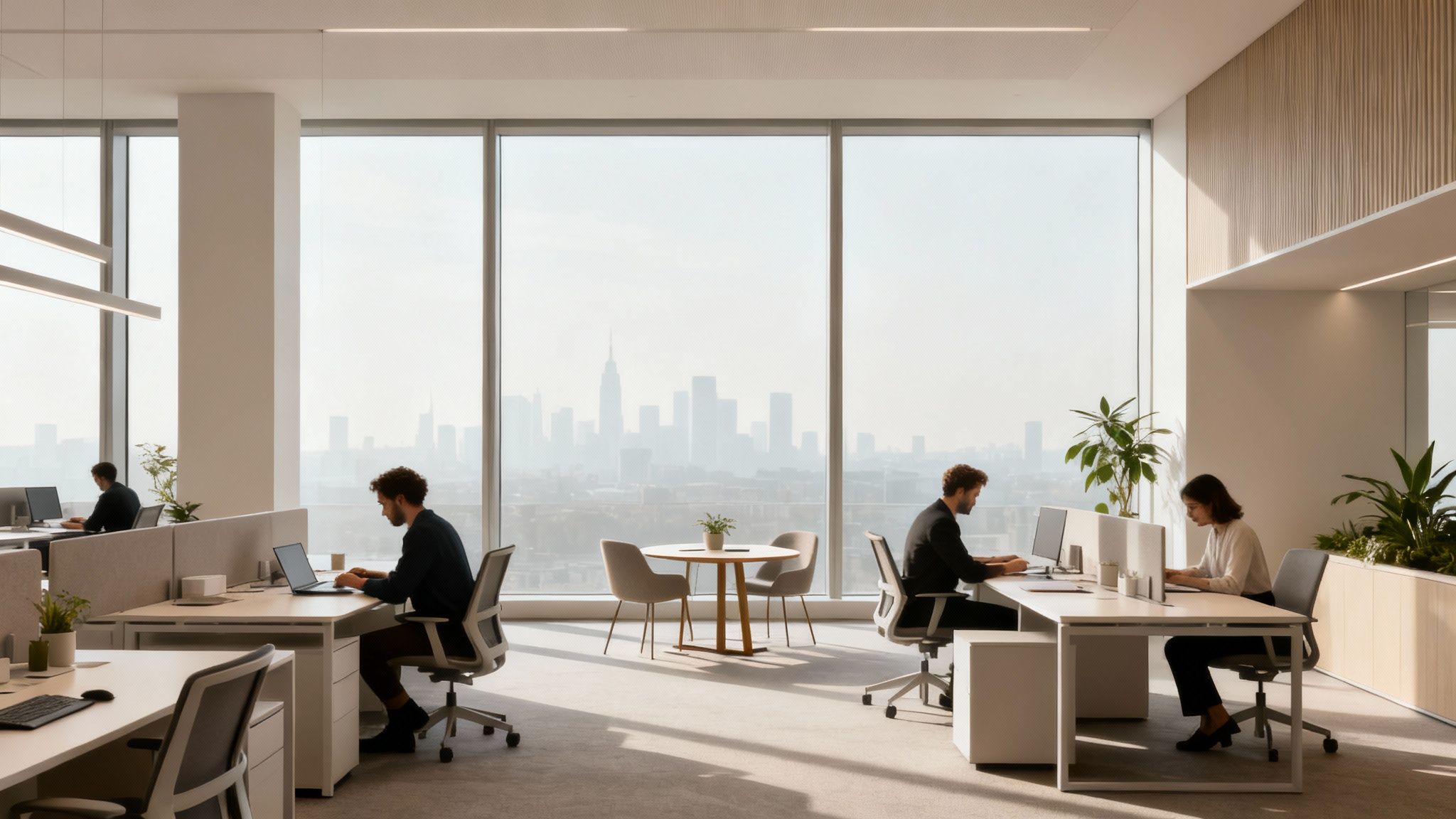
In the current UK market every forward-thinking business I talk to has productivity at the top of its agenda. With operational costs creeping up and the skills gap still a very real problem we simply can’t afford to have work environments that get in the way of performance.
The whole conversation has shifted. It’s no longer about getting teams to put in longer hours. It’s about creating a space where they can achieve more and feel better in the time they have.
This is where strategic workplace design stops being a “nice-to-have” and becomes a powerful business tool. A well-planned office isn’t just about looking good. It has a direct measurable impact on focus, teamwork and employee wellbeing. These are the very foundations of high performance.
Think of your office as more than just bricks and mortar. It’s a strategic asset that can and should deliver a tangible return on your investment.
The True Cost of an Unproductive Workspace
A poorly designed office does more than just frustrate your staff. The knock-on effects are real. Wasted time, a dip in innovation and good people heading for the door. It creates a measurable financial drain.
When teams are constantly fighting interruptions or squinting under bad lighting their ability to do meaningful deep work is shot. This hits project timelines, client satisfaction and ultimately your bottom line.
For businesses in competitive hubs like London or the growing tech centres around Cambridge the battle for top talent is fierce. A workspace that clearly prioritises productivity and wellbeing sends a powerful message that we value our people. That alone makes you a far more attractive employer.
Connecting Physical Space to Business Goals
Really getting to grips with how to improve workplace productivity starts when you see the direct line between your office environment and your business objectives. A thoughtful office fit out isn’t an expense but an investment in your company’s future. It’s your chance to align your physical space with your brand, your culture and your operational needs.
A well-designed office can:
- Slash Distractions: By creating dedicated zones for quiet focused work and others for collaboration.
- Improve Communication: Through clever layouts that encourage people to actually talk to each other.
- Boost Morale: By giving people a comfortable, healthy and supportive place to spend their day.
- Enhance Brand Identity: Creating a space that feels like you and leaves a lasting impression on clients.
Whether you’re based in Bishop’s Stortford or Braintree the goal is identical. Create a workplace that empowers people to do their absolute best work. This guide will walk you through the practical, actionable steps to turn your office from a simple cost centre into a dynamic engine for growth.
Finding the Hidden Productivity Drains in Your Current Workspace
Before you can fix anything you need an honest unfiltered look at what’s really holding your team back. This isn’t about guesswork. It’s about getting on the ground and seeing the workspace through their eyes.
Start with a simple observation exercise. Spend an hour or two just watching the natural flow of the office. You’ll be surprised what you notice. The subtle traffic jams, the queues for the printer and the awkward dance people do to get past each other in tight corridors. These are the small daily frictions that grind productivity down.
Then go straight to the source. A quick informal poll can be incredibly revealing. Ask your team to pinpoint the spots where distractions are highest. Is it the constant chatter from the sales desk? Or the flickering light above the design team? This is about uncovering the real-world issues that a floor plan simply can’t show you.
Recognising Congestion Hotspots
To really understand the flow of your office you need to walk the floor during its busiest periods. Think mid-morning or just after lunch. Map out the main routes people take between their desks, meeting rooms and communal areas like kitchens.
You’ll quickly spot the chokepoints. It might be a narrow corridor in your Chelmsford office that creates a bottleneck costing a few minutes every time someone passes through. These lost minutes add up across a team and across a year.
Look out for these classic signs:
- Paths so narrow two people can’t pass without turning sideways.
- Persistent queues forming at the coffee machine or printers.
- Meeting room entrances that awkwardly block main walkways.
Surveying Your Team’s Distraction Hotspots
While your own observations are valuable a short survey gives your staff a proper voice. It allows them to anonymously flag the noisy, disruptive or just plain uncomfortable areas that impact their focus.
Frame your questions around their daily experience. Ask them to rate different spots on a simple scale from 1 (peaceful) to 5 (constantly distracting). Questions about glare on their screens or the comfort of their chair in your Essex office can provide a goldmine of actionable data.
This process gives you a clear ‘heat map’ of the biggest offenders.
Your Workplace Productivity Audit Checklist
To bring all this insight together a simple checklist can be a powerful tool. It helps you quantify what are often seen as subjective feelings about the office environment. Go through each area and give it an honest score based on your observations and team feedback.
| Productivity Area | Key Questions to Ask | Score (1-5) |
|---|---|---|
| Seating Comfort | Do chairs and desks properly support long periods of focused work without causing discomfort? | |
| Distraction Levels | How often are you interrupted by noise or movement from your colleagues? | |
| Acoustic Conditions | Is ambient noise making it difficult to concentrate or take calls at your desk? | |
| Lighting Quality | Do you regularly experience eye strain, headaches or screen glare from poor lighting? | |
| Traffic Flow | Can you move easily between your desk, meeting rooms and facilities without getting stuck? |
Once you’ve filled it out tally the scores to see where your biggest weaknesses lie. A simple traffic light system makes it easy to communicate the findings and prioritise your next steps.
- Green (21–25 points): You’re in a great place. The conditions are mostly optimal.
- Amber (15–20 points): There are moderate issues that need addressing before they become major problems.
- Red (Under 15 points): This is a red flag. Your layout has urgent productivity drains that require immediate attention.
This straightforward audit demystifies the process and helps everyone see exactly where improvements can be made.
Evaluating Lighting and Acoustics
Let’s dig a bit deeper into two of the biggest culprits lighting and sound.
For lighting walk around and look for the obvious signs. Dark, gloomy corners or desks where screens are washed out by intense glare from a window. Better yet have staff swap desks for a day and report back on which seats feel the most comfortable for their eyes.
When it comes to acoustics you don’t need fancy equipment. A simple noise meter app on a smartphone can give you a decent reading of decibel levels. High readings in areas meant for focused work tell you exactly where you need to introduce sound-absorbing materials.
It’s a pressing issue. In Q2 2025 UK productivity actually fell by 0.8% year-on-year even though hours worked went up by 2%. The value added simply isn’t keeping pace. This growing gap shows why optimising every aspect of your workspace is no longer a ‘nice-to-have’ but essential for survival. Learn more about Q2 2025 productivity findings.
Visual Tip: Small, data-driven tweaks can deliver huge wins for productivity. It’s about investing smart not just spending more.
Gathering this real-world data ensures you’re investing wisely and not just throwing money at problems based on a hunch. With a clear picture of where the drains are you can move on to targeted effective design solutions.
Designing for Deep Work and Seamless Collaboration
Now that you’ve pinpointed where productivity is leaking away it’s time to get practical about the design solutions. A truly productive modern workspace isn’t about forcing a single way of working. It’s about offering genuine choice and empowering your team to find the right environment for whatever task is at hand.
Forget the tired debate of open-plan versus private offices. The real secret to how to improve workplace productivity lies in creating a balanced ecosystem of different zones. Each one carefully tailored for a specific type of work.
It all comes down to intentionally designing spaces that support both intense individual focus and the dynamic energy of teamwork. When your people can move fluidly between these areas you remove the hidden friction that kills performance and unlock their true potential.
Creating Zones for Different Work Modes
Think of your office less as one single space and more as a collection of unique neighbourhoods. Each one serves a clear purpose allowing staff to pick the best spot for what they need to do right now. It’s a simple powerful strategy that gives people a sense of control over their surroundings.
A successful zoning plan usually includes a mix of these key areas:
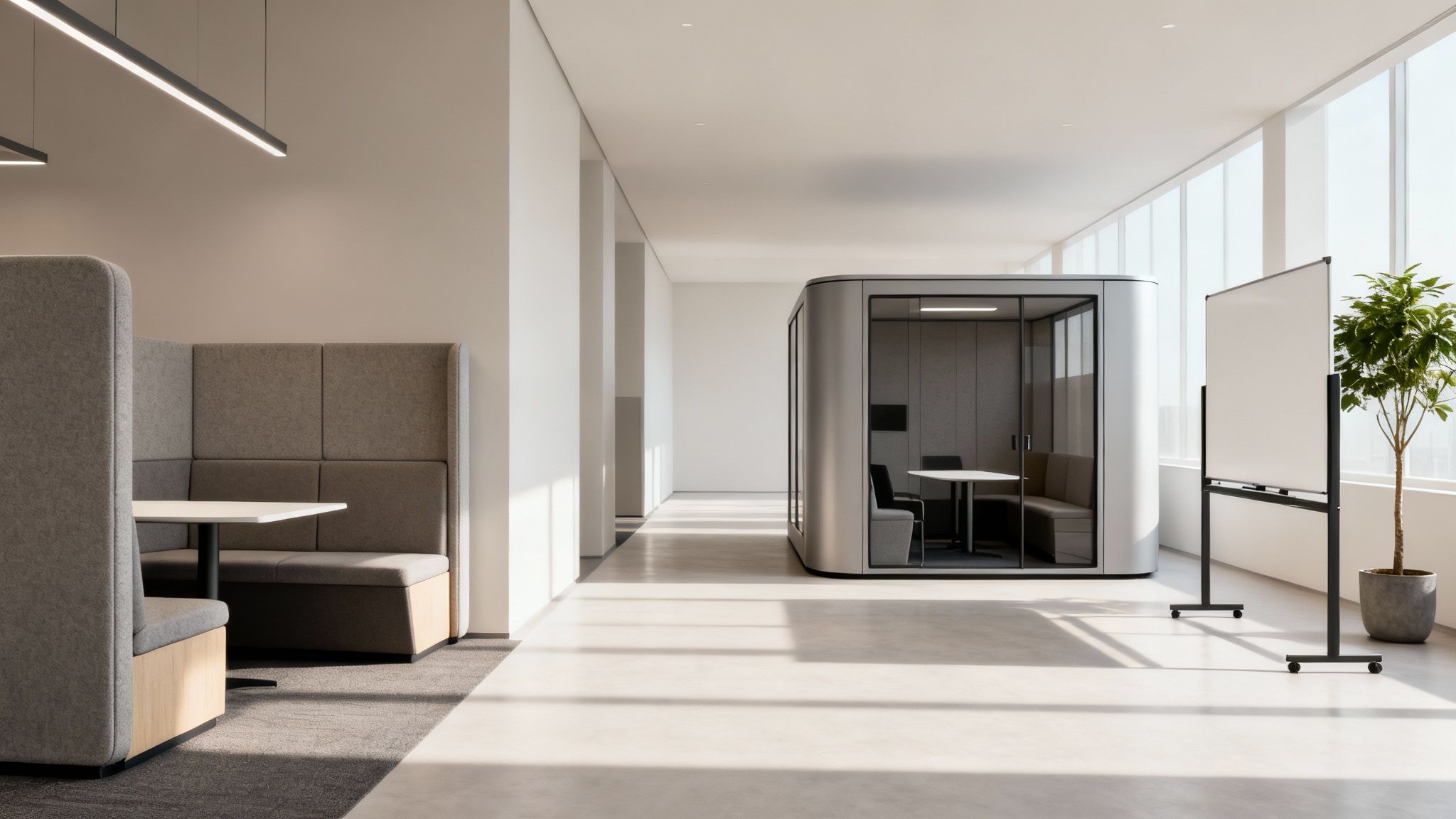
- Focus Zones: These are your library-like areas built for deep concentration. Make sure they’re tucked away from high-traffic routes and feature individual workstations with good acoustic screening.
- Collaboration Zones: These spaces are buzzing with interaction. Think open areas with large tables, whiteboards everywhere and comfy seating that invites spontaneous brainstorming sessions.
- Social Zones: This is the heart of your office. The kitchen, a breakout space or a café-style area. It’s where informal connections happen and your company culture really comes to life.
- Private Zones: Absolutely crucial for confidential calls or one-to-one catch-ups. Or just when someone needs to completely escape the buzz to get something done.
By offering this variety you’re acknowledging the natural rhythm of a workday which rarely involves being chained to one desk for eight straight hours.
Taming the Noise with Smart Acoustics
Let’s be honest. In an open-plan office noise is the number one enemy of deep work. The constant chatter, ringing phones and foot traffic can shatter concentration leading to mistakes and serious frustration. The good news is you don’t have to build walls to fix it.
Strategic acoustic management is one of the smartest investments you can make. The goal isn’t total silence as that can be just as unsettling. It’s about controlling and absorbing sound to create a more comfortable less distracting environment. For a proper deep dive check out our detailed guide on the reduction of noise in the workplace.
Some of the most effective solutions we see working time and again include:
- Acoustic Panels: Fixed to walls or hung from ceilings these soak up ambient sound. Modern designs look fantastic and can even become a design feature adding colour and texture.
- High-Backed Seating: Sofas and armchairs with high backs are brilliant for creating small semi-private nooks within an open area. They offer a surprising amount of acoustic insulation for one or two people.
- Sound-Masking Systems: These systems emit a subtle engineered background sound that makes human speech harder to understand from a distance and therefore far less distracting.
The Power of Flexible and Modular Solutions
For many businesses flexibility is everything. A full-scale disruptive refurbishment isn’t always on the cards. This is where modular solutions really shine offering a fast cost-effective way to solve your most pressing productivity challenges right now.
Modular meeting pods are the perfect example. These self-contained acoustically sealed rooms can be installed in a few hours. They instantly create much-needed private spaces for calls, video conferences or quiet work.
Imagine you’re struggling with a chronic shortage of meeting rooms. Instead of weeks of disruptive building work you could have two or three pods installed over a weekend. The impact is immediate. Teams get the private spaces they desperately need and the main open-plan area becomes calmer and more focused. This adaptability is key to future-proofing your workspace allowing it to evolve as your business does.
How Employee Wellbeing Fuels High Performance
Let’s be blunt. A burnt-out team is an unproductive team. It’s a simple truth many businesses still overlook when they’re chasing output and targets. The reality is that sustained high performance isn’t possible without genuine employee wellbeing. The two are completely intertwined.
Thinking about how to improve workplace productivity means looking beyond workflows and software. It means creating a physical environment that actively supports the physical and mental health of your people. When you show your team you value them as individuals they repay that investment with focus, loyalty and better work.
This isn’t about grand expensive gestures. It’s about thoughtful design choices that make the workday healthier and more comfortable.
Supporting Physical and Mental Health Through Design
The best workplace designs make wellbeing feel effortless and integrated not like an optional extra. Small strategic changes can have an outsized impact on how people feel and perform each day. This is where concepts like biophilic design really come into their own.
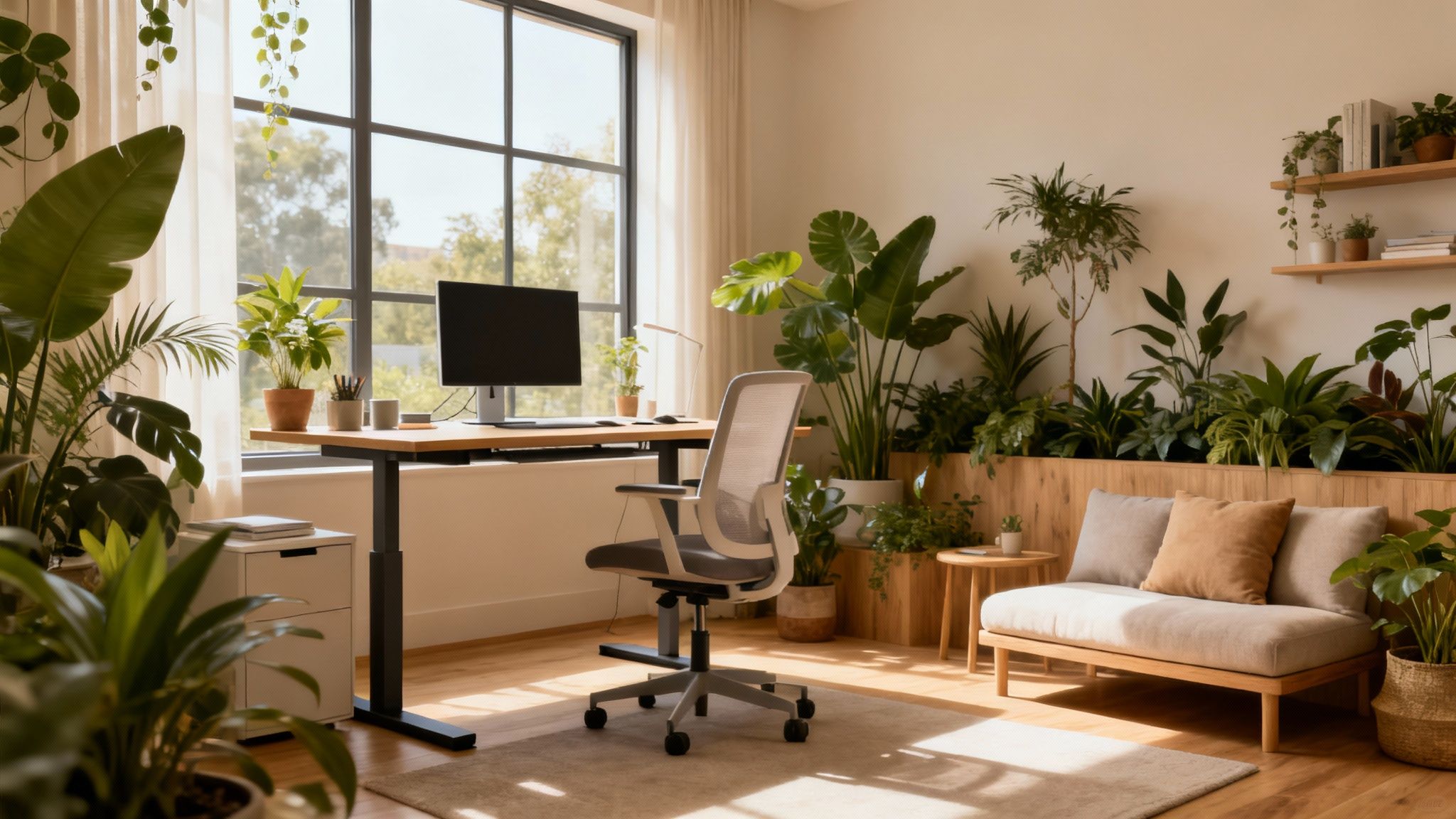
Bringing natural elements into the office is one of the most effective ways to lower stress and improve concentration. This can be as simple as adding live plants to desks and communal areas or maximising the natural light that floods the space. Access to daylight is consistently linked to better moods and higher energy levels.
Ergonomics is another non-negotiable. A poorly designed workstation leads to physical strain, discomfort and eventually absenteeism. Investing in high-quality adjustable chairs and desks isn’t a perk. It’s a fundamental requirement for preventing chronic issues and ensuring your team can focus on their tasks without physical distraction.
Visual Tip: An office that actively cares for its people is an office that performs. By designing for health you are directly investing in your company’s productivity and resilience.
Dedicated wellness rooms or quiet zones also play a crucial role. Providing a tech-free space where staff can decompress for a few minutes is a powerful statement. It shows you understand the pressures of modern work and are providing the tools to manage them effectively.
The Clear Link Between Reduced Burnout and Better Performance
The conversation around flexible working models and shorter work weeks isn’t just a trend. It’s backed by compelling data. The results from major UK trials of a four-day week provide clear evidence that when you prioritise rest and reduce burnout productivity often improves.
In one significant UK pilot an incredible 71% of employees reported feeling less burnout. At the same time 39% felt less stressed all while company productivity and performance were maintained. This proves that creating a work culture and environment that prevents exhaustion is a direct route to better business outcomes.
Whether you’re based in Braintree or Stansted creating a workspace that supports this modern flexible approach is key to attracting and retaining the best talent. For a deeper look check out our guide to improving wellbeing in the workplace.
Wellbeing Quick Wins for Your Office
You don’t need a complete overhaul to start making a difference. Here are a few practical steps you can take right now to boost wellbeing and in turn productivity:
- Introduce Live Plants: Start with low-maintenance options to improve air quality and add a calming natural aesthetic.
- Survey Staff on Ergonomics: Just ask your team what they need. A simple questionnaire can reveal common issues with chairs, desks or screen positions that are easy to fix.
- Designate a Quiet Zone: Find a corner that can be a designated no-tech no-call zone for relaxation and mental resets.
- Improve the Breakout Area: Make the kitchen or breakout space more inviting with comfortable seating and better amenities to encourage proper breaks away from desks.
These small but meaningful changes signal a commitment to your team’s health. They create a positive cycle where supported employees deliver their best work.
Future-Proofing Your Office with Smart Tech and Training
A brilliant new office layout is a fantastic starting point but it’s only half the battle. To truly unlock long-term productivity your team needs the right tools and the skills to use them effectively. I’ve often seen the biggest gains happen when a company nails the connection between their physical environment and the tech within it.
Investing in your people’s capabilities has never been more critical. The average training investment per employee in the EU is now double that of the UK where a staggering 3.7 million workers currently lack essential digital skills. This isn’t just a number. It’s a gap that directly impacts national productivity and puts a spotlight on the urgent need for workplaces that support continuous learning.
This is why an office refurbishment shouldn’t be seen as just a capital expense. It’s a strategic investment in your company’s future skills. By designing a space that encourages and facilitates learning you create an environment where your team can adapt and grow.
Designing Spaces for Learning and Development
Let’s be honest. Those traditional stuffy training rooms are a relic of the past. To really foster a culture of continuous improvement learning spaces need to be woven into the daily fabric of the office. They should feel accessible, modern and genuinely inviting.
Think about creating multi-purpose rooms with flexible reconfigurable furniture. One day it might host a formal software training session and the next it could be transformed for a collaborative hands-on workshop. These areas must be kitted out with the latest tech to support hybrid learning. This ensures everyone can participate on an equal footing whether they’re in the office or working remotely.
Here’s what I’d consider essential for effective training spaces:
- Integrated AV Technology: Seamless screen sharing, high-quality cameras and crystal-clear audio are non-negotiable for modern training delivery.
- Flexible Seating: A mix of moveable tables, stackable chairs and comfortable soft seating allows the room to adapt to different learning styles and session formats.
- Writable Surfaces: Think floor-to-ceiling whiteboards or interactive digital displays. Anything that encourages people to get up, participate and brainstorm visually.
Embedding Technology to Boost Collaboration
The right technology doesn’t just support formal training sessions. It enhances the everyday collaboration and knowledge-sharing that drives a business forward. When you equip your collaborative zones with the right tech you turn them from simple breakout areas into powerful productivity hubs.
For instance installing user-friendly video conferencing systems in smaller meeting rooms and pods empowers teams to connect instantly with clients or remote colleagues without the usual technical faff. An interactive smartboard can transform a standard project meeting into a dynamic session where ideas are captured, saved and shared with a single click.
This approach is all about removing the technological friction that so often slows work down. When the tools are intuitive and reliable your teams are far more likely to use them. This naturally leads to more efficient communication and faster decision-making. You can explore a variety of tech-forward spaces in our guide to modern office design ideas.
Visual Tip: A smart office isn’t just about flashy gadgets. It’s about thoughtfully integrating technology that makes your team’s work life simpler, faster and more connected.
Creating an Environment for Mentorship
Beyond any formal training programme a huge amount of skill development happens organically through informal mentorship and on-the-job learning. Your office design can either hinder this process or actively help it along. The key is creating a layout that encourages natural interaction.
This doesn’t mean forcing everyone into a noisy distracting open-plan space. It’s about designing intentional “collision points” where staff from different teams and levels of seniority can naturally cross paths. This could be a well-designed central coffee point or a comfortable library area for focused work.
These are the spaces where spontaneous conversations spark. The kind where invaluable knowledge is passed on. By designing an office that supports both structured training and this vital informal mentorship you build a resilient adaptable workforce that’s ready to tackle whatever comes next.
We’ve walked through the whole process from rooting out those hidden productivity killers to putting smart design and wellbeing in place. Boosting workplace productivity isn’t a one-and-done project. It’s about building an environment that can adapt and grow with your team.
The good news? You don’t have to boil the ocean. The best approach is to start with small manageable changes that give you the most bang for your buck right away.
Start Small, Build Momentum
Focus on the quick wins first. Sorting out the acoustics with a few smartly-placed panels or improving the lighting in a dark forgotten corner can make a real difference in a matter of days. These early successes are crucial. They build momentum and get your team excited about what’s next.
Visual Tip: Improving your workplace is a journey of continuous refinement. The goal isn’t perfection on day one but consistent progress that helps your people do their best work every single day.
Once you’ve sorted the most glaring issues you can start planning the bigger investments. Maybe that’s creating proper zones for different work styles or bringing in new tech for better collaboration. Every step whether it’s big or small adds up to a more effective and supportive place to work.
This strategic phased approach means every decision is considered and every pound you spend delivers a clear return. It’s all about making smart incremental improvements that over time create a massive transformation.
Ready to transform your workspace? Speak to the Gibbsonn Interiors team today.
Your Questions, Answered
Embarking on an office overhaul to boost productivity always sparks a few questions. From budget-friendly tweaks to project timelines here are some straightforward answers to the queries we hear most often.
What’s the single most impactful change I can make on a tight budget?
If I had to pick one thing it would be tackling the acoustics. It’s often the highest-impact lowest-cost change you can make especially in a noisy open-plan office. Poor acoustics are a notorious productivity killer constantly breaking focus and draining energy.
You don’t need a massive budget to see a real difference. Strategically placed acoustic panels, baffles or even some high-backed soft seating can work wonders by absorbing sound and carving out quieter zones.
For a more flexible fix investing in just one or two modular acoustic pods like those from BlockO gives your team a dedicated sanctuary for calls and deep-focus work. It’s a surgical strike against distraction that delivers a massive productivity boost without the need for major construction.
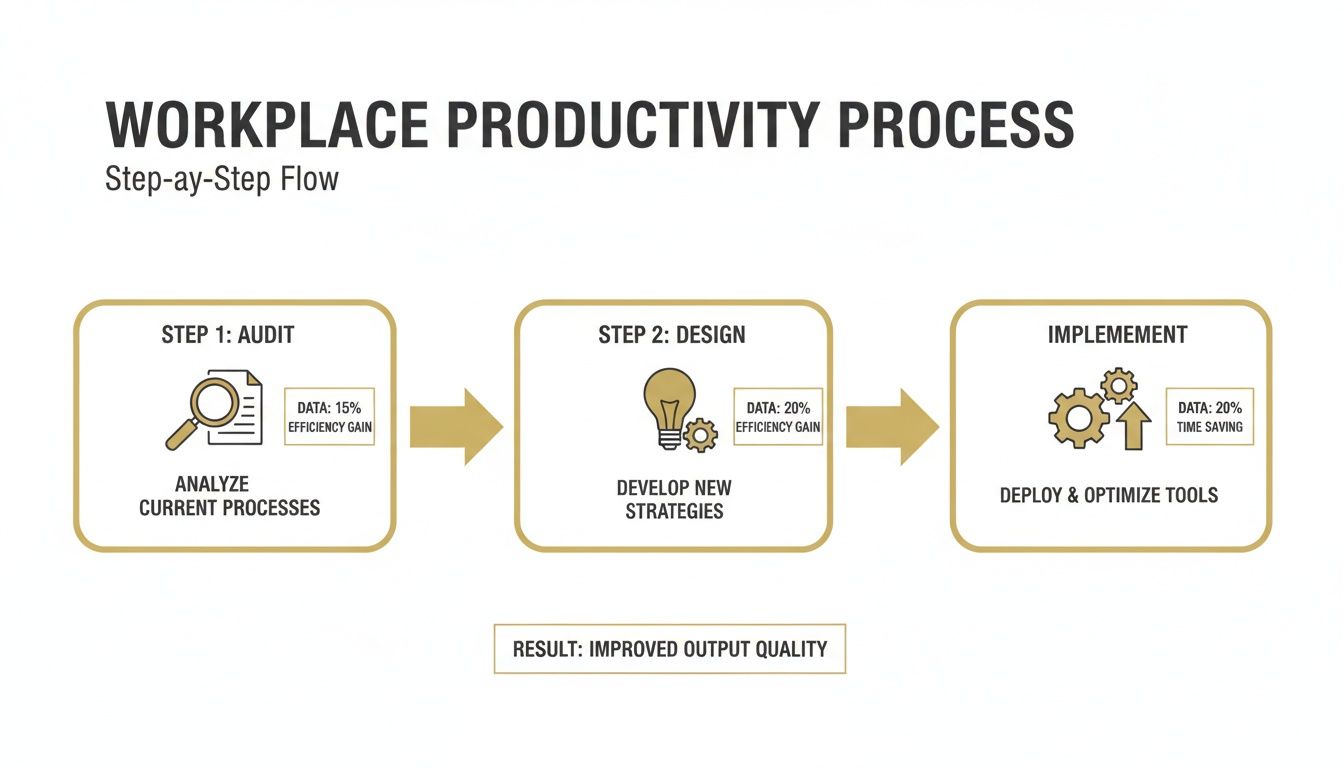
This simple flow really shows that a successful project isn’t about guesswork. It’s about a solid process.
How can I actually measure the ROI of an office refit on productivity?
Measuring the return on your investment comes down to tracking the right metrics before and after the work is done. It’s all about the data.
Before you start you need a benchmark. Gather your current numbers on things like employee satisfaction scores, absenteeism rates and staff turnover.
Once the new space is up and running keep tracking these exact same metrics for the next six to twelve months. A successful project will show clear improvements. Think higher satisfaction, lower absenteeism and better staff retention. While pinning an exact financial figure can be tricky these positive trends give you concrete proof of the value you’ve added to the business.
How long does a typical office fit-out take?
There’s no one-size-fits-all answer as it really depends on the scale of the project. But for a professional partner like Gibbsonn Interiors the number one goal is always to keep disruption to an absolute minimum.
A simple reconfiguration with new furniture might only take a couple of weeks. On the other hand a full-scale refurbishment involving structural changes could take several months from start to finish.
We almost always work in carefully planned phases or schedule the noisy work for evenings and weekends. This ensures your team can carry on with their jobs with as little interruption as possible. From day one we provide a detailed project plan so you know exactly what’s happening and when. Clear communication is everything.