
Table of Contents
- Why Workplace Wellbeing is a Critical Business Priority
- The Hidden Costs of a Stressed-Out Workforce
- Key Design Strategies for a Healthier Office
- Using Modular Pods to Create Focused Work Zones
- Your Step-by-Step Plan to a Better Workplace
- How to Measure Your Return on Wellbeing
- Your Top Questions About Workplace Wellbeing Design
Not long ago workplace wellbeing was a nice-to-have, a buzzword you might hear in HR meetings. Now it’s a core measure of a company’s health and a powerful driver of business success. It’s about looking after the physical, mental and social health of your people. Building an office that actively supports them is one of the smartest investments you can make.
Why Workplace Wellbeing Is a Critical Business Priority
The conversation has moved from the staff room to the boardroom. Employee wellbeing is now understood as a fundamental business function that touches everything from daily output to long-term profit. And this shift is happening for a simple reason: people do their best work when they feel their best.
Let’s be honest, traditional office layouts are showing their age. Those endless rows of desks, harsh lighting and a constant hum of background noise were designed for maximum headcount, not human comfort. The result is an environment that practically breeds stress and burnout, stifling focus and collaboration. For businesses in competitive hubs like London and Cambridge, ignoring this is a mistake that costs real money.
The Real Impact of a Poor Work Environment
A workspace that undermines wellbeing hits your bottom line, plain and simple. When your team is constantly distracted, uncomfortable or stressed out by their surroundings, their ability to concentrate and deliver high-value work takes a nosedive. That leads to missed deadlines, a drop in quality and a culture of disengagement.
This isn’t just a hunch. Recent data from the Health and Safety Executive (HSE) shows that stress, depression or anxiety accounted for a staggering 17.1 million working days lost in the UK in 2022/23. This is a clear signal that the work environment itself is a major factor in employee health.
Your Office Is a Tool for Growth
It’s time to start seeing your physical office as a strategic asset. A thoughtfully designed workspace does more than just give your team a place to sit; it actively builds a positive, productive culture. It sends a clear message that you value your people’s health and comfort, a powerful signal for boosting morale and earning loyalty.
This is where strategic office design comes in. By focusing on a few key elements, you can create a space that works for your people, not against them. Think about improvements like:
- Better Acoustic Control: Minimising disruptive noise so people can finally get into deep work.
- Improved Natural Light: Boosting mood and energy levels throughout the day.
- Ergonomic Furniture: Preventing the physical strain that leads to aches, pains and absence.
- Flexible Spaces: Giving people the choice to work where and how they feel most productive.
These design principles are fundamental to creating healthier, more effective workspaces. It’s also worth noting how sustainable office spaces contribute massively to employee wellbeing. By investing in these areas, companies across Essex and Hertfordshire aren’t just getting a facelift for their office. They’re building more resilient, attractive and successful businesses from the inside out.
The Hidden Costs of a Stressed-Out Workforce
Poor employee wellbeing isn’t some fluffy HR concept; it’s a hard financial reality that shows up on the balance sheet. When people feel stressed, burnt out or simply unsupported by their work environment, the consequences are very real. These seemingly abstract issues quickly translate into concrete numbers that hit productivity, attendance and your ability to hold onto good people.
Seeing these costs clearly is the first step in building a compelling case for change. Investing in a healthier, more supportive workspace isn’t just another expense. It’s a strategic move to protect your most valuable asset, your people, and secure your company’s long-term resilience.
The Problem of Presenteeism
One of the biggest and most invisible drains on a business is presenteeism. This is what happens when your team is physically at their desks but mentally and emotionally somewhere else entirely. They might be wrestling with stress, anxiety or just an inability to focus because of constant distractions. While they’re ‘present’, their productivity plummets, leading to mistakes, missed opportunities and a noticeable dip in the quality of their work.
This isn’t a rare occurrence; it’s alarmingly common. The HSE’s 2023 report highlights that stress, depression and anxiety are the main causes of work-related ill health. The cost to UK businesses runs into billions each year with the lion’s share of that figure pinned directly on presenteeism.
High Turnover and Spiralling Recruitment Costs
A stressful or uncomfortable workplace is one of the main reasons great employees decide to walk away. High staff turnover is incredibly expensive, kicking off a costly cycle that goes far beyond just placing a job advert. Every time a team member hands in their notice, you’re looking at costs for:
- Recruitment: The fees for advertising, agency costs and the countless hours spent interviewing candidates.
- Onboarding: The time and resources it takes to train a new hire and get them up to full speed.
- Lost Knowledge: When an experienced employee leaves, they take a huge amount of institutional knowledge with them.
- Team Morale: Constant departures can seriously damage the stability and spirit of the people who stay.
Visual Tip Box: By creating a work environment that actively supports wellbeing in the workplace, you don’t just improve retention. You turn your company into a magnet for top talent, giving you a real edge in a competitive job market.
The Constant Battle with Noise and Distractions
In so many modern offices, especially open-plan ones, noise is a primary source of stress and a killer of focus. The constant buzz of background chatter, ringing phones and impromptu meetings creates an atmosphere where deep, concentrated work feels almost impossible. This auditory overload forces people to use up precious mental energy just to block everything out, leaving them drained and frustrated.
This is far more than a minor annoyance; it’s a direct hit to efficiency. For businesses we work with in places like Chelmsford, tackling acoustic comfort is often right at the top of their list. Our guide on the reduction of noise in the workplace dives into practical strategies to win this battle. By putting the right acoustic solutions in place, you can carve out quiet zones that give your team the peace they need to truly perform at their best.
Key Design Strategies for a Healthier Office
Knowing the cost of poor wellbeing is one thing but actually doing something about it is another challenge. The great news is that intelligent office design gives us practical, tangible ways to build a healthier and more productive work environment. It’s time to move from theory to action.
These design interventions aren’t just about making the place look nice; they get to the root causes of workplace stress, physical aches and mental burnout. By thoughtfully shaping the physical space, you give your team the tools they need to feel and perform at their best. For businesses in places like Bishop’s Stortford, this isn’t an expense, it’s a direct investment in your people.
Prioritise Ergonomics to Support Physical Health
Let’s be honest, long hours slouched in a bad chair or hunched over a laptop take a serious physical toll. It’s no surprise that musculoskeletal issues are a huge cause of employee absence, often stemming directly from office setups that completely ignore how the human body is meant to function. This is where ergonomics makes all the difference.
Simply put, ergonomic design is about fitting the workspace to the worker, not forcing the worker to fit the workspace. It means providing adjustable furniture that lets each person find their sweet spot for posture, taking the strain off their neck, back and wrists.
A few key ergonomic solutions make a world of difference:
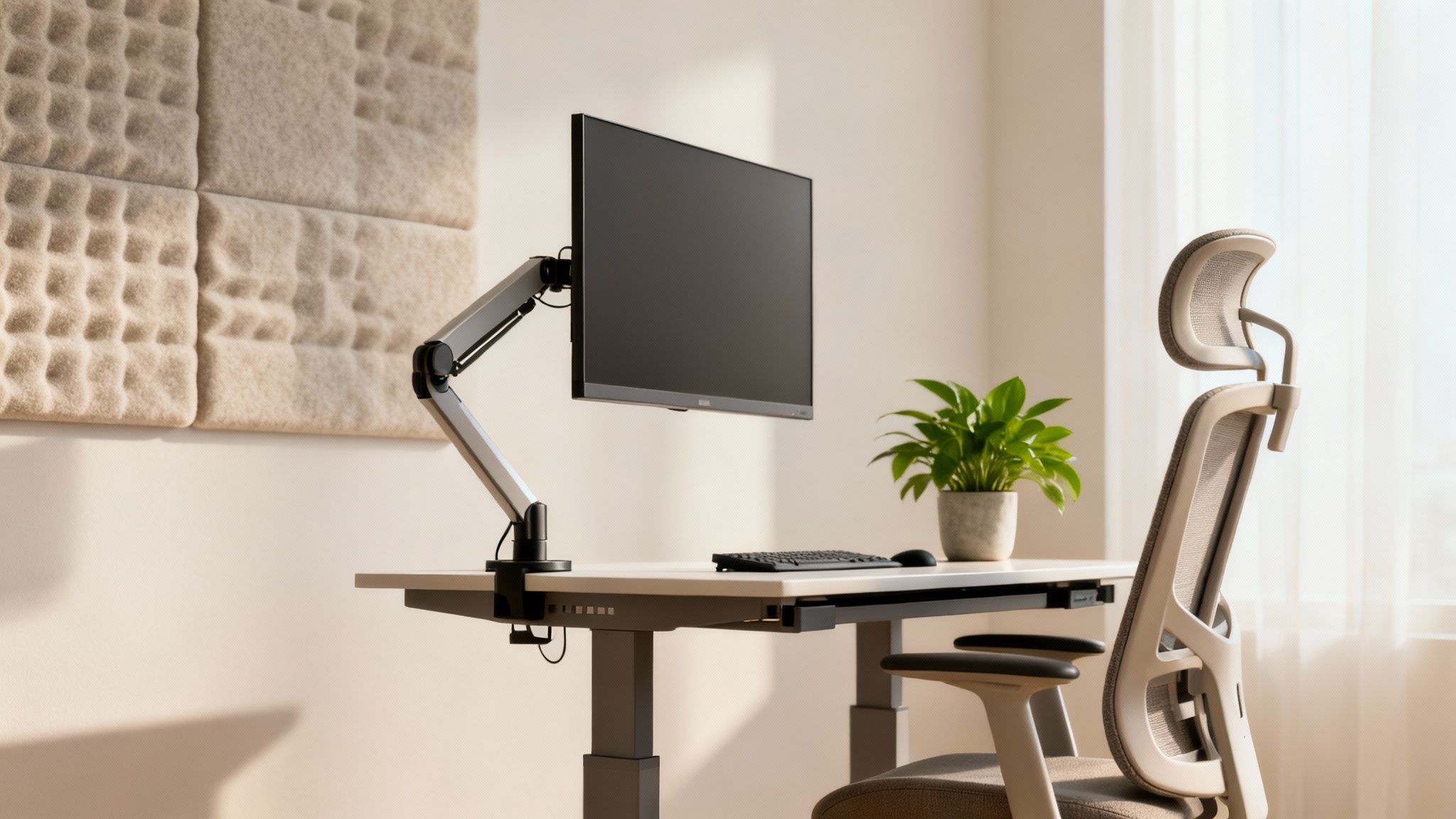
- Adjustable Chairs: Look for chairs with customisable height, proper back support and moveable armrests. It’s the foundation of good posture.
- Sit-Stand Desks: Giving people the choice to stand or sit throughout the day is a game-changer for breaking up sedentary habits and boosting energy.
- Monitor Arms: These simple additions allow screens to be placed at the perfect eye level, instantly preventing that all-too-common neck and shoulder pain.
When you invest in ergonomic furniture, you’re not just buying desks and chairs. You’re actively preventing the chronic aches and pains that kill focus and lead to sick days.
Embrace Biophilic Design to Reduce Stress
We all have an innate need to connect with nature. Biophilic design is all about bringing elements of the natural world into the office to tap into this powerful connection. It’s a surprisingly simple yet incredibly effective way to lower stress, sharpen cognitive function and create a much calmer atmosphere.
A study featured in renowned architecture publication ArchDaily found that employees in offices with natural elements reported a 15% higher level of wellbeing and were 6% more productive than those working without them.
You don’t need to turn the office into a jungle overnight. Bringing in biophilia can be as simple as adding potted plants and living walls, which introduce greenery and naturally improve air quality. Maximising natural light by clearing windows of obstructions is another easy win, helping to lift moods and regulate our internal clocks. Using natural materials like wood, stone and even small water features helps to strengthen that restorative link to the outdoors.
Control Acoustics for Better Focus
As we’ve seen, noise is one of the biggest productivity killers in the modern office. The constant buzz of background chatter and endless interruptions makes it almost impossible to get into a state of deep focus. This is why smart acoustic management is non-negotiable.
This isn’t about enforcing library-like silence. It’s about creating a balanced acoustic environment with different zones designed for different kinds of work. You can achieve this with:
- Acoustic Panels: Wall-mounted or ceiling-hung panels are brilliant for soaking up excess sound, cutting down on echo and general clatter.
- Sound-Masking Systems: These systems introduce a subtle, uniform background sound that cleverly makes distracting conversations fade into the background.
- Strategic Layouts: Simply designing quiet zones away from high-traffic, noisy areas like kitchens and receptions can work wonders.
A well-thought-out acoustic strategy minimises distractions, reduces stress and gives people the headspace they need to concentrate.
Create Flexible and Empowering Spaces
The one-size-fits-all office is dead. Today’s workforce doesn’t just want choice and autonomy, they expect it. A flexible layout provides a whole menu of different settings designed for different tasks, empowering your team to choose the environment that works best for them in that moment.
This approach, often called activity-based working, might include quiet pods for heads-down focus, comfy lounge areas for a quick, informal chat and traditional desks for routine tasks. It’s a way of acknowledging that what a person needs at 9 a.m. is very different from what they need at 3 p.m.
By providing this variety, you’re sending a clear message of trust and giving your team control over their own productivity and comfort. For companies in Chelmsford, this kind of adaptability is exactly what helps attract and keep the best people.
To bring these concepts together, let’s look at how these interventions compare side-by-side.
Comparing Wellbeing Design Interventions
| Intervention Type | Primary Wellbeing Benefit | Example Solution |
|---|---|---|
| Ergonomics | Reduces physical strain & prevents injury | Adjustable sit-stand desks, monitor arms |
| Biophilic Design | Lowers stress & improves mood | Living walls, natural materials, maximised daylight |
| Acoustic Control | Increases focus & reduces distractions | Sound-absorbing panels, designated quiet zones |
| Flexible Layouts | Boosts autonomy & supports diverse tasks | A mix of open, private and collaborative spaces |
Each of these strategies tackles a different aspect of employee wellbeing but they work best when integrated into a holistic design that puts people first.
Using Modular Pods to Create Focused Work Zones
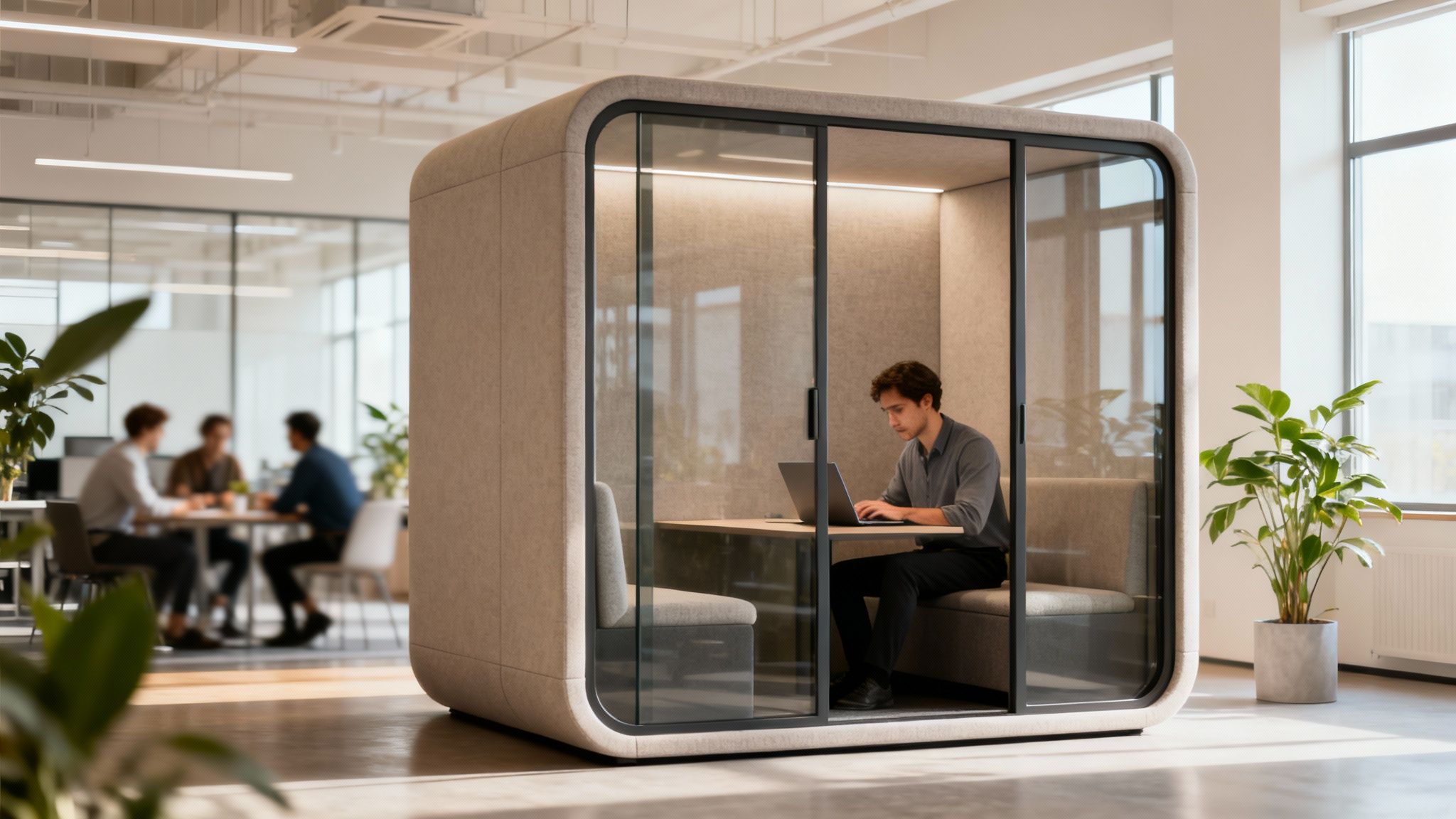
While broad design strategies set the stage for a healthier office, sometimes the most powerful solutions are the ones you can drop right into an existing floor plan. For today’s open-plan office, nothing tackles the constant headache of noise and distraction quite like a modular pod. These freestanding structures are one of the best tools we have for improving wellbeing in the workplace.
They hit two of the biggest sources of office stress head-on: the lack of privacy and the inability to escape a constant barrage of noise. By offering a self-contained, acoustically sealed environment, they hand control back to the employee, giving them a much-needed sanctuary for focus and confidential conversations.
Carving Out Space for Deep Work
Deep work, the kind of laser-focused concentration you need for complex problem-solving or genuine creativity, is next to impossible in a bustling open-plan environment. Every passing conversation or ringing phone shatters your train of thought, forcing your brain to reset. It’s mentally exhausting and a huge drain on productivity.
Modular pods create the perfect on-demand zones for this kind of heads-down work. They’re engineered to block out the surrounding chaos, allowing employees to step inside and find instant quiet. This isn’t just about making things less annoying; it’s about creating the psychological safety people need to produce their best work.
By giving your team a reliable escape from the open floor, you empower them to manage their own focus. This autonomy is a cornerstone of a positive work environment, showing trust and respect for their needs.
And these pods are far more than just quiet boxes. Leading brands like Vetrospace and BlockO design their products with total user comfort in mind. They integrate features like controlled lighting, comfortable seating and all the necessary power and data points, turning them into fully functional micro-offices within the wider workspace.
Supporting Confidentiality and Collaboration
Privacy is another casualty of the open-plan revolution. Sensitive client calls, confidential HR discussions or one-to-one performance reviews become fraught with anxiety when you know half the office can overhear. This lack of privacy can easily erode trust and create a culture where people feel constantly on show.
Pods offer an elegant fix, providing a soundproof space where these crucial conversations can happen. They are incredibly versatile and can be configured for all sorts of uses:
- Single-Person Phone Booths: Perfect for private calls or video conferences, keeping sensitive information secure.
- Two-Person Pods: Ideal for manager check-ins, interviews or collaborative problem-solving without disrupting the whole office.
- Larger Meeting Pods: Accommodate small teams for focused brainstorming sessions, away from the general office buzz.
This adaptability makes them an invaluable asset for any business, especially in a busy hub like London or Cambridge. To see just how much they can change a shared space, you can explore our detailed guide on rethinking workspace dynamics with freestanding booths and pods.
The Advantage of Flexibility
Perhaps the biggest win with modular pods is their sheer flexibility. Unlike putting up traditional stud walls, which means disruptive, dusty and often permanent construction, pods can be installed in a matter of hours with minimal fuss. This makes them a fantastic solution for businesses leasing their space or for those who need to adapt their layout as the team grows and changes.
This plug-and-play approach means you can react to your team’s needs in real-time. If you notice a growing demand for quiet spaces, you can simply add more pods without committing to a full-scale office refurbishment. For agile companies in fast-moving locations like Stansted, this adaptability is absolutely essential. Pods aren’t just furniture; they are a strategic, future-proof investment in your office infrastructure and your team’s wellbeing.
Your Step-by-Step Plan to a Better Workplace
Improving workplace wellbeing can feel like a mammoth task but breaking it down into a clear, manageable plan makes all the difference. This isn’t about guesswork or throwing money at the latest furniture trends; it’s a deliberate process that starts with understanding your people and ends with a space that genuinely supports them.
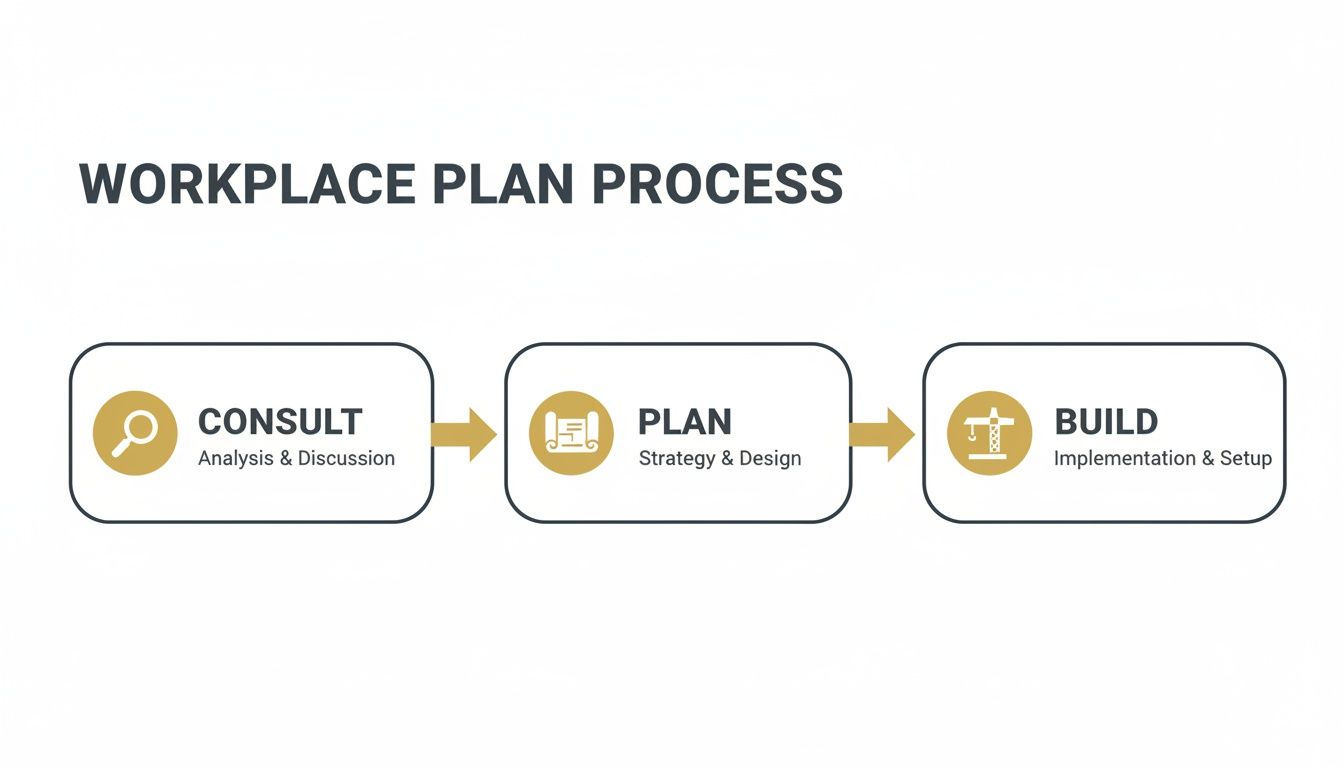
At Gibbsonn Interiors, we simplify the entire journey with our proven design-and-build approach. From our first chat to the final handover, you get a single, dedicated point of contact who is responsible for the whole project. This completely removes the stress of juggling multiple contractors and guarantees a smooth path from vision to reality for businesses across Hertfordshire and beyond.
Start with a Workplace Consultancy
Before you even think about moving a desk, you need to get under the skin of how your team actually works. A workplace consultancy is the essential first step, a deep dive into your company culture, workflows and all the little frustrations that get in the way. It’s all about listening to your people to discover what’s holding them back and what they need to truly thrive.
This stage is where we gather the crucial intel through:
- Employee Surveys: Asking direct questions about comfort, noise levels and what people feel they need to do their jobs better.
- Team Workshops: Bringing people together in facilitated discussions to uncover shared challenges and collaborative needs.
- Space Utilisation Studies: Observing how your current office is really being used, which areas are constantly buzzing and which are gathering dust.
This discovery phase is absolutely vital. It gives us the hard data needed to design a space based on evidence, not assumptions, ensuring every decision is the right one for your unique team.
Move to Intelligent Space Planning
Once you know what your people need, the next job is to translate those insights into a practical, functional layout. Intelligent space planning is the bridge between your team’s requirements and the physical design of your office. It’s where we map out a floor plan that actively solves the problems we uncovered during the consultancy.
This is so much more than just arranging desks. It’s about creating a balanced ecosystem of different work settings. The final plan might feature designated quiet zones for deep focus, vibrant collaborative hubs for team projects and comfy breakout areas for those informal chats and much-needed breaks. For our clients in places like Braintree, this strategic approach makes sure the new layout starts working hard for them from day one.
A well-planned office layout is the very foundation of a high-performing workplace. It naturally guides movement, cuts down on distractions and gives employees the freedom to choose the right setting for whatever task is at hand.
Execute a Seamless Fit-Out
With a solid plan locked in, the final stage is bringing it all to life. This is the fit-out, where the designs on paper become a tangible, physical reality. Our end-to-end design-and-build model makes this phase completely seamless. Because the very same team that helped you plan the space is also managing its construction, there are no communication gaps or costly misunderstandings.
We handle every single detail, from sourcing the right materials and managing the trades to ensuring the project stays firmly on schedule and within budget. This unified approach keeps disruption to your business to an absolute minimum, allowing your team to stay focused on their work while we handle the transformation.
Whether it’s a full refurbishment in Stansted or a smaller reconfiguration, our process guarantees a high-quality finish with complete accountability. This structured plan turns the big idea of improving workplace wellbeing into a simple, achievable project.
How to Measure Your Return on Wellbeing
Investing in a new office design to boost wellbeing in the workplace is more than just a nice-to-have; it’s a smart strategic decision. But to really drive the point home with leadership and stakeholders, you need to prove its value. How? By measuring the impact.
Tracking the right data before and after a refurbishment gives you cold, hard proof that a better environment creates better business outcomes. This isn’t about capturing vague feelings. It’s about drawing a direct line from the physical transformation of your space to tangible improvements in performance, armed with data that speaks directly to the bottom line.
Key Metrics to Track
To build a watertight business case, you don’t need a hundred different data points. Just focus on a few high-impact areas that clearly reflect employee wellbeing and engagement. These metrics give you a clean before-and-after snapshot of your workplace’s health.
Here’s where I always advise clients to start:
- Employee Absence Rates: This is one of the most direct measures you can find. A noticeable drop in unscheduled absences is a huge sign that stress levels are down and you’ve created a healthier, more comfortable environment.
- Staff Retention Figures: Let’s be honest, high turnover is incredibly expensive. If more of your talented team members are choosing to stay put after the refurbishment, that’s a powerful testament to increased job satisfaction.
- Productivity Metrics: This will look different for every business. It could be project completion times, sales figures, client satisfaction scores or other key performance indicators. An uplift here shows the new space is genuinely helping people work more effectively.
Don’t Forget the Human Element
Numbers tell a crucial part of the story but they don’t tell all of it. The why behind the data comes from your people. Gathering qualitative feedback is where you see the real, human impact of your investment.
Simple, regular employee surveys are an incredibly effective tool for this. Asking direct questions about comfort, noise distractions and whether they can find the right kind of space for the task at hand gives you rich, day-to-day insights into how the new design is being received.
This is the straightforward, effective process we follow to get these results for our clients, from the initial deep-dive to the final build.
By combining hard data like absence rates with direct feedback from your team, you create a complete, compelling picture of your return on wellbeing.
This evidence-based approach doesn’t just justify the initial project spend. It builds an unshakeable case for continuing to prioritise your team’s health and happiness in every future business decision. It transforms your office from a line item on the balance sheet into a proven driver of success.
Your Top Questions About Workplace Wellbeing Design
Starting a project to improve wellbeing in the workplace always sparks a few questions. It’s completely natural. To help you move forward with confidence, here are some straight-talking answers to the queries we hear most often from business leaders and FMs.
What’s the Ballpark Cost for a Wellbeing-Focused Refurbishment?
This is always the first question and the honest answer is: it really depends. The final figure is shaped by the scale of your ambition, the size of your space and the specific changes you want to make. A simple refresh with new ergonomic chairs and a few biophilic touches is a world away from a full-scale reconfiguration with structural changes.
The key is to think of this as an investment, not a cost. As we’ve seen, the price of doing nothing, measured in high staff turnover, sick days and lost productivity, often dwarfs the initial project spend. We believe in total transparency, so we build detailed quotes after our first chat to make sure everything aligns with your goals and budget.
How Long Will It Take and How Much Disruption Should We Expect?
Every project has its own timeline, tailored to the work involved. Phasing in a few modular pods might just take a few days, whereas a complete fit-out will naturally take several weeks. Here at GIBBSONN Interiors, we’ve become specialists in working around you.
We often schedule the noisiest, most disruptive tasks for outside of your team’s core hours. This means your day-to-day operations can continue with the absolute minimum of fuss. We’ll agree on a clear project schedule with you right from the start so there are no surprises.
Is This Only for Big Companies with Huge Offices?
Not at all. In fact, many of the most powerful wellbeing strategies are perfect for small and medium-sized businesses. Clever space planning can make even a compact office feel far more open and functional and you can get fantastic single-person modular pods that slot neatly into an unused corner.
The core principles of boosting wellbeing in the workplace are universal:
- Let the Light In: This is more about smart layout than sheer square footage.
- Improve Air Quality: Easily done with well-placed plants and ensuring good ventilation.
- Offer Choice: Even in a small footprint, providing different types of seating can make a huge difference.
How Can We Be Sure We’re Making the Right Changes for Our Team?
This is where guessing gets expensive and listening pays dividends. Instead of making assumptions, we use tools like surveys, workshops and simple observation to get direct, honest feedback from your employees.
This data-led approach means every design choice is rooted in the real, identified needs of the people using the space every day. It takes the guesswork out of the equation and ensures your investment delivers results you can actually see and feel. From our experience with clients in London to Cambridge, putting your team first is the real secret to success.
Ready to build a workspace where your team doesn’t just work but thrives? Speak to the Gibbsonn Interiors team today.