
Has your office seen better days? Take a look around. Does it feel like it’s truly working for your team, or is it just a collection of desks and chairs? If you’re feeling it’s time for a change, you’re not alone. Getting your office furniture and design right is so much more than a cosmetic exercise. It’s a powerful investment in your people and their potential.
Table of Contents
- Building Your 2026 Workspace Blueprint
- Creating Your Project Brief with Workplace Consultancy
- Thinking Beyond Rows of Desks
- Choosing Ergonomic Furniture and Smart Acoustic Solutions
- Managing Your Budget and End-of-Lease Obligations
- Bringing It All Together: Installation and Future-Proofing Your Space
- Your Office Design Questions Answered
Building Your 2026 Workspace Blueprint
Think of this guide as your partner in turning that vision of a better workspace into a concrete reality. We’ll walk through the entire process, starting with the crucial first step of understanding what your team actually needs, and then shaping a plan that makes sense for your budget. It’s not just about aesthetics; it’s about building a productive, inspiring, and human-centric environment from the ground up.
This simple, three-stage process, Needs, Plan, Build, is the foundation of every successful workspace project we deliver.
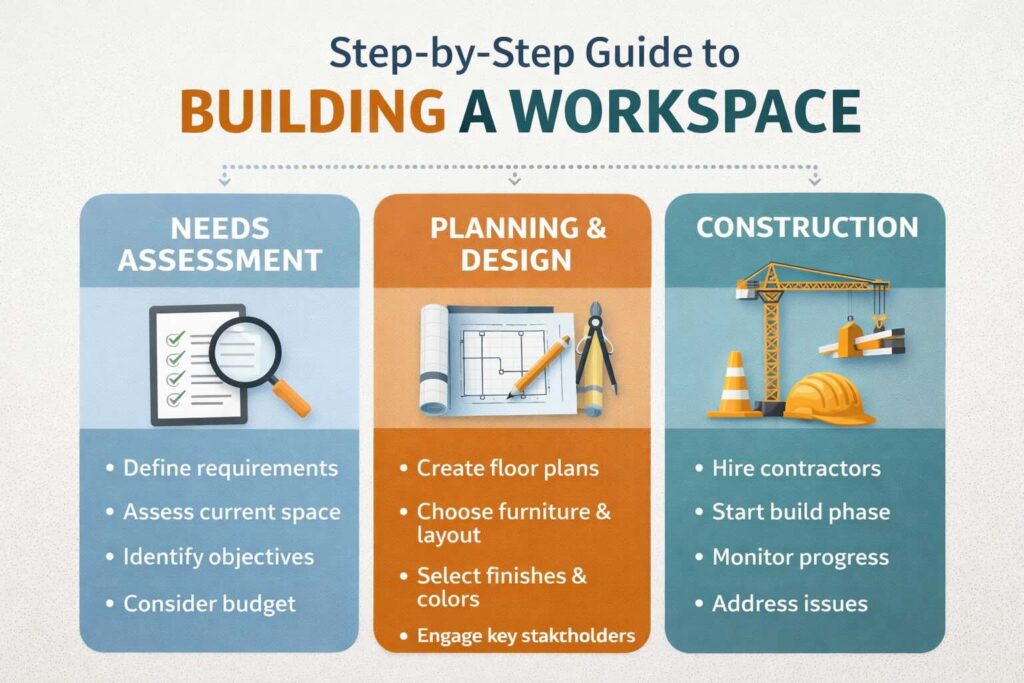
Stick to these fundamentals, and you’ll keep your project on track, avoiding the costly diversions and compromises that can derail even the best intentions.
Why a Blueprint Matters
Whether you’re based in a thriving tech hub like Cambridge or a busy commercial centre, a solid plan is your most important tool. A blueprint for your office furniture and design project gives everyone, from your own team to your external partners, a shared understanding of the objectives. It ensures every decision aligns with your core business goals.
When you get it right, the office becomes a strategic asset. It can:
- Boost productivity: By creating a mix of environments for focused work, collaboration, and quiet reflection.
- Improve staff wellbeing: Through ergonomic furniture and thoughtful layouts that reduce physical and mental strain.
- Attract and retain talent: Let’s be honest, a fantastic workspace is a major draw for top candidates.
- Strengthen your brand: Your office is a physical expression of your company’s culture and what you stand for.
“A brilliant workspace is one of the most important investments you can make in your business. It directly impacts your people, your productivity, and your brand.”
Thinking About Your Space in Essex and Hertfordshire
For organisations we work with across Essex and Hertfordshire, the core principles never change. The mission is always to create a space that’s tailored to support your unique workflow and company culture. A well-designed office isn’t a luxury, it’s a fundamental asset that delivers tangible returns in morale and performance.
Throughout this guide, we’ll break down each stage of the journey, from defining your brief to final installation. Let’s get started.
Creating Your Project Brief with Workplace Consultancy
It’s easy to get swept up in the exciting parts of an office redesign, the colour swatches, the sleek new desks, the fancy coffee machine. But before you even glance at a furniture catalogue, we need to take a step back and define what success actually looks like for your business.
This all starts with a project brief. Far from being just another bit of paperwork, a good brief is the single most important document you’ll create. It’s the blueprint for the entire office furniture and design project, ensuring every decision we make has a purpose.
A robust brief doesn’t come from guesswork. It’s built on understanding how your teams operate now, what holds them back, and what they genuinely need to thrive. This is exactly where workplace consultancy comes into play.
What Is Workplace Consultancy?
Think of workplace consultancy as the diagnostic phase of your project. It’s a deep dive into your business goals, team dynamics, and company culture, led by an expert who knows how to translate those findings into a physical environment that delivers results. A consultant helps you challenge assumptions with hard evidence.
We see it all the time. A client might be convinced they need three more large meeting rooms. But after we run a simple staff survey and observe how the space is used, the data often tells a different story. What the team really craves are small, private pods for uninterrupted focus work and video calls.
Getting this right from the start saves a huge amount of time and money down the line. If you’re curious about the nuts and bolts of this process, it’s worth exploring what’s involved with a professional workplace strategy consultant.
Gathering Honest Feedback from Your Team
The only way to know what your people need is to ask them. We use a few tried-and-tested methods to gather the honest, practical insights that form the bedrock of a great design.
| Feedback Method | What It’s Good For | A Real-World Example |
|---|---|---|
| Anonymous Surveys | Getting unfiltered opinions on sensitive topics like noise, privacy, or even management visibility. | “On a scale of 1-5, how easy is it to find a quiet space for a confidential phone call?” |
| Team Workshops | Collaborative brainstorming where creative and practical ideas for the new space can surface. | “If you had a magic wand, what’s the one thing you would change about the office to make your day better?” |
| On-Site Observation | Seeing how people actually use the space, which can be very different from how they say they do. | We’ll watch for makeshift meeting spots, bottlenecks in high-traffic areas, or underused spaces. |
When you gather this data, you’re doing more than just planning an office fit-out; you’re co-creating the new environment with the very people who will bring it to life. This collaborative approach builds a powerful sense of ownership and excitement from day one.
“A strong project brief acts as your north star. It ensures every single decision, from the layout to the final piece of furniture, is directly linked back to your business goals and your team’s needs.”
Ultimately, putting in this foundational work transforms your project from a simple cosmetic upgrade into a strategic investment in your people and your future. It aligns everyone, from the board room to the installation team, around a single, clear vision for success.
Thinking Beyond Rows of Desks
Right, you’ve done the deep dive into what your team actually wants from their office. Now comes the exciting part: translating those needs into a physical space that works. This is where we move from theory to reality, getting practical with space planning and zoning.
This isn’t just about making sure you can fit enough desks in. It’s about being deliberate. Smart space planning is the art of creating a balanced, functional environment that supports every single way your team works. It means thoughtfully carving out different zones for different activities, a crucial step in boosting focus, sparking collaboration, and creating a workplace people genuinely want to be in.
The Old Office Doesn’t Work Anymore
The old, one-size-fits-all office layout, those endless, identical rows of desks, simply doesn’t work for most businesses anymore. The way we work is far too dynamic for that. Your office needs to reflect this reality by offering a variety of spaces that empower your team with choice and control over their environment.
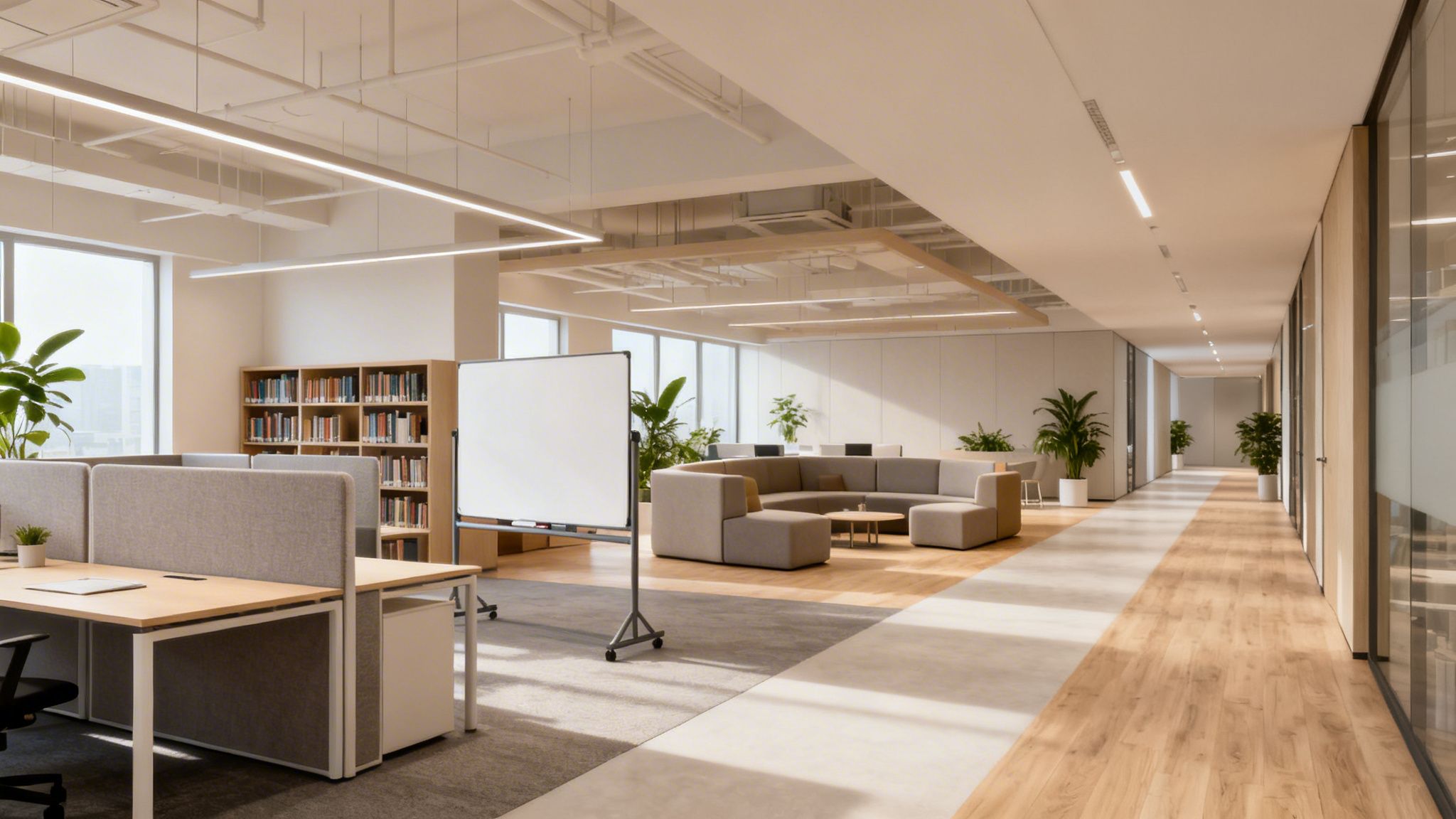
It’s all about creating a menu of options, each with a clear purpose:
- Focus Zones: Think of it as a library for the office. These are designated quiet areas where strict rules apply, designed for deep, uninterrupted concentration. They’re kitted out with comfortable seating and are kept free from the usual office buzz.
- Collaboration Hubs: These are the lively, energetic spots where ideas come to life. Teams can brainstorm, hold quick stand-ups, and work together on projects. We’re talking modular seating, movable whiteboards, and plenty of room to think on your feet.
- Social Spaces: A welcoming kitchen or a comfortable breakout area is the true heart of any office. It’s where people connect on a human level, building the personal relationships that are the bedrock of a strong company culture.
- Private Spaces: Whether it’s for a confidential call, a one-to-one meeting, or just a moment of quiet reflection, having small, enclosed rooms or acoustic pods is non-negotiable in a modern office.
The Rise of Office Neighbourhoods
One of the most effective concepts we’re implementing for clients is the idea of ‘office neighbourhoods’. This involves grouping teams into their own distinct zones, giving them a shared home base and a real sense of place.
Each neighbourhood can be tailored with its own unique mix of workstations, a small meeting table, and dedicated storage, all configured to how that specific department works. This approach fosters a strong sense of identity and ownership. It also builds in flexibility, allowing teams to adapt their own area without needing to overhaul the entire floor. You can use furniture like shelving units or planters to create soft boundaries, defining zones without putting up restrictive, permanent walls.
“Good space planning isn’t just about arranging furniture. It’s about creating an intuitive flow that guides people through the space naturally, reducing friction and making the workday smoother.”
For any organisation, particularly one operating in a competitive market like London, a thoughtfully planned office can be a game-changer. It has a direct impact on reducing distractions, improving communication, and boosting productivity across the board. For a more granular look at layouts, you can explore our detailed guide on effective office floor planning.
Investing in Furniture That Bends, Not Breaks
The furniture you select is just as important as the layout itself. The big trend we’re seeing is a move towards adaptable and modular pieces that can be reconfigured on the fly as your business evolves. This need for flexibility is driving serious investment in the UK market.
According to Market Report Analytics, the UK office furniture market was valued at £5.21 billion in 2025. Projections show steady growth through to 2033, and it’s largely being fuelled by companies investing in agile solutions like height-adjustable desks and modular systems that properly support hybrid working. You can see the full analysis in the UK office furniture industry from Market Report Analytics.
By planning your space with purpose and choosing furniture that can adapt with you, you’re not just creating an office that looks impressive, you’re building an environment that actively works to make your team more successful. This is the very foundation of intelligent office furniture and design.
Choosing Ergonomic Furniture and Smart Acoustic Solutions for 2026
A healthy, comfortable team is a productive team. It’s a simple truth we’ve seen play out in countless office projects. That’s why getting your office furniture and design choices right is one of the most critical investments you’ll make as you plan for 2026. This isn’t just about aesthetics; it’s about looking after your people so they can produce their best work.
But let’s be honest, great furniture is only half the story. The best ergonomic chair in the world won’t help someone focus if they can’t hear themselves think. So, let’s look at how to choose furniture that genuinely supports wellbeing and how to finally tackle office noise with some clever acoustic thinking.
Putting Ergonomics at the Forefront
Ergonomic furniture isn’t a “nice-to-have” anymore; it’s a non-negotiable part of modern workplace health and safety. It’s specifically engineered to support the human body, reduce physical strain, and prevent the endless aches and pains that come from spending long hours at a desk. When your team is physically comfortable, they’re not just happier, they’re more focused and far more productive.
The office chair is, without a doubt, the single most important piece of ergonomic kit you will buy. It’s no surprise that, according to Mordor Intelligence, chairs make up the biggest slice of the UK office furniture market, accounting for an estimated 36.80% of revenue in 2025. This is driven by the legal requirement for employers to provide Display Screen Equipment (DSE) compliant seating to protect staff, whether they’re in the office or working from home. You can discover further insights into the UK office furniture market in their full report.
For the businesses we work with across Essex and Hertfordshire, getting the seating right is always our first priority. If you want to really get into the specifics, we’ve put together a detailed guide on what makes great back-supporting chairs.
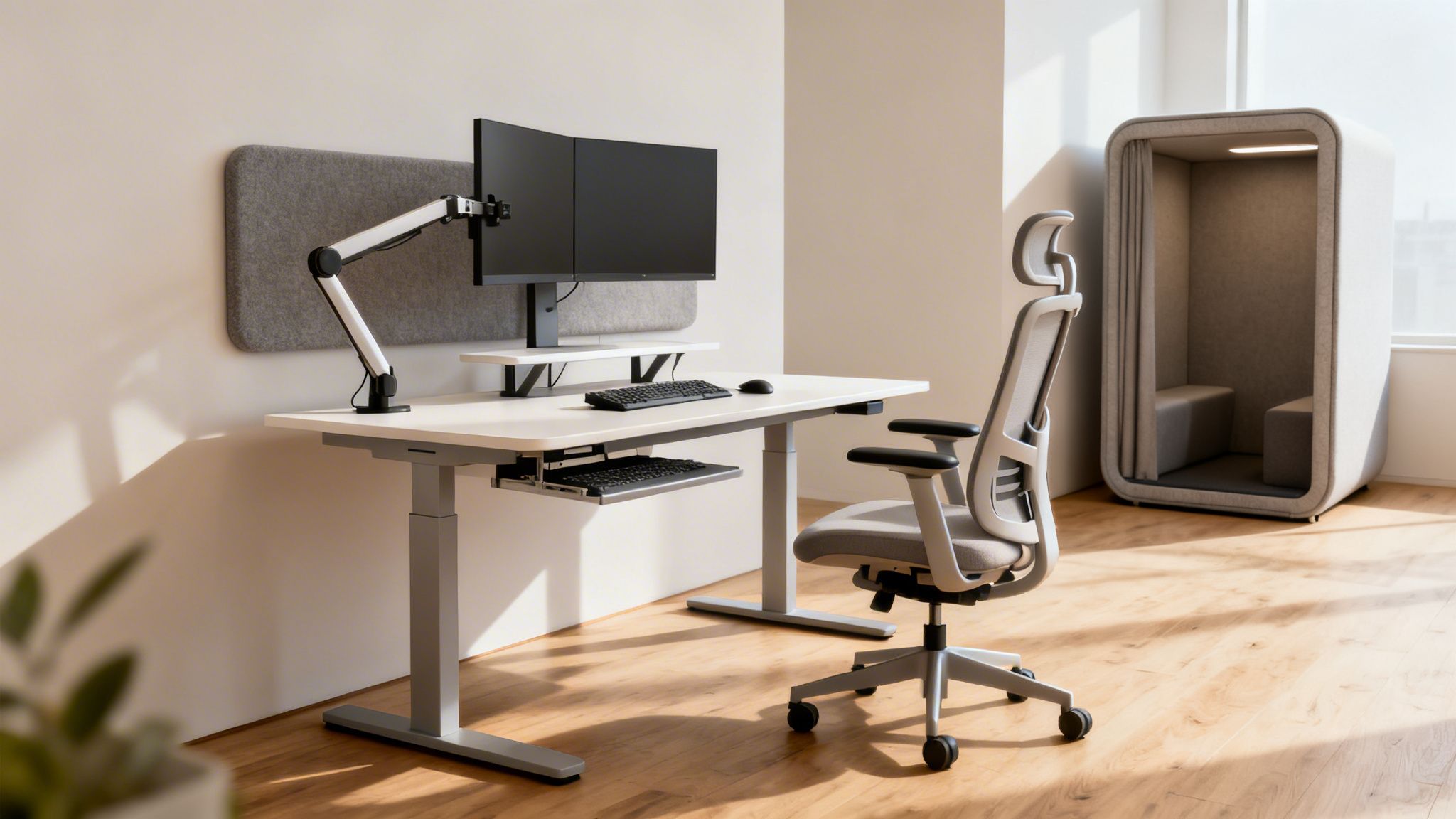
Beyond the chair, height-adjustable desks are another absolute game-changer. They give your team the freedom to switch between sitting and standing throughout the day, which is brilliant for boosting energy levels and combating the health risks of a sedentary work life.
Key Furniture Investments for a Modern Office
To help you prioritise, we’ve put together a quick look at the essential pieces that make a tangible difference to staff wellbeing and day-to-day efficiency.
| Furniture Type | Primary Benefit | What to Look For |
|---|---|---|
| Ergonomic Chairs | Reduces back pain and musculoskeletal strain. | Adjustable lumbar support, seat depth, armrests, and height. |
| Height-Adjustable Desks | Promotes movement and reduces sedentary behaviour. | Smooth and quiet electronic controls, good stability at height. |
| Monitor Arms | Ensures screens are at the correct eye level to prevent neck strain. | Easy adjustability for height, depth, and angle. |
These three items form the foundation of a truly supportive and productive workstation for any modern office.
Solving the Office Noise Problem
An open-plan office can be fantastic for collaboration, but the constant background hum is a notorious productivity killer. For organisations in bustling commercial hubs like Milton Keynes, managing the soundscape is absolutely essential for keeping teams focused and preventing burnout.
The good news? You don’t need to start building solid walls to bring back a sense of peace. Smart acoustic solutions can absorb, block, and contain sound without sacrificing that open, connected feel you worked so hard to create.
Here are a few practical options we often recommend:
- Acoustic Wall and Ceiling Panels: These are specially designed panels that soak up ambient sound, cutting down on echo and general chatter. They come in endless colours and shapes, so they can easily become a stylish design feature.
- High-Backed Seating: A sofa or armchair with high sides can create a mini-enclave, offering a slice of visual and acoustic privacy for a small group or a solo worker needing to concentrate.
- Acoustic Meeting Pods: For focused work and private conversations, these are the ultimate solution.
“The goal isn’t silence. The goal is control. Give your people the ability to choose the sound environment that suits the task they’re doing.”
Industry leaders like Vetrospace and Framery are masters of creating these freestanding, soundproof rooms. They can be dropped right into an existing open-plan layout to provide a quiet sanctuary for important calls, video conferences, or deep-focus tasks, all without the dust and disruption of major construction.
By thoughtfully blending ergonomic furniture with smart acoustics, you create a workspace that doesn’t just look good but actively supports every aspect of your team’s wellbeing and performance.
Managing Your Budget and End-of-Lease Obligations for 2026
Right, let’s talk about the money. An office fit-out is a major investment, so getting a firm grip on your budget from the word go is non-negotiable. This isn’t just about the price tags on chairs and desks; it’s about seeing the full, panoramic picture of your office furniture and design project. We’ll break down how to manage your spending and tackle one of the most overlooked parts of any office move: the end-of-lease clear-out.
Thinking about your budget early on helps you make smarter choices that will save you a world of stress and money down the line. It’s the only way to ensure your vision for a brilliant new workspace doesn’t get side-lined by surprise costs.
Building a Realistic Project Budget
Creating a budget for your office refurbishment can feel like a monumental task, but it becomes much more manageable when you break it down into key areas. A proper budget goes far beyond the furniture itself, accounting for every single cost involved in bringing your new space to life.
Here are the main line items you absolutely need to plan for:
- Furniture and Equipment: This is the most obvious part, covering everything from desks and task chairs to meeting pods and clever storage units.
- Professional Fees: Don’t forget the costs for essential services like workplace consultancy, interior design, and project management.
- Installation and Labour: The cost of getting everything delivered, built, and put perfectly in place can be significant, so make sure it’s in there.
- Technology and IT: Think about data cabling, floor boxes, power sockets, and integrating any new tech.
- A Contingency Fund: I can’t stress this enough. Always set aside around 10-15% of your total budget for the unexpected. It’s the single best way to keep your project on track without any last-minute panic.
Sourcing Your Office Furniture
Once you have a budget, the next stage is procurement, which is really just the process of buying everything you need. You’ve got a few main routes to go down here, and each has its own set of pros and cons.
| Procurement Method | How It Works | Best For |
|---|---|---|
| Direct from Manufacturer | You buy straight from the company that makes the furniture. | Businesses placing large orders who know exactly what they want. |
| Through a Dealer | You work with a dealer who represents multiple brands. | Companies looking for variety and expert guidance on different product options. |
| A Turnkey Provider | You partner with one company (like us!) that manages the entire process. | Businesses that want a single point of contact and a seamless project, from start to finish. |
The growth in office refurbishments is fuelling a seriously strong market. According to IBISWorld reports, office furniture wholesaling in the UK saw a compound annual growth rate of 10.6% from 2020 to 2025, with industry revenue hitting £1.3 billion. This boom is heavily driven by companies investing in better, healthier office environments post-pandemic.
Navigating End-of-Lease Dilapidations
Here’s a topic that catches so many businesses by surprise: dilapidations. In simple terms, this is a clause in most commercial leases that requires you to return the property to your landlord in its original condition. For businesses in areas like Braintree, failing to plan for this can result in a hefty bill right when you’re focused on moving into your fantastic new space.
This process usually means:
- Removing all partitioning and any non-original structures.
- Taking up any flooring you installed.
- Repairing any damage to walls, ceilings, and floors.
- Redecorating the space back to a neutral, pre-agreed standard.
“Planning your new fit-out with your end-of-lease obligations in mind is one of the smartest moves you can make. It can save you thousands of pounds and a massive headache when it’s time to move.”
Thinking about dilapidations from the very start of your design process can be a genuine game-changer. For instance, instead of building fixed plasterboard walls, you could opt for modular glass partitions or freestanding meeting pods. These can often be easily dismantled and sometimes even taken with you to your new office, drastically simplifying the entire dilapidation process.
By managing your budget carefully and planning for your exit from day one, you protect your investment and ensure a smooth, cost-effective transition to your brilliant new workspace.
Looking for bespoke pod solutions or interior support? We’re here to help.
Contact Us
Bringing It All Together: Installation and Future-Proofing Your Space for 2026
So, the plans are signed off, the budget’s agreed, and the furniture is on order. Now for the most exciting part: bringing your new office furniture and design to life. For most people I talk to, the biggest worry at this stage is the disruption. How on earth do you manage a full refurbishment without bringing the whole business to a grinding halt?
It all comes down to meticulous planning and clear, consistent communication. The goal is to make the installation feel less like a construction site and more like a seamless transformation, keeping downtime to an absolute minimum while getting your team genuinely excited for what’s coming.
Keeping Disruption on a Leash During Installation
A smooth installation doesn’t happen by chance; it’s the result of a solid strategy. With a bit of forward-thinking, the physical work can have a surprisingly small impact on your team’s day-to-day. It’s all about finding a rhythm that works for your business.
Over the years, we’ve found a few tried-and-tested approaches that keep businesses running smoothly:
- Phased Installations: This is probably the most common method we use. Instead of trying to do everything at once, we break the project into manageable phases. We’ll refurbish one floor or a specific zone at a time, allowing your team to carry on working in other parts of the office.
- Out-of-Hours and Weekend Work: For many organisations, the perfect solution is to have the noisy, disruptive work happen when no one’s around. Your team heads home on a Friday afternoon and walks back in on Monday morning to a completely new space. It’s a bit like magic.
- Clear and Constant Communication: This is absolutely vital. Keeping everyone in the loop, what’s happening, when, and why, makes them feel part of the journey. Regular updates via email, a quick stand-up meeting, or a noticeboard can turn potential grumbles into real anticipation.
For our clients in busy town centres like Chelmsford, this level of planning is non-negotiable. We have to carefully schedule every delivery and bit of on-site work to avoid creating a logistical nightmare for you or your neighbours.
The Handover and Future-Proofing for 2026 and Beyond
The day the fitters pack up their tools isn’t the finish line. A proper, thorough handover is essential to make sure you and your team know exactly how to use your new environment. This could be anything from showing everyone how to adjust their new ergonomic chairs to walking them through the new meeting room booking system.
But even then, the job isn’t quite done. A truly brilliant workspace is never static; it needs to be able to evolve as your business does. This is exactly what we mean when we talk about ‘future-proofing’. The choices you make now should deliver value for years, ensuring your investment has genuine, long-term impact.
“Future-proofing isn’t about having a crystal ball. It’s about building in flexibility so your workspace can adapt to whatever comes next.”
Here’s how you build an agile, adaptable workspace ready for 2026 and the years that follow:
| Future-Proofing Strategy | Why It Matters | Practical Example |
|---|---|---|
| Choose Modular Furniture | Gives you the freedom to easily reconfigure layouts as your teams and projects change. | Using modular sofas that can be split apart or joined together to create different seating areas in a breakout space. |
| Embrace Flexible Systems | Anything not fixed to the building fabric is far easier and cheaper to move or adapt. | Opting for freestanding acoustic pods from brands like BlockO instead of building permanent stud walls. |
| Plan for Growth | Design a layout that can welcome more staff down the line without needing a major refit. | Leaving some ‘soft’ areas in the initial plan that can easily be converted into extra workstation zones when needed. |
By focusing on a seamless installation and building in this kind of flexibility from day one, you’re not just getting a great office for today. You’re securing a valuable asset that will grow right alongside you.
Your Office Design Questions Answered
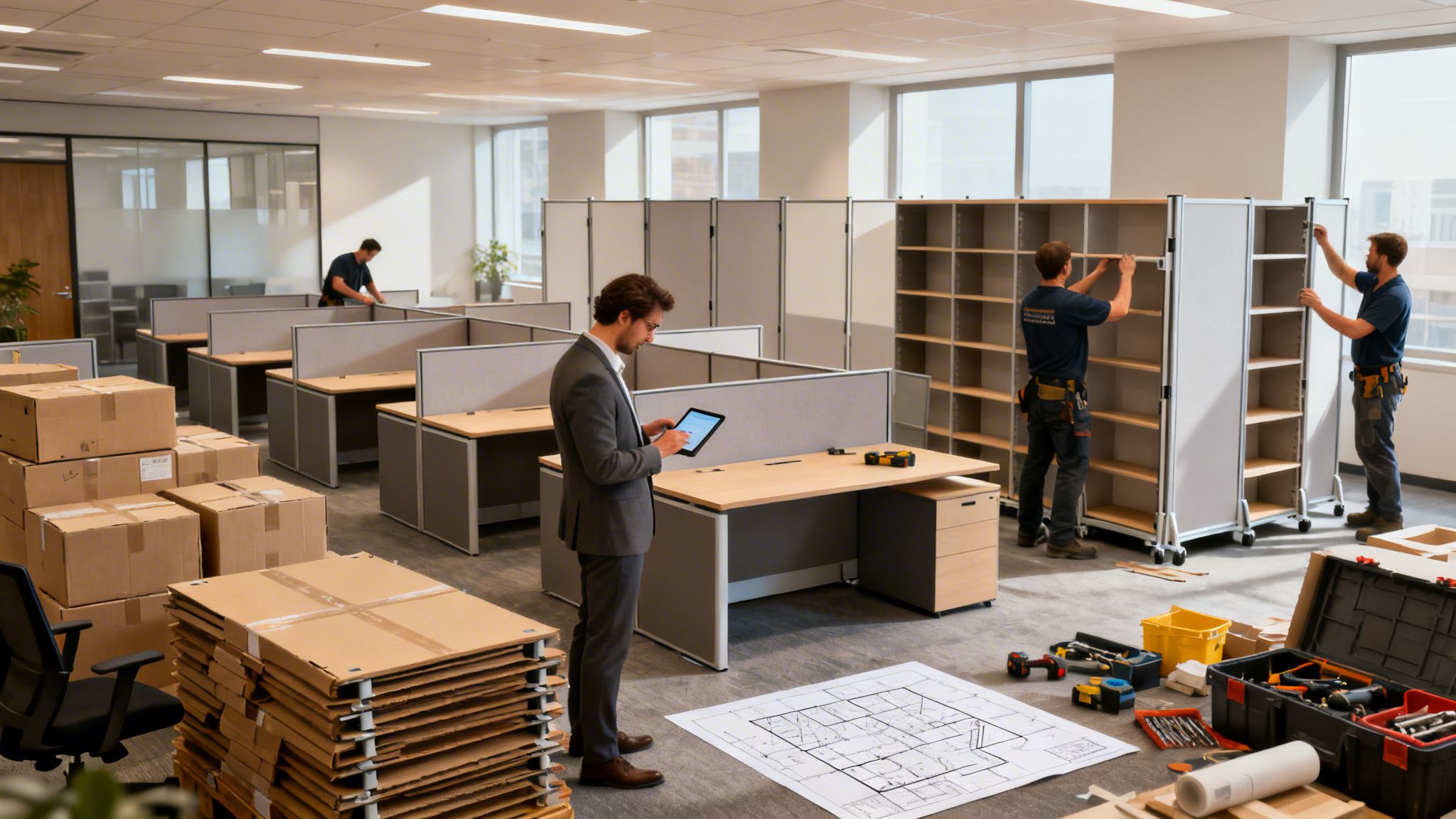
Starting a new office project can feel like a huge undertaking, and it’s natural to have questions. We see the same queries come up time and again, so we’ve put together some answers on office furniture and design to give you the clarity you need to get started.
How Long Does a Typical Office Fit Out Take?
This is the classic “how long is a piece of string?” question. The timeline is completely tied to the project’s scale and complexity. A straightforward furniture refresh in a small office might be wrapped up in a couple of weeks. In contrast, a full fit-out, taking a building from an empty shell to a ready-to-use workspace, could easily span several months.
The one thing I always stress is the importance of the planning stage. If you invest time upfront in a detailed brief and design process, the actual on-site work becomes much faster and smoother. Why? Because all the big decisions are locked in before a single tool is picked up.
What Is the Difference Between a Fit Out and a Refurbishment?
It’s a great question, and one we get a lot. People often use the terms interchangeably, but they mean very different things.
An ‘office fit-out‘ typically involves taking an empty commercial space, what we in the industry call a ‘Cat A’ shell, and building a complete, working office from scratch.
An ‘office refurbishment‘, on the other hand, is all about breathing new life into an existing office. It could mean bringing in new furniture, redecorating, changing the layout to improve flow, or adding new features like meeting pods. Both projects aim to improve your workspace, but they have completely different starting points.
For businesses we work with across Essex and Hertfordshire, figuring out which one you need is always the first step.
How Can I Make My Open Plan Office Less Noisy?
Noise complaints are the number one issue in most open-plan offices. There’s no single magic bullet; the best approach is always a layered one.
Strategically placing acoustic panels on walls and ceilings is a brilliant start, as they soak up a surprising amount of background chatter. You can also use furniture like high-backed sofas or tall shelving units as natural barriers to break up the space and stop sound from travelling.
“For a more direct solution, installing dedicated acoustic pods from brands like BlockO gives people a completely soundproof place for calls and focused work without disturbing colleagues.”
These pods have been a game-changer, particularly for teams in busy, dynamic areas like Dartford, where they create pockets of calm right in the middle of the action.
Ready to transform your workspace? Speak to the Gibbsonn Interiors team today.