
Rethinking Your Workspace: A Guide to Commercial Architecture Design in 2026
Table of Contents
- What Commercial Architecture Design Really Means in 2026
- The Three Pillars of a High-Performing Workspace
- Building a Greener Future with Sustainable Design
- Your Step-by-Step Design and Build Journey
- Flexible Solutions for the Modern Office in 2026
- Your Commercial Design Questions Answered
- Ready to Transform Your Workspace?
Let’s move beyond the idea that an office is just a container for desks and people. Commercial architecture design is the art and science of shaping a physical space that actively drives your business forward. It’s about treating your workplace as a strategic asset.
Think of it this way: your office can be your most effective team member. When designed with purpose, it works around the clock to boost productivity, embody your brand’s culture, and create an environment where people genuinely want to be. For any ambitious UK business, getting this right is no longer a luxury, it’s fundamental to attracting top talent and securing growth. This is about striking that perfect balance between function and feeling, a process we’ve honed for clients across Hertfordshire and Essex.
What Commercial Architecture Design Really Means in 2026
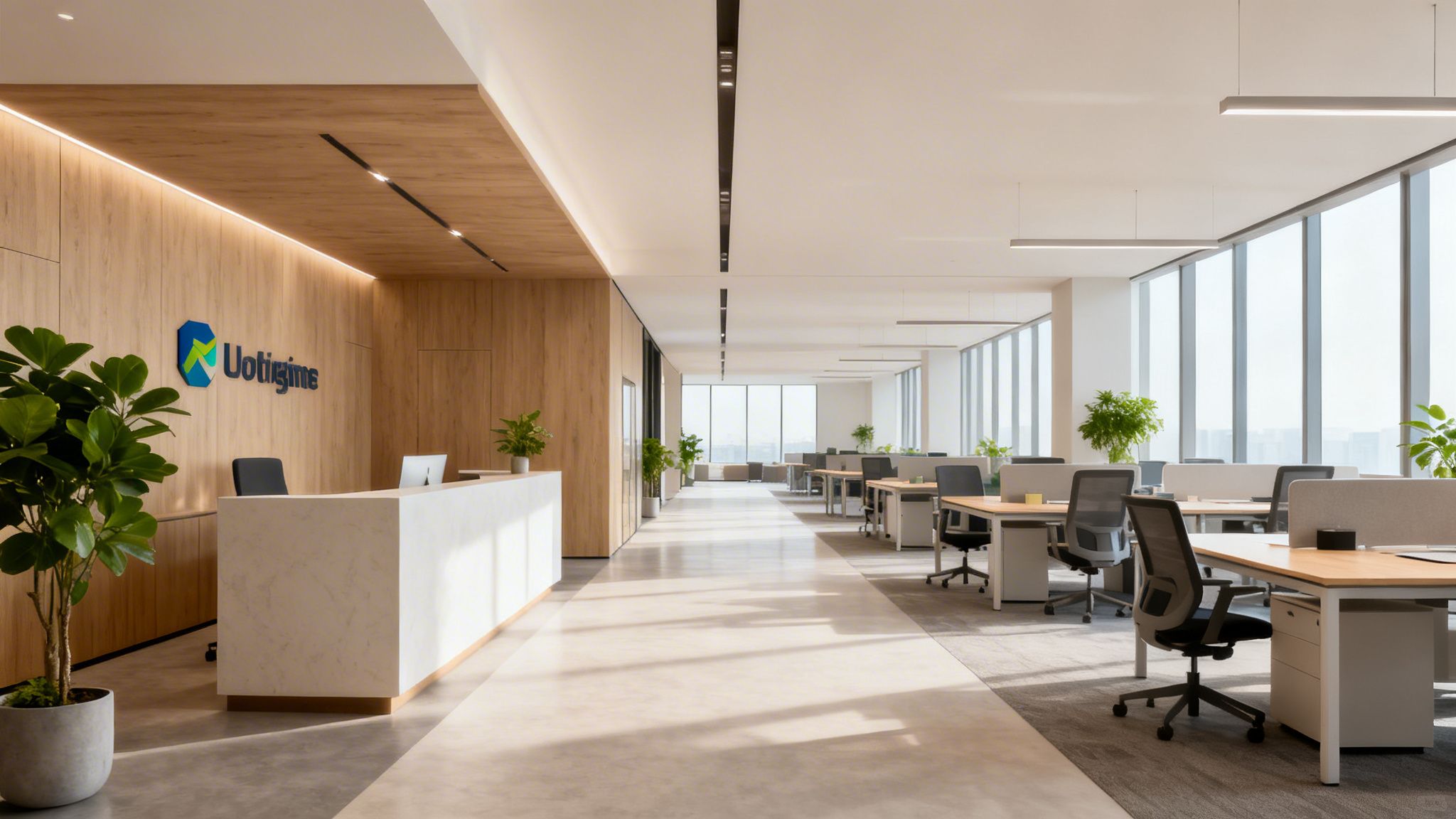
At its core, commercial architecture design is the thoughtful creation of spaces that are built for people and purpose. It covers everything from the first impression at the reception desk to the intricate flow of your main workspace. The ultimate goal isn’t just a visually impressive interior, but a highly functional environment that supports your specific business objectives.
Your office is far more than just a place to complete tasks; it’s a powerful tool that shapes how work gets done. A well-considered design can transform team communication, foster spontaneous collaboration, and provide the quiet zones needed for deep, focused work.
The Core Elements of a Successful Design
A truly successful design goes much deeper than just arranging furniture. It’s a synthesis of several key factors that work together to create a cohesive, effective, and inspiring workplace. Understanding these pillars is the first step toward realising your office’s full potential.
These core elements include:
- Space Planning: This is all about choreographing the flow of the office. We map out movement and adjacencies to create a layout that feels both natural and efficient, ensuring there’s ample room for focused work, collaboration, and everything in between.
- Brand Expression: Your workspace is a three-dimensional billboard for your brand. The colours, textures, materials, and even the furniture should tell your company’s story and reinforce its core values to every employee and visitor.
- Employee Wellbeing: A modern workspace must prioritise the health and happiness of its people. This means a non-negotiable focus on great lighting, ergonomic furniture, good acoustics, and dedicated spaces for rest and social connection. You can explore the tangible benefits of workplace design in more detail in our dedicated guide.
To give you a clearer picture, this table breaks down how each focus area translates into real-world business value.
Key Focus Areas in Commercial Architecture
| Focus Area | What It Means for Your Business | Why It Is Important |
|---|---|---|
| Space and Layout | Creating a floor plan that supports how your teams actually work and interact. | Improves workflow efficiency and encourages positive collaboration. |
| Aesthetics and Brand | Using design elements to tell your company’s story and build a unique culture. | Strengthens team identity and leaves a lasting impression on clients. |
| Functionality & Wellbeing | Ensuring the space has the right tools, technology, and comforts for your team. | Empowers people to do their best work while feeling valued and supported. |
Ultimately, great commercial architecture design is about making deliberate choices that turn your office from an overhead into a high-performing asset. It’s a direct investment in your people, your productivity, and the long-term resilience of your company.
The Three Pillars of a High-Performing Workspace
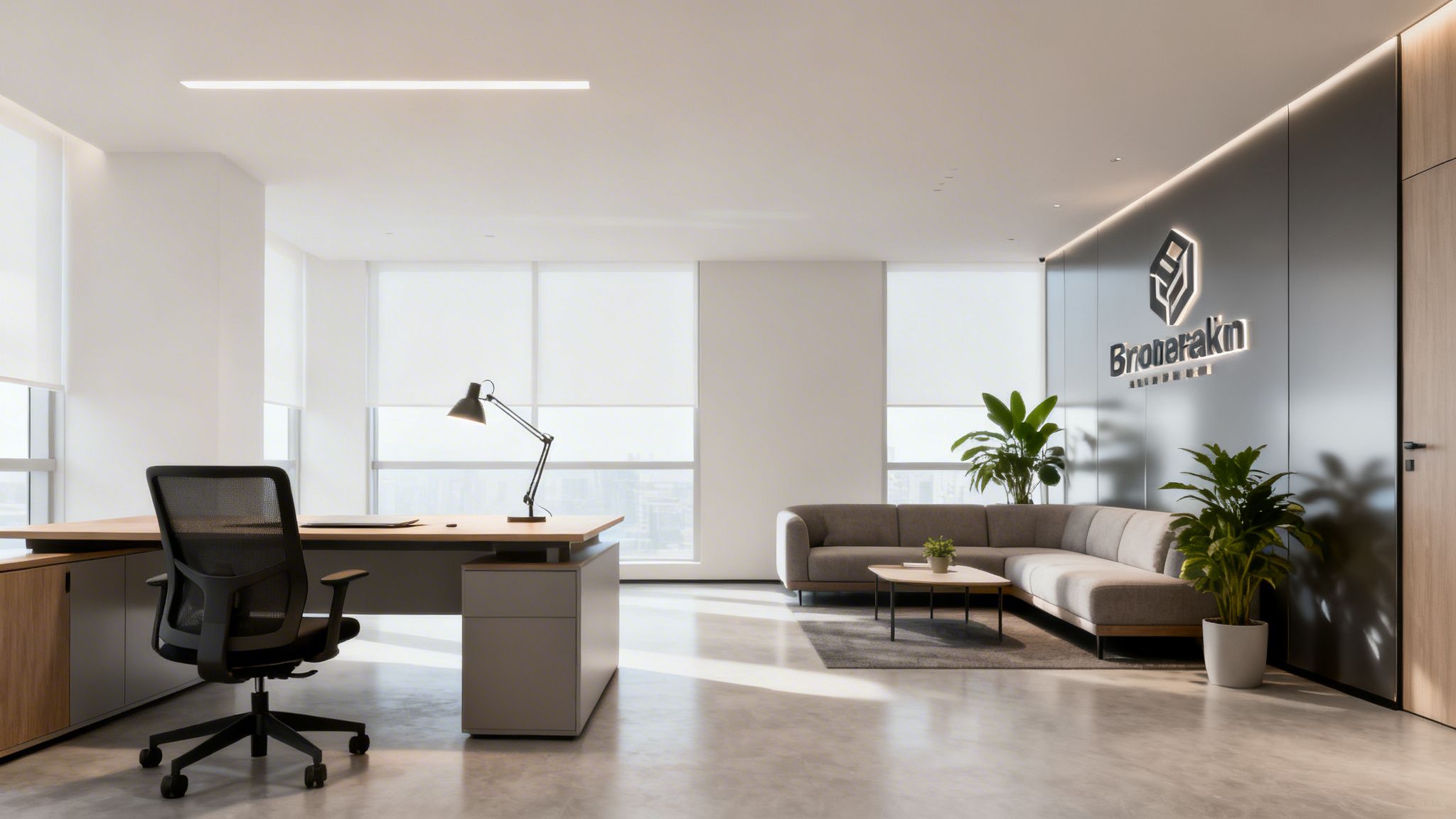
A truly great workspace does more than just look the part; it acts as an engine for business success. We find that the most effective examples of commercial architecture design are always built on three core pillars. Get the balance right, and the office stops being a simple cost centre and becomes one of your most valuable assets.
When these elements work in harmony, your workplace actively helps you hit your goals. Let’s unpack what they are and why they matter so much.
Pillar One: Boosting Productivity
First up is productivity. This isn’t about guesswork; it’s about designing a physical environment that removes friction and genuinely empowers your team to do their best work.
It all starts with an intelligent layout. We look at how your teams actually interact to create a floor plan that supports easy collaboration while carving out dedicated quiet zones for deep focus. This way, a quick team chat doesn’t derail someone else’s concentration.
Lighting is another huge factor. We’ve all felt the drain of a poorly lit room, it causes eye strain and fatigue that kills output. By maximising natural light and supplementing it with smart, human-centric lighting systems, we can keep energy and focus high all day long.
And of course, ergonomic furniture is non-negotiable. An uncomfortable chair isn’t just a minor annoyance; it’s a constant distraction. Investing in adjustable, supportive furniture shows your people you value their comfort and helps them stay locked in on the task at hand. It’s about creating a space that works with your people, not against them.
“Your office is more than just a place to work; it’s a powerful tool for building your culture, driving performance, and telling your brand’s story. Getting the design right is an investment in your people and your future.”
Pillar Two: Championing Wellbeing
Our second pillar is wellbeing. A workspace that genuinely cares for its people is rewarded with better morale, less stress, and much stronger staff retention. A healthy team is a happy, productive team.
This goes far beyond just being comfortable. It means creating a truly healthy atmosphere through things like superior air quality, which we can enhance with modern ventilation and the strategic use of plants. In fact, biophilic design, the practice of incorporating natural elements, is proven to reduce stress and spark creativity.
Comfortable breakout areas are also vital. These spaces give your staff a chance to step away from the screen, recharge, and connect with colleagues on a human level. It’s often in these informal moments that the best ideas are born and the strongest team bonds are forged.
In busy urban environments, this focus on wellbeing becomes even more critical. For a business in a fast-paced part of London, for instance, the office can be designed as a calm oasis, offering a welcome retreat from the city’s constant hustle.
Pillar Three: Expressing Brand Identity
The final pillar is your brand identity. Your office is a living, breathing, three-dimensional expression of your company’s story, its values, and its vision for the future. For a potential client or a top new hire, it’s often the first real taste they get of your brand.
This is where we bring your identity to life using colour, materials, and custom-designed features. A bold colour palette might shout energy and innovation, whereas natural woods and soft textures could convey a commitment to sustainability and trust.
Bespoke features, like a branded reception wall or unique meeting room furniture, make an immediate and powerful statement. They signal an attention to detail and a commitment to quality that says more about your business than a mission statement ever could.
The right expression is completely unique to you. A tech firm in a hub like Cambridge might want a space that feels open and dynamic, engineered to spark those spontaneous ‘aha!’ moments. Ultimately, your workspace should tell everyone who you are without you having to say a single word.
Building a Greener Future with Sustainable Design
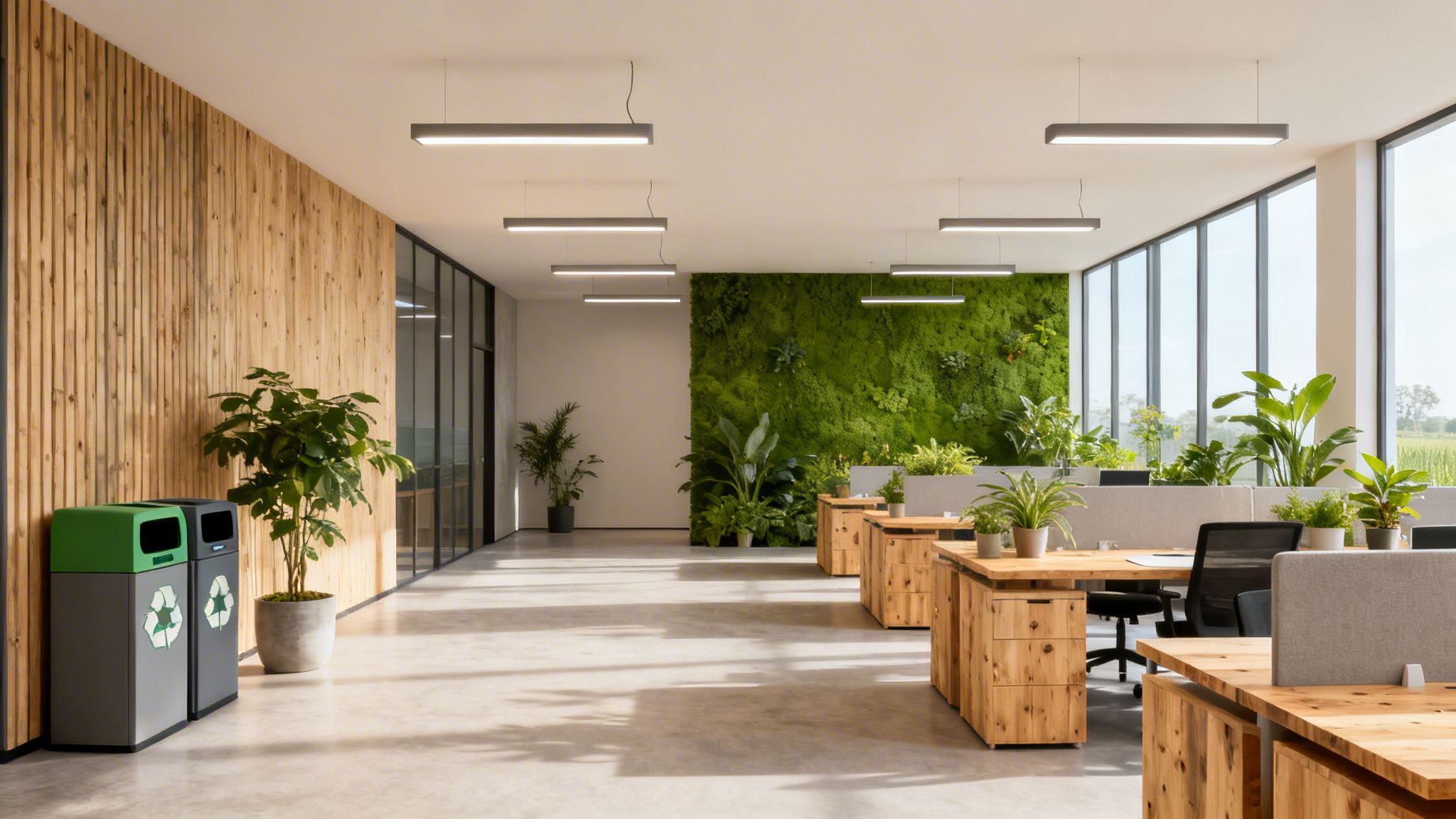
Not so long ago, sustainability in office design felt like an optional extra. Now, it’s a non-negotiable part of any forward-thinking commercial architecture design. A truly eco-friendly workspace is about making intelligent, practical choices that pay dividends for your business, your people, and the planet.
This goes far beyond simply having a good recycling policy. We’re talking about tangible decisions like installing energy-efficient LED lighting and modern heating systems that immediately chip away at your running costs. It’s also about being smart with materials, choosing those that are recycled, locally sourced, or from certified sustainable forests.
Proper insulation is another hero in this story. By improving how your building holds onto heat in the winter and stays cool in the summer, you can slash energy bills. But the benefits aren’t just financial; this creates a much more comfortable and consistent environment for your team to work in.
Practical Steps to a Sustainable Workspace
Making your office greener isn’t as complicated as it sounds. It really comes down to a series of smart, deliberate choices made during the design and fit-out. We’re seeing this proactive approach becoming standard on projects right across the UK, from refurbishments in Bishop’s Stortford to new builds in every major city.
Here are a few actionable ideas to get you started:
- Choose Sustainable Furniture: Look for pieces built from recycled materials or certified wood. Many manufacturers now provide clear environmental credentials, making it easier than ever to furnish your space with a clear conscience.
- Incorporate Biophilic Design: This is all about bringing the outside in. Living walls, potted plants, and natural materials don’t just look incredible; they actively improve air quality, lower stress, and can genuinely boost productivity.
- Optimise Water Usage: Fitting low-flow taps and toilets is a simple tweak that makes a huge difference. Over time, it can significantly cut your company’s water consumption and utility bills.
- Prioritise Natural Light: A design that makes the most of daylight doesn’t just save on energy by reducing the need for artificial lighting, it creates a brighter, more positive atmosphere for everyone.
The Long-Term Benefits of Going Green
An investment in sustainability is really an investment in the future resilience and reputation of your business. A green office isn’t about following a trend; it’s a strategic move with clear, measurable advantages that touch everything from your finances to your company culture.
Think about the entire lifecycle of your materials. For example, steel’s high recyclability and strength-to-weight ratio make it a fantastic choice for structural work. It cuts down on waste and ensures the building’s core is made from something that can be repurposed down the line.
The benefits stack up fast:
| Benefit Area | What It Means for You |
|---|---|
| Financial Savings | Lower energy and water bills mean reduced overheads and a healthier bottom line. |
| Employee Wellbeing | A healthier space with better air quality leads to fewer sick days and higher morale. |
| Brand Reputation | A visible commitment to sustainability enhances your image with clients, partners, and staff. |
Ultimately, a sustainable design sends a powerful message: you’re a forward-thinking company that cares. This is a massive draw for attracting and keeping top talent who want to work for businesses that reflect their own values. You can learn more about creating these spaces by exploring our guide to sustainable office spaces for 2026.
Your Step-by-Step Design and Build Journey
So, how does a bold vision for a new office actually become a fully-realised, inspiring space? It’s not magic. It’s a clear, structured journey that takes you from an initial idea right through to moving day, but without the headaches and confusion that often come with major projects. This is the design and build path we follow to bring our clients’ ambitions to life.
It all kicks off with a conversation. Our first job is simply to listen, to get a real feel for what you need from your workspace, what your business is aiming for, and what kind of budget you have in mind. This brief is the single most important part of the whole process; it’s the bedrock for every decision we make from here on out.
Once we’re on the same page, we dive into the creative design phase. This is where your vision starts to take physical form. Our designers will map out layouts, select materials and finishes, and build detailed 3D visuals. These are much more than just pretty pictures, they let you digitally walk through your new office before a single nail is hammered, giving you total confidence that the end result is exactly what you’ve been picturing.
From Blueprint to Reality: The Technical Details
With the creative direction signed off, we shift gears to the technical side of commercial architecture design. This stage is all about translating those beautiful designs into a practical, compliant, and safe environment. It’s where we handle all the complexities, so you don’t have to.
This means producing meticulous construction drawings, specifying every last fixture and fitting, and mapping out the project timeline. A massive part of this phase is ensuring total compliance with UK Building Regulations, which govern critical areas like:
- Fire Safety: Making sure there are clear escape routes, proper fire detection systems, and fire-resistant materials throughout.
- Accessibility: Ensuring the space is built to be accessible and usable for everyone, meeting all legal standards.
- Health and Safety: Planning the entire construction phase to satisfy all Health and Safety Executive (HSE) standards, protecting the build team and your own staff.
We take care of all the necessary applications and inspections, giving you the peace of mind that your new workspace isn’t just beautifully designed, but also fully compliant and built to the highest possible standard.
“A turnkey service is about taking full ownership. One team, one point of contact, one goal: to deliver your project on time and on budget, with absolutely no surprises.”
The Fit Out and The Power of a Turnkey Service
Now for the exciting part: the ‘fit out’. This is when our skilled construction and installation teams arrive on-site to bring the approved designs into the real world. From putting up partitions and ceilings to fitting the electrics, plumbing, and data cabling, our crew works methodically to turn an empty shell or an old space into something new.
We orchestrate every single trade and supplier, managing the entire build to keep disruption to an absolute minimum, something that’s especially crucial if we’re refurbishing a building you’re still working in. Our project managers will keep you in the loop with regular updates, so you always know what’s happening without getting bogged down in the day-to-day logistics.
This highlights the huge advantage of a turnkey design and build service. Rather than you having to find and manage an architect, a separate main contractor, and countless subcontractors, you have a single, dedicated partner from start to finish. This one point of accountability not only saves an enormous amount of your time but also prevents the miscommunication and blame games that can happen between different teams, and it often saves you money in the long run.
The journey wraps up with the final handover. We’ll walk you through your brand-new space, check that every last detail is perfect, and hand over the keys to your ready-to-use office. From the very first sketch to the final polish, the process is designed to be seamless.
If you’d like to explore this in more detail, have a read of our complete guide to the office design and build process for 2026.
Flexible Solutions for the Modern Office in 2026
The way we work is shifting. There’s no doubt that open-plan layouts are brilliant for fostering a sense of community and sparking collaboration. But let’s be honest, your team also craves private, quiet spaces for focused work and confidential calls. A huge part of modern commercial architecture design is about delivering this flexibility on demand, without boxing everyone in with permanent walls.
Agility is the new currency for office space. Businesses need environments that can pivot and grow right alongside their teams. This means looking beyond the fixed desking of the past and embracing smart, adaptable solutions that cater to every work style, from lively group brainstorms to individual deep work.
Meeting the Need for On-Demand Privacy
This is where office pods have become a game-changer. Think of them as self-contained, acoustically insulated rooms you can drop directly into an open-plan space. In an instant, you have a private office, a quiet meeting room, or a phone booth, a peaceful haven from the background hum of a busy office.
Leading manufacturers like Framery and Vetrospace are creating pods that are not only acoustically brilliant but also add a genuinely stylish, contemporary feature to the floorplate. The best part? They can often be installed in a single day, side-stepping the mess and disruption of traditional construction. They’re also a true asset; you can move them around or even take them with you if you relocate.
This simple infographic highlights the three-step journey we take to turn an idea into a finished, functional space.
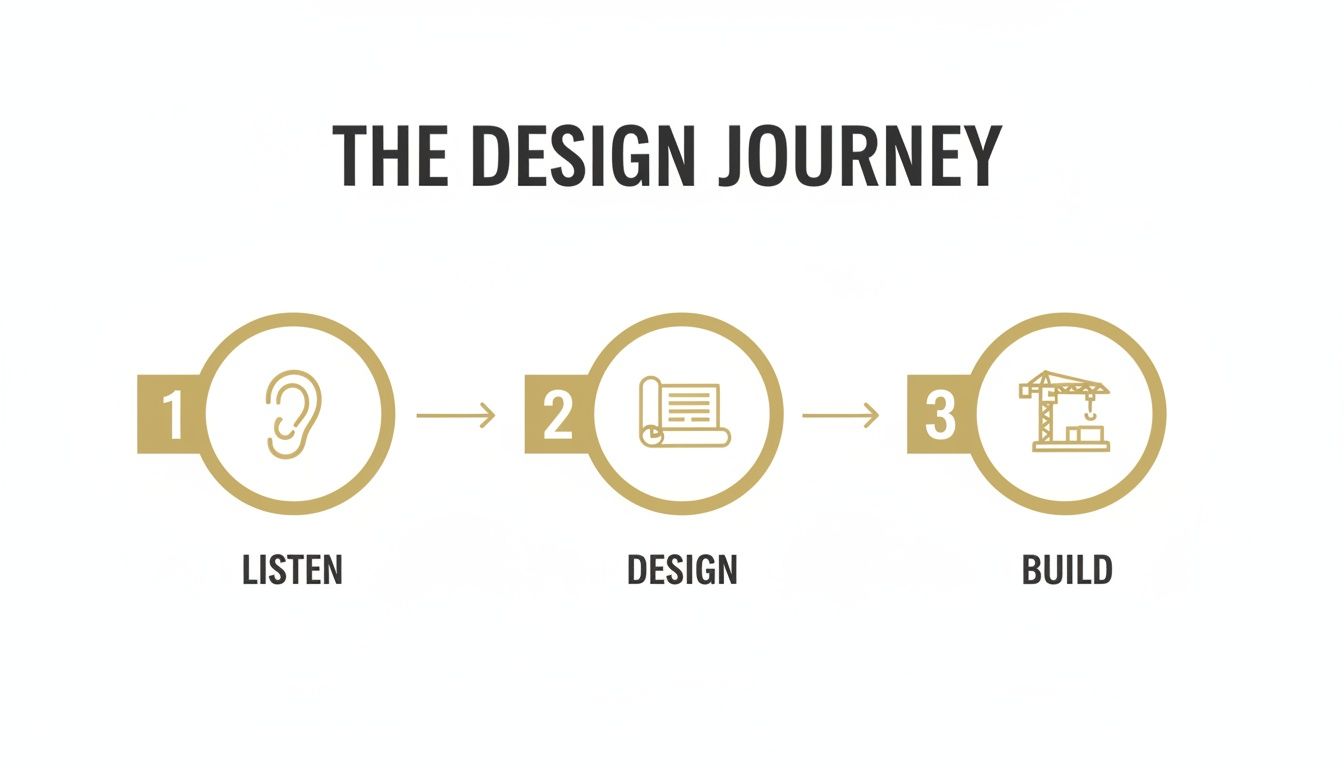
It shows that whether we’re delivering a full fit-out or integrating flexible solutions like pods, it all begins with one crucial step: listening.
A Fast and Cost-Effective Way to Modernise
Another fantastic technique for breathing new life into a workspace is architectural wrapping. Imagine it as a high-performance, durable skin that can completely transform tired or dated surfaces. It’s an innovative approach that lets us give walls, doors, reception desks, and even lifts a fresh, new identity without the cost and downtime of a full replacement.
This is worlds away from the decorative vinyl you might have seen years ago. Today’s architectural films are incredibly tough and come in thousands of finishes, from realistic wood and stone to sleek metals and solid colours, all applied with minimal disruption.
It’s an incredibly smart way to modernise an office on a tight schedule and budget. For businesses in areas like Chelmsford, it offers a path to keeping the workspace looking sharp and on-brand without a major capital outlay.
Why Flexibility Matters for Your Business
Ultimately, integrating solutions like pods and architectural wraps is about future-proofing your office. The UK workplace is always changing, and an office that can adapt is one that will continue to serve your business well for years to come.
These solutions empower businesses to:
- Respond to Team Needs: Effortlessly add private spaces as your team expands or as different projects demand different ways of working.
- Maximise Your Budget: Get a high-end finish and improved functionality for a fraction of what a full strip-out and rebuild would cost.
- Minimise Downtime: Both pods and wrapping can be installed with very little interruption, letting your team carry on with business as usual.
By striking the right balance between open, collaborative zones and private, on-demand spaces, you create a dynamic and productive environment where every member of your team has what they need to do their best work.
Your Commercial Design Questions Answered
When it comes to commercial architecture and office fit outs, we find that clients often have similar questions. It’s a big investment, and you want to get it right. To give you some clarity and help you plan your next project with confidence, we’ve put together answers to some of the most common queries we receive.
How Much Does an Office Fit Out Cost in the UK?
This is almost always the first question on everyone’s mind, and understandably so. The honest answer is: it depends. The final figure is shaped by the project’s size, the standard of finish you’re after, and any complex technical needs.
As a ballpark figure, a straightforward refurbishment could start from around £40 per square foot. For a full-scale design and build project with high-end finishes, custom joinery, and bespoke features, you might be looking at £150 per square foot or more. The only way to get a truly accurate cost is for us to sit down with you. We pride ourselves on providing a completely transparent, itemised quote so you see exactly where every pound of your investment is going.
How Long Does a Typical Office Fit Out Take?
The timeline for any commercial design project is tied directly to its scale and complexity. A light-touch office refresh, perhaps focusing on new decor, furniture, and a fresh coat of paint, can often be wrapped up in just a few weeks.
A comprehensive fit out for a larger organisation, however, is a different story and could take several months from start to finish. A typical project might involve 2-4 weeks for design and planning, followed by a 6-12 week construction and installation phase on-site. From our very first meeting, we work closely with you to establish a realistic schedule and manage every stage meticulously to ensure we hit our deadlines, keeping disruption to your business in places like Braintree to an absolute minimum.
“A ‘fit out’ is transforming an empty shell into a ready-to-use workspace. A ‘refurbishment’ is updating an existing office. We are experts in both, delivering functional and inspiring spaces every time.”
What Is the Difference Between a Fit Out and a Refurbishment?
That’s an excellent question, as the two terms are often used as if they mean the same thing. They are, in fact, quite different.
A ‘fit out’ involves taking an empty commercial space, often a bare ‘shell and core’ with just concrete floors and walls, and building a complete, functioning workspace from scratch. This covers everything from putting up internal walls and ceilings to installing the electrics, plumbing, IT infrastructure, and final finishes.
A ‘refurbishment’, on the other hand, is all about breathing new life into an existing office. This could be as simple as a decorative update with new carpets and furniture, or it could be a major overhaul where we reconfigure the layout to better support your team’s current ways of working.
Do I Need to Handle Building Regulations Myself?
Absolutely not. Navigating the world of building control is a core part of what we do for you. In the UK, all commercial construction work must adhere to a strict set of Building Regulations, which govern everything from fire safety and accessibility to structural integrity and energy efficiency.
As part of our end-to-end turnkey service for clients across Essex and Hertfordshire, we manage the entire process. This includes handling all necessary applications and coordinating inspections with local authorities. It’s our job to ensure your new workspace in a location like Stansted is not just beautiful and functional, but fully compliant, safe, and built to the highest possible standard. It’s all about giving you total peace of mind.
Ready to Transform Your Workspace?
We’ve walked through what goes into exceptional commercial architecture, and hopefully, it’s clear just how much your physical environment can shape your business. An investment in your workspace isn’t just about new desks and a fresh coat of paint; it’s a direct investment in your people, your brand identity, and your future growth.
Whether you’re planning a full-scale office fit-out in a major hub like Milton Keynes, looking to refurbish your current setup, or simply exploring more flexible solutions, your first and most crucial decision is choosing the right partner.
A thoughtfully designed office stops being an expense and becomes one of your most powerful assets. It’s the backdrop for your company culture, the engine for performance, and the reason your team feels proud to walk through the door each day.
Your journey toward a better, more inspiring workspace starts with a conversation. The Gibbsonn Interiors team is ready to help you bring your vision to life, from the very first sketch to the final result.
Ready to transform your workspace? Speak to the Gibbsonn Interiors team today.