Table of Contents
- Defining Your Vision for a New Workspace in 2026
- How We Moved Beyond the Cubicle Farm
- The Core Elements of a Great Office Layout
- Solving Noise and Privacy in the Modern Office
- The Business Case for a Thoughtful Workspace
- Your Office Layout Questions Answered
A Practical Guide to Modern Office Layout Design for 2026
Planning a new office layout can feel like a huge task, but it all comes down to one simple question: what does your team really need? A successful office layout design isn’t just about picking out nice furniture. It’s about building a space that works, one that helps your people and your business ambitions.
Defining Your Vision for a New Workspace in 2026
Before you even think about paint colours or where the desks go, the first step is to create a clear, honest brief. This document is the roadmap for your whole project. Without it, you’re just guessing at what might work. Getting this foundation right is the key to designing a workspace that’s not just modern, but genuinely works for your company.
The best place to start is with your team. They’re the ones in the space every day, so their thoughts are gold. You need to understand their daily routines, find out what frustrates them about the current setup, and discover what would make their working lives better and more productive.
Engaging Your Team for Real Insights
Don’t just guess what people want. Anonymous surveys are a great way to get honest feedback. Ask specific questions about noise levels, the constant fight for meeting rooms, and what kinds of spaces they feel are missing.
Workshops or small focus groups can also bring out some brilliant ideas. Getting different departments in a room together lets them share views you might never have thought of. You might find out your sales team is desperate for more private call areas, or that your developers need a dedicated quiet zone to concentrate. These are the details that make or break a successful design.
This simple infographic breaks the planning process down into three key stages.
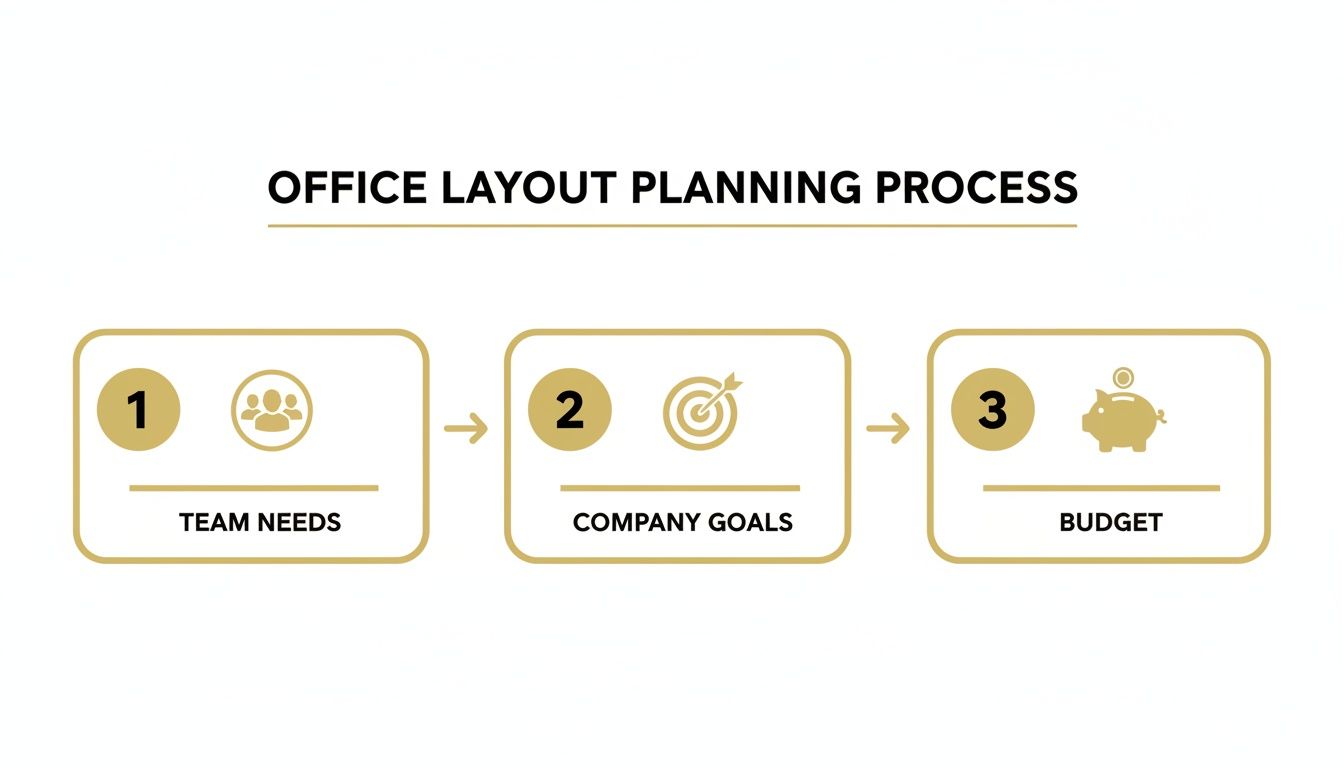
As you can see, the sweet spot is found by balancing what your team needs with what the business wants to achieve. That’s how you make a smart investment.
Aligning Your Space with Business Goals
Next, let’s talk about what you want this new space to do for the business. Your business goals will directly shape the design choices we make together. For instance, if you’re looking to get departments working together more, your layout should have more open collaboration hubs and informal social spaces.
Here are some common goals a new office layout can help you achieve:
- Improving Teamwork: Creating more shared project zones and casual meeting areas where ideas can flow freely.
- Attracting Top Talent: Designing a modern, appealing space that truly reflects your company culture. This is a key factor for businesses in Bishop’s Stortford and right across Hertfordshire.
- Increasing Productivity: Providing a good mix of quiet zones for deep focus and lively areas for teamwork.
- Supporting Hybrid Work: Making the office a great place to be with better technology and a wider variety of workspaces that people can’t get at home.
Finally, setting a realistic budget and timeline from the very beginning is vital. Being clear about your money and time helps keep the project on track and makes sure there are no nasty surprises later. It lets us suggest solutions that give you the best value for your money, creating a workspace that will serve your business for years to come.
How We Moved Beyond the Cubicle Farm
To really understand where modern office design is heading, it’s useful to look back at where we’ve come from. The breakout zones, collaboration hubs, and flexible spaces we see today are a world away from the offices of a few decades ago.
The journey started with a focus on one thing: pure efficiency. The goal was simple, get as many people as possible into one space to do the most work.

The Rise of the Cubicle
Think back to the 1970s. This was the golden age of the cubicle farm. Based on factory production lines, businesses crammed staff into endless rows of identical, high-walled boxes. On paper, it seemed to make sense, give everyone a little bit of personal space while fitting in as many people as possible.
The reality, of course, was a sea of beige partitions. It created places that felt impersonal, isolating, and soulless. Noise travelled everywhere, yet proper teamwork was a struggle. This whole approach was driven by the needs of the business, not the people actually doing the work.
This era actually saw a huge shift in UK office design. In the mid-1970s, office parks began popping up on the edge of cities like London, driven by cheaper rents. Companies filled these new buildings with modular cubicles to increase productivity as technology like word processors became common. But it often just led to noisy, cramped workplaces. You can read more about this period in the evolution of office design.
The Shift Towards Open-Plan Design
By the 1990s and 2000s, things were changing. The backlash against the cubicle gave rise to a new idea: the open-plan office. The aim was to tear down the walls, both literally and figuratively, to spark a new spirit of teamwork and openness.
Open-plan layouts were sold as the key to spontaneous chats and easy teamwork. It was a direct reaction to the stuffy formality of the cubicle era. And it certainly made offices feel more modern and spacious.
But this new approach came with its own problems. Without any physical barriers, the biggest complaints quickly became constant noise and a total lack of privacy. Trying to focus on a tricky task while hearing every single phone call and casual chat around you is a huge drain on productivity.
Many businesses across Essex and the wider UK are still dealing with the legacy of these designs. They’re left with workspaces that just don’t fit how people need and want to work today.
Why This Matters for Your Business
Understanding this history is important because it explains why so many offices feel out of date. The way we work has been turned on its head, especially with the rise of hybrid and flexible working. The old layouts simply can’t keep up.
A modern office layout design needs to do so much more than just house people. It has to:
- Support Different Work Styles: It needs to offer a mix of spaces for deep focus, team projects, casual catch-ups, and private calls.
- Be Flexible: Your layout should be able to adapt as your team changes, without needing a complete refit every six months.
- Look After Wellbeing: The goal is to create a place where people feel comfortable, supported, and motivated to do their best work.
The lesson from the past is clear: a one-size-fits-all approach just doesn’t work. The best office layouts today offer variety, choice, and control. They recognise that a successful workplace is one that empowers its people by giving them the right space for whatever task is at hand.
The Core Elements of a Great Office Layout
Right, let’s get into the practical side of things. A brilliant office layout design isn’t just about making the space look good. It’s about making it work for the people who use it every day. This is where the real expertise comes in. Getting these core elements right from the start is what separates an average office from a great one.
The first, and I’d say most important, idea to get your head around is zoning. Think of it like planning a small town. You wouldn’t build a noisy factory right next to a quiet residential street, and the same thinking applies here. Zoning is all about creating separate, dedicated areas for all the different things your team needs to do.
It’s an acceptance that a one-size-fits-all open-plan office just doesn’t work anymore. People need different kinds of spaces to do their best work.
Creating Your Office Zones in 2026
When you get zoning right, you give your team choice and control. Productivity and job satisfaction go up when people can pick the right space for the task. A well-designed office should feel natural and support the rhythm of a modern workday.
Here are the key zones we always think about:
- Quiet Zones: These are your quiet spots for deep, focused work. Think library rules: very little chat, no phone calls. They are vital for anyone who needs to concentrate without being interrupted.
- Collaboration Hubs: This is where the energy is. These spots are designed for brainstorming and teamwork, so they need things like whiteboards, big screens, and flexible furniture that can be moved around.
- Social Spaces: You could call this the heart of your office culture. A great kitchen or breakout area is where those informal, spontaneous chats happen, the ones that often lead to the best ideas. It’s a space for people to relax and connect.
- Private Areas: Every office needs small spaces for confidential calls, one-to-one meetings, or just a moment of peace. These can be small, purpose-built rooms or even single-person acoustic pods.
To make this a bit clearer, here’s a simple breakdown of how these zones function.
A Practical Look at Office Zones
This table gives you a simple look at the different types of zones, what they’re for, and the key things you’ll want to include in each.
| Zone Type | Main Purpose | Key Design Features |
|---|---|---|
| Focus Zone | Deep, individual work | Acoustic panels, single desks, “library rules” signs |
| Collaboration Hub | Brainstorming, team projects | Moveable whiteboards, large screens, flexible seating |
| Social Area | Informal catch-ups, building culture | Comfy sofas, good coffee machine, relaxed feel |
Thinking through these things for each zone helps make sure every part of your office has a clear and valuable purpose.
The Importance of Circulation and Flow
Once your zones are mapped out, you need to think about how they all connect. This is where circulation comes in. It’s the art of planning how people will move through the space. A well-designed office has clear, natural pathways that stop bottlenecks and make getting around easy.
You have to avoid creating traffic jams, especially around busy spots like the kitchen, printers, or main meeting rooms. Walkways should be wide enough for people to pass comfortably. The layout should guide staff from one area to another without them feeling lost or having to cut through someone’s workspace. Good circulation makes the whole office feel calmer and more organised.
Choosing Your Desking Solutions
Finally, let’s talk about desks. The old model of one assigned desk for every person is no longer the standard. A modern office layout design is all about flexibility, offering a menu of options to suit different work styles and hybrid schedules. You can learn more by exploring our detailed guide on modern office floor plans for 2026.
Some of the most common solutions we use include:
- Assigned Desks: The classic setup. It gives people a sense of their own personal space, which many still like.
- Hot Desking: Employees pick any available desk for the day. This is a brilliant space-saver, especially for companies with a flexible or hybrid working model.
- Team Neighbourhoods: Think of this as a middle ground. A specific area is given to a team, but people can choose where they sit within that “neighbourhood” each day.
When you bring together the right zones, clear circulation, and flexible desking, you create a supportive and energetic environment. This thoughtful approach makes sure your office is a tool for success, a place that helps your team perform and one they genuinely want to come to.
Solving Noise and Privacy in the Modern Office
Ask anyone what drives them mad about open-plan offices, and you’ll almost always get the same answer: the constant noise and the feeling of being watched. It’s a huge issue, one that damages productivity and leaves people feeling exposed.
This isn’t just a feeling, it’s a fact backed by data. A 2022 survey of UK office workers found that for 33% of them, the lack of privacy was their single biggest complaint. That’s a shocking statistic that shows a major flaw in many open-plan designs. You can see more of the findings from this workplace survey.
Luckily, you don’t have to start building permanent walls to fix it. There are some incredibly good and flexible solutions out there that give your team the quiet focus they need.
Introducing Flexibility with Modular Meeting Pods
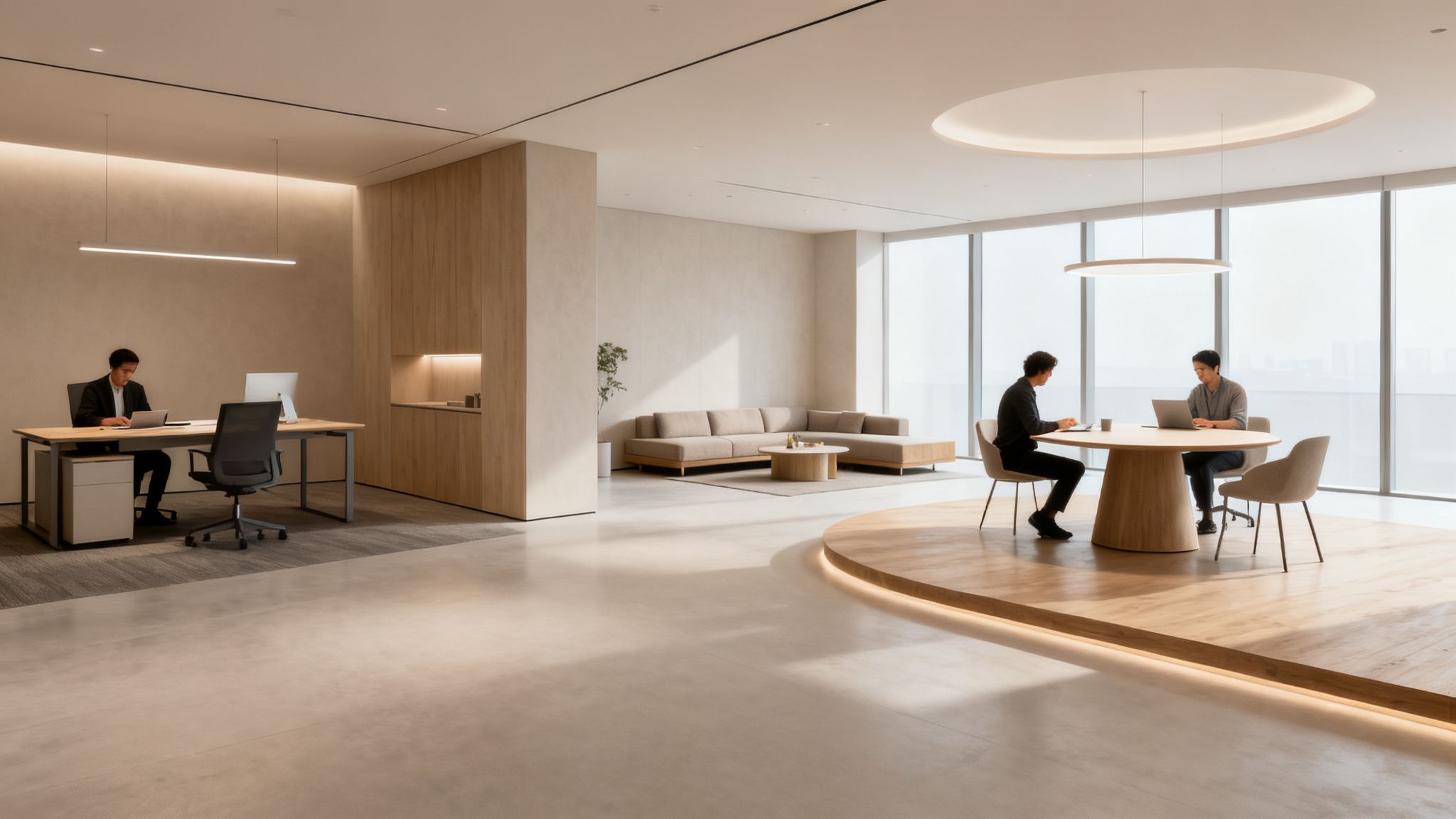
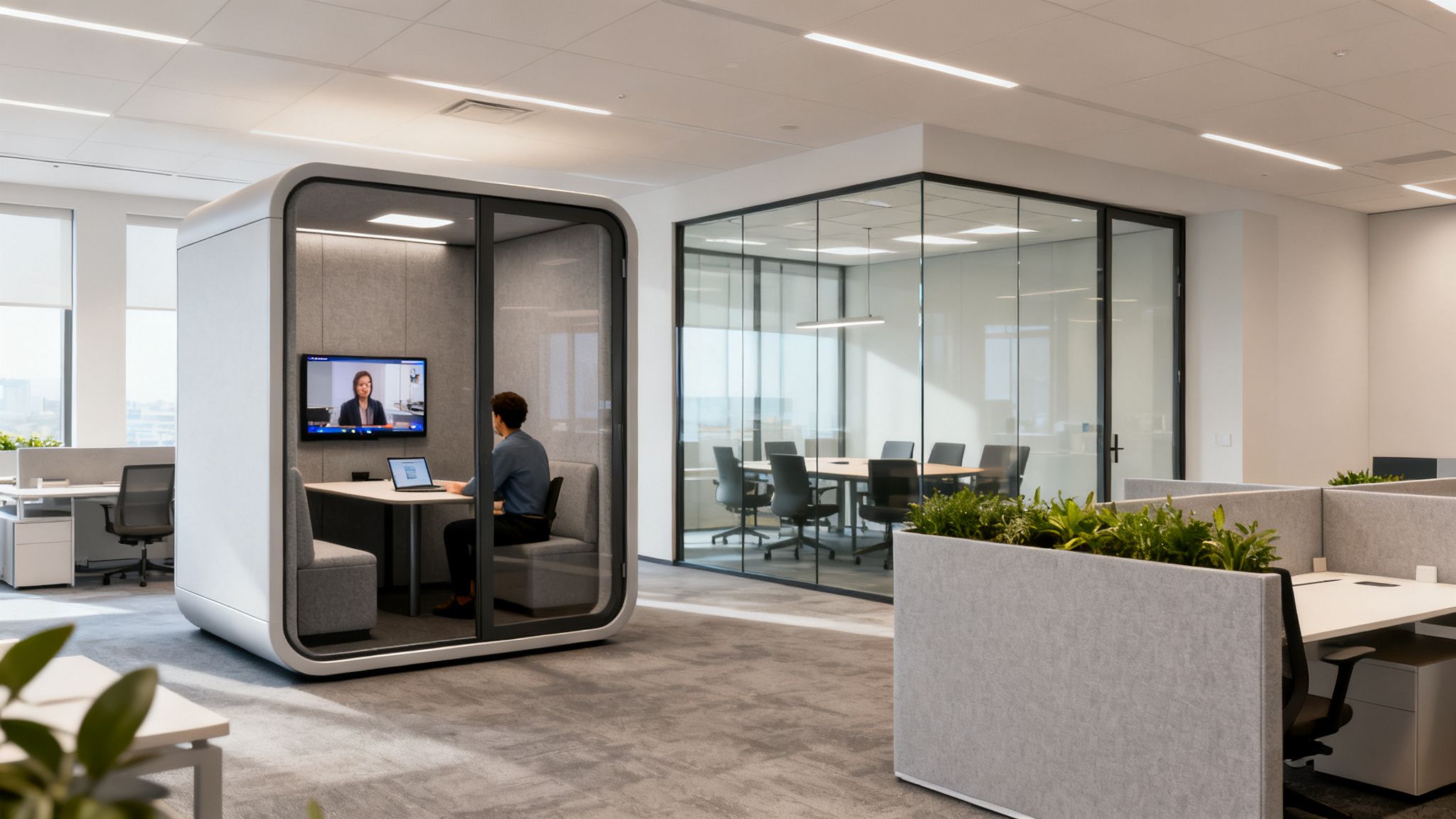
One of the best tools in the modern office layout design playbook is the modular meeting pod. Think of them as self-contained, soundproof rooms you can just drop into your existing space with very little fuss.
They’re a brilliant solution for a few reasons:
- Great Acoustics: Pods are built to block out the office buzz and keep conversations private. Perfect for confidential calls, video meetings, or one-to-one chats.
- Total Flexibility: Unlike a normal wall, a pod isn’t permanent. If you decide to change the office layout later, you just move the pod. Simple.
- Quick to Install: We’re talking hours, not weeks. A pod can be built and ready to use with almost no downtime for your business.
We partner with leading names like Vetrospace, BlockO, and Framery to offer a huge range of sizes and options. Whether you need a solo phone booth or a larger pod for a team of four, there’s a model that will fit perfectly.
Using Glass Partitioning to Define Space
Another fantastic way to reduce noise while keeping the space feeling bright and connected is with glass partitioning. This lets you create separate offices, meeting rooms, or quiet zones without killing the natural light or making people feel boxed in.
For businesses in places like Braintree, glass is an incredibly popular way to modernise a space. It finds that perfect balance, giving you the sound and visual privacy of a separate room but with the clean look of a modern, open environment.
Here’s a quick look at the benefits:
| Feature | Benefit for Your Business |
|---|---|
| Acoustic Glass | Greatly reduces sound, killing distractions. |
| Visual Openness | Keeps that collaborative, connected feeling. |
| Professional Look | Delivers a sleek, modern finish that impresses clients. |
By mixing different types of partitioning, for example, fully glazed walls with frosted patterns for extra privacy, you can tailor each zone for its exact purpose. This smart take on office layout design ensures you get the best of both worlds: the energy of a collaborative hub alongside the calm needed for deep focus. To learn more, check out our guide on practical noise reduction in the office.
Ultimately, solving the noise and privacy problem is about creating variety. It’s about building a balanced mix of different spaces that suits every kind of task and every style of working. When you give your team the right environment, you empower them to do their best work, free from the distractions that affect so many UK offices.
The Business Case for a Thoughtful Workspace
Investing in a high-quality office layout is much more than a simple cosmetic upgrade. It’s a powerful, strategic business decision with a clear return. Think about it: a poorly designed workspace doesn’t just frustrate your team. It actively costs UK businesses a huge amount in lost productivity every year.
This section is all about connecting the dots between a well-planned office and your bottom line. When your workspace is designed with people at its heart, the positive effects are felt in every part of the business.
Boosting Productivity and Your Bottom Line
It’s just common sense. An office that’s noisy, cramped, or badly lit makes it incredibly hard for people to focus, and the result is a direct hit to efficiency. On the other hand, a space that supports different ways of working, from deep concentration to lively teamwork, actively helps people do their best work.
Using ergonomic furniture and clever layouts can also have a huge impact on staff wellbeing, leading to fewer sick days. A comfortable and supportive environment keeps your team healthier and happier, which is a clear win for everyone.
The financial impact here is shocking. Studies have shown that badly designed spaces can cost businesses up to £135 billion a year in the UK, while better spaces can make workers 19% more productive. With issues like noise, a lack of privacy, and poor temperature control causing productivity to dip for 37% of staff, it’s clear that getting the layout right is a sound investment.
A Powerful Tool for Talent Attraction
In a competitive market, your office is one of your most powerful secret weapons. For potential employees, the workspace is a real-life example of your company culture and values. A tired, old-fashioned office sends a clear message that you don’t invest in your people.
A modern, lively, and flexible office, however, tells a very different story. It shows you care about employee wellbeing and are committed to providing the best possible tools for success. For top talent, the quality of the work environment is often a deciding factor, especially when choosing between similar job offers.
This is particularly true for hybrid working. If you want to encourage people to come into the office, you need to offer them something they simply can’t get at home. This means creating spaces that are perfectly designed for teamwork, social connection, and focused work. To get more ideas, you can also check out our guide on how to improve workplace productivity.
Your Office as a Brand Statement
Finally, never underestimate the impression your office makes on clients, partners, and other visitors. Your workspace is a physical part of your brand. It should tell your story and reflect what your company is all about.
A thoughtful office layout design can communicate your brand’s identity without you having to say a word. For businesses across Essex and Hertfordshire, a professionally designed space can instantly show you are competent, creative, and pay attention to detail. It shows you take your business seriously and are proud of the work you do.
Ultimately, creating a workplace where people feel comfortable, supported, and productive is one of the smartest investments you can make. It’s a decision that pays you back in productivity, staff retention, and brand image for years to come.
Your Office Layout Questions Answered
When you’re diving into a new office layout design, you’re going to have questions. We’ve been asked just about everything over the years, so we’ve gathered some of the most common questions we hear from clients to help you get started.
How Long Does an Office Fit Out Usually Take?
This is the big one, and the honest answer is: it really depends on the project. There’s no single timeline because every office, and every business, is unique.
A simple office refresh, maybe some new furniture, a fresh coat of paint, and better lighting, might only take a few weeks from start to finish. It’s a great way to make a big impact without major disruption.
On the other hand, a full redesign involving structural changes, building new rooms, or re-doing all your electrics is a different story. A big fit out like this could easily take several months to plan and complete properly.
The secret to a smooth project is careful planning from day one. We work with you to map out a clear, realistic schedule. Our priority is always to cause as little disruption to your business as possible, planning any noisy or messy work outside of your core hours whenever we can.
What Is the Difference Between a Cat A and Cat B Fit Out?
You’ll see these terms pop up all the time in commercial property. Understanding them is key. They just refer to two different stages of getting an office space ready for someone to move in.
A Category A (Cat A) fit out is usually what the landlord provides. Think of it as an empty shell, a blank canvas with all the basics in place.
A typical Cat A fit out includes things like:
- Raised floors and suspended ceilings
- Basic electrics and air conditioning
- Finished internal walls and fire protection
- Completed shared areas like toilets and lifts
A Category B (Cat B) fit out is where the magic happens and where we come in. This is the stage that transforms that blank canvas into your office. It’s all about bringing in the things that reflect your brand, support your company culture, and meet the needs of your team. This is what truly makes the space your own.
This covers everything from installing sleek glass partitions for new offices and meeting rooms to laying your chosen flooring, decorating, and fitting out the kitchen. It’s the final, crucial step that brings your office layout design to life.
How Can We Make Our Office Layout More Sustainable in 2026?
Sustainability is no longer a ‘nice-to-have’. It’s a core part of being a responsible business. The good news is, there are plenty of practical ways to make your office design more environmentally friendly.
It all starts with making smarter choices about materials. We can prioritise using products with a high recycled content or those sourced locally to cut their carbon footprint. Even small things, like choosing paints with low VOCs (volatile organic compounds), can improve indoor air quality and create a healthier workspace.
Energy efficiency is another huge win. Switching to modern LED lighting with smart controls can dramatically cut your electricity use. Good space planning also makes the most of natural daylight, reducing the need to keep the lights on.
Flexible design is also sustainable. For instance, using modular meeting pods from brands like Vetrospace or BlockO gives you private spaces that can be moved as your business grows. This avoids the waste that comes from knocking down and rebuilding permanent walls later.
Architectural wrapping is another fantastic, eco-friendly option. Instead of ripping out perfectly good surfaces like doors or reception desks and sending them to landfill, we can give them a high-quality wrap. They get a brand-new look at a fraction of the cost and with very little waste. For businesses in places like Cambridge, it’s a clever way to modernise on a budget.
What Should We Consider for a Hybrid Working Office?
Designing an office for hybrid work needs a total shift in thinking. The office is no longer the default place to be, it’s a destination. You have to create a space that gives your team a good reason to make the commute.
The layout needs to provide things people can’t easily get at home. Recent research shows 87% of workers still find huge value in meeting face-to-face for teamwork. This means your new layout should be packed with high-quality collaboration zones, tech-ready meeting rooms, and inviting social spaces that help build team culture.
You’ll probably find you need fewer traditional desks, which frees up floor space for much more variety. You can explore hot desking systems, supported by personal lockers for convenience.
Crucially, you must also provide quiet, private spaces. The reality of hybrid work is more video calls and virtual meetings. Providing dedicated acoustic pods, like those from Framery, for focused work or private calls is a must. It makes sure one person’s video call doesn’t become a noisy distraction for the whole office. The goal is a flexible, varied environment that supports every single task your team needs to do.
Ready to transform your workspace? Speak to the Gibbsonn Interiors team today.
Contact Us