
Picture this: your star employee in London is wrestling with nagging back pain. Their focus is shot and their productivity is taking a nosedive. This isn’t a rare occurrence; it’s a daily reality in far too many UK offices where a bad chair becomes a serious business problem. That’s why office chairs with lower back support aren’t just an expense – they’re a crucial investment in your team’s wellbeing and your company’s performance.
Table of Contents
- Why Your Team’s Back Health Is Your Business’s Backbone
- Why Lumbar Support Isn’t Just a Buzzword
- Decoding the Features of an Ergonomic Office Chair
- Choosing the Right Chair for Your Business and Budget
- Integrating Ergonomic Chairs into Your Office Design
- Answering Your Top Questions About Ergonomic Chairs
Why Your Team’s Back Health Is Your Business’s Backbone
That constant, niggling discomfort isn’t just a personal problem for one employee. It creates ripples that spread across the entire organisation.
When people are distracted by pain their attention to detail slips, creativity stalls and their overall engagement just evaporates. This is the hidden cost of poor seating and it can be immense, throwing off project timelines and hampering business success.
Choosing the right chairs is a powerful, proactive step towards building a healthier, more resilient workforce. It sends a clear message that you value your team’s health – a move that does wonders for morale and staff retention. A truly supportive chair helps maintain the natural curve of the spine, easing muscle strain and freeing up employees to concentrate fully on their work. It’s a foundational piece of any genuinely productive office environment.
The True Cost of Neglecting Ergonomics
Ignoring the need for proper seating is a surefire way to kickstart a negative cycle. You’ll see an uptick in absenteeism as back-related issues become more common, piling more pressure onto the rest of the team.
In the long run this neglect can lead to chronic musculoskeletal problems. In fact, according to the Health and Safety Executive (HSE), these issues are a leading cause of work-related illness in Great Britain. For any business that translates directly into lost workdays and a team that’s running on empty.
The infographic below really drives home the clear connection between back pain, a proactive investment in ergonomic solutions and a direct boost in productivity.
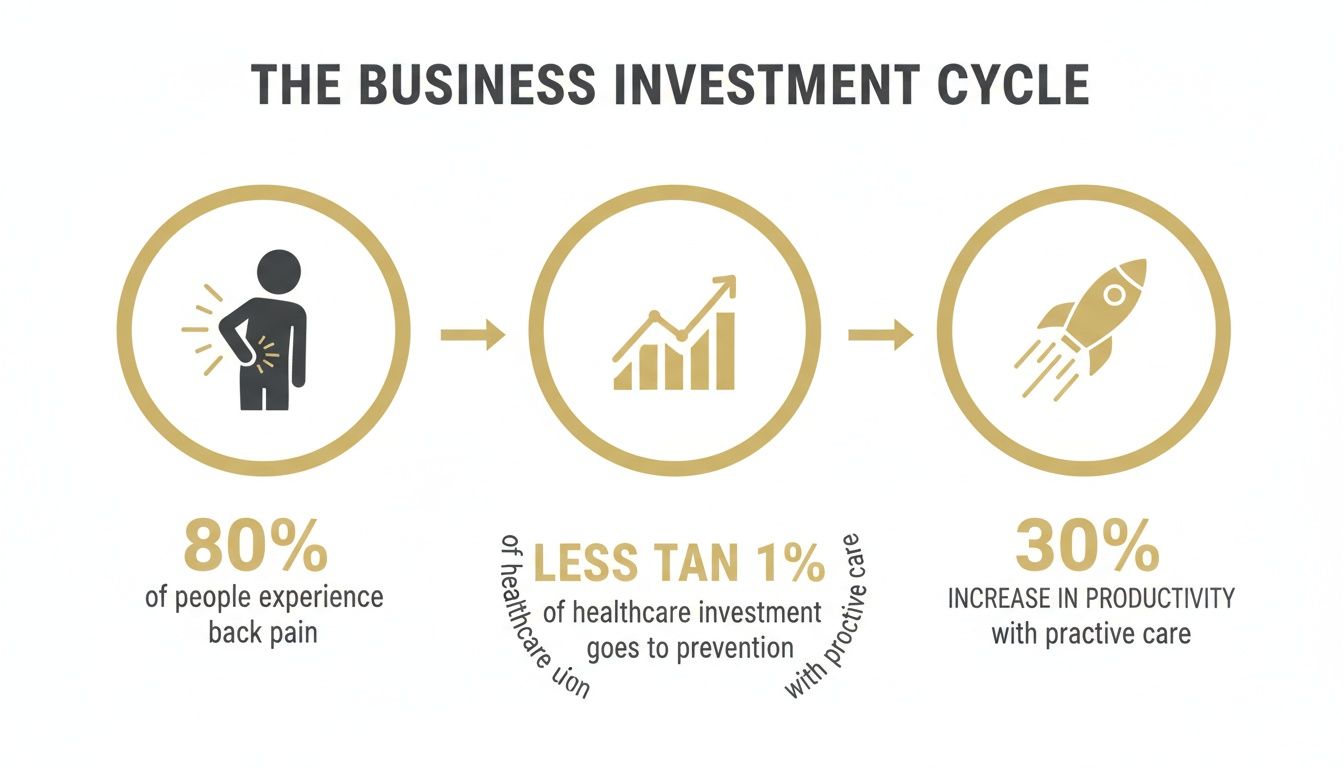
This cycle shows how even a small investment in preventative care like ergonomic chairs directly fuels a more productive and healthy workplace. Whether your office is based in Bishop’s Stortford or Cambridge, this principle is universal.
You can learn more about the link between a well-designed office and its output by reading our guide on how to improve workplace productivity. It all comes down to creating an environment where your team can truly thrive.
Why Lumbar Support Isn’t Just a Buzzword
So what’s all the fuss about lumbar support? Why does it matter so much?
Think of your lower spine – the lumbar region – as the keystone in an arch. It has a natural inward curve designed to carry weight and keep you balanced. But when you sit, especially for hours on end, that natural arch often gets flattened out against the back of a standard, unsupportive chair.
When that happens the muscles in your lower back are forced to pick up the slack, working overtime just to hold your posture. It’s no wonder that by 3pm you feel that familiar ache and fatigue. This constant strain is what leads to poor posture and eventually persistent pain.
It gets worse. Sitting without proper support puts a huge amount of pressure on your spinal discs, those little gel-like cushions between your vertebrae. Slouching squashes them unevenly and over months and years this can contribute to serious, chronic back problems for your team.
Getting to Grips with Healthy Posture
A healthy seated posture isn’t about being ramrod straight. It’s about maintaining the natural ‘S’ shape of your spine. A proper office chair with lower back support does one simple but critical job: it fills the gap between the chair and the small of your back, gently encouraging that natural curve.
The effect is immediate. Your back muscles can finally relax which massively reduces the physical stress that builds up throughout the workday. By keeping the spine in its proper alignment you’re tackling the root causes of most office-related back pain – muscle fatigue and disc pressure.
“Once you understand the ‘why’ behind ergonomics, you’re in a much stronger position to make smart decisions for your team’s health and productivity. This is true for any office fit-out, whether you’re based in Essex or Hertfordshire.”
The Business Case for Backing Your Team
The demand for better seating isn’t just a fleeting trend; it’s a fundamental shift in how we approach workplace wellbeing. The UK office furniture industry and its focus on ergonomics is growing year on year, fuelled by an urgent need for chairs that actually support the lower back.
And the numbers speak for themselves. With a staggering percentage of UK office workers suffering from lower back pain, the line between poor seating and lost productivity has never been clearer.
This isn’t just about comfort; it’s about providing the right tools for the job and a good chair is the most fundamental tool of all. You can learn more by diving into our detailed guide on the principles of ergonomic chairs for back pain.
Decoding the Features of an Ergonomic Office Chair
Choosing the right office chair goes far beyond picking a comfy cushion. To find a truly effective office chair with lower back support, you need to get to grips with the key adjustable features that turn a simple seat into a powerful ergonomic tool. These are the non-negotiables that will genuinely support your team’s health and daily focus.
Adjustable Lumbar Support
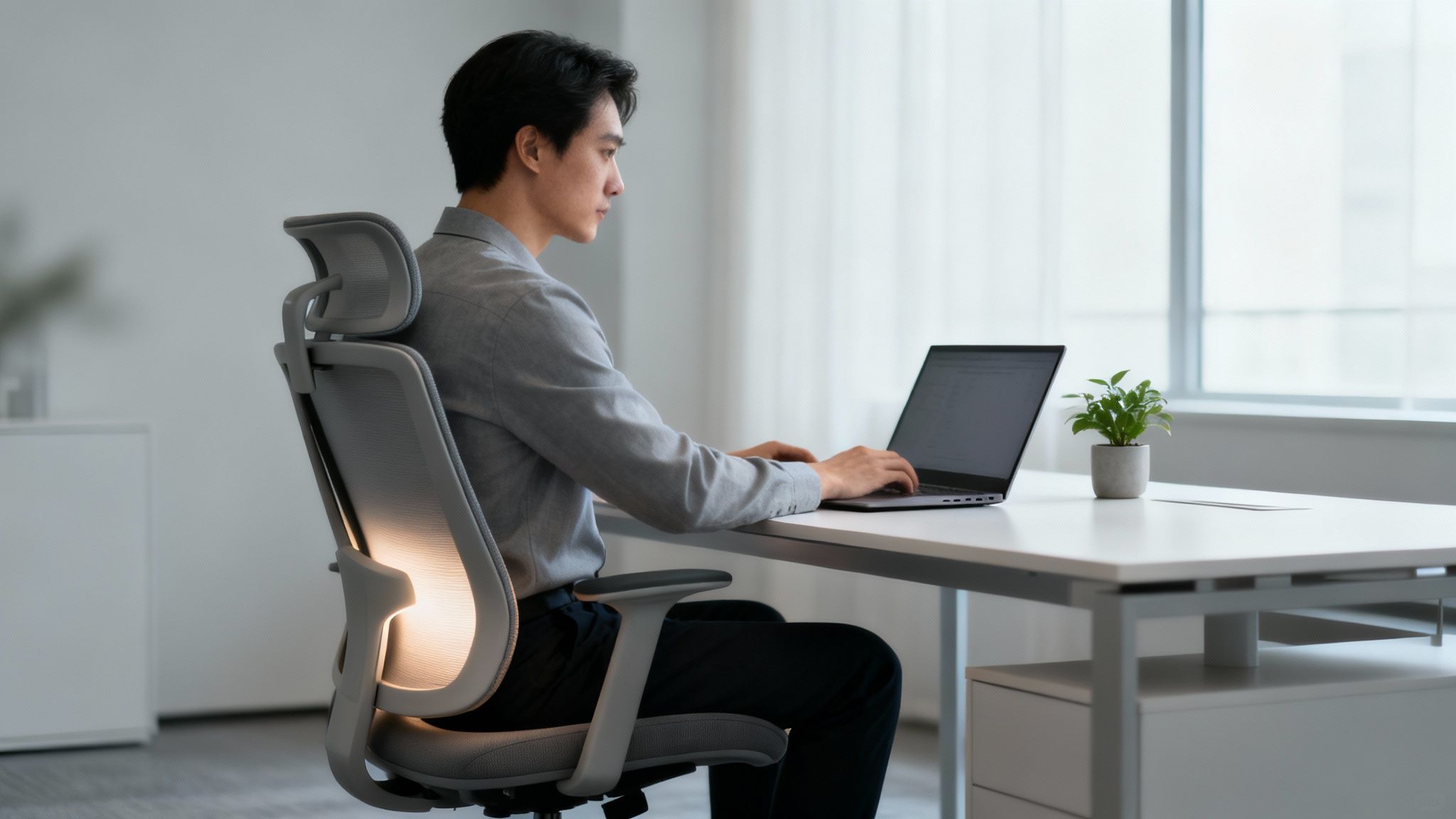
Let’s be clear: this is the most critical feature of them all. No two spines are the same so a fixed lump of foam shoved into the back of a chair just isn’t going to cut it for everyone. It’s a one-size-fits-none approach.
Proper adjustable lumbar support allows each person to fine-tune two things: its height and its depth. This means they can slide the support up or down to perfectly nestle into the natural curve of their lower back, then adjust how much pressure it applies. Getting this right is the absolute foundation for preventing slouching and keeping muscle fatigue at bay.
Seat Depth Adjustment
Have you ever sat in a chair where the edge digs relentlessly into the back of your knees? Or one that feels so short you’re practically perching on the edge? That’s a seat depth problem.
This feature lets you slide the seat pan forwards or backwards completely independent of the chair back. The sweet spot is leaving a gap of about two to three fingers between the seat’s edge and the back of your knees. It’s a simple tweak but it’s crucial for maintaining healthy blood circulation to your legs and properly supporting your thighs.
Armrest Adjustability
Armrests that are stuck too high or too low are a fast track to shoulder and neck pain. They force people into awkward, unnatural postures, leading to a build-up of tension that can last all day.
You want to look for armrests that can be adjusted in multiple directions – often called “4D” armrests. At the bare minimum they must adjust for height. The best chairs however also allow for width, depth and pivot adjustments. This level of customisation helps your team keep their shoulders relaxed and forearms perfectly supported while typing, which is a core principle of good Display Screen Equipment (DSE) practice.
For the official word it’s always worth consulting the Health and Safety Executive (HSE) resources on DSE regulations.
“A chair without the right adjustability is just a static piece of furniture. A truly ergonomic chair is a dynamic tool that adapts to the individual, encouraging healthy posture and movement throughout the day.”
Synchro-Tilt Mechanism
A great ergonomic chair should move with you, not against you. A synchro-tilt mechanism is a clever piece of engineering where the backrest and the seat pan tilt in a synchronised ratio – usually the back reclines more than the seat.
This encourages what we call ‘active sitting’. When you lean back your hips open up, blood flow improves and the pressure on your spinal discs is relieved. It allows for natural, fluid movement rather than locking you into one rigid position, which is exactly what you need to fight off the stiffness from sitting all day.
Understanding these features is key, whether you’re planning a full office fit-out in London or upgrading your existing setup in Bishop’s Stortford.
To make it even clearer we’ve put together a quick-reference table that breaks down the essentials. Think of this as your cheat sheet when comparing models.
Essential Ergonomic Chair Features at a Glance
| Feature | What It Does | Why It Matters |
|---|---|---|
| Adjustable Lumbar Support | Moves up/down and in/out to fit your spine. | Directly supports the lower back’s natural curve, reducing muscle strain. |
| Seat Depth Adjustment | Slides the seat pan forward or backward. | Ensures proper thigh support and prevents poor circulation in the legs. |
| Adjustable Armrests | Move in multiple directions (height, width, pivot). | Reduces shoulder and neck tension by supporting forearms correctly. |
Keep these features top of mind and you’ll be well on your way to selecting chairs that don’t just fill a space but actively contribute to a healthier, more productive work environment.
Choosing the Right Chair for Your Business and Budget
Finding the perfect office chair often feels like a balancing act between quality and cost. How do you provide the best office chairs with lower back support for your team without blowing the entire budget? The trick is to stop seeing it as an expense and start looking at it as a long-term investment in your business’s most valuable asset – your people.
The most expensive chair isn’t always the right one. The best choice is the one that meets your team’s specific needs while staying in line with your company’s financial goals.
Matching Chairs to Your Workplace
The needs of a fast-growing start-up in Braintree are worlds apart from those of a large corporate headquarters in the city. A smaller, agile business might prioritise chairs that are versatile enough for multiple roles. A larger company on the other hand will likely need to specify different chairs for distinct functions like task seating, meeting rooms or executive offices.
At Gibbsonn Interiors we essentially act as consultants, helping clients in places like Chelmsford select furniture that fits their unique operational demands. We help you look beyond the price tag to consider the full picture.
Materials and Durability
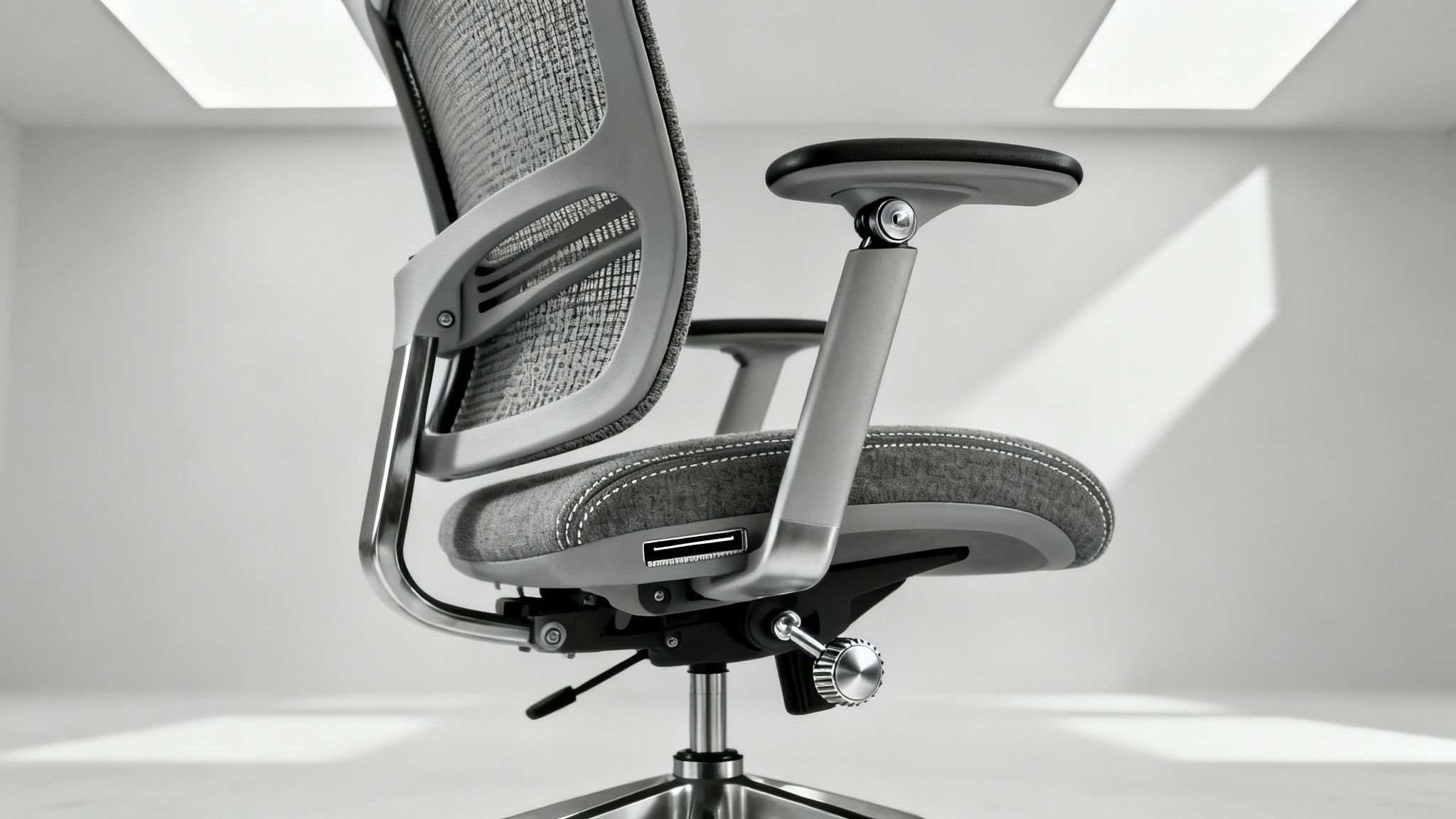
The materials used in an office chair have a massive impact on both its comfort and its lifespan. Two of the most common options you’ll come across are mesh and fabric.
- Breathable Mesh: This is a hugely popular choice for its fantastic ventilation, which keeps users cool throughout the day. It offers a firm, supportive feel that many people find incredibly comfortable.
- Durable Fabric: High-quality, commercial-grade fabric over foam cushioning provides a softer seating experience. It’s also available in a vast range of colours to perfectly match your brand identity and is built to withstand the rigours of a busy office.
Beyond the upholstery take a good look at the chair’s base and casters. A sturdy aluminium base will always outlast a plastic one and fitting casters designed for your specific flooring will prevent damage and ensure everyone can move around smoothly.
Top Tip
A solid warranty is more than just a piece of paper; it’s a manufacturer’s vote of confidence in their product. Look for warranties that cover the chair’s mechanism and structural components for at least five years, as this is a strong indicator of quality and long-term value.
Why User Trials Are Non-Negotiable
You wouldn’t buy a fleet of company cars without a test drive would you? The exact same principle applies to office chairs. Before you even think about committing to a large order it is absolutely essential to arrange user trials with a cross-section of your employees.
This hands-on feedback is invaluable. It lets your team experience how the chair actually feels over a full workday, ensuring the model you choose genuinely works for different body types and preferences. This simple step prevents costly procurement mistakes and makes sure your investment truly pays off.
Integrating Ergonomic Chairs into Your Office Design
Choosing the perfect office chairs with lower back support is a brilliant first step but it’s really only half the job. To truly unlock their benefit these chairs need to be woven thoughtfully into your overall office design. After all a great chair in a cramped, poorly planned space is an opportunity completely wasted.
A holistic workplace strategy makes sure your ergonomic seating works in harmony with its surroundings. This means thinking about how chairs fit within different layouts, from buzzing open-plan areas to quiet focus pods. Every single employee needs enough room to adjust their chair properly and move around without feeling boxed in.
This is a core principle of good office design. When we help businesses in places like Stansted plan their space our focus is always on creating an environment that supports natural movement, preventing the static postures that lead to aches and pains. You can explore this idea more in our guide to designing an effective office space.
Creating Active Workspaces
The real goal here is to create ‘active workspaces’ where the layout itself encourages small, natural movements throughout the day. This could be as simple as positioning collaborative zones away from individual workstations or making sure there are clear, easy pathways to shared amenities like the kitchen or breakout areas.
The space around the desk is just as important as the chair itself. An employee should be able to recline, swivel and get up from their desk without bumping into a colleague or a filing cabinet. This freedom of movement isn’t just a luxury; it’s crucial for both physical wellbeing and psychological comfort.
This kind of layout shows how distinct areas for collaboration, individual work and relaxation can coexist beautifully, encouraging people to move between them. By creating a varied environment the design naturally breaks up long, unhealthy periods of static sitting.
A Turnkey Approach to Ergonomics
A truly successful office fit-out goes way beyond just supplying furniture. It involves a deep understanding of how your team actually works and then designing a space that supports those workflows from an ergonomic point of view. This complete, end-to-end approach is becoming more and more vital as UK businesses rightly prioritise employee health.
The demand for ergonomic furniture is fuelling serious market growth. This investment is directly linked to tackling the staggering number of work-related musculoskeletal disorders reported each year, with back issues alone costing the economy billions in lost productivity. You can learn more about the UK office furniture market trends and what’s driving this growth.
At Gibbsonn Interiors we deliver these turnkey solutions. We make sure every single element of your office, from the layout in Bishop’s Stortford to the chairs in your new London hub, works together to create a healthy, productive and genuinely supportive environment.
Answering Your Top Questions About Ergonomic Chairs
When you’re looking to invest in proper office chairs with lower back support, it’s only natural to have a few questions. It’s a big decision after all. We’ve put together some clear, straightforward answers to the queries we hear most often from clients across the UK.
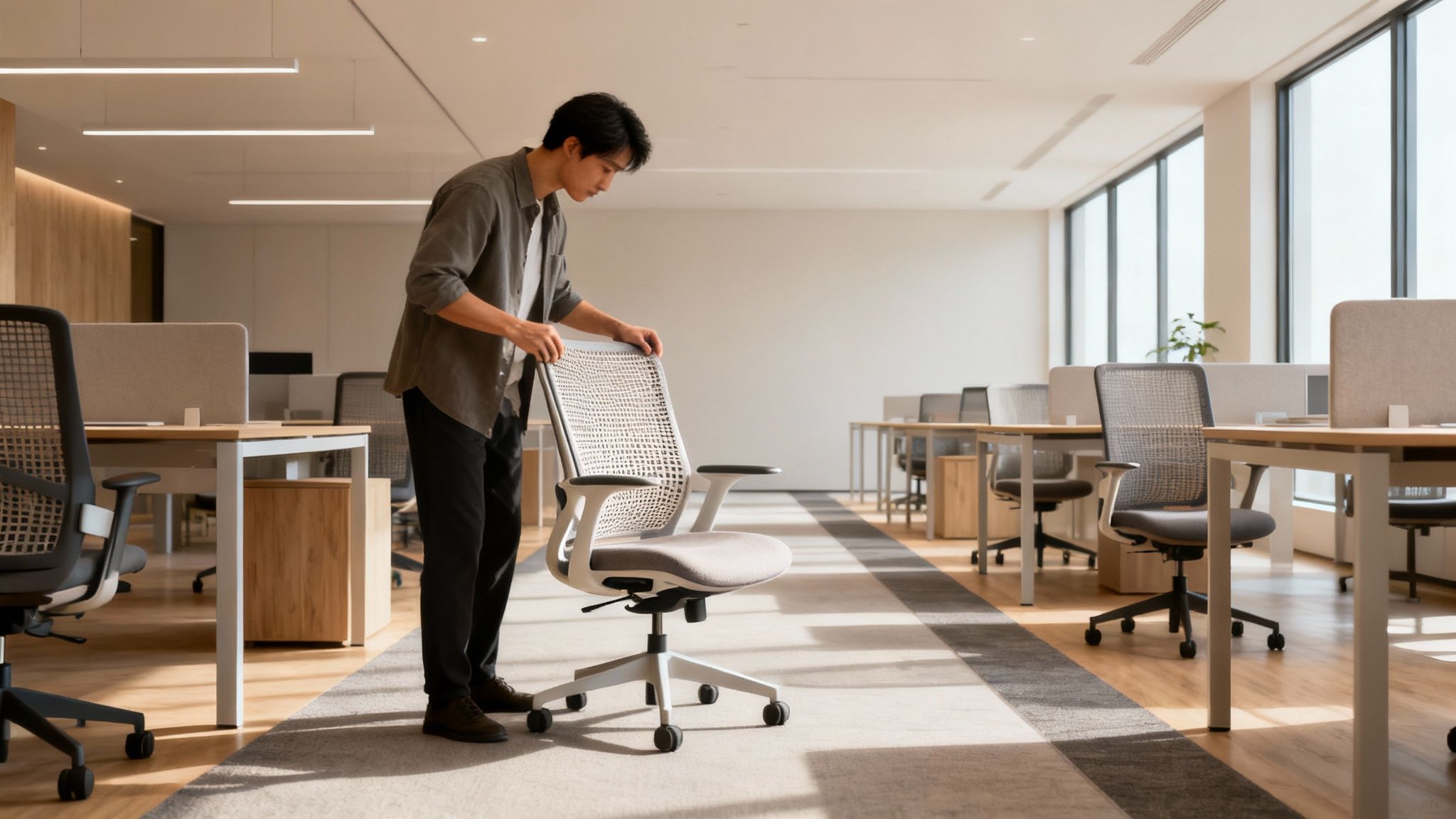
How Long Should an Ergonomic Chair Last?
A high-quality ergonomic chair isn’t just a piece of furniture; it’s a long-term investment in your team’s wellbeing. You should be looking for a manufacturer’s warranty that covers the main mechanical parts for at least 5-10 years.
Of course the real lifespan comes down to the build quality – a sturdy metal base will always outlast plastic – and its user weight rating. A well-made chair, when used correctly, will provide reliable support for years, making it an incredibly cost-effective choice in the long run.
Is Mesh or Fabric Better for Back Support?
This is one of those questions where the real answer comes down to personal preference and the office environment itself. Neither material is definitively “better” but they each have their own strengths.
- Mesh Chairs are fantastic for breathability, which is a massive plus in warmer offices or for people who tend to run hot. The material offers a firm, responsive feel that many people find incredibly supportive.
- Fabric and Foam Chairs give you a more cushioned, contoured kind of support. High-density foam in particular can mould to the user’s shape, providing a softer feel that’s still exceptionally supportive.
Honestly the best way forward is to let a few people trial both types. It’s the only way to know what feels right for your team.
How Do I Set Up My Ergonomic Chair Correctly?
Even the best chair in the world is only effective if it’s adjusted properly for the person using it. An incorrect setup can undo all the benefits. Here’s a quick checklist to help anyone in your team get the perfect fit:
- Feet Firmly Planted: Start by adjusting the chair height so your feet are flat on the floor and your thighs are roughly parallel to it. No tiptoes!
- Knee Position: You want a small gap – about two to three fingers’ width – between the front edge of the seat and the back of your knees.
- Back Support: Now position the lumbar support. It should fit snugly right into the natural curve of your lower back.
- Armrest Height: Your elbows should rest comfortably at a 90-degree angle with your forearms level with the desk and your shoulders feeling relaxed, not hunched.
Do We Need to Provide Ergonomic Chairs for Remote Workers?
In short, yes. An employer’s duty of care absolutely extends to those working from home. Under the Health and Safety Executive (HSE) Display Screen Equipment (DSE) regulations you are responsible for ensuring your remote team has a safe and ergonomic workstation.
This doesn’t automatically mean you have to start delivering chairs to every employee’s home. There are plenty of practical solutions like providing a list of approved ergonomic chairs, offering a stipend for staff to purchase their own or arranging for DSE assessments to pinpoint specific needs. Supporting your remote team is just as vital as looking after those in your Bishop’s Stortford office.
Ready to transform your workspace? Speak to the Gibbsonn Interiors team today. We’re here to help you invest in your team’s health and productivity with expertly chosen seating.