
“Sustainable office space” is a term you hear a lot. But it’s more than just a buzzword. It’s a smart way of thinking about our workspaces that brings together environmental care, staff wellbeing and solid financial sense.
It’s about looking at the entire lifecycle of a workplace, from the materials used in the fit-out to the energy it uses every day. The goal is simple: a healthier, more productive and cost-effective environment for everyone.
Table of Contents
- What Does a Sustainable Office Really Mean?
- Why Investing in Sustainability is Non-Negotiable
- Core Elements of a Sustainable Office Fit-Out
- How to Choose the Right Sustainable Materials
- Using Technology to Build a Smarter Green Office
- Calculating the Real ROI of a Sustainable Office
- Common Questions About Sustainable Offices
What Does a Sustainable Office Really Mean?
Forget the token pot plants and recycling bins for a moment. A truly sustainable office is a carefully designed ecosystem. Every element, from the lighting to the layout, works together to shrink its environmental footprint, support the people working there and deliver real results for the business.
Think of it as a workplace that’s better for the planet, better for your team and better for your bottom line.
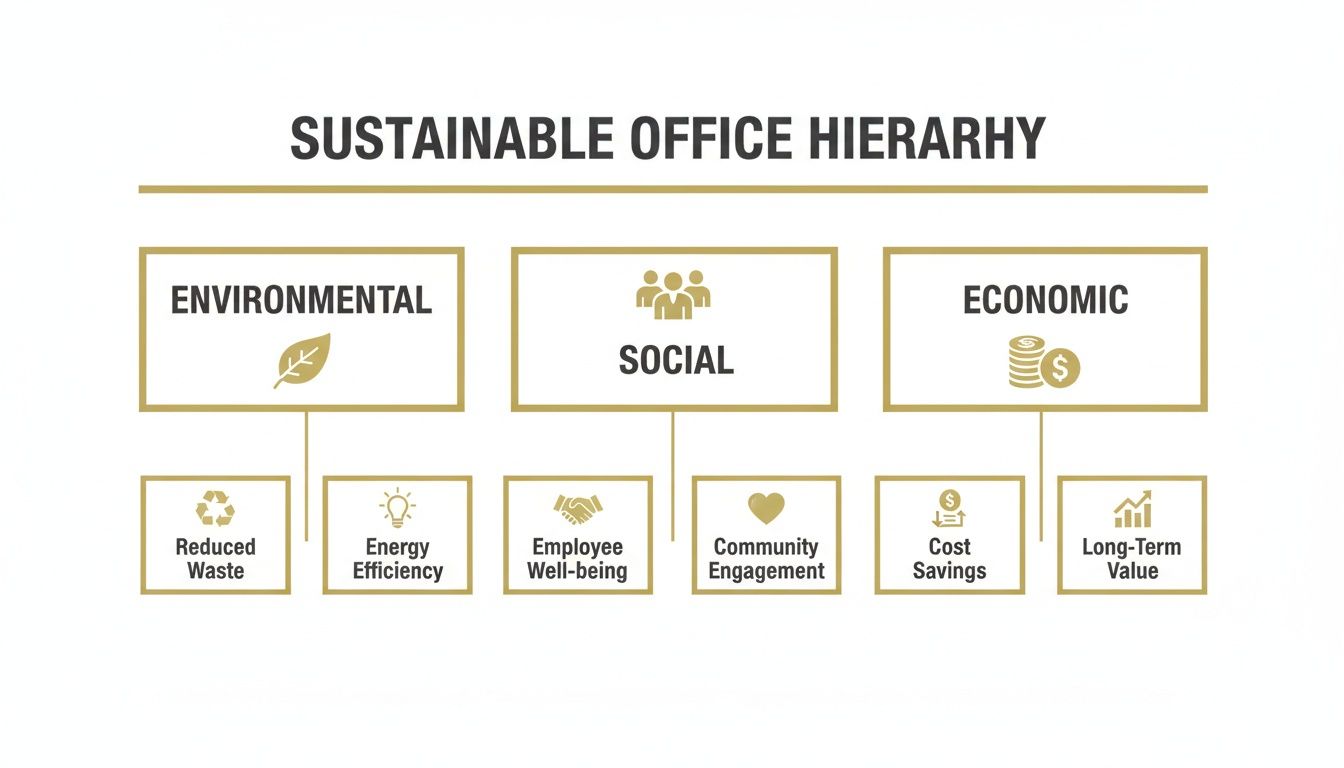
This isn’t a single-issue approach. It stands on three core pillars that have to work together. Getting this balance right is the first step towards creating a workspace that doesn’t just look good but does good.
The Three Pillars of a Sustainable Workplace
A successful strategy is never one-dimensional. To create a truly sustainable office, we need to balance the environmental, social and economic needs of the business.
We’ve broken down these core components in the table below, explaining where the focus lies for each and what the real-world business benefit is.
| Pillar | Core Focus | Key Business Benefit |
|---|---|---|
| Environmental | Reducing the physical impact of the office by cutting energy and water use, minimising waste and choosing responsibly sourced or recycled materials. | Lower operational costs, a smaller carbon footprint and a stronger brand reputation. |
| Social | Creating a healthy, comfortable and supportive environment that boosts employee wellbeing with a focus on natural light, clean air and great acoustics. | Improved productivity, better staff retention and attraction and fewer sick days. |
| Economic | Connecting sustainable practices directly to financial performance through reduced utility bills, increased property value and enhanced productivity. | Long-term cost savings, increased asset value and a more resilient business model. |
As you can see, each pillar supports the others. A well-ventilated, naturally lit office (Social) doesn’t just make people happier but it also reduces the need for artificial lighting and air conditioning, cutting energy bills (Environmental and Economic).
This balanced approach is becoming critical here in the UK. We’re seeing a huge push from businesses to get their carbon footprint under control, especially with new regulations on the horizon. In fact, over 80% of commercial properties in major English cities could become un-lettable by 2030 if they don’t get serious green upgrades.
While the headlines might talk about high office vacancy rates, the reality on the ground is different. Premium, energy-efficient buildings are in hot demand. The market is speaking loud and clear: sustainability is no longer a “nice-to-have”. You can learn more about this significant market shift and the future of UK offices.
Why Investing in Sustainability is Non-Negotiable
The case for creating sustainable office spaces isn’t some far-off idea anymore, it’s a pressing business reality. Deciding to invest in sustainability isn’t about adding a ‘nice-to-have’ corporate perk. It’s about securing a competitive, financial and reputational edge. For any modern business, it’s simply non-negotiable.
The most immediate win comes from direct financial savings. Think about your biggest operational costs, energy consumption is probably right at the top. Just by upgrading to smart HVAC systems and energy-efficient LED lighting, businesses can slash their utility bills. These aren’t tiny adjustments, they’re substantial savings that directly boost your bottom line from day one.
A sustainable fit out is not an expense. It is one of the smartest strategic investments a modern business can make, delivering returns through lower costs, higher productivity and enhanced brand value.
People and Productivity
Beyond the balance sheet, the human element is where sustainable design truly shines. A workplace that puts wellbeing first is a workplace where people thrive. We’ve all experienced those silent productivity killers: poor air quality, harsh artificial lighting and a constant hum of background noise.
An office designed with sustainability at its heart changes that. The improvements are real:
- Improved Air Quality: Using low-VOC (volatile organic compound) paints and materials alongside better ventilation cuts down on toxins. The result? Fewer sick days and sharper focus.
- Maximised Natural Light: Access to daylight is proven to boost mood and energy levels. It helps regulate our natural body clocks, making staff feel more alert and engaged throughout the day.
- Biophilic Design: Bringing natural elements like wood, stone and indoor plants into the office creates a calming atmosphere that reduces stress and improves focus.
These elements combine to create a space where your team actually wants to be. Suddenly, your company becomes a magnet for top talent, who are increasingly looking for employers whose values match their own.
Future-Proofing Your Business
Investing in sustainability is also a powerful way to future-proof your business. It’s your shield against shifting market demands and tightening government regulations. The UK’s environmental standards are only going to get stricter and offices that don’t keep up risk becoming obsolete or facing expensive retrofits down the line.
At the same time, the market itself is demanding greener spaces. The UK flexible office sector is on track to hit £4.86 billion by 2030, a boom driven by companies that need workspaces to meet their ESG (Environmental, Social and Governance) goals. We’re seeing this trend not just in London but across regional hubs from Bishop’s Stortford to Cambridge, where the demand for certified green buildings is soaring. You can read more about the growth of the ESG-aligned office market and its impact.
By taking a sustainable approach now, you turn a potential headache into a clear competitive advantage. A certified green office doesn’t just polish your brand reputation, it secures your asset’s long-term value in a property market that’s changing fast.
Core Elements of a Sustainable Office Fit-Out
Bringing a sustainable office to life is about making smart, deliberate choices across every aspect of your fit-out. It’s a hands-on process that breaks down into clear, manageable steps. By focusing on a few key areas, you can create a workspace that’s not only responsible but also more efficient and healthier for your team.
Let’s walk through the essential components that form the foundation of high-performing sustainable office spaces. From getting a handle on energy use to selecting the right materials, each step contributes to a workplace that works for your people and the planet.
Mastering Energy and Water Efficiency
Energy and water are the lifeblood of any office but they can also be a big drain on your budget. Gaining control over them is often the first and most impactful step in a sustainable fit-out. The goal is simple: use less without compromising on comfort or productivity.
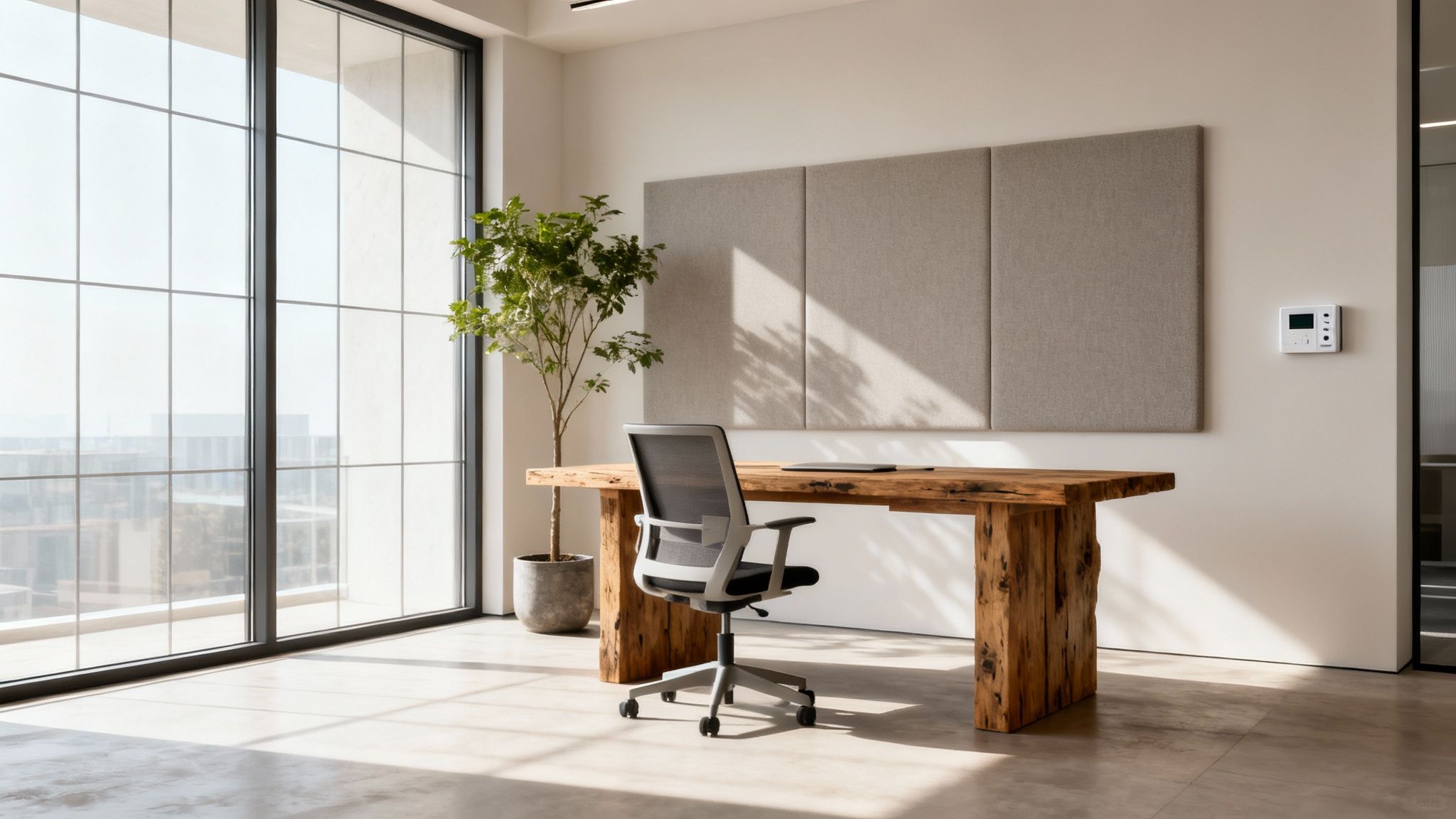
It all starts with intelligent design. For instance, smart office floor planning can be used to maximise natural daylight, dramatically cutting down the need for artificial lighting. Big windows and open layouts aren’t just for show, they’re powerful energy-saving tools.
On top of this smart design, you can layer in the right technology:
- LED Lighting: Switching from old fluorescent tubes to modern LEDs is a must. They use up to 80% less energy and last far longer, which means lower electricity bills and less maintenance.
- Smart Sensors: Occupancy sensors that automatically switch off lights in empty meeting rooms are a game-changer. Similarly, daylight sensors can dim artificial lights when there’s plenty of natural sunlight.
- Water Conservation: You’d be surprised what a difference simple upgrades can make. Low-flow taps and dual-flush toilets can slash your office’s water consumption, which is good for the environment and your utility bills.
Choosing Sustainable and Up-cycled Materials
The materials you choose for your fit-out have a long-lasting impact. Every selection matters, from the furniture your team uses every day to the paint on the walls. A sustainable approach means prioritising materials that are recycled, renewable or have a low environmental impact.
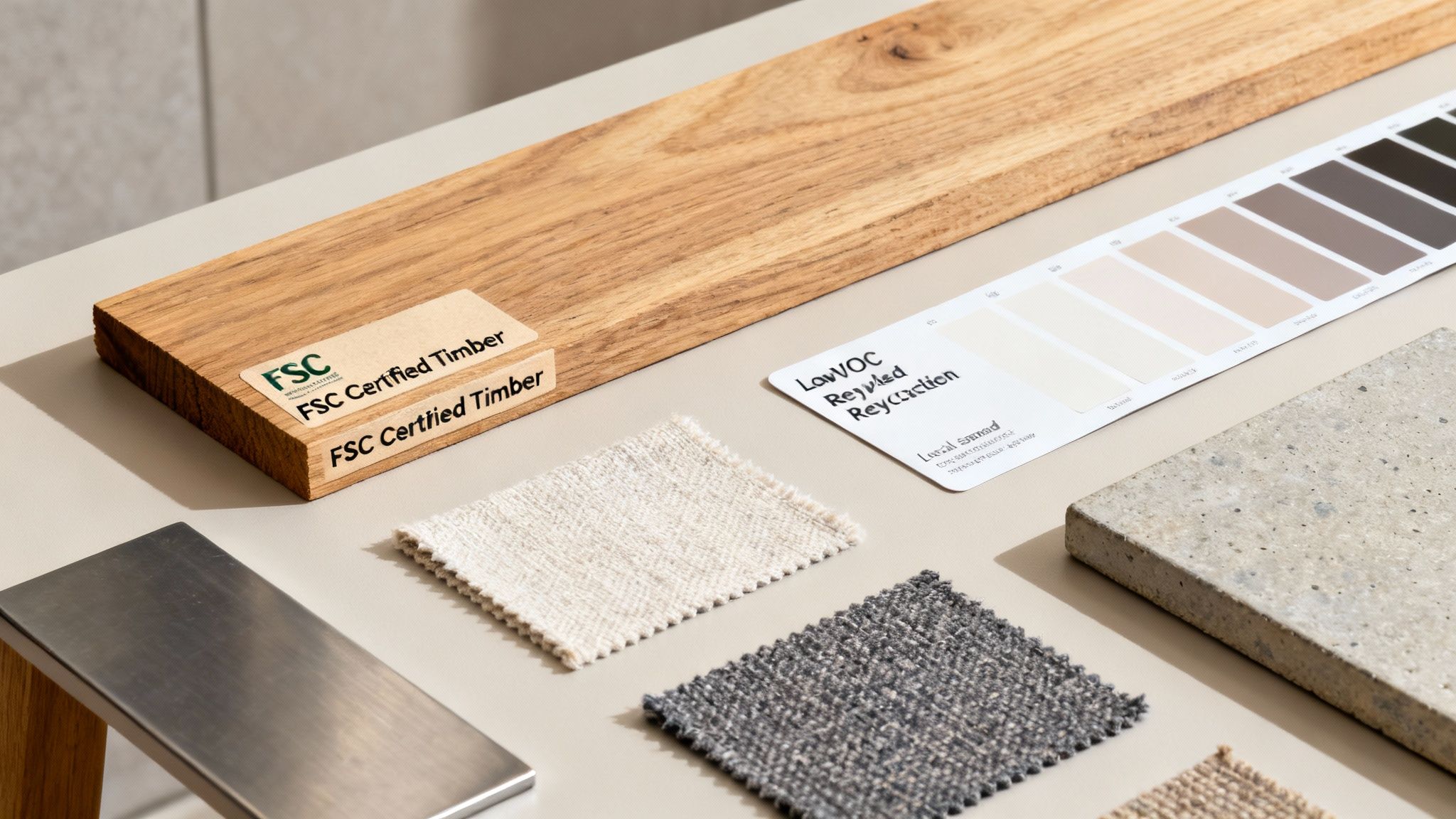
Keep an eye out for furniture and building materials with recognised certifications. These labels are your assurance that the products meet high environmental and social standards. This isn’t just about “being green”, it’s about creating a healthier indoor environment, free from harmful chemicals.
Using up-cycled or refurbished items is one of the most effective ways to cut waste in an office fit-out. It gives existing materials a new lease of life and avoids the carbon footprint of making something new.
A brilliant way to get a fresh, modern look without the waste is through architectural wrapping. Instead of ripping out perfectly good but dated desks, cabinets or reception areas, we can apply high-quality, durable vinyl wraps. This technique transforms surfaces with new colours or textures, delivering a premium finish for a fraction of the cost and environmental toll of a full replacement. It’s a savvy solution for businesses in fast-paced hubs like London or Cambridge.
Creating a Healthy Indoor Environment
At its heart, a sustainable office is a human-centric one. The final core element is ensuring the indoor environment actively supports the health and wellbeing of your employees. This goes far beyond just providing comfortable chairs, it’s about creating a space where people can breathe clean air, enjoy good light and focus without distractions.
Here are the key components of a healthy indoor environment:
- Air Quality: Always opt for low-VOC (Volatile Organic Compound) paints, adhesives and carpets. These materials don’t release harmful chemicals into the air. Adding biophilic design elements, like living walls or indoor plants, also works wonders to naturally purify the air.
- Natural Light: As we’ve mentioned, maximising daylight is crucial. It’s proven to boost mood and alertness, which leads to a more engaged and productive workforce.
- Acoustic Comfort: In a busy office, unwanted noise can be a huge source of stress and a productivity killer. A sustainable design plans for this, using acoustic solutions like sound-absorbing panels, high-backed seating or dedicated quiet zones to keep noise levels under control.
By weaving these three core elements into your fit-out, you build a sustainable workspace that delivers real benefits from every angle.
How to Choose the Right Sustainable Materials
The materials you choose are the building blocks of your sustainable office. They don’t just shape the look and feel of the space, they define its long-term environmental footprint and the wellbeing of your team. It can feel like a big decision but getting this right is one of the most powerful ways to bring your green vision to life.
This is about more than just picking a recycled carpet. It’s about digging into the entire story of a product, from where its raw materials came from to what happens when it’s no longer needed. With this knowledge, every surface becomes a positive contributor to your goals.
Understanding Material Lifecycles
Every product has a history. A truly sustainable material is one with a good story from start to finish. We look at its complete journey, often called a ‘cradle-to-cradle’ approach. This simply means we’re considering its environmental impact at every stage of its life.
This mindset prioritises materials that aren’t just made from recycled content but that can also be easily recycled or reused themselves. This is how you create a circular economy within your fit-out, cutting down the waste that a typical office refurbishment sends to landfill.
By thinking about the full lifecycle, we shift from a disposable mindset to a restorative one. The goal is to choose materials that can be used, reused and returned to the earth or the production cycle without causing harm.
Key Certifications to Look For
Navigating ‘eco-friendly’ marketing claims can be a minefield. Thankfully, independent certifications do the heavy lifting for you, acting as a trusted stamp of approval. When sourcing materials for projects, whether in Chelmsford or Braintree, we always keep an eye out for these key labels.
Here are a few of the most important ones to recognise:
- FSC (Forest Stewardship Council): When you see this on timber, it’s your guarantee that the wood comes from a responsibly managed forest that protects wildlife and supports local communities.
- Cradle to Cradle Certified®: This is the gold standard for product circularity. It assesses materials across five categories: health, recyclability, renewable energy use, water stewardship and social fairness.
- Low-VOC Labels: Look for certifications like Greenguard which confirm that paints, adhesives and furniture release minimal Volatile Organic Compounds. This is non-negotiable for maintaining healthy indoor air quality.
Prioritising Local and Natural Materials
Where your materials come from is just as important as what they are. Sourcing locally from suppliers near your project, be it in Hertfordshire or Stansted, is a simple but effective way to shrink your project’s carbon footprint. It cuts the emissions tied to long-haul transport.
At the same time, opting for natural materials like bamboo, cork or linoleum brings huge benefits. They are typically renewable and biodegradable but they also bring a sense of warmth and connection to the outdoors into the workplace, a cornerstone of biophilic design.
Comparing Sustainable Office Materials
To make things clearer, here’s a quick comparison of some popular sustainable material choices, outlining what makes them great and where they fit best in a modern office.
| Material Type | Key Environmental Benefit | Best Used For |
|---|---|---|
| Reclaimed Wood | Reduces deforestation and diverts waste from landfill. Each piece has a unique character. | Feature walls, reception desks and communal tables. |
| Low-VOC Paint | Improves indoor air quality by minimising harmful chemical emissions. | All wall surfaces, especially in enclosed meeting rooms. |
| Recycled Carpet Tiles | Made from post-consumer materials like fishing nets and plastic bottles. Easy to replace individual tiles. | High-traffic areas, general office flooring and breakout zones. |
By asking the right questions, looking for trusted certifications and thinking locally, you can confidently choose materials that create a workspace that’s not just beautiful and healthy but genuinely sustainable.
Using Technology to Build a Smarter Green Office
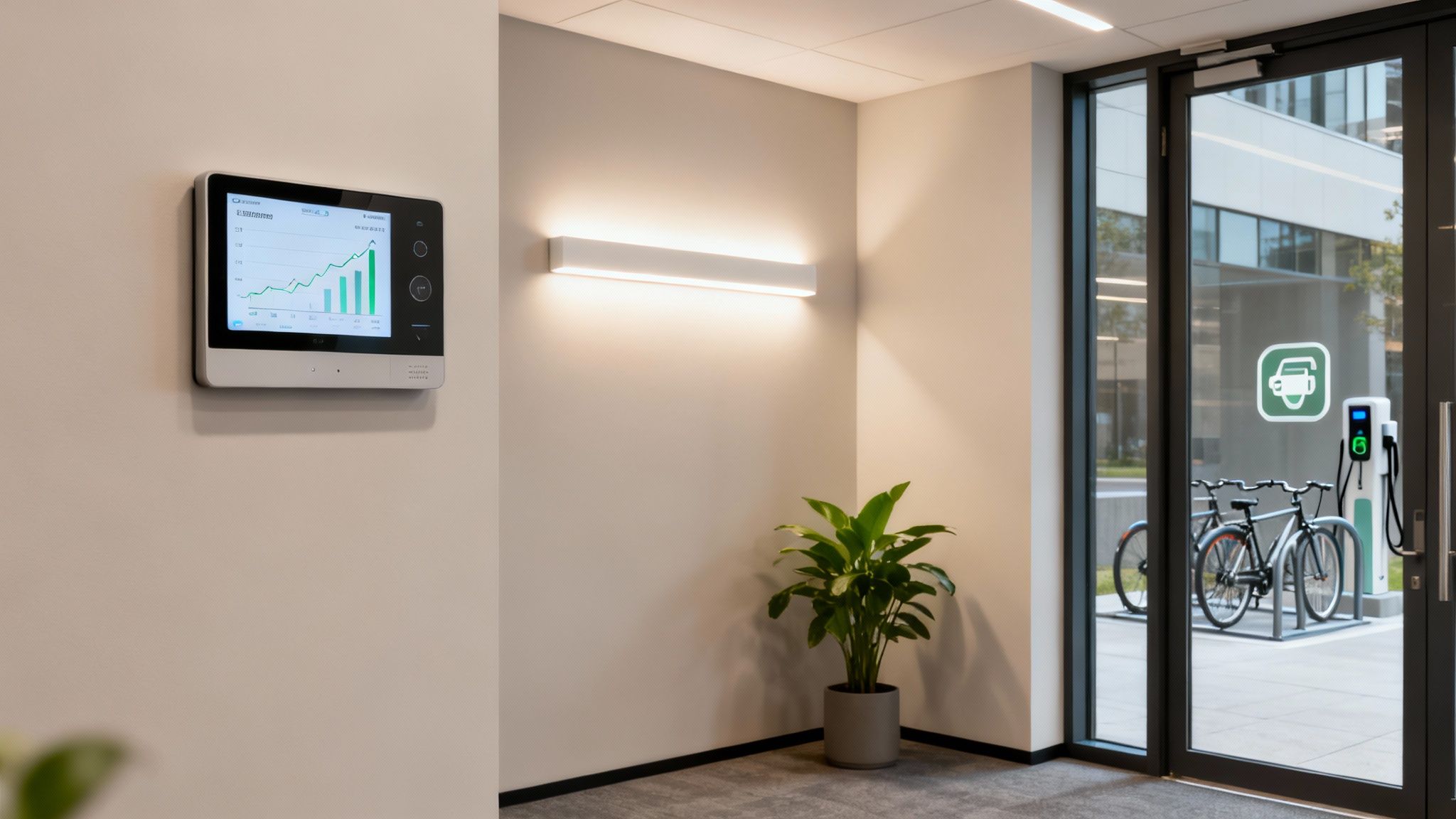
Technology is the engine that takes modern sustainable office spaces from good to great. Smart systems are practical tools that create workspaces that are responsive, efficient and intelligent. These technologies work in the background, slashing waste and creating a much more comfortable environment for your team.
Imagine an office that adjusts its own temperature based on who’s in the room or dims the lights when the sun comes out. That’s not science fiction, it’s the reality of a modern, sustainable workplace.
Intelligent Building Management
At the core of any smart, green office is a Building Management System (BMS). Think of it as the central nervous system of your workspace. It connects all the essentials like heating, ventilation, air conditioning (HVAC) and lighting onto one intelligent platform, giving you total control over your office’s energy use.
A BMS uses data from sensors to make real-time decisions that cut energy waste without anyone lifting a finger. It can detect which areas of the office are occupied and direct heating or cooling only where it’s needed. This level of automation can lead to huge savings on energy bills, sometimes cutting consumption by up to 30%.
Smart technology transforms a building from a passive structure into an active partner in sustainability. It automates efficiency, allowing your business to save energy and money without conscious effort.
These systems also play a massive role in maintaining a healthy indoor environment. By constantly monitoring air quality and adjusting ventilation, a BMS ensures your team always has fresh, clean air to breathe.
The Power of Smart Lighting and Sensors
Lighting is one of the biggest energy users in any office but it’s also where you can make some of the quickest gains. Swapping old fluorescent tubes for energy-efficient LEDs is a brilliant first step but smart controls take things to a new level.
Here’s how smart lighting tech makes a difference:
- Occupancy Sensors: These devices detect movement and automatically switch lights off in empty meeting rooms, kitchens and hallways. It’s a foolproof way to stop paying to light up empty spaces.
- Daylight Harvesting: Clever sensors measure the amount of natural light coming into a room and automatically dim the artificial lights. This saves a bundle on energy and reduces eye strain for your staff.
- Task Tuning: This feature lets you set maximum brightness levels for different zones. Not every area needs to be lit like a stadium and task tuning ensures you’re only using the precise amount of light required.
Working together, these technologies create a lighting system that adapts to your people and the natural rhythms of the day.
Future-Proofing with Green Infrastructure
A truly sustainable office thinks beyond its own four walls. It also has to consider how employees get to and from work. As we all shift towards greener transport, future-proofing your workplace means supporting these new habits.
One of the most powerful moves you can make is installing Electric Vehicle (EV) charging stations. Providing this infrastructure makes it far easier for employees to choose electric cars, which directly supports the transition away from fossil fuels. It also sends a clear signal that your company is serious about its environmental commitments.
Calculating the Real ROI of a Sustainable Office
For any business leader, the numbers have to add up. An investment in a sustainable office fit-out is no different and the good news is the financial case is clear. The Return on Investment (ROI) for sustainable office spaces goes far beyond just feeling good about your company’s green credentials.
We can break down this return into two main categories: immediate operational savings and powerful long-term value. Understanding both is key to seeing a sustainable fit-out not as an expense but as one of the smartest investments a modern business can make. It’s a move that pays dividends for your people, your brand and your bottom line.
Immediate Financial Gains
The most obvious financial wins come from slashing your operational costs. These are the real savings you’ll see on your bills, month after month.
- Lower Utility Bills: This is the big one. Switching to energy-efficient LED lighting, installing smart sensors and optimising your HVAC system can cut electricity consumption by up to 30%.
- Reduced Water Usage: By fitting low-flow taps and modern toilets, you can significantly reduce your water bills. These savings add up over the year.
- Lower Maintenance Costs: Sustainable materials are often more durable and last longer than cheaper alternatives. This means less money spent on repairs and replacements.
These immediate gains provide quick relief to your operating budget, often helping to offset the initial investment much faster than you might think. To get a clearer picture of upfront costs, you can explore our guide on the cost of an office fit out.
Unlocking Long-Term Value
While the short-term savings are great, the real value of a sustainable office unfolds over time. These long-term benefits are even more impactful, securing the future health of your business.
A healthier, more engaging workplace directly influences your most valuable asset: your team. Studies show that offices with good natural light, clean air and biophilic elements see a real boost in staff productivity. When people feel better, they work better.
A sustainable office is a direct investment in your workforce. It creates an environment that reduces sick days, boosts focus and makes your company a place where top talent genuinely wants to stay and grow.
Beyond productivity, the long-term ROI is helped by other critical factors.
- Higher Property Value: Green-certified buildings are in high demand and command higher rental and sale prices. A sustainable fit-out future-proofs your asset against tightening regulations.
- Enhanced Brand Reputation: A visible commitment to sustainability builds trust with clients, customers and potential new hires. It’s a powerful way to stand out.
- Improved Talent Retention: A great work environment is a major draw in a competitive job market. A sustainable office that prioritises wellbeing is a powerful tool for attracting and keeping your best people, which cuts recruitment costs.
When you add up the immediate savings and the long-term gains, the financial case for building sustainable office spaces becomes undeniable.
Common Questions About Sustainable Offices
When you start looking into sustainable office spaces, a few practical questions always pop up. It’s natural to wonder about the costs, the logistics and what kind of real-world impact these changes will have. We hear these questions all the time from businesses, so we’ve put together some clear, straightforward answers.
How much more does a sustainable office fit-out cost?
This is usually the first question on everyone’s mind and the answer is surprisingly good. While some high-tech green systems might have a higher initial price tag, many sustainable material choices are now on par, cost-wise, with traditional ones. The trick is to see this as an investment, not just an expense.
Think about it: the long-term savings from lower energy and water bills, combined with a proven lift in employee productivity, often mean the project pays for itself in just a few years. At Gibbsonn, we get to know your budget and find cost-effective solutions that deliver the biggest returns.
Can I make my current office more sustainable without a full refit?
Absolutely. Sustainability isn’t an all-or-nothing deal, it’s a journey. You can start making a real difference with simple but effective changes.
A phased approach lets you make gradual, meaningful improvements without the disruption of a complete overhaul. Every step, big or small, adds up to a more efficient and healthier workplace.
Here are a few great places to start:
- Upgrading to LED lighting is a quick win that instantly slashes energy use.
- Installing water-saving fixtures in kitchens and washrooms makes a dent in your utility bills.
- Introducing a proper recycling programme is a simple way to minimise your office’s waste.
- Using architectural wrapping can refresh tired desks and walls, avoiding the waste of throwing them out.
We often help businesses in places like Bishop’s Stortford and Essex map out a step-by-step plan to improve their workspace over time, one smart change at a time.
What are BREEAM and WELL certifications?
Think of these as the gold standard for green and healthy buildings. They’re independent assessments that act as a stamp of approval, verifying a building’s positive credentials.
BREEAM (Building Research Establishment Environmental Assessment Method) is a world-renowned system that rates a building’s overall environmental performance. It looks at everything from energy and water use to waste management. You can get the full details on the official BREEAM website.
The WELL Building Standard, on the other hand, focuses on the health and wellbeing of the people inside. It assesses factors like air quality, water, light and comfort to ensure the space is actively supporting its occupants. Earning these certifications isn’t just a tick-box exercise, it’s a powerful public statement about your commitment to doing business the right way.
How does a sustainable office really help with employee retention?
Today’s top talent isn’t just looking for a good salary. They want to work for companies that share their values and sustainability is a massive one. A green office is a clear, physical demonstration of your commitment to both your people and the planet.
Features that boost wellbeing, like plenty of natural light, clean air and connections to nature, are proven to cut stress, lift moods and increase job satisfaction. This all contributes to a positive and engaging work environment that people simply don’t want to leave, making it one of your best tools for attracting and keeping great employees.
Ready to transform your workspace into a healthier, more efficient environment? Speak to the Gibbsonn Interiors team today.