
The Ultimate Guide to Office Fit Out Design in 2026
Table of Contents
- Understanding Office Fit Out Design for 2026
- The Six Key Stages of Your Fit Out Project
- Decoding the Costs: How to Budget for Your Office Fit Out
- Designing for Wellbeing and Productivity in 2026
- Future-Proofing Your Workspace for Hybrid Work
- How We Deliver Your Perfect Workspace
- Answering Your Key Questions About Office Fit Outs
An office fit out design is the art and science of turning an empty commercial space into a workplace that truly lives and breathes your brand. It is so much more than just picking out desks and chairs. It is about crafting an environment from the ground up that speaks to your company culture, energises your team, and fuels productivity. A thoughtful design is one of the most powerful assets you have for attracting and keeping brilliant people.
Understanding Office Fit Out Design for 2026
Think of an office fit out like building your company’s home from the inside out. You begin with a basic shell, which might be a completely empty unit or a space that a previous tenant has stripped back, and then methodically bring your vision to life. This process covers everything from installing partitions and meeting rooms to laying down the electrical wiring, lighting, flooring, and all the final decorative touches that make the space unmistakably yours.
Viewing it as a strategic investment, rather than just an expense, is key. The right office fit out design directly shapes your business’s future success. A well-planned workspace can revolutionise how your teams collaborate, genuinely support their wellbeing, and send a powerful message to clients and future hires.
This is especially true for businesses in dynamic areas across Essex, where a standout office is a real competitive advantage. The aim is to create a destination, a place people are excited to come to every day.
Fit Out vs Refurbishment: What Is the Difference?
People often use the terms ‘fit out’ and ‘refurbishment’ as if they’re the same, but they describe two very different projects. A fit out means creating a brand-new interior from a shell. A refurbishment, on the other hand, is all about updating or reconfiguring an existing, operational workspace.
For instance, if you were moving into a newly constructed building in Bishop’s Stortford, you would need a fit out. In contrast, if you decided to modernise your current office by creating better meeting areas and a new kitchen, that would be a refurbishment.
“An effective office design is a strategic asset. It’s not just about aesthetics; it’s about creating a physical extension of your brand and a tool for achieving your business goals.”
Getting this distinction right from the start is crucial for defining your project’s scope, timeline, and budget. Here’s a simple breakdown to make it clear:
| Aspect | Office Fit Out | Office Refurbishment |
|---|---|---|
| Starting Point | An empty space or ‘shell’. | An existing, furnished workspace. |
| Main Goal | To build a brand-new interior from scratch. | To update, modernise, or reconfigure a current space. |
| Typical Work | Installing walls, electrics, flooring, and all new finishes. | Painting, new flooring, updated furniture, or changing the layout. |
Ultimately, both paths aim to improve your workspace, but the journey, scale, and investment are worlds apart. A professional partner can help you navigate which approach is right for your business and what you want to achieve.
The Six Key Stages of Your Fit Out Project
Getting an office fit out right is no happy accident. It’s a well-oiled journey that takes you from a blank canvas to a fully functioning workspace, and it follows a proven, structured path to make sure there are no surprises.
Breaking the project down into clear stages turns what feels like a massive undertaking into a series of manageable, collaborative steps. This gives you a transparent roadmap, so you always know what’s happening, why it’s happening, and what comes next.
This simple graphic shows the basic transformation from an empty building shell to a completed office space through the fit out process.
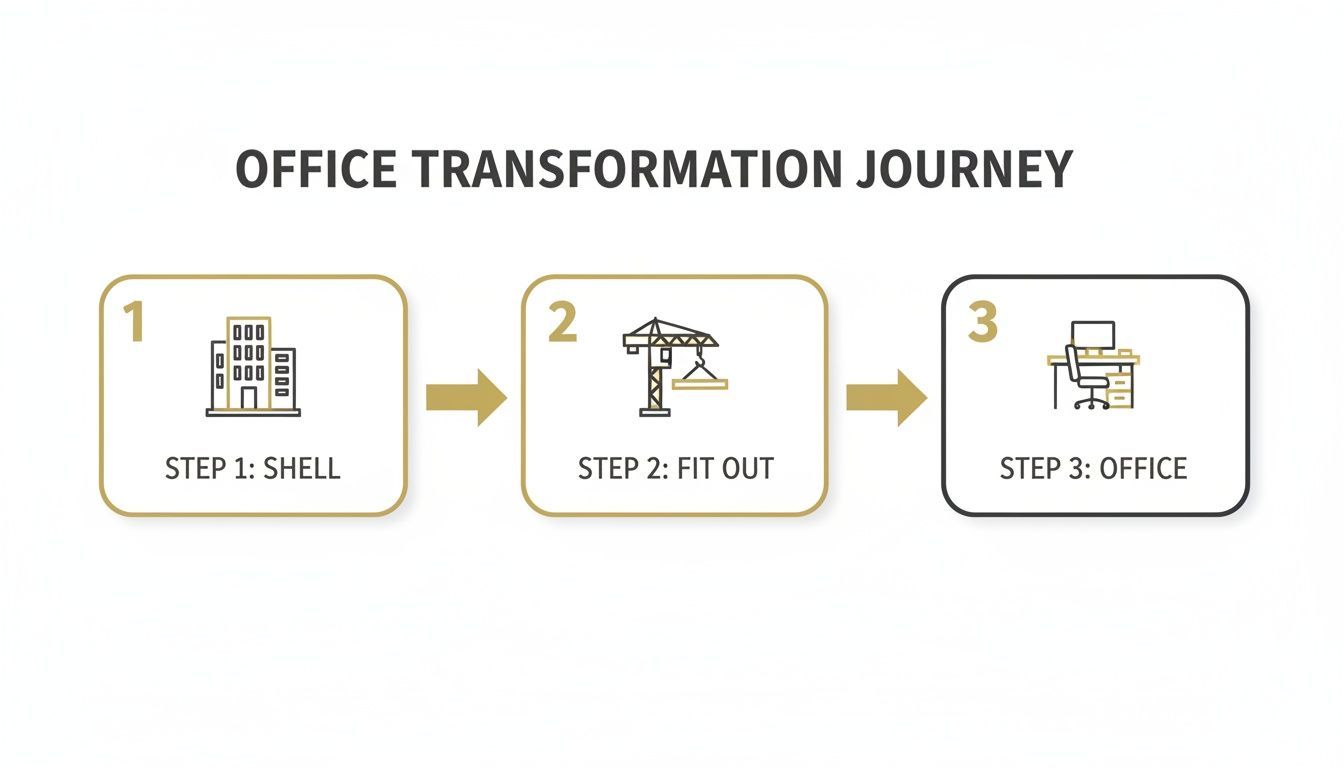
As you can see, the fit out is the critical construction phase that bridges the gap between a basic structure and a space that’s ready for your people to thrive in.
Stage One: Briefing and Discovery
This is, without a doubt, the most important part of the entire project. It’s where we sit down and really listen. We’ll talk about everything from your company culture and day-to-day operations to how your teams collaborate and what you truly want this new space to achieve for your business.
Think of it as the foundation for everything to come. It’s all about defining your vision and pinning down the practical requirements that will make it a reality.
Stage Two: Workplace Consultancy and Space Planning
With a solid understanding of your needs, we get to work on the blueprint for your office. Our workplace consultancy expertise helps translate your business goals into a functional layout. We meticulously map out where everything will go, desks, meeting rooms, breakout areas, kitchens, to ensure the space flows intuitively.
Using 3D models and virtual walkthroughs, we bring the floor plan to life, allowing you to see and feel the layout long before a single wall goes up.
Stage Three: Detailed Design and Visualisation
Now we inject your brand’s personality into the blueprint. This is where we move from the layout to the look and feel, carefully selecting colours, materials, furniture, lighting, and finishes. The detailed office fit out design ensures every element reflects your identity.
Whether you’re aiming for a creative, buzzing hub or a sleek, sophisticated corporate environment, this stage is crucial. For businesses in competitive markets like London, a strong and authentic brand presence is absolutely key.
“A successful fit out journey is built on partnership. Each stage is a collaborative step towards creating a space that not only looks fantastic but works brilliantly for your people.”
Stage Four: Transparent Costing and Programming
Once the design is signed off, we present a completely transparent, line-by-line breakdown of all costs. There are no hidden fees or vague estimates, just a clear, honest picture of the investment.
Alongside the costs, we provide a detailed schedule, or programme, outlining the timeline for every phase of the build. You’ll know exactly what to expect, how much it will cost, and when it will be delivered.
Stage Five: The Build and Construction
This is where the vision starts to become a physical reality. Our dedicated project managers and highly skilled tradespeople get to work on site, turning the designs into a tangible space.
We manage everything for you, from coordinating plumbers and electricians to installing partitions, laying flooring, and assembling furniture. Our focus is always on quality craftsmanship and keeping disruption to an absolute minimum.
Stage Six: Handover and Aftercare
The final stage is the moment we hand over the keys and welcome you to your new workspace. We’ll walk through the entire office with you, making sure every detail is absolutely perfect and exactly as you imagined.
But our commitment doesn’t end when you move in. We provide ongoing aftercare and support to ensure your new environment continues to meet your needs and help your team do their best work.
Ready to transform your workspace? Speak to the Gibbsonn Interiors team today.
Decoding the Costs: How to Budget for Your Office Fit Out
Let’s get straight to it, the big question on everyone’s mind: how much does an office fit out really cost? Trying to put a number on it can feel like guesswork, but the picture becomes much clearer once you understand what actually drives the final price.
Your total investment hinges on a few key factors. Think about the quality of materials you want, the level of technology you need, your furniture choices, and, critically, your location. Getting a handle on these elements early on is the secret to setting a realistic budget and moving forward with confidence.
The Key Factors That Shape Your Budget
No two office fit outs are ever the same, which means no two budgets are either. The final cost is a direct reflection of the specification you’re aiming for. A basic, functional space will naturally cost far less than a high-end, bespoke environment filled with custom joinery and the latest tech.
Here are the main cost drivers you’ll want to consider:
- Quality of Finishes: The materials you pick for flooring, walls, ceilings, and lighting have a huge impact. For example, luxury vinyl tile will carry a higher price tag than standard carpet tiles.
- Technology Integration: Your requirements for AV equipment in meeting rooms, smart lighting systems, and robust data cabling will add to the budget. The more connected you want your space to be, the higher the investment.
- Furniture Selection: While standard desking is cost-effective, ergonomic chairs, custom-made breakout furniture, and bespoke reception desks will increase the price.
- Mechanical & Electrical Works: The extent of changes needed for your heating, ventilation, air conditioning, power distribution, and plumbing systems is always a major factor in the overall project cost.
How Location Affects Your Bottom Line
It’s a simple truth: where your office is based plays a massive role in your budget. Everything from labour rates and logistics to general operating costs varies significantly across the UK. A project in a major city centre will almost always cost more than one in a suburban or regional town.
Take London, for instance. A report from global property consultant Turner & Townsend states it is the most expensive city in the UK for fit outs. A medium-specification project there averages £207 per square foot, a significant premium over other major hubs like Manchester or Birmingham. This is a crucial point for any business looking to manage its budget effectively.
To put this into perspective, here is a quick comparison based on their industry data.
Example Fit Out Costs per Square Foot (Medium Specification)
The table below clearly shows the cost disparity for a medium-specification fit out across major UK cities, according to Turner & Townsend.
| City | Average Cost per sq ft |
|---|---|
| London | £207 |
| Manchester | £179 |
| Birmingham | £171 |
As you can see, understanding your local market from the very beginning is essential for setting a budget that works.
Working with a Partner to Maximise Your Budget
While it might sound counterintuitive, bringing a professional fit out specialist on board can actually help you save money. We use our industry knowledge and supplier relationships to find the best possible value for your investment.
“A good design partner doesn’t just spend your budget, they optimise it. They find clever ways to deliver a high-end feel without the high-end price tag, ensuring every pound works harder for you.”
For example, instead of specifying expensive natural materials, we can use innovative solutions like architectural wrapping to achieve a premium look for a fraction of the cost. It’s these smart, experience-led choices that ensure your office looks incredible without overstretching your finances.
For a more detailed breakdown, check out our guide on how to calculate your office fit out cost.
Designing for Wellbeing and Productivity in 2026
The best offices today are built around people. When we talk about an office fit out in 2026, we’re not just talking about cramming in desks. We’re talking about creating an environment that genuinely helps your team feel good and perform at their absolute best. This human-centric approach is not some fluffy “nice-to-have”. It’s a direct line to better productivity, creativity, and keeping your best people on board.
Investing in your team’s surroundings is about tackling the everyday frustrations that get in the way of a great day’s work. By focusing on core elements like acoustics, lighting, and comfort, you start building a workplace that supports your people, rather than getting in their way.
This is especially true for businesses in the thriving communities across Hertfordshire, where the competition for top talent is fierce. A workspace designed for wellbeing sends a powerful message: we value our people.
Solving the Noise Problem in Open-Plan Offices
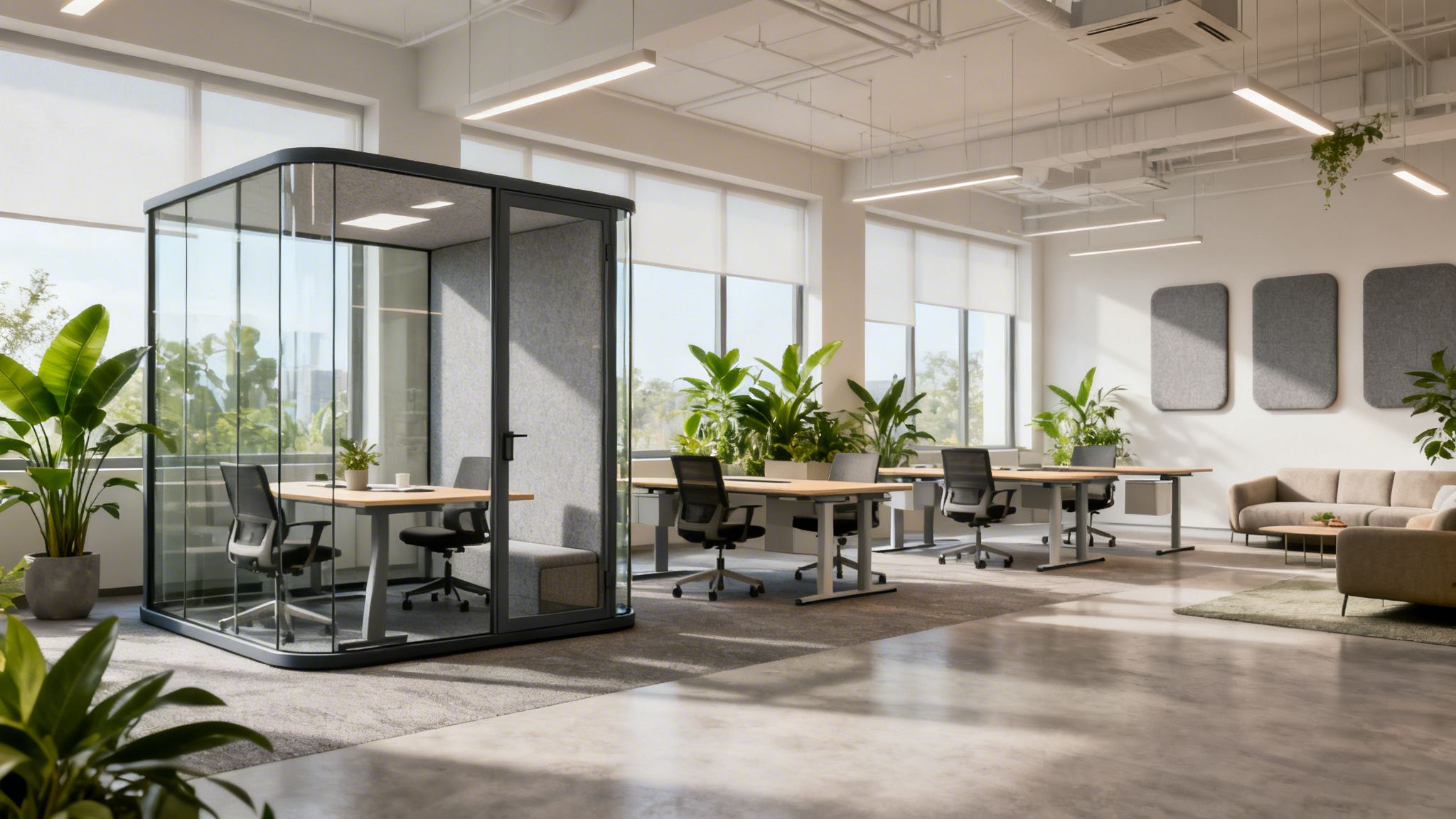
Let’s be honest: one of the biggest complaints about open-plan offices is the constant noise and distraction. It’s nearly impossible to get into deep, focused work when you can hear every phone call and side conversation. Thankfully, a smart fit out can solve this without putting up solid walls and losing that fantastic sense of open collaboration.
“Wellbeing isn’t a perk; it’s a productivity strategy. A workspace that reduces stress and distraction is a workspace where people can do their best work.”
The key is the strategic use of different zones. When you create a variety of spaces, you empower your team to choose the right environment for whatever they need to do. Here are some of the most effective ways we achieve this:
- Modular Meeting Pods: Think of these as self-contained, acoustically sealed rooms you can simply drop into an open-plan layout. They provide a quiet escape for focused work, private calls, or small team huddles. Manufacturers like BlockO offer fantastic solutions that are as stylish as they are functional.
- Glass Partitions: If you’re looking to create more permanent quiet zones or meeting rooms, glass partitions are a brilliant choice. They offer excellent sound insulation while keeping that visual connection and letting natural light flood the space.
- Acoustic Furniture and Finishes: It’s amazing what the right materials can do. Soft seating, high-backed sofas, acoustic panels on the walls, and even specific types of carpet tiles all work together to absorb sound and bring down the overall noise level.
The Pillars of a Healthy and Productive Workspace
Beyond just acoustics, a few other design elements are absolutely crucial for creating a space where people thrive. A complete office fit out considers the entire sensory experience of your employees.
In our projects with businesses in places like Chelmsford, we focus on the areas that deliver the biggest impact on wellbeing and performance.
| Design Element | Impact on Wellbeing |
|---|---|
| Lighting | Maximising natural light and using human-centric lighting systems can reduce eye strain, seriously boost mood, and regulate energy levels throughout the day. |
| Ergonomics | Providing adjustable chairs, desks, and monitor arms ensures physical comfort. This simple step reduces aches and pains and keeps focus sharp. |
| Biophilic Design | Incorporating natural elements like plants, wood finishes, and nature-inspired patterns is proven to lower stress levels and spark creativity. |
By weaving these elements into the fabric of your office, you create an environment that actively supports your team’s health. For a deeper look at this, you can learn more about promoting wellbeing in the workplace in our dedicated guide.
At the end of the day, investing in a thoughtful, human-centric design is one of the smartest business decisions you can make. It fosters a positive, supportive culture and gives your team the foundation they need to do amazing things.
Future-Proofing Your Workspace for Hybrid Work
The conversation around the modern office has completely changed. It’s no longer enough to offer a collection of desks. Today’s workspace needs to be a vibrant hub for collaboration, culture, and connection, a place that genuinely earns the commute.Future-proofing your office fit out design is all about creating an agile, flexible environment that can grow and shift right alongside your team. We’re moving away from the one-size-fits-all model and towards creating a destination, a place that offers experiences and tools people simply can’t get at home.
This isn’t just a theory; the commercial property market is telling the same story. Recent data shows a powerful recovery in UK office demand, particularly for flexible spaces built for new work patterns. In the first half of the year, take-up in London was 7% above the long-term average, and key regional cities saw an 8% rise over 10-year norms. This surge is being driven by businesses looking for spaces ready-made for hybrid teams, a trend explored in the UK office space demand report for 2025.
Creating a Destination, Not Just Desks
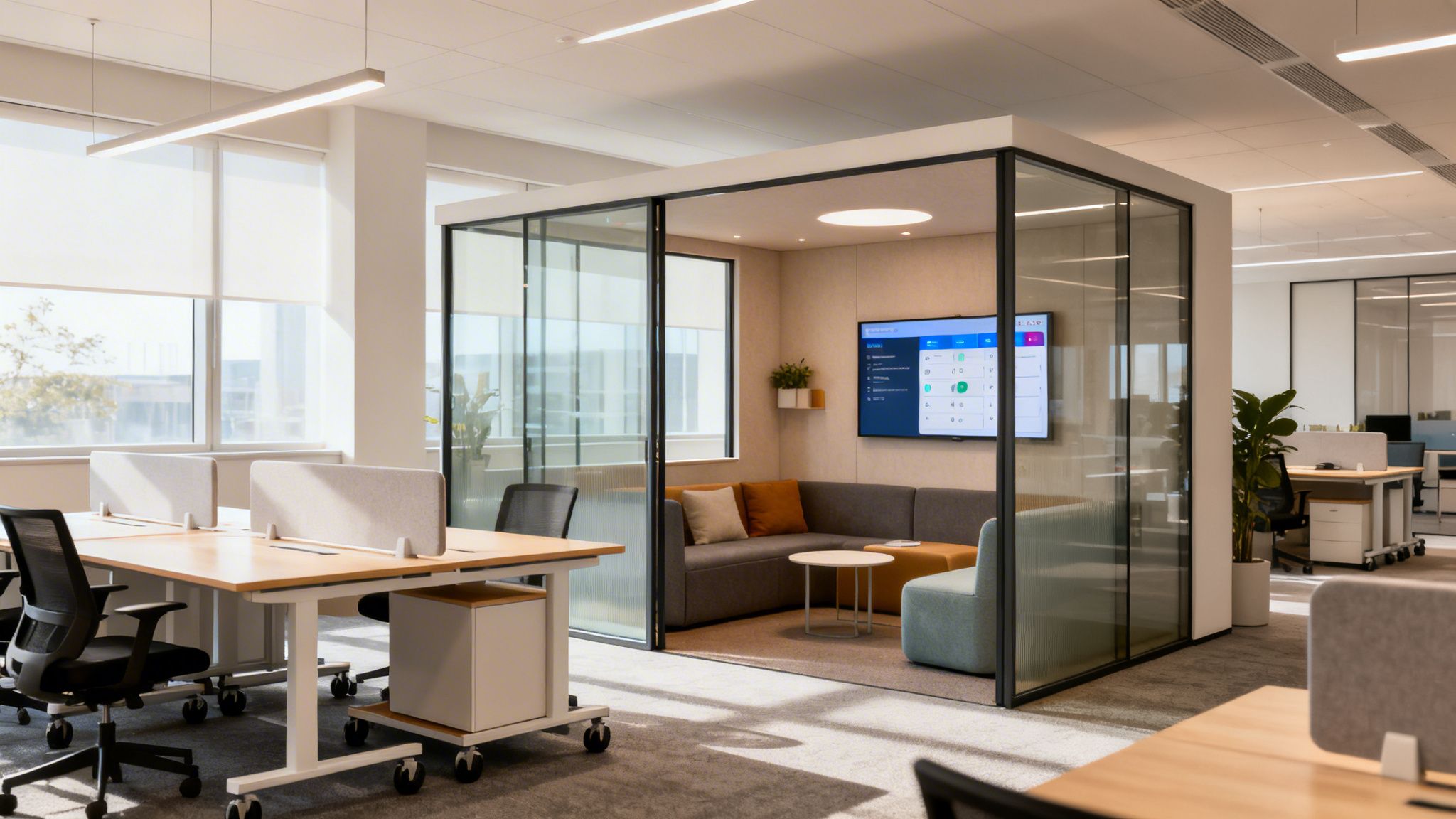
Building an office that stands the test of time means providing a rich variety of spaces that empower your people to do their best work. This is the heart of an agile working environment. For businesses in competitive hubs like Cambridge, this kind of flexibility is a massive advantage in the war for talent.The core idea is simple: move away from a sea of assigned desks and towards an activity-based model. Your design needs to cater to the different modes of work that happen throughout the day.
- Collaborative Zones: Think open, comfortable areas with whiteboards, screens, and moveable seating. These are the spaces where teams come together to brainstorm, solve problems, and spark new ideas.
- Focus Areas: For deep work, you need quiet zones or individual pods where people can truly concentrate without distraction or interruption.
- Social Hubs: A great kitchen and breakout area that feels more like a welcoming café than a staff room is essential. It’s in these informal spaces that relationships are built and company culture really thrives.
“A future-proofed office is one that can change as quickly as your business does. It’s about building in flexibility from day one, so your space works for you, not against you.”
Embracing Adaptable and Agile Design
To make your workspace genuinely adaptable, you have to choose furniture and layouts that can be easily reconfigured. Static, built-in solutions can quickly become obsolete. Instead, the focus is now firmly on mobility and multi-functionality.For maximum flexibility, we recommend focusing on these key elements:
- Reconfigurable Furniture: Think tables on castors, modular sofas that can be rearranged in moments, and lightweight chairs that allow for spontaneous meeting spots.
- Hot-Desking and Booking Systems: Rather than giving everyone a permanent desk, creating bookable workstations is a far more efficient use of space, especially with a hybrid team.
- Movable Partitions: Operable walls or movable screens allow you to instantly transform a large, open area into smaller, private zones for meetings or workshops, then open it back up again just as quickly.
By making these strategic design choices, you’re not just fitting out an office for today, you’re creating a resilient workspace that will remain effective and relevant for years. It’s a smart investment in productivity, employee wellbeing, and long-term business success. You can dive deeper into this way of thinking by reading our guide on what agile working really means.
Ready to transform your workspace? Speak to the Gibbsonn Interiors team today.
How We Deliver Your Perfect Workspace
This is where our expertise truly comes to life. We know from experience that coordinating a workspace transformation can be a major headache, which is why we offer a full turnkey design and build service.
Think of us as your single, trusted partner from the first chat right through to the final handover. There’s no juggling different contractors or worrying about schedules clashing. We take full ownership of the project, ensuring clear communication and total accountability from start to finish. It’s our job to make sure everything runs smoothly, so you don’t have to.
A Seamless Process From Start to Finish
Our entire process is built around minimising disruption to your day-to-day operations. This lets you concentrate on running your business while our team gets on with bringing your new office fit out design to life on time and on budget.Whether you’re starting with a blank canvas or looking to carefully refurbish your existing office, we have the experience to deliver. We’re also specialists in fitting the key elements that make a modern office function effectively, including:
- Modular Meeting Pods: We’re experts at installing high-performance pods from leading names like Vetrospace, creating essential quiet zones in open-plan layouts.
- Glass Partitions: We can create bright, acoustically private rooms that don’t compromise the open and airy feel of your workspace.
“A turnkey solution means total peace of mind. We take full ownership of the process, ensuring every detail is managed so you can enjoy the transformation without the stress.”
Our deep experience working with businesses in places like Braintree gives us the practical knowledge to handle any challenge, big or small. At the end of the day, we’re dedicated to building inspiring workspaces that empower your team and help drive your business forward.
Ready to transform your workspace? Speak to the Gibbsonn Interiors team today.
Answering Your Key Questions About Office Fit Outs
Embarking on an office fit out is a major step, and it’s completely normal to have a few key questions before you dive in. As experts in transforming workplaces, we’ve heard them all. Here are our straightforward answers to some of the most common queries we encounter during the office fit out design process.
How Long Does a Typical Office Fit Out Take?
This is probably the number one question we get asked, and the honest answer is: it depends on the scope. The timeline is directly linked to the size and complexity of your vision.A smaller, more straightforward project can often move from the first day of the build to handover in as little as 4-6 weeks. For a large-scale transformation with intricate design details and bespoke elements, you’re more likely looking at 12-16 weeks, sometimes longer. The most important thing is that we establish a clear and realistic programme right from the start, so you know exactly what to expect.
What Is the Difference Between CAT A and CAT B Fit Outs?
It’s easy to get these terms mixed up, but the distinction is quite simple. A CAT A (Category A) fit out is what a landlord typically provides. Think of it as a habitable but empty shell, a blank canvas. It will have the basics in place, like raised flooring, suspended ceilings, and the core mechanical and electrical services, but nothing more.A CAT B (Category B) fit out, on the other hand, is where we bring your brand to life. This is the layer that turns the blank canvas into your office. It covers everything from partitions and meeting rooms to furniture, branding, tea points, and all the unique finishes that reflect your company culture and support your team’s way of working.
“A CAT A space is the starting line. A CAT B fit out is the race itself, creating a branded and functional environment ready for your team.”
Can We Stay in Our Office During a Refurbishment?
Absolutely. In many cases, you can remain fully operational while the work is underway. This is where meticulous planning makes all the difference. We are specialists in phased project management, breaking the refurbishment down into carefully managed stages to keep disruption to an absolute minimum.This is especially critical for businesses in constantly active environments like Stansted. We can schedule noisier or more disruptive works outside of your main business hours, ensuring your team can carry on with their day-to-day tasks without interruption.
What Are Dilapidations?
Dilapidations sound complex, but they simply refer to your contractual obligation as a tenant to return your office space to its original state when the lease expires. This usually means removing any alterations you’ve made, like partitions or custom finishes, and making good on any wear and tear.It’s a process that needs to be handled with professional care. If it isn’t managed correctly, you could find yourself facing a substantial bill from your landlord to cover their costs of putting the space back to its original condition.
Looking for bespoke pod solutions or interior support? We’re here to help.