
Forget everything you thought you knew about office seating. The idea of “dynamic seating” is not just a fancy term for hot-desking or taking away someone’s personal desk. It’s a fundamental shift in how we design workspaces. Instead of a sea of identical desks, it’s about offering a rich menu of spaces and furniture that people can choose from to suit what they’re doing, or even how they’re feeling, on any given day.
Think about it: people can move seamlessly from a collaborative hub for a team brainstorm, to a quiet, soundproofed pod for deep focus, and then to a soft-seated breakout area for a coffee and a casual chat.
Table of Contents
- A New Blueprint for the Modern Office
- How to Implement a Dynamic Seating Plan
- Choosing the Right Ergonomic and Modular Furniture
- Managing Acoustics and Privacy in a Flexible Office
- How Flexible Design Impacts Office Dilapidations
- Got Questions About Dynamic Seating?
A New Blueprint for the Modern Office
The old model of row after row of desks was designed for a world that largely does not exist anymore, one where everyone was in the office, nine-to-five, five days a week. That ship has sailed. With hybrid work now the norm, offices are often half-empty but the people who do come in need something more. They need spaces that genuinely help them collaborate, connect, and concentrate in ways they cannot at home.
This is where dynamic seating comes in. It turns the office from a static box into a living, breathing environment based on activity. It becomes a destination people want to come to, not just a location they have to be at. By giving your team choice and autonomy over where and how they work, you directly boost their engagement and wellbeing.
The Bedrock Principles of Dynamic Seating
For a dynamic office to truly work, it needs to be built on a few solid principles. This is not just about scattering a few beanbags around.
- Real Choice and Flexibility: It is about providing a genuine variety of work settings. This means proper ergonomic task chairs and standing desks alongside comfortable soft seating in lounges and collaborative zones.
- Activity-Based Working (ABW): This is the core idea. You design specific zones for different tasks. Think libraries for quiet work, workshops for creative brainstorming, and open-plan ‘plazas’ for team huddles.
- Smart Tech Integration: Technology is the enabler. Using a simple desk booking system like Condeco or sensors helps people find a free spot without the morning scramble. It also gives you, the facilities manager, invaluable data on how your space is actually being used.
- A Focus on Wellbeing: This goes beyond just ticking a box. It is about prioritising furniture that supports physical health, chairs with excellent lumbar support are non-negotiable, and creating spaces that nurture mental wellbeing, like tech-free quiet zones or biophilic areas with plenty of natural light and plants.
A workplace that adapts to its people is more than just a passing trend. It’s a recognition that the office’s role has fundamentally changed. We’re now creating environments that actively support great work, not just places that demand physical presence.
To give you a clearer picture, let’s quickly compare the old and new ways of thinking.
Static vs Dynamic Seating At a Glance
The move from a static, assigned-desk model to a dynamic one is a significant change. This table breaks down the core differences in approach and what they mean for your business and your people.
| Feature | Traditional Static Seating | Modern Dynamic Seating |
|---|---|---|
| Space Allocation | One person, one desk. Often leads to underutilisation. | Space is a shared resource, allocated based on need. |
| Employee Experience | Limited choice, tied to a single spot all day. | Empowered with autonomy and choice of work setting. |
| Collaboration | Happens in formal meeting rooms or awkwardly at desks. | Encouraged through a variety of purpose-built collaborative zones. |
| Flexibility | Rigid. Difficult to accommodate changing team sizes or projects. | Highly adaptable. Space can be reconfigured easily. |
| Real Estate Efficiency | Often inefficient, with many empty desks. | Optimises space based on actual usage data, reducing wasted area. |
| Technology | Basic IT setup at each desk. | Relies on booking systems, sensors, and mobile tech. |
As you can see, the dynamic model is built for the agile, hybrid world we now operate in, focusing on experience and efficiency over outdated conventions.
Why this is a Game-Changer for UK Businesses
Here in the UK, the conversation around the purpose of the office is more intense than ever. It is not just talk; the market reflects this shift. Seating alone now commands a massive 37.65% share of the entire UK office furniture market, a figure driven almost entirely by the demand for ergonomic, flexible solutions. You can explore the latest UK office furniture market trends to see just how dominant this move towards dynamic solutions has become.
For businesses in competitive areas like Bishop’s Stortford or the heart of London, a thoughtfully designed office is a serious advantage in the war for talent. A dynamic workplace sends a clear message: we trust our people and we are invested in their wellbeing and productivity.
Beyond culture, it makes plain financial sense. You can optimise your property portfolio by designing a space that reflects real-world usage, not just headcount. This means you can finally reclaim those vast, underused desk farms and transform them into valuable collaborative hubs, quiet libraries, or social spaces that genuinely make your employees’ working day better.
How to Implement a Dynamic Seating Plan
Making the switch to dynamic office seating is about far more than just buying new chairs and telling everyone to find a spot. I have seen it done well and I have seen it go wrong. When it is done right, with a thoughtful, strategic approach, it can genuinely transform a workplace, improving how you use your space, boosting team morale, and driving productivity.
The whole process has to start with understanding what you have and what your people actually need. You simply cannot design a successful new workspace based on assumptions. That means digging into real data about how your current office is being used and asking your employees what they want from their environment.
Start with a Comprehensive Space Audit
Before you move a single desk, you need a crystal-clear picture of your current reality. A proper space and people audit provides the hard data to guide your decisions, making sure your investment meets genuine needs, not just perceived ones.
This really boils down to two key activities:
- Utilisation Studies: Spend time observing how your space is actually used throughout the day and week. Are those big meeting rooms always booked but only ever half-empty? Do you have entire banks of desks sitting vacant on a Friday? This is the kind of data that reveals the true patterns of occupancy.
- Employee Surveys and Workshops: Just ask your team. Find out their biggest frustrations with the current setup and what kind of spaces would help them do their best work. Do they need more quiet nooks for deep concentration or are they crying out for more informal areas to collaborate?
Gathering this information gives you a solid foundation to build on. It prevents costly mistakes and ensures your new dynamic seating plan is fit for purpose from day one.
Design a Zoned and Varied Environment
Once you have got the data, you can start sketching out the new layout. The goal here is to create a ‘neighbourhood’ of different zones, each one tailored to specific activities. This activity-based working approach is the absolute heart of a successful dynamic office.
Think about carving out distinct areas for different types of work:
- Focus Zones: These are your library-like areas with single desks or acoustic pods, perfect for tasks that require deep concentration. You will want to place them well away from high-traffic routes and the coffee machine.
- Collaboration Hubs: Think open, energetic spaces with whiteboards, big screens, and flexible furniture that can be easily pulled apart and put back together for team huddles and creative brainstorming.
- Social and Breakout Spaces: These are vital. Comfortable, café-style areas that encourage those chance encounters and informal chats that build real company culture, especially in a hybrid world.
This infographic breaks down how these elements come together.
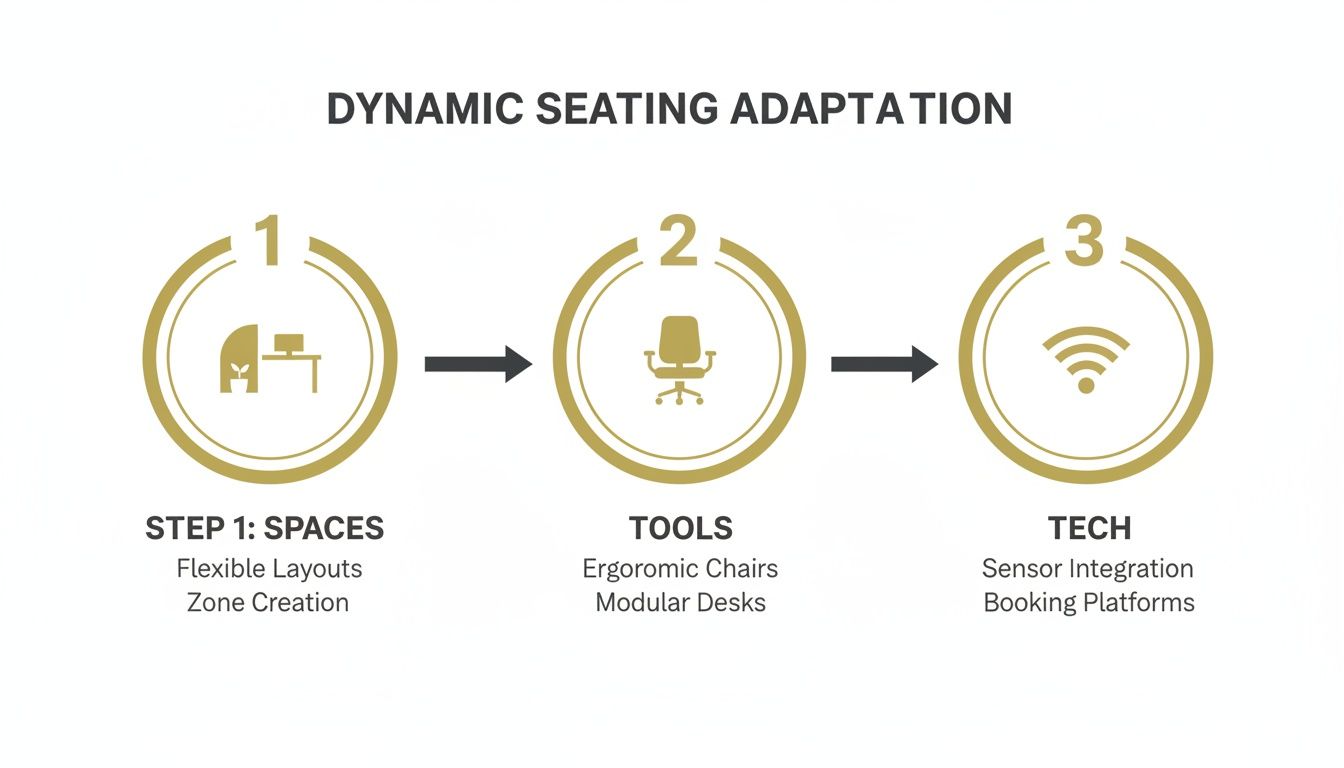
It shows that a successful plan is all about balancing the right spaces, tools, and technology to support what your team needs to do. For a deeper dive into this, have a look at our insights on strategic office floor planning.
Select the Right Furniture and Technology
The physical tools your team interacts with every day will ultimately make or break your new seating plan. This is not the place to cut corners; you need to invest in quality and functionality. The UK office furniture market has seen a massive push towards ergonomics as businesses across Stansted and beyond realise it is directly linked to comfort and productivity.
Here are the key things to get right:
- Ergonomic Seating: Provide high-quality, adjustable chairs that support good posture. This is completely non-negotiable for employee wellbeing.
- Modular Furniture: Choose tables, screens, and storage units that can be moved and reconfigured with minimal fuss. This builds in the flexibility for the space to adapt as your business changes.
- Acoustic Solutions: In an open environment, you have to manage noise. Use freestanding pods, high-backed sofas, and acoustic panels to create pockets of privacy and keep sound levels comfortable.
- Desk Booking Systems: An intuitive app or software that lets staff easily find and reserve a desk or meeting room is essential. It removes the daily anxiety of “where will I sit?” and prevents frustration.
“A common mistake I see is companies focusing purely on aesthetics. While a great design is important, the real test of a dynamic office is its day-to-day functionality. The furniture and tech have to be genuinely easy to use and supportive of the work being done.”
Communicate Clearly and Manage the Change
This is probably the most critical part of the whole process: managing the cultural shift. For employees used to having their own assigned desk for years, moving to a flexible model can be unsettling. Clear, constant communication and a proper change management plan are absolutely essential.
Start by explaining the ‘why’. Share the data you collected from your audit. Highlight the benefits for them, more choice, better collaboration spaces, improved wellbeing.
A structured rollout is the only way to do it smoothly:
- Develop a Clear Policy: Create simple, straightforward guidelines on how the new system works. This needs to cover booking etiquette, personal storage (good lockers are a must!), and expectations for keeping shared spaces tidy.
- Run a Pilot Programme: Before you go all-in, test the concept with a single department or team. This is your chance to gather real-world feedback, iron out any teething problems, and create some internal champions for the new way of working.
- Provide Training: Do not just launch the new booking software and hope for the best. Show everyone how to use the technology and how to make the most of the different work zones.
By thoughtfully planning each stage, from that initial audit to the final rollout, you can create a dynamic workplace that truly empowers your team. Our experts help businesses in Cambridge and London navigate this entire process, ensuring a seamless and successful transformation.
Choosing the Right Ergonomic and Modular Furniture
Any dynamic seating plan is only as good as its physical backbone, the furniture you choose. This is not about flicking through a catalogue and picking what looks good. It is about selecting hardworking, functional pieces that will genuinely support your team’s wellbeing and flex with the future of your business.
Get this right and you create a space that feels intuitive and supportive. Get it wrong and you are just creating frustration, discomfort, and a failed experiment.
The two cornerstones of a great dynamic office are ergonomics and modularity. One looks after your people, while the other future-proofs your investment.
Prioritising True Ergonomics
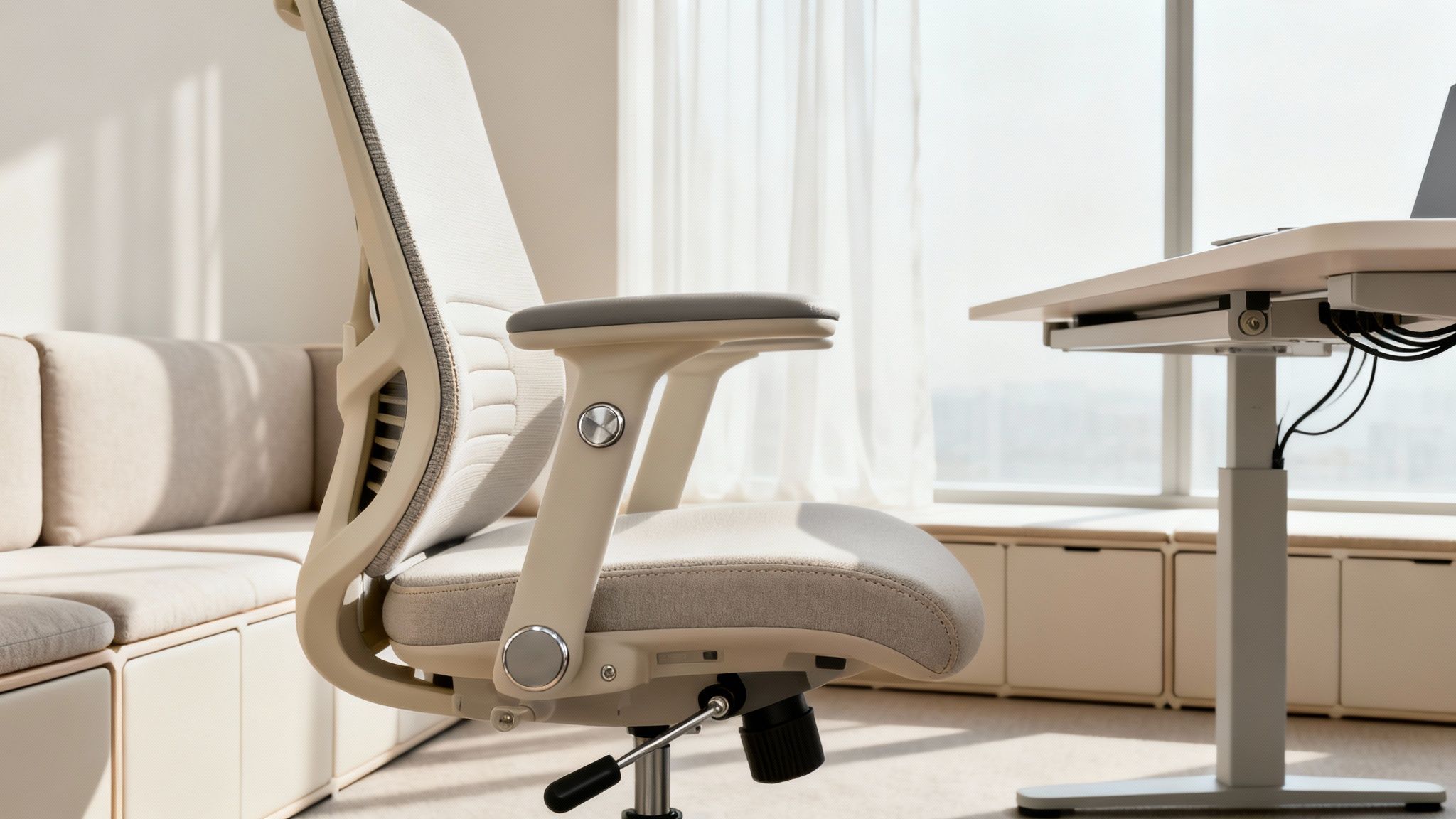
The word ‘ergonomic’ gets thrown around a lot but what does it really mean in practice? A truly ergonomic chair is far more than just a cushioned seat; it is a highly adjustable tool designed to support the body through a full range of movements during the working day.
When you are assessing chairs, here are the absolute non-negotiables:
- Adjustable Lumbar Support: This is the most critical feature. A proper chair lets you adjust the height and depth of the lumbar curve to perfectly match the user’s lower back, which is essential for preventing slumping.
- Seat Depth Adjustment: This allows users to slide the seat pan so there are a few inches of space between the back of their knees and the edge of the seat, vital for good circulation.
- Dynamic Tilt Mechanism: Look for a chair that moves with you. A good mechanism lets you recline smoothly and offers support as you lean forward, encouraging the kind of natural movement that stops stiffness from setting in.
It’s tempting to be swayed by aesthetics but for the core task chairs where people spend hours at a time, function has to win. Investing in proper ergonomic chairs is a direct investment in your team’s health and it pays dividends by reducing issues like back pain and absenteeism.
The Power of Modular and Adaptable Furniture
While ergonomics handles individual comfort, modularity tackles the flexibility of the whole workspace. A dynamic office is never static. Project teams grow and shrink and departmental needs can shift overnight. Your furniture has to keep up.
Modular furniture systems are designed for exactly this kind of easy reconfiguration. Think desks that can be clustered for team projects and then separated for focused work or movable screens that create instant privacy walls.
This is the adaptability that makes a dynamic office truly dynamic. It means you can transform a space in a few hours, not weeks, without needing to call in the fit-out team. It is a practical, agile approach we often recommend to our clients in busy commercial hubs from Hertfordshire to Essex.
This kind of flexibility is a real commercial advantage. In fact, you can read more about the UK’s office furniture wholesaling industry trends and see how the demand for adaptable solutions is driving the market.
Creating Versatility with Different Seating Types
A complete dynamic seating strategy goes way beyond desks and task chairs. To bring your different zones to life, you need a diverse palette of furniture.
Consider bringing in elements like:
- High-backed Sofas: These are brilliant for creating semi-private nooks for informal team catch-ups or one-to-ones without needing a separate room.
- Acoustic Pods and Booths: For tasks that demand deep focus or for confidential calls, freestanding pods are an absolute must. We have seen great results with brands like Vetrospace or BlockO, which offer excellent sound insulation and create quiet sanctuaries in a busy office. You can discover more about the benefits of freestanding pods in our detailed article.
- Perch Stools and Standing-Height Tables: These are perfect for quick, ad-hoc meetings or for touchdown points where people can check emails without settling in for hours. They encourage movement and a more active posture.
By blending these different furniture types, you create a rich, varied landscape that empowers employees to choose the right setting for their task. That choice is the very essence of a successful dynamic workplace.
Managing Acoustics and Privacy in a Flexible Office
When we talk to clients about moving to a dynamic office seating model, one of the first worries that comes up is almost always the same: noise. And it is a perfectly valid concern. When you bring more energy and collaboration into an open space, you can easily end up with a distracting environment where nobody can get any real work done.
But the answer is not to retreat behind solid walls and revert to the old ways. It is about being much smarter with your acoustics, creating layers of sound management that give your team genuine control over what they hear. A vibrant, buzzing office does not have to be a loud one.
Building Your Acoustic Strategy
A solid acoustic plan does not start with a shopping list. It starts with understanding the unique rhythm and flow of your own space. A simple acoustic audit, which can be as straightforward as walking the floor during peak times, will quickly show you where the noise hotspots are and where people naturally seek out quiet.
Once you have mapped out the problem areas, you can start to introduce a blend of solutions to absorb, block, and even cover unwanted sound. It is this multi-layered approach that is the secret to creating a comfortable and productive acoustic landscape for everyone.
“The goal is not total silence; it’s about providing control. A well-designed dynamic office offers a spectrum of acoustic zones. It empowers employees to choose the environment that fits their task, whether that’s a bustling collaboration hub or a pin-drop quiet pod.”
This is the kind of strategic thinking we regularly help Facilities Managers with in places like Braintree and Stansted, making sure their new layout genuinely works for the people using it.
The Acoustic Toolkit for a Dynamic Office
Think of managing sound in three distinct ways: absorption, blocking, and covering. Each one plays a vital role.
- Absorption (The Sponges): This is all about soaking up ambient sound before it can bounce around. Soft materials are your best friend here. Think high-performance acoustic ceiling tiles, sound-absorbing wall panels, and even soft furnishings like rugs and fabric-covered sofas. They can all dramatically reduce echo and background chatter.
- Blocking (The Barriers): This involves putting up physical barriers to stop sound in its tracks. Clever furniture placement is key. Using high-backed sofas or strategically positioned shelving can create effective semi-private zones. But for guaranteed privacy, nothing beats a dedicated pod.
- Covering (The Mask): It might sound counterintuitive but sometimes adding a sound can help. A subtle, engineered background hum from a sound masking system can make human speech less intelligible from a distance and therefore far less distracting.
For a deeper dive into this, you can read our complete guide on the practical ways to reduce office noise.
The Essential Role of Pods and Booths
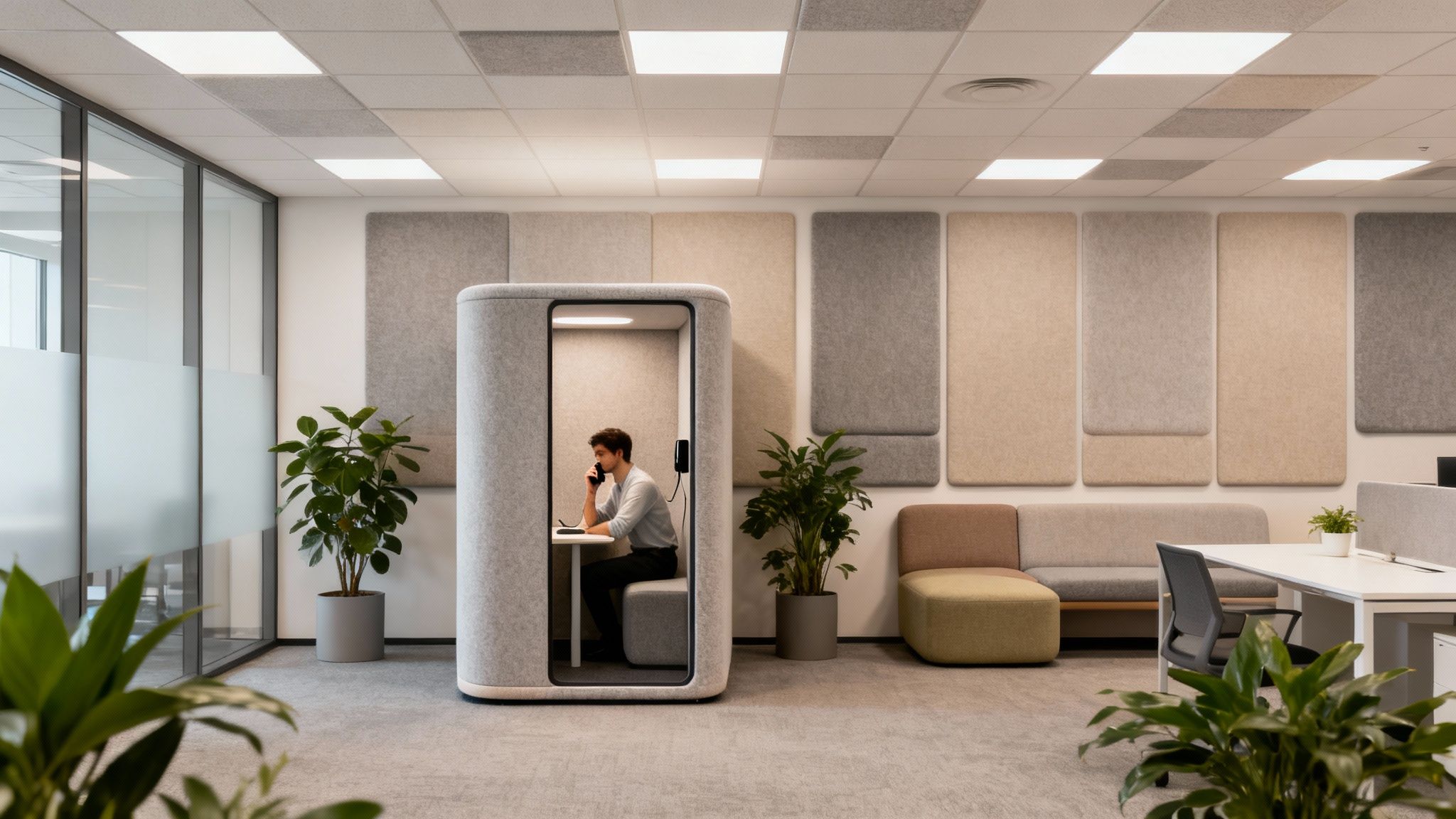
While general acoustic treatments are great for handling the overall ambient noise, you absolutely need dedicated spaces for guaranteed quiet. Freestanding modular meeting pods and phone booths are no longer a ‘nice-to-have’ in a dynamic office, they are an essential utility.
These self-contained units provide a necessary escape for confidential calls, video meetings, or any task that demands intense, uninterrupted focus. They are the ultimate privacy solution, creating quiet sanctuaries right in the middle of a busy open-plan floor.
To help you decide what is right for your space, here is a quick look at how different acoustic solutions stack up.
Acoustic Solutions for Dynamic Offices
| Solution Type | Best For | Considerations |
|---|---|---|
| Acoustic Panels & Tiles | Reducing overall ambient noise and echo in open areas. | Effective for general sound but won’t block direct conversations. |
| High-Backed Furniture | Creating semi-private nooks for informal chats. | Offers visual privacy and some sound dampening, not true silence. |
| Freestanding Pods & Booths | Confidential calls, video meetings, and deep focus work. | A higher initial investment but provides guaranteed sound isolation. |
By layering these different solutions, you can design a truly flexible workspace that supports both lively collaboration and quiet concentration. It is the key to ensuring your dynamic seating plan boosts productivity instead of getting in its way.
How Flexible Design Impacts Office Dilapidations
When you sign a commercial lease, the end-of-tenancy obligations can feel a long way off. It is easy to push them to the back of your mind. But the design choices you make today will have a huge impact on the cost and complexity of the dilapidations process when it is time to move on.
This is where a dynamic office seating strategy offers a significant, often overlooked, financial advantage. A flexible, modular approach is not just about empowering your team during the tenancy; it is about making that final handover so much simpler.
Rethinking Permanent Fixtures
Traditional office fit-outs often rely on fixed, permanent elements. Think stud walls to create private offices, built-in reception desks, and partitions bolted to the floor to divide departments. While they serve a purpose, they become a major headache at the end of a lease.
Under most commercial agreements, you are on the hook to return the space to its original condition. That means demolishing those fixed walls, making good the floors and ceilings, and removing every trace of your custom build. It is a costly, disruptive, and genuinely time-consuming process.
A flexible design sidesteps a lot of this hassle. By using freestanding pods, movable acoustic screens, and modular furniture systems, you can create your zones and private spaces without making permanent, structural alterations to the building’s fabric.
“The core idea is simple but powerful: instead of building your office into the space, you furnish it with adaptable elements. This preserves the landlord’s property and gives you a far easier exit strategy.”
The Advantage of a Modular Approach
Adopting a modular design has direct, tangible benefits for your dilapidations liability. When you rely on non-permanent fixtures, the entire process of reinstatement becomes much more straightforward.
Here is how a flexible design simplifies things in the real world:
- Freestanding Pods: Instead of building a fixed meeting room from plasterboard and steel, you install a modular pod. At the end of the lease, you can simply dismantle it and take it with you to your new premises, leaving no damage behind.
- Modular Furniture: Adaptable desks and storage units can be reconfigured or removed without any structural impact. This is a world away from ripping out built-in joinery that has been screwed and glued into place.
- Acoustic Screens: Movable panels are brilliant for defining spaces and absorbing sound but they do not need to be fixed to the floor or ceiling, making their removal effortless.
This approach massively reduces the labour, time, and waste involved in handing the office back. As a result, the potential for disputes with your landlord over reinstatement costs is also much, much lower.
Negotiating Your Lease from the Start
For any business planning a dynamic fit-out, it is incredibly wise to address this during your initial lease negotiations. A well-drafted lease can, and should, include clauses that explicitly permit the use of freestanding, non-structural solutions.
This provides clarity for both you and the landlord right from day one. It formally acknowledges your intention to use a flexible design and sets clear expectations for the condition of the space upon exit. As a leading design-and-build firm, we frequently support clients with these early-stage discussions, ensuring their interior design plans and lease obligations are perfectly aligned.
Our integrated services support businesses throughout their entire property lifecycle. From the initial office fit-out in locations like Chelmsford to managing the final handover, we ensure a seamless process. This forward-thinking approach to workplace design saves you money and hassle, both now and in the future.
Got Questions About Dynamic Seating? You’re Not Alone.
Taking the leap into a more flexible way of working is a big move and it is only natural to have a few questions. Over the years, we have found that most clients have similar concerns when they first start exploring dynamic office seating. We have heard them all, so let’s get straight to the answers.
How Do We Keep Things Fair in a Hot-Desking World?
This is, without a doubt, the number one concern. There is a real fear of creating a daily scramble for the ‘best’ desks, a sort of first-come, first-served free-for-all. But a properly designed dynamic system is the complete opposite of that chaos.
True fairness comes from smart structure and clear policies, not just letting people loose. We help clients set up ‘neighbourhoods’, designated home bases for specific teams. This simple step ensures that colleagues who need to collaborate are actually near each other.
Pair that with a transparent desk booking system and you level the playing field entirely. Staff can book a space in advance, which gets rid of that morning rush anxiety. It ensures everyone gets access to the kind of workspace they need to do their best work. This is about creating an organised, equitable system, not a battleground.
What’s the Real Return on Investment Here?
The ROI on dynamic seating goes way beyond pounds and pence but let’s be honest, the financial case is still incredibly strong.
Your most immediate win is in real estate efficiency. When you design your office around how it is actually used, rather than a rigid one-desk-per-person model, you can often support the same headcount in a much smaller footprint. That is a direct saving on rent and utilities.
Beyond the balance sheet, you will see tangible returns from improved employee wellbeing. According to a report from the Health and Safety Executive (HSE), musculoskeletal issues are a massive cause of work-related illness. Giving people access to high-quality, ergonomic seating directly reduces absenteeism and gives productivity a real boost.
“An investment in a dynamic office is not just an operational expense; it’s a strategic move that benefits your two most valuable assets: your property and your people. The returns show up in efficiency, wellbeing, and your power to attract top talent.”
And finally, there is the powerful, if less tangible, benefit of attracting and keeping the best people. Today’s workforce expects flexibility. Offering a modern, adaptable workspace gives you a serious edge, especially in competitive markets like London or Cambridge.
Will Our People Lose Their Sense of Belonging?
It is a valid worry. Will employees feel disconnected or like they do not have a ‘home’ at work if they do not have their own personal desk? The truth is, a desk does not create community, your culture does.
You can absolutely build a strong team identity without assigned seating. Creating those team ‘neighbourhoods’ we talked about is a brilliant first step. It gives each team a clear area to call their own, a place to gravitate towards.
You then reinforce this with well-designed communal and social spaces that genuinely encourage people to interact. And do not forget personal storage. High-quality, secure lockers are non-negotiable; they give people a safe, personal spot for their belongings and peace of mind.
Ultimately, a dynamic office shifts the focus of ‘belonging’ from a piece of furniture to the people and the shared company mission. It builds connections through collaboration and shared experiences, not through static desks. Get it right and you will find it actually strengthens your company culture, it does not weaken it.
Ready to transform your workspace? Speak to the Gibbsonn Interiors team today. We are here to guide you through every step of your office transformation.