
Sustainable Office Space: Your Practical Guide for 2026
Table of Contents
A sustainable office is much more than just a few recycling bins in the corner. It’s a space designed from the start to have a small environmental impact. At the same time, it actively boosts the health, happiness, and productivity of the people inside. It’s about making smart, conscious choices in energy, materials, and overall design that pay you back in lower running costs and a more engaged team.
Building a Better Workspace for the Future
Welcome to your practical guide for creating a truly sustainable office. This isn’t just about ticking boxes for environmental targets; it’s about shaping a healthier, more productive, and cost-effective workplace that’s fit for 2026 and beyond. Done right, a sustainable approach will not only slash your energy bills but also help you attract and keep top talent.
We’re moving past the basics. This guide will explore what a genuinely sustainable office looks like in practice. It covers everything from energy use and material sourcing to the crucial element of employee wellbeing. Think of this as your blueprint for turning your workplace into an asset that benefits your people, the planet, and your profits.
This flow chart neatly sums up how focusing on people and the planet creates a balanced, sustainable office that ultimately drives profit.
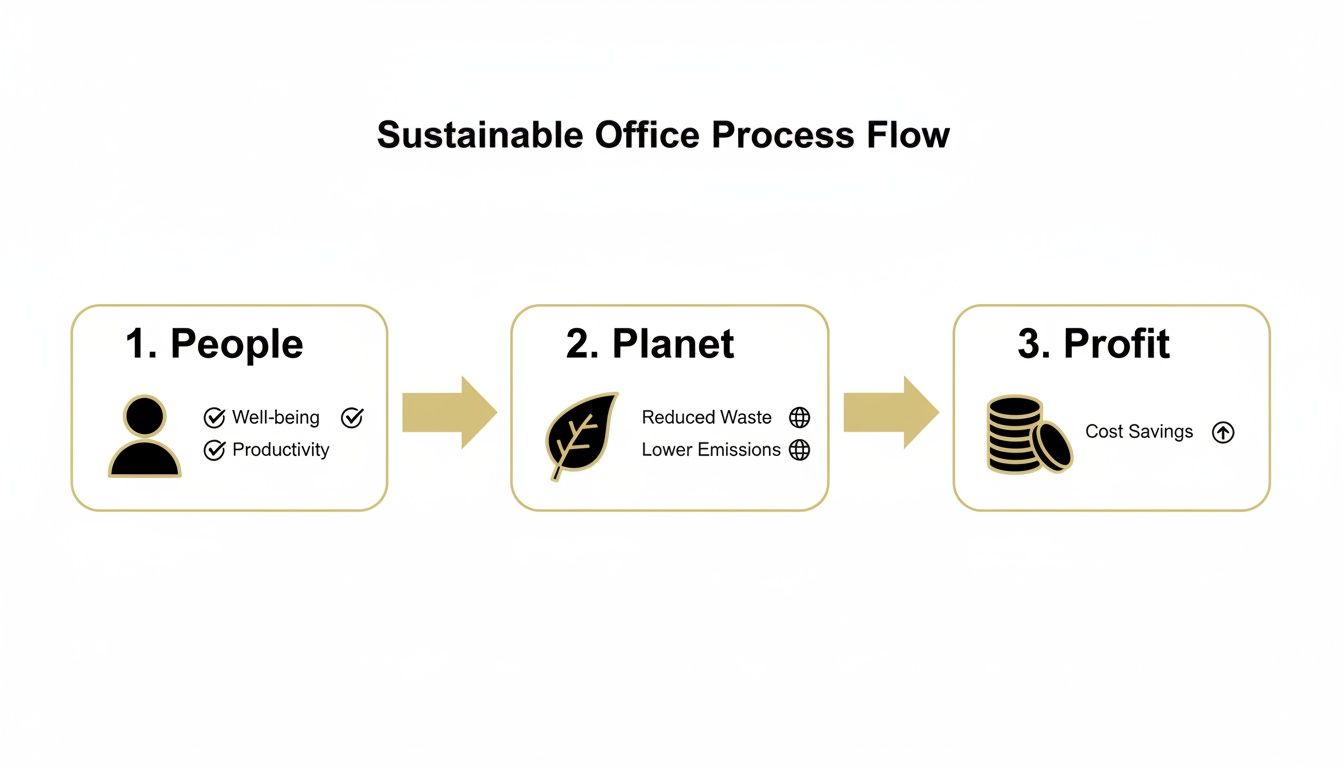
It shows that when you prioritise your team’s wellbeing and adopt eco-friendly practices, the financial rewards naturally follow.
Why a Sustainable Office Matters in 2026
The idea of a “green” office has moved from a nice-to-have to a core part of modern business strategy. A sustainable workspace sends a powerful message that your company is forward-thinking and socially responsible, which is a massive draw for new employees and clients. It proves you care about your team’s health and the world we all share.
For businesses in bustling areas like Bishop’s Stortford or anywhere across Hertfordshire, making these changes can also provide a real, tangible competitive edge.
“Creating a workspace that aligns with environmental values not only benefits the planet but also enhances employee well-being and can reduce operational costs.”
The Triple Bottom Line
A sustainable office fit-out directly supports the “triple bottom line”, an approach that balances three key areas of performance:
- People: A well-designed, healthy office with great air quality, lots of natural light, and comfortable breakout spaces makes for a happier, more engaged team.
- Planet: By using fewer resources, creating less waste, and choosing eco-conscious materials, you actively shrink your company’s environmental footprint.
- Profit: Better energy efficiency, lower waste management costs, and higher employee retention all lead to reduced operational expenses and a healthier bottom line.
This balanced approach is vital for any modern company, whether you’re based in a central London hub or a growing business in Essex. It’s about building long-term, sustainable value that goes far beyond the initial investment.
How to Assess Your Current Office Footprint
Before you can build a more sustainable future, you first need a clear picture of where you stand today. This means doing a simple but effective workplace audit. In my experience, this is the single most important step in creating a sustainable office that delivers real results.
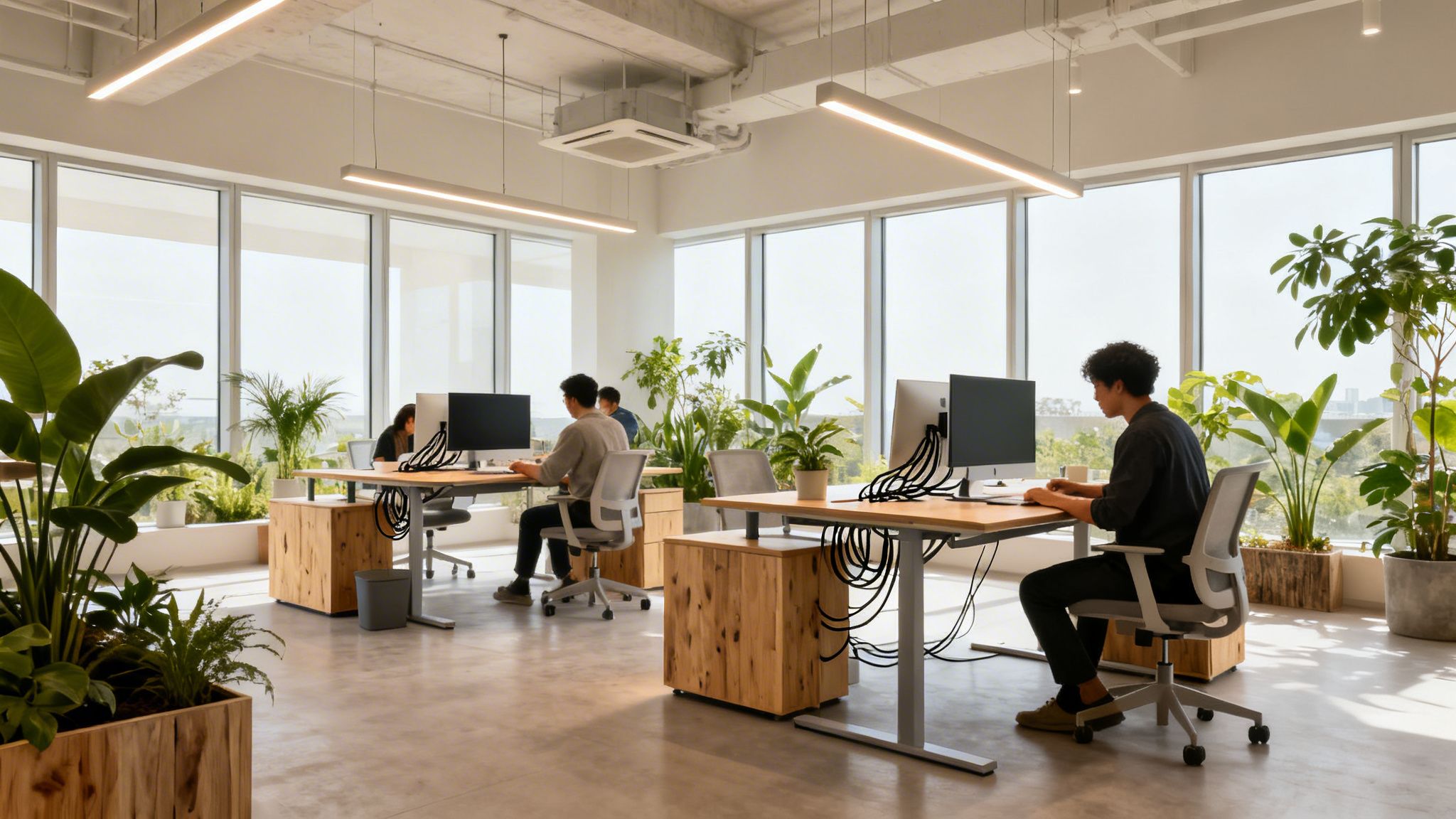
This initial audit isn’t about being critical; it’s about gathering some starting data. With this information, you can set realistic goals, measure your progress, and see a real return on your efforts. It helps you find the biggest opportunities for improvement, making sure your budget is spent where it will make the most impact.
Start with Your Energy Bills
The easiest place to begin your assessment is with your utility bills. Take some time to go through your electricity and gas statements for the last 12 to 24 months. Look for patterns, you might see obvious spikes in winter heating costs or notice high usage even when the office is quiet over a weekend.
This data is your foundation. It tells a story about how your building performs throughout the year. For instance, if your energy use doesn’t drop much on Saturdays and Sundays, it’s a strong clue that equipment is being left on standby or inefficient lighting is running when it shouldn’t be.
“Understanding your baseline energy use is the key that unlocks genuine savings. It turns guesswork into a clear, actionable strategy for improvement.”
Conduct a Simple Walkthrough Audit
Once you have your energy data, it’s time to get on your feet for a physical walkthrough. You don’t need to be an expert for this, just observant. Grab a notepad and walk through your entire office, paying close attention to a few key areas.
This process helps you connect the numbers on your bills to the physical space. It’s about spotting the small, everyday things that add up to big costs and a larger carbon footprint.
Here’s a simple checklist to guide you:
- Lighting Check: Are you still using old fluorescent tubes or halogen bulbs? Make a note of how many you have and where they are. Check if lights are constantly left on in empty meeting rooms or storage areas.
- Equipment Audit: How many computers, printers, and monitors are left on overnight instead of being properly shut down? Don’t forget small kitchen appliances like microwaves and coffee machines, they all draw power on standby.
- Heating and Cooling: Check for draughts around windows and doors. Are radiators blocked by furniture, stopping heat from circulating properly? Note down the age and type of your heating, ventilation, and air conditioning (HVAC) system.
- Water Usage: Look for any dripping taps in kitchens or bathrooms. Check what type of toilet flush systems you have; older models use much more water than modern dual-flush systems.
Look at Your Waste and Materials
Finally, take a hard look at what you’re throwing away. How many general waste bins do you have compared to dedicated recycling bins? A quick glance can often tell you if you’re recycling effectively or if most of your waste is just heading to landfill.
Also, think about the materials all around you. Your current furniture, flooring, and partitions all have an environmental story. Are they made from recycled content, or could they be refurbished or recycled at the end of their life? Our comprehensive guide offers more detailed advice on this. Check out our office space planning checklist for deeper insights.
Choosing Smart, Sustainable Materials and Finishes
Now we get to the really creative part of designing your sustainable office: choosing the materials that bring your vision to life. This is where we make choices that not only look fantastic but also actively help create a healthier planet and a more inspiring workplace for your team.
The real goal here is to think about the entire life of a material. We’re moving beyond just the initial look and feel to consider its whole journey, where it came from, how it was made, and where it will end up. This lifecycle approach is key to creating a truly sustainable office space fit for 2026 and beyond.
Embracing Circular Economy Principles
A huge part of modern sustainable design is the circular economy. It’s a simple but powerful idea: instead of a straight line from production to landfill, we create a loop where products can be reused, repurposed, or recycled.
Think of it this way: a tired-looking desk doesn’t have to become waste. Its parts can be used to create something new, which cuts down on the need for raw materials and saves a huge amount of energy.
When we’re selecting furniture or flooring, we’re not just looking at the colour. We’re asking deeper questions:
- Can this carpet be returned to the manufacturer to be recycled into new tiles?
- Is this desk made from parts that can be easily taken apart and recycled?
- Could this partition be reinstalled somewhere else if we change the office layout in a few years?
This shift in thinking is crucial. It ensures the materials in your office have a life beyond their first use, turning your workspace into part of the solution. It’s a practical approach we’ve successfully applied to projects in places like Bishop’s Stortford.
“Choosing materials based on their lifecycle isn’t just an environmental choice; it’s a smart business decision. It future-proofs your investment and reduces long-term waste disposal costs.”
Key Sustainable Materials to Consider
Building a sustainable office doesn’t mean you have to compromise on style. In fact, many of the best eco-friendly materials offer unique character and brilliant performance. Here are some of the top options we’re seeing today.
Reclaimed and Recycled Materials
Using materials that have had a previous life adds instant character and a story to your space. Reclaimed wood from old buildings can create stunning feature walls or reception desks. We’re also seeing amazing new carpets made from recycled fishing nets or plastic bottles, which are now very durable and available in a huge range of designs.
Low-VOC Paints and Finishes
Standard paints often release Volatile Organic Compounds (VOCs), which can affect air quality and employee health. Switching to low-VOC or zero-VOC options is a simple change that makes a massive difference to the indoor environment. It’s an easy win for creating a healthier space for everyone.
Sustainable Wood
If you’re using new wood, always look for certificates like the Forest Stewardship Council (FSC). This label is your guarantee that the timber comes from responsibly managed forests. It ensures that natural habitats are protected and that for every tree used, new ones are planted.
To help you navigate these choices, here’s a quick look at some key strategies and their benefits.
Key Sustainable Design Strategies
Strategy Area | Key Actions | Primary Benefit |
|---|---|---|
Material Sourcing | Prioritise reclaimed wood, recycled metals, and recycled content fabrics | Reduces demand for new resources and diverts waste from landfill |
Indoor Air Quality | Use low VOC or zero VOC paints, glues, and sealants | Creates a healthier environment and reduces headaches and breathing issues for staff |
Lifecycle Thinking | Select furniture and flooring designed to be taken apart for recycling | Minimises future waste costs and supports a circular economy |
Sustainable Timber | Use only FSC or PEFC certified wood for joinery, furniture, and structures | Guarantees responsible forest management and protects biodiversity |
Innovative Finishes | Use architectural wrapping to update existing surfaces instead of replacing them | Lowers project costs, reduces disruption and prevents usable items going to landfill |
These are practical steps that lead to a more resilient, cost-effective, and responsible workplace.
A Fresh Look Without the Waste: Architectural Wrapping
One of the most exciting ideas in sustainable fit-outs is architectural wrapping. Instead of ripping out dated but perfectly good surfaces, like doors, cabinets, or reception desks, we can wrap them in a durable, high-quality vinyl finish.
This is a fantastic way to completely refresh your office look without sending bulky items to landfill. The process is faster, much less disruptive, and often cheaper than a full replacement. For businesses across Hertfordshire looking for a quick and impactful eco-friendly upgrade, this is a brilliant solution we can’t recommend enough.
Cutting Costs with Smart Energy and Lighting
Energy is a huge operational cost for any office, and it also comes with a heavy environmental price. Let’s look at some practical, smart ways to slash your energy use. This will create a sustainable office that’s cheaper to run and a better place for your team to work.
It really is about working smarter. By upgrading key systems and using smart technology, you can build an environment that responds to your team’s needs in real-time while shrinking your carbon footprint. You’d be surprised how quickly these changes pay for themselves.
We’ll look at how modern lighting, intelligent controls, and efficient heating all work together to create a workplace that’s genuinely fit for 2026 and beyond.
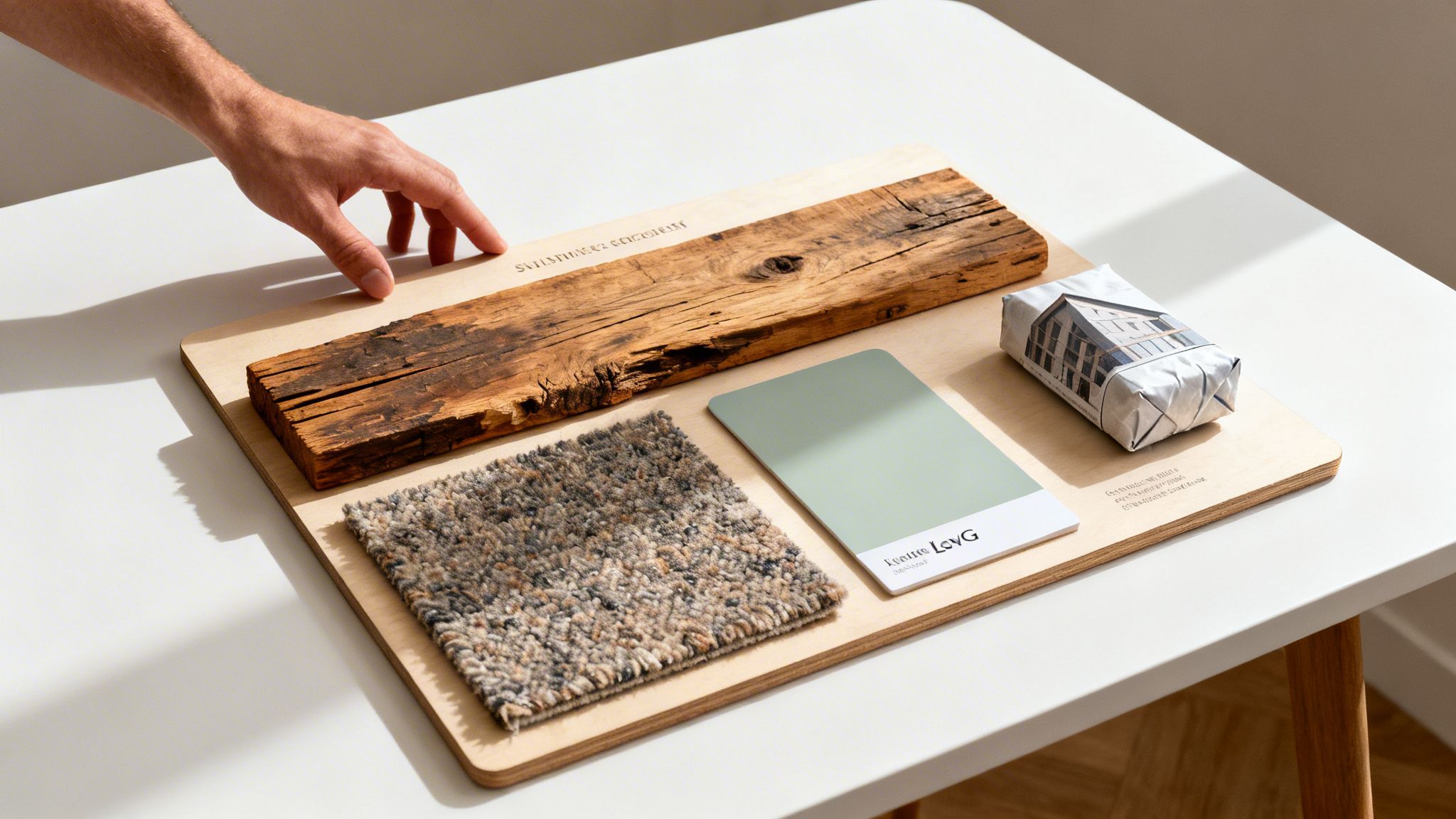
The Simple Switch to LED Lighting
If you only make one change to boost your office’s energy efficiency, make it this: switch to LED lighting. Old-school fluorescent tubes and halogen bulbs are very wasteful. They burn a massive amount of energy as heat instead of light.
LEDs, on the other hand, use up to 80% less energy and can last up to 25 times longer. That means you’re not just making a huge cut in your electricity bills; you’re also reducing maintenance costs and the waste from constantly replacing old bulbs.
Plus, the quality of light is much better, which can reduce eye strain and create a more pleasant atmosphere for your staff. For any business thinking about a sustainable upgrade, this is easily the most logical and high-impact place to start.
“Upgrading your office lighting to LED is one of the fastest ways to see a return on your investment. The energy savings are immediate, and the long-term benefits for your budget and your team’s comfort are undeniable.”
Using Intelligent Lighting Controls
Even the most efficient lights are a complete waste of energy if they’re left on in an empty room. This is where smart controls make a world of difference. They automate your lighting so it’s only on when and where it’s actually needed.
These systems aren’t a complicated luxury anymore; they are a standard feature in any modern, sustainable office. The most common and effective controls we see include:
- Motion Sensors: They automatically switch lights on when someone enters a room and off again after a period of inactivity. They are perfect for meeting rooms, kitchens, and corridors where lights are often left on by mistake.
- Daylight Harvesting: These clever sensors measure the natural light coming into a space and automatically dim the artificial lights to keep the brightness consistent. This saves a huge amount of energy, especially in offices with large windows.
- Dimmers and Scene Setting: Giving staff control over their lighting levels not only saves energy but also improves comfort and productivity. You can also program ‘scenes’ for different activities, like presentations or focused work.
Combining these technologies creates a responsive system that actively cuts your electricity bill without anyone even having to think about it.
Efficient Heating and Better Insulation
Heating, ventilation, and air conditioning (HVAC) systems are another major energy user. Modern systems are light-years ahead of older ones, providing far better temperature control and air quality while using less power.
But even the best HVAC system in the world will struggle if your building is poorly insulated. For businesses in older buildings, improving insulation and installing high-performance windows can have a massive impact. It traps heat in during the winter and keeps the office cooler in the summer, dramatically reducing the load on your systems all year round.
Investing in these upgrades might feel like a big step, but the long-term savings on energy bills are significant. If you’re planning a refurbishment, understanding the full financial picture is key. You can learn more by exploring our detailed breakdown of the cost of an office fit out.
At its core, a truly sustainable office is one that intelligently manages its resources. It creates a comfortable, efficient, and cost-effective workplace for everyone.
Future-Proofing Your Office with Modular Design for 2026
The way we work is always changing, and our offices must be able to keep up. A truly sustainable workspace is one that can adapt without the wasteful cycle of demolition and rebuilding every few years. This is where modular design comes in, offering a much smarter and more flexible way to future-proof your office.
Instead of being locked into permanent walls and a fixed layout, modular solutions let you reconfigure your space as your team grows, project needs change, or new work styles emerge. It’s a practical, forward-thinking approach that cuts down on waste and disruption, making it a key part of any modern, sustainable office strategy.
The Power of Adaptable Spaces
Let’s be honest, the traditional office is static. Need a new meeting room or a quiet zone for focused work? That usually means calling in the builders, dealing with dust, and accepting a lot of downtime. Modular design completely changes this by using movable, high-quality elements that can be repositioned easily.
Think of it like building with sophisticated, life-sized Lego bricks. You can create the perfect layout for your needs today, knowing you can just as easily change it tomorrow. This kind of flexibility is invaluable for businesses, especially in dynamic hubs across Essex and beyond. It allows them to respond quickly without the high cost and environmental impact of a traditional refit.
Introducing Acoustic Meeting Pods
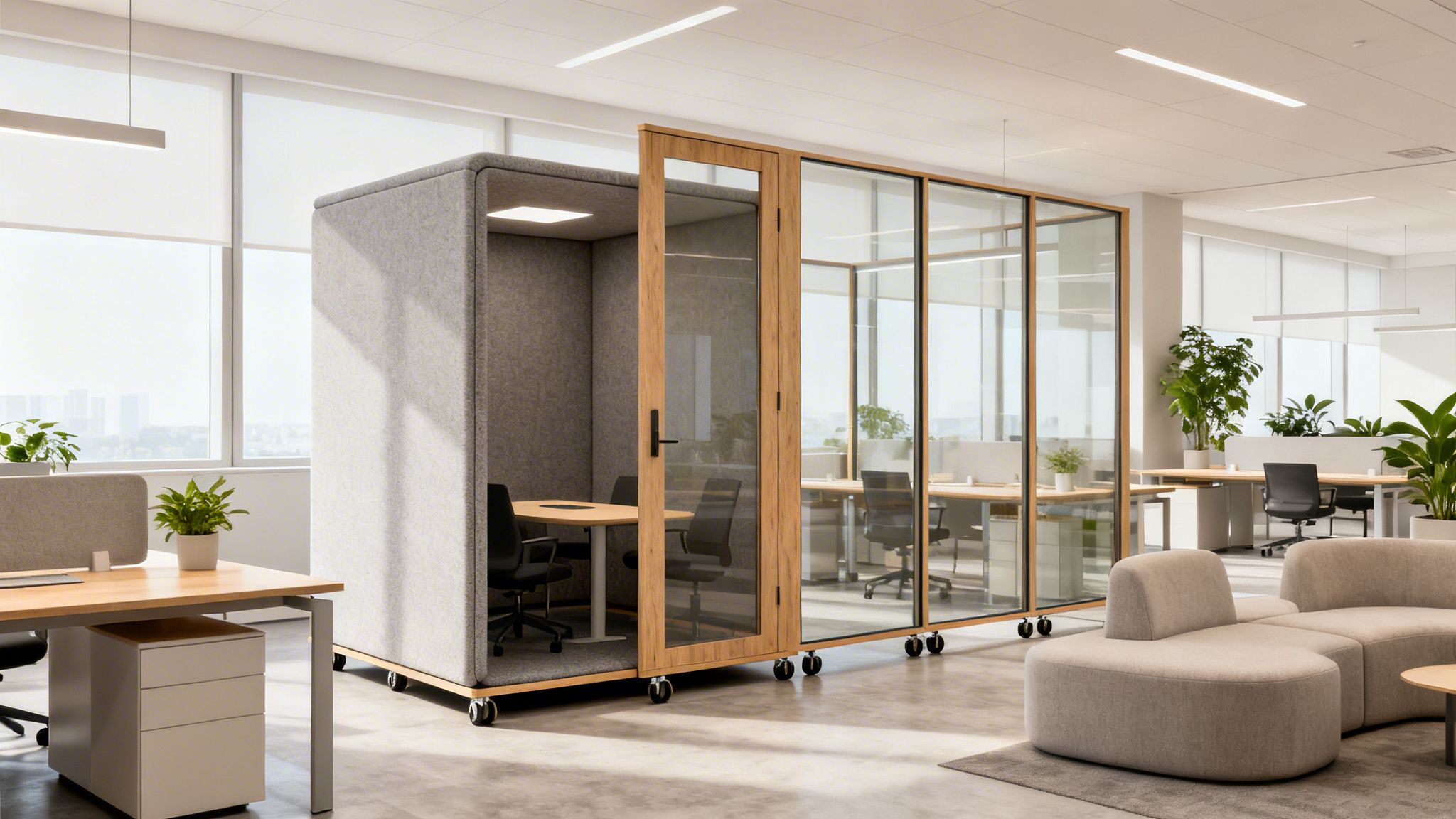
One of the best real-world examples of modular design is the acoustic meeting pod. These are basically self-contained, soundproof rooms that can be placed directly into an open-plan office. They solve one of the biggest problems of open layouts, noise and lack of privacy, by providing the perfect retreat for video calls, private chats, or deep concentration.
We partner with some of the best manufacturers in the business to provide solutions that are not just functional but also beautifully designed and sustainably made. Some of our most popular options include:
- Vetrospace Pods: Known for their exceptional air quality and acoustic performance, Vetrospace pods create a genuinely healthy and quiet micro-environment.
- BlockO Pods: Offering fantastic flexibility in size and customisation, BlockO allows you to create the exact space your team needs.
- Framery Pods: As a pioneer in this space, Framery is famous for its iconic design and world-class soundproofing.
The best part? These pods can be moved when you relocate, so your investment stays with you. It’s a smart, sustainable choice that supports hybrid working and the evolving needs of a dynamic team. For businesses in a competitive market like Cambridge, this flexibility is a game-changer. You can find out more about how these solutions fit into a modern workplace in our guide to modular office furniture.
“Modular design isn’t just about moving walls; it’s about creating an office that breathes and evolves with your business. It is the ultimate expression of a long-term, sustainable workplace strategy.”
The Growing Demand for Flexible Workspaces
This shift towards flexible, sustainable offices isn’t just a short-term trend; it’s a major market movement. The UK’s flexible office market is predicted to grow from £2.84 billion in 2025 to £5.48 billion by 2030. This growth is fuelled by a powerful demand for sustainability-certified workspaces.
With new ‘day-one’ flexible working laws taking effect, companies are actively turning away from spaces that don’t meet modern ESG standards. This makes adaptable solutions like acoustic pods not just a ‘nice-to-have’, but essential for staying competitive. You can read more about the UK flexible office space market growth and what it means.
Ultimately, this approach is about more than just convenience. It’s a commitment to a sustainable future, where your office is an asset that adapts with you, not a problem that needs constant, wasteful updates.
Understanding Certifications and Measuring Success for 2026
You’ve done the hard work and created a genuinely sustainable office space. But how do you prove it? This is where official certifications and smart, consistent tracking come in, turning good intentions into real, recognised achievements.
They provide a clear framework, giving you a credible way to show tenants, investors, and your own team that your commitment to sustainability is real.
Think of these certifications as the gold standard. They are independent assessments that confirm your office meets high environmental and wellbeing standards. This is a fantastic boost for your brand’s reputation and often increases the property’s value.
Key Environmental Certifications Explained
There are a few big names in the UK certification game, and each has a slightly different focus. Getting to know them helps you pick the one that best fits what you’re trying to achieve.
- BREEAM (Building Research Establishment Environmental Assessment Method): This is the one you’ll see most often in the UK. BREEAM takes a broad view, covering everything from energy and water use right through to waste management and the ecological value of the site itself.
- WELL Building Standard: Just as the name suggests, WELL is all about the people inside the building. It’s focused on health and wellbeing, measuring things like air and water quality, access to natural light, and features that promote both mental and physical health.
- LEED (Leadership in Energy and Environmental Design): Although it started in the US, LEED is a globally recognised benchmark for green buildings. It assesses performance in key areas like energy savings, water efficiency, and the reduction of CO₂ emissions.
Achieving any of these is a powerful statement. It signals a serious commitment that really connects with today’s environmentally aware workforce and clients.
“Formal certifications aren’t just badges to display. They are proof that your investment in sustainability is real, measurable, and making a genuine difference.”
Tracking Your Own Success Beyond Certifications
While official certifications are fantastic, they aren’t the only way to measure what you’ve accomplished. You can and should track your own success. This creates a feedback loop for continuous improvement. It shows your team the real results of their efforts and helps you spot new opportunities for savings.
A great place to start is by regularly checking your energy and water bills. Compare them to the starting data you gathered before the project began. Are you seeing the reduction you hoped for? You can do the same with your waste management bills to track how much you’ve managed to divert from landfill.
And don’t forget the human element. Get feedback directly from your staff with simple surveys. Ask them how they feel about the new lighting, the improved air quality, or the new quiet zones. After all, their wellbeing is one of the most important returns on your investment.
Frequently Asked Questions About Green Offices
Making the move to a more sustainable office is a great goal, but it naturally comes with a lot of questions. We get it. To help you get started, we’ve put together answers to some of the most common questions we hear from businesses just like yours.
What Is the First Realistic Step for a Small Business?
If you’re a smaller business, the thought of a full-scale sustainable fit-out can feel like a lot to take on, both practically and financially. My advice? Don’t try to do everything at once. Instead, focus on the quick wins that deliver the biggest impact for the least initial effort.
A simple energy audit is a brilliant place to start. As we’ve already talked about, switching to LED lighting is a no-brainer. It instantly slashes your electricity use and reduces maintenance costs down the line. At the same time, take a look at your waste management. Bringing in clearly labelled, easy-to-access recycling stations is another simple but powerful change. These actions don’t need a huge budget, but they start building that all-important culture of sustainability.
“You don’t need to do everything at once. Small, consistent changes are the key to building a genuinely sustainable office. Focus on one or two high-impact areas first, and build from there.”
How Do I Get My Team On Board with New Green Initiatives?
This is a big one. Any green initiative is likely to fail without your team’s support. The secret is to stop thinking of it as something you do to them and start seeing it as something you do with them.
Don’t just hand down new rules; explain the ‘why’ behind every change. Talk about the benefits, not just for the planet, but for their own health and wellbeing. For instance, when you switch to low-VOC paints, explain how it creates better indoor air quality for everyone. When you improve the lighting, mention how it can help reduce eye strain and headaches.
Here are a few ideas that really work:
- Create a ‘Green Team’: Get volunteers from different departments to act as sustainability champions. They can help gather ideas and build enthusiasm.
- Make it Easy: Convenience is key. Make sure recycling bins are placed in obvious, high-traffic areas and that energy-saving settings on equipment are the default.
- Celebrate the Wins: Share your progress! Let the team know when you’ve hit a recycling target or how much you’ve saved on the energy bills. A little recognition goes a long way.
When your team feels like they are part of the journey and can see the positive results of their efforts, they’re far more likely to support the changes. For businesses in places like Braintree, this kind of team approach is what truly makes the difference.
Ready to transform your workspace? Speak to the Gibbsonn Interiors team today.