
The way we work has changed for good. Static rows of desks and outdated cubicles no longer work for ambitious businesses in competitive hubs like London or Cambridge. To attract and keep top talent, boost productivity and build a strong company culture your workspace has to be more than just a place to work. It needs to be a destination an asset that actively supports your goals and reflects your company’s values.
This guide moves past generic advice to give you practical insights into the most impactful modern office design ideas shaping the future of work. We will explore ten key concepts from adding natural elements that improve wellbeing to creating agile layouts that support hybrid teams. You will learn how to create private zones in open-plan offices, use smart technology for smooth operations and express your brand identity through intelligent design.
Each idea is broken down with practical tips to help you see how these strategies can work in your own space whether you’re planning a full refurbishment in Essex or a small upgrade in Hertfordshire. We will also show where specialist solutions like architectural wrapping for quick makeovers or modular systems for ultimate flexibility can deliver the best value. Let’s explore the designs that will define the most successful workspaces.
Table of Contents
- 1. Activity-Based Working (ABW)
- 2. Biophilic Design
- 3. Modular and Acoustic Meeting Pods
- 4. Wellness-Centric Workspaces
- 5. Open-Plan with Strategic Privacy Zones
- 6. Sustainable and Circular Design
- 7. Agile and Flexible Office Layouts
- 8. Brand Identity and Workplace Culture Expression
- 9. Technology-Enabled Smart Workspaces
- 10. Client-Ready & Architectural Wrapping
1. Activity-Based Working (ABW)
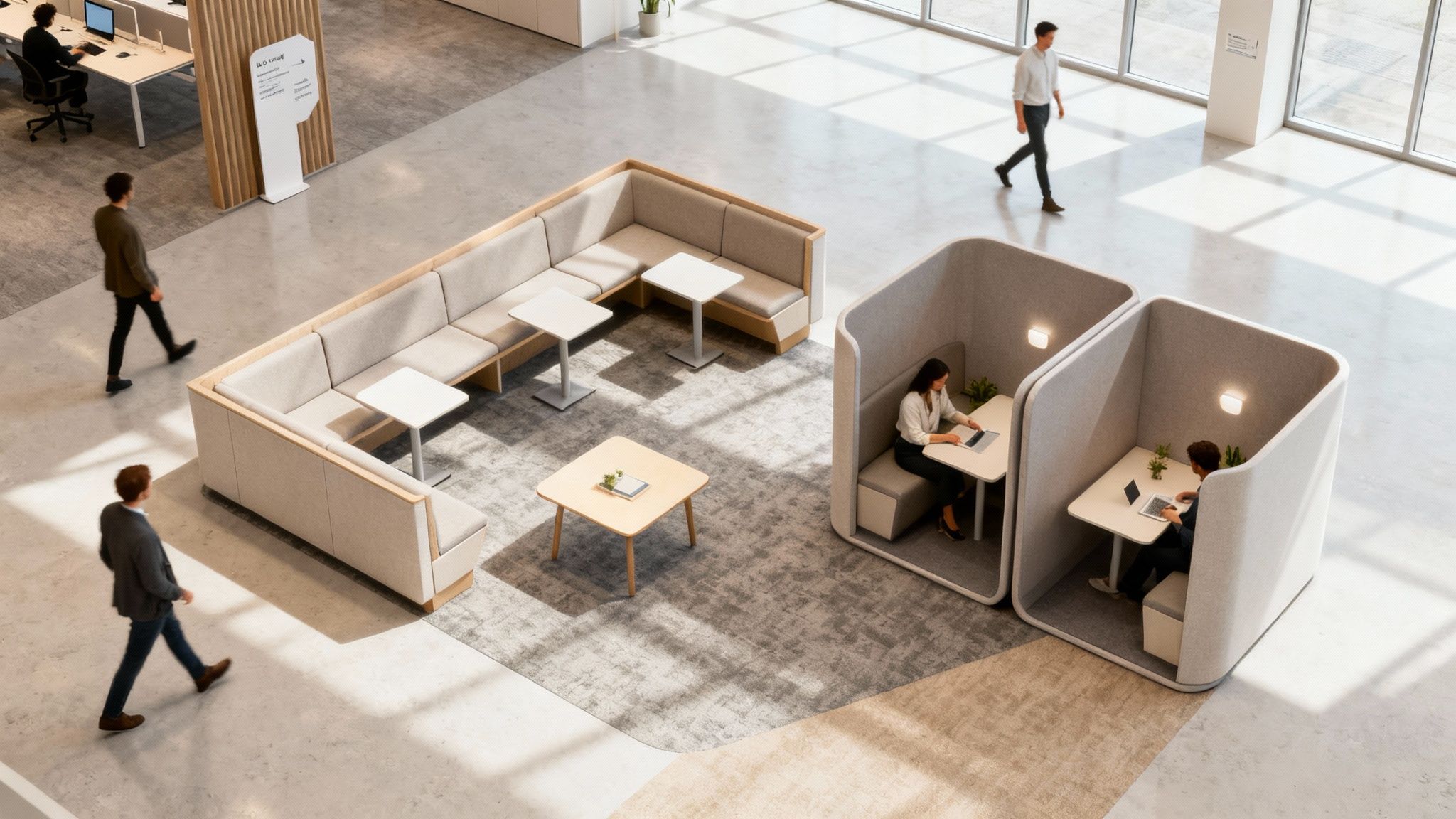
Activity-Based Working (ABW) moves away from the traditional model of one employee one desk. Instead it offers a variety of workspaces designed for specific tasks. This is a core concept in many modern office design ideas. It allows employees to choose a setting that best suits what they need to do whether it’s a quiet pod for deep focus, a collaborative bench for brainstorming or a relaxed lounge for informal chats.
This approach understands that a single work setting can’t support all the different activities employees do all day. Companies like Microsoft and Google have led the way with this model creating dynamic spaces where staff move freely between different zones which boosts both productivity and independence. The goal is to empower people with choice trusting them to pick the environment where they can do their best work.
Making ABW Work for You
Making ABW successful requires more than just new furniture. It needs a cultural shift supported by thoughtful design and technology.
- Understand Your Team: Before any changes survey your employees to find out how they actually work. This information is vital for designing a space that meets real needs.
- Invest in Technology: Simple space-booking apps are essential. These tools should sync with calendars making it easy for staff to find and reserve a workspace.
- Provide Clear Signage: Use distinct visual cues, colour-coding and clear signs to define each zone. This helps employees find their way around and understand what each area is for.
- Offer Secure Storage: With no assigned desks secure personal lockers are a must-have. This gives employees a personal “home base” to store their things while they move between zones.
Gibbsonn’s Insight: ABW is all about flexibility. We use modular wall systems and reconfigurable furniture to create adaptable zones. This allows businesses in fast-moving areas like Cambridge to easily adjust their layout as team needs change without needing a complete refit.
2. Biophilic Design
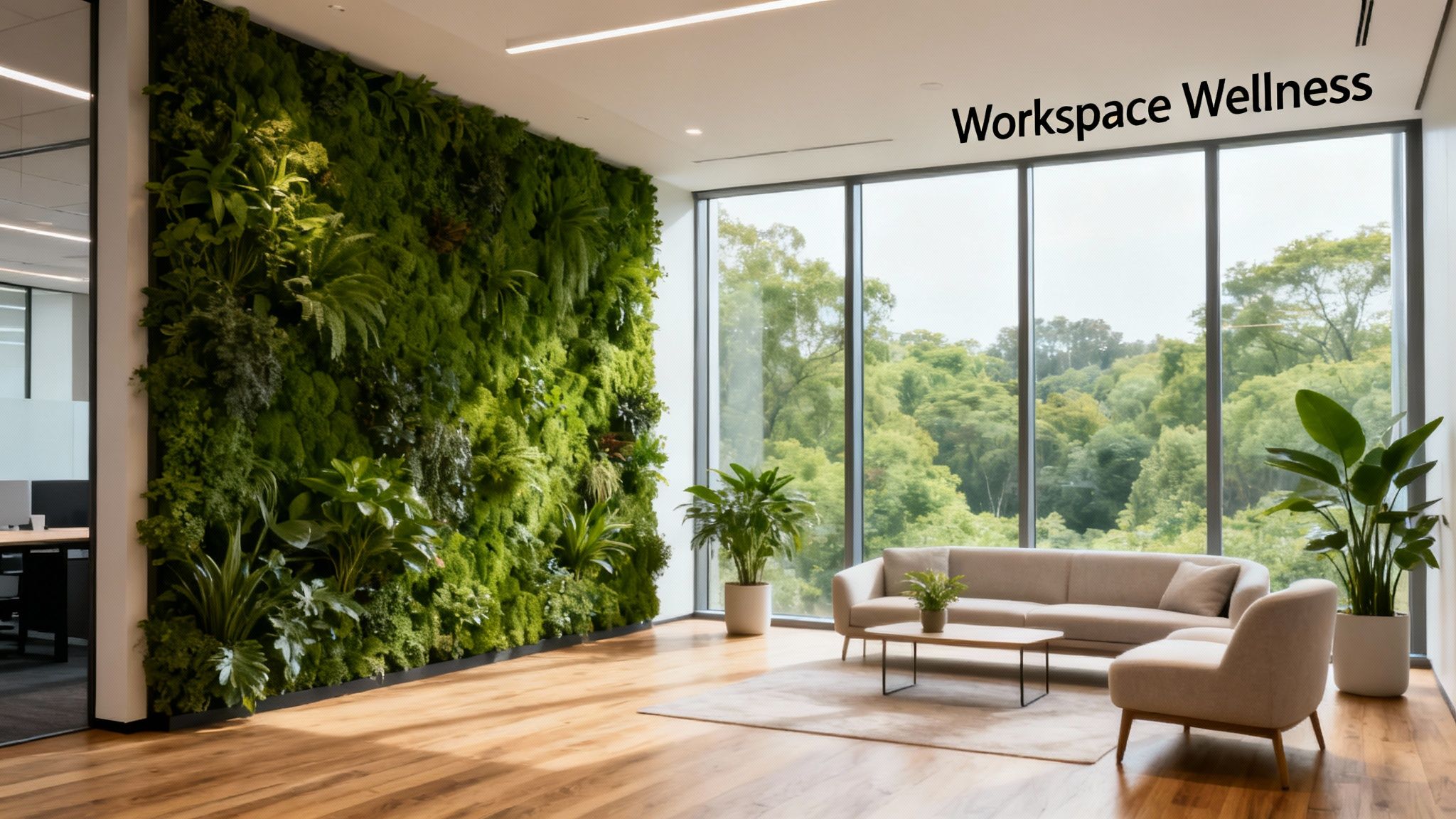
Biophilic design is a powerful modern office design idea that centres on our natural connection to nature. It involves bringing natural elements like plants, daylight, organic materials and water features into the workspace. The main idea is that creating a more natural environment can significantly improve employee wellbeing, reduce stress and boost creativity.
This approach is more than just putting a few plants on a windowsill. It’s a complete strategy seen in impressive offices like Amazon’s Spheres in Seattle and The Edge in Amsterdam. These spaces use lots of greenery, natural light and organic textures to create immersive environments that connect people with nature even in a busy city. According to a report by a leading architecture journal ArchDaily, this can improve productivity by up to 15%.
Making Biophilic Design Work for You
A successful biophilic design needs a thoughtful mix of natural and man-made elements to create a supportive atmosphere.
- Integrate Living Greenery: Add living walls, large plant installations or well-placed planters to improve air quality and add visual appeal. Work with specialist landscaping contractors to make sure plants are chosen and maintained correctly.
- Maximise Natural Light: Prioritise layouts that let daylight reach deep into the office. Use glass partitions instead of solid walls and choose window treatments that soften light rather than blocking it.
- Use Natural Materials: Use materials like wood, stone, bamboo and cork in flooring, wall finishes and furniture. These organic textures create a calming and grounding feeling.
- Incorporate Natural Patterns and Sounds: Where live plants are not possible use high-quality nature images, fabrics with botanical patterns or even subtle water features to mimic the feeling of being outdoors.
Gibbsonn’s Insight: Biophilic design is very adaptable. We often use architectural wrapping with realistic wood, stone or plant-based finishes to transform existing surfaces. This is a cost-effective way to bring natural textures into an office in Bishop’s Stortford or London without the structural work or maintenance of real materials.
3. Modular and Acoustic Meeting Pods
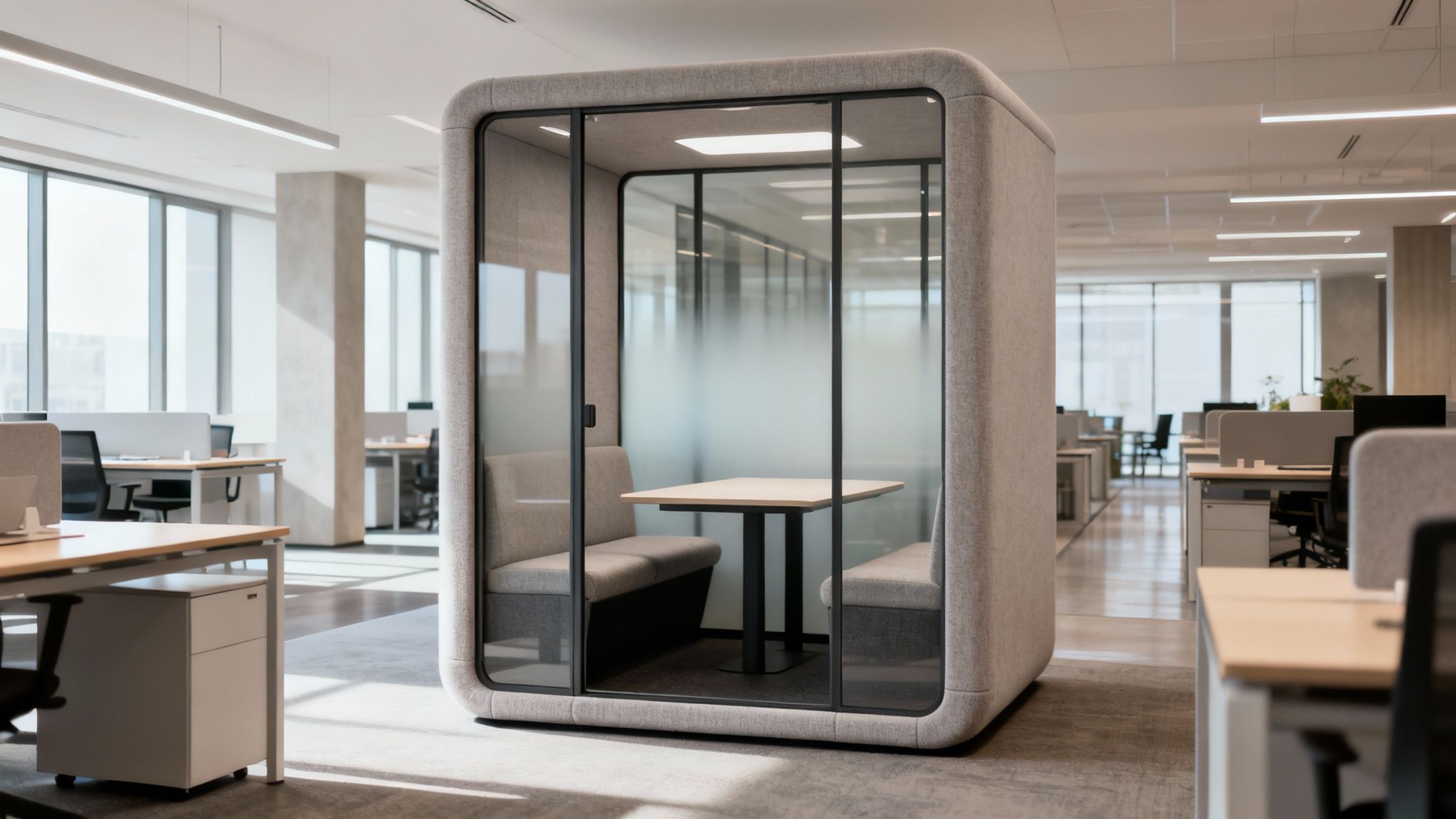
Modular and acoustic meeting pods are one of the most transformative modern office design ideas for open-plan offices. These are self-contained units that provide soundproofed spaces for focused work, private phone calls or small team meetings. They directly solve the main problems of open offices which are noise and lack of privacy without needing expensive and disruptive construction.
This plug-and-play solution offers amazing flexibility. Companies like Framery and Steelcase have made pods popular as a way to quickly add quiet zones exactly where they are needed. They have become a standard feature in fast-paced tech and financial services offices across the UK allowing businesses to adapt their layouts as teams grow and projects change. The pods create rooms within a room offering a quiet space away from the surrounding noise.
Making Pods Work for You
Using acoustic pods effectively is about placing them strategically and making sure they meet real user needs. Proper planning stops them from becoming unused novelties.
- Conduct a Noise Audit: Before buying map out the noisiest areas of your office. Use this data to place pods where they will have the most impact creating effective sound buffers.
- Size Appropriately: Choose a mix of pod sizes. A single-person phone booth is perfect for private calls while a four-person pod is great for team sessions. Avoid choosing larger pods that might stay empty.
- Prioritise Ventilation and Light: Make sure pods have excellent air circulation to stop them from feeling stuffy. Placing them near windows or choosing models with glass panels helps maintain a connection to the wider office and maximises natural light.
- Integrate Technology: Equip pods with essential tech like screens, charging points and video conferencing equipment. Link them to your central space-booking system to get the most use out of them and avoid booking clashes. Explore more about revolutionising workspace dynamics with freestanding booths and pods.
Gibbsonn’s Insight: We see pods as more than just quiet spaces they are design elements. We use them to define zones and improve navigation in large open-plan offices. By wrapping pods in branded vinyl or using them as a backdrop for a collaboration area they become functional, stylish assets that reinforce company culture.
4. Wellness-Centric Workspaces
A wellness-centric workspace is an environment designed to support the physical, mental and emotional health of its occupants. This approach goes beyond basic health and safety by including features that actively promote wellbeing. These modern office design ideas focus on elements like ergonomic furniture, optimised air quality, circadian lighting that mimics natural daylight and dedicated spaces for rest.
The main principle is that a healthy workforce is a productive one. By prioritising employee wellbeing companies can reduce sick days, improve focus and boost morale. Leading organisations like the International WELL Building Institute have set global standards for creating spaces that help people thrive. This means looking at the office not just as a place to work but as an environment that improves quality of life.
Making Wellness Work for You
Creating a truly wellness-focused office needs a complete strategy that considers both the physical environment and the company culture.
- Conduct a Wellness Audit: Before investing survey your team to find out their main health and wellbeing issues. Are they struggling with back pain from poor seating, eye strain from harsh lighting or stress from a noisy environment? Use this information to guide your design choices.
- Invest in Ergonomics: High-quality, adjustable furniture is essential. Provide ergonomic chairs, height-adjustable desks and monitor arms from well-known brands. Follow up with professional ergonomic assessments for staff.
- Prioritise Air and Light: Use air quality monitoring systems and adaptive lighting that changes in brightness and colour throughout the day. This helps regulate employees’ natural body clocks improving sleep and energy levels.
- Designate Quiet Zones: Create dedicated tech-free zones or mindfulness rooms for relaxation. These spaces offer a crucial escape from the sensory overload of a busy office helping to prevent burnout.
Gibbsonn’s Insight: Wellness is an investment, not an expense. We help businesses in places like Chelmsford and Bishop’s Stortford include wellness features affordably. For example using architectural wraps with natural textures and colours can create a calming atmosphere while our modular systems can be used to build quiet pods or rest areas without major structural changes.
5. Open-Plan with Strategic Privacy Zones
The pure open-plan office has been criticised for noise and distractions but its benefits for collaboration are clear. The modern solution is a hybrid model an open-plan layout with carefully placed private and semi-private zones. This approach creates a balanced environment where teams can collaborate freely in shared areas while individuals can go to quiet areas for focused work.
This is one of the most practical modern office design ideas because it acknowledges that work is not always the same. Companies like Facebook have mastered this by creating spaces with lively collaboration hubs alongside quiet focus pods. This zoned approach provides the best of both worlds supporting different activities and work styles within a single floor plan. The key is creating clear distinctions between zones for social interaction, collaboration and deep concentration.
Making a Hybrid Layout Work for You
A successful hybrid layout needs careful planning to make sure each zone serves its purpose without disrupting others. This involves more than just scattering a few pods around an open floor.
- Map Your Workflows: Before finalising a layout map out how your teams interact. Identify high-traffic routes and communication patterns to position quiet zones away from noisy areas.
- Use Visual and Acoustic Cues: Define zones using different flooring materials, ceiling designs, colours and lighting. Add acoustic panels, high-backed furniture and well-placed plants to manage sound between areas.
- Establish Clear Etiquette: Use simple signs to communicate the intended use of each zone. For example a sign indicating a “Quiet Zone” for head-down work sets clear expectations and helps staff respect the space. For an in-depth guide explore our advice on designing office space.
- Implement Booking Systems: For high-demand private rooms or pods a simple digital booking system can prevent clashes and ensure fair access for everyone needing a private space.
Gibbsonn’s Insight: We use modular partitions and architectural wrapping to create distinct zones that feel integrated yet separate. For clients in busy hubs like Stansted or Chelmsford this allows us to add privacy to existing open-plan offices efficiently defining focus areas without the cost and disruption of major construction.
6. Sustainable and Circular Design
Sustainable and Circular Design is an approach that prioritises environmental responsibility. It goes beyond simply using recycled materials focusing instead on reducing carbon emissions, minimising waste and choosing resources that can be reused, repaired or repurposed. This forward-thinking concept is central to modern office design ideas that support corporate ESG (Environmental, Social and Governance) goals.
The main principle is to shift from a linear “take-make-dispose” model to a circular one. This involves careful planning from sourcing low-impact materials to designing for future disassembly. Leading examples like The Edge in Amsterdam, often called the world’s most sustainable office building, show how smart technology and circular principles can create a workspace that is both efficient and good for the environment. This is supported by institutions like the Royal Institute of British Architects (RIBA) who champion these practices.
Making Sustainable and Circular Design Work for You
Integrating real sustainability needs a complete strategy that influences every decision from the initial idea to daily operation.
- Choose Certified Materials: Prioritise materials with clear supply chains and recognised certifications like FSC (Forest Stewardship Council) for wood or Cradle to Cradle for circular products.
- Design for Demountability: Plan for the future by using construction methods and systems that can be easily taken apart and reconfigured. This minimises waste during future office updates.
- Invest in Smart Systems: Use smart building technology to monitor and manage energy use. This includes LED lighting with daylight sensors and energy-efficient HVAC systems.
- Conduct a Life Cycle Analysis: Look beyond the initial purchase price. A whole-life cycle cost analysis assesses the long-term environmental and financial impact of materials and systems guiding more sustainable choices.
Gibbsonn’s Insight: We see sustainability as smart business. Our architectural wrapping services are a great example of circular design. By refinishing existing surfaces like doors, walls and furniture we prevent tonnes of material from going to landfill. This helps businesses in areas like Chelmsford and London achieve a high-end look without the environmental cost of a complete replacement.
7. Agile and Flexible Office Layouts
Agile and flexible office layouts prioritise being adaptable creating spaces that can be reconfigured quickly and cheaply. This modern office design idea moves beyond fixed walls and static furniture using demountable partitions, modular parts and mobile technology to build a workspace that can evolve with the organisation’s changing needs.
This approach is invaluable for fast-growing businesses or those with project-based teams like consulting firms or tech startups. Instead of a disruptive and expensive refit an agile layout allows a company to resize a meeting room, create a new project zone or reallocate space in a matter of hours. Companies like Dropbox have embraced this model to support dynamic workflows ensuring their physical environment never gets in the way of innovation or growth.
Making Agile Layouts Work for You
Implementing a truly agile design needs strategic planning from the start focusing on infrastructure and high-quality systems that are built to last.
- Plan for Multiple Scenarios: Work with your design partner to map out current and future needs. Develop a plan of potential configurations for project launches, team growth or departmental shifts.
- Invest in Quality Demountable Systems: Choose robust and well-engineered demountable systems. Products from manufacturers like Haworth or Voko offer excellent acoustic performance and durability ensuring they can handle repeated reconfigurations.
- Prioritise Infrastructure: Flexible layouts depend on flexible infrastructure. Make sure your power, data and AV cabling are designed for easy rerouting. A raised access floor or well-placed service grids are essential.
- Train Your Facilities Team: Your facilities team must be trained on how to safely and efficiently reconfigure the modular systems. Documenting each standard layout with drawings and photos provides a vital reference point.
Gibbsonn’s Insight: True agility is built in, not added on. We design agile spaces using high-performance demountable partitions and modular systems. This allows our clients in London and Hertfordshire to adapt to new projects or team sizes without the cost and downtime of traditional construction future-proofing their investment.
8. Brand Identity and Workplace Culture Expression
Your office design is a powerful way to communicate your company’s brand, values and culture. More than just a place to work the physical environment is a real expression of your organisation’s personality. It uses colour, materials, custom graphics and layout to tell a story creating a strong sense of belonging for employees and making a memorable impression on clients.
This approach turns the workplace from a functional space into an active part of building culture. Tech giants like Google are famous for this with their offices designed to reflect a culture of innovation and creativity. Similarly a high-end law firm in London might use refined materials and a structured layout to communicate stability and prestige. This is one of the most impactful modern office design ideas because it aligns your physical space with your strategic mission helping to attract and keep talent who connect with your values.
Making Brand Expression Work for You
Embedding your brand and culture into the workplace needs a careful, authentic process that goes beyond just hanging a logo on the wall.
- Define Your Narrative: Before design begins hold workshops with leadership and staff to define your core values and cultural story. What do you want your space to say about you? This forms the brief for the entire project.
- Create Brand Guidelines: Develop a set of guidelines for the physical space that dictates the use of colours, materials and typography. This ensures a consistent brand experience throughout the office.
- Use Environmental Graphics: Commission local artists or designers to create murals, wall graphics or installations that tell your company’s story. These custom elements create unique, memorable spaces.
- Involve Your Team: Let employees take part in the design process. This ensures the final space reflects the actual culture not just an aspirational one creating a genuine sense of ownership and pride.
Gibbsonn’s Insight: We see brand identity as a key part of office design. Using architectural wraps we can apply custom branding to walls, glass partitions and even furniture turning standard elements into powerful brand assets. This is a cost-effective way for businesses in competitive hubs like Stansted or Chelmsford to make a strong statement and reinforce their culture visually.
9. Technology-Enabled Smart Workspaces
Technology-enabled smart workspaces use IoT sensors, analytics and cloud platforms to create an office that is responsive, efficient and data-driven. This approach turns a static building into a dynamic environment that optimises its own operations and improves the employee experience. It moves beyond simple tech to build a fully connected ecosystem a key part of truly modern office design ideas.
From automated environmental controls that adjust lighting and temperature based on occupancy to intelligent booking systems that prevent double-booked meeting rooms smart technology streamlines daily operations. Companies like Cisco and Microsoft use these systems in their own offices to analyse space use, improve collaboration and reduce their energy consumption. The goal is to create a seamless work environment where the building supports employees not the other way around.
Making Smart Workspaces Work for You
Implementing a smart workspace strategy needs clear goals and a phased approach to ensure you get a return on your investment and buy-in from your team.
- Start with Key Pain Points: Focus on high-impact areas first. Occupancy sensors for meeting rooms and hot desks can deliver immediate results by revealing underused spaces and reducing booking clashes.
- Choose Integrated Platforms: Select technology that can integrate with your existing tools like calendars and communication apps. A unified platform creates a seamless user experience.
- Prioritise Privacy and Communication: Be transparent with staff about what data is being collected and why. A clear privacy policy and communication plan are essential for building trust.
- Plan for Scalability: Ensure your chosen technology partner provides robust integrations. This allows you to add new features and connect different systems as your workplace needs change in the future.
Gibbsonn’s Insight: Smart technology is most effective when it’s invisible. We embed sensors and control systems within the office architecture and furniture. This could involve integrating occupancy sensors into modular pods in a London office or using architectural wraps to discreetly house wayfinding beacons making the technology feel like a natural part of the design.
10. Client-Ready & Architectural Wrapping (Hospitality-Influenced and Rapid Refurbishment)
This approach focuses on creating a premium, client-facing experience by borrowing design ideas from the luxury hospitality sector. It’s about making your office feel less like a workplace and more like a high-end hotel lobby or exclusive business lounge especially in areas where you host clients. This philosophy is often paired with architectural wrapping a rapid refurbishment technique that uses high-performance films to transform surfaces achieving a high-impact new look without disruptive construction.
Combining these two modern office design ideas allows for stunning, brand-aligned transformations that are both quick and cost-effective. Professional services firms like leading law practices and financial institutions use this to create an immediate impression of quality and sophistication. The goal is to provide a welcoming, comfortable and memorable experience for visitors reinforcing brand value from the moment they walk through the door.
Making Hospitality-Led Design Work for You
Success lies in creating a real sense of welcome and quality through thoughtful details and smart, modern refurbishment techniques.
- Focus on High-Impact Zones: Concentrate your budget on key client areas like the reception, meeting rooms and breakout spaces. Back-office areas can remain more functional to balance costs.
- Embrace Architectural Wrapping: Use high-quality architectural films to upgrade existing doors, walls, reception desks and furniture. This delivers the look of premium materials like wood, stone or metal at a fraction of the cost and time and it’s ideal for leased properties.
- Invest in Sensory Details: Sophisticated lighting design, quality acoustics, comfortable seating and even a signature scent contribute to a luxurious atmosphere. These details show a commitment to client comfort.
- Train Your Team: The design must be supported by a service culture. Ensure front-of-house staff are trained to offer a high-level welcome completing the premium experience.
Gibbsonn’s Insight: Architectural wrapping is a game-changer for businesses needing rapid, reversible upgrades. We’ve helped clients in professional hubs like London and Cambridge transform tired reception areas into premium, client-ready spaces over a single weekend minimising downtime. It’s the perfect solution for end-of-lease dilapidations or a fast-paced brand refresh. Learn more about our architectural wrapping services.
10 Modern Office Design Ideas, Comparison
Strategy | Key Benefits ⭐ | Ideal Use Cases 💡 |
|---|---|---|
Activity-Based Working (ABW) | Boosts space efficiency, collaboration, and autonomy | Hybrid tech firms, high-rent or scaling businesses |
Biophilic Design | Enhances wellbeing, reduces stress, boosts creativity | Creative agencies, wellness-led companies, high-stress environments |
Modular & Acoustic Meeting Pods | Fast privacy solution, relocatable, minimal disruption | Open-plan offices, hybrid teams, leased workspaces |
Wellness-Centric Workspaces | Long-term ROI, attracts and retains talent, boosts engagement | Corporates, high-pressure sectors, WELL-targeting firms |
Strategic Privacy Zones | Balances focus and collaboration, improves acoustic comfort | Mixed-role teams, open-plan transitions |
Sustainable & Circular Design | Meets ESG goals, reduces lifecycle costs, improves brand reputation | Public sector, ESG-driven businesses, end-of-lease fit-outs |
Agile Office Layouts | High adaptability, lower rebuild costs, ideal for rapid change | Startups, project-based teams, short-term leases |
Brand-Led Interiors | Builds culture, attracts talent, enhances client impression | Professional services, client-facing HQs, brands investing in culture |
Smart Workspaces | Reduces costs, unlocks space data, improves energy efficiency | Multi-location firms, large portfolios, facilities-led organisations |
Client-Ready Wrapping | Quick transformation, high finish, reversible for leased properties | Leased offices, professional services, client-facing reception or meeting areas |
Bringing Your Vision to Life with Gibbsonn Interiors
Looking through these modern office design ideas reveals a clear theme: the modern workplace is no longer just a place to work. It is a dynamic space designed to encourage productivity, wellbeing and connection. From the structured freedom of Activity-Based Working to the calming influence of biophilic design and the focused privacy of acoustic pods each concept we have explored is a tool to create a more human-centric and effective environment.
Moving beyond generic layouts and old-fashioned cubicles is no longer an optional upgrade it is a strategic necessity. Mastering these concepts allows your business to attract and keep top talent, improve employee satisfaction and build a strong company culture. An office that includes wellness-focused layouts, sustainable materials and smart technology is an office that shows care, responsibility and forward-thinking leadership. It becomes a physical representation of your company’s values and a powerful asset in a competitive market.
Key Takeaways for a Future-Proof Workspace
To recap the core principles your focus should be on creating a workspace that is:
- Adaptable: Agile layouts with flexible furniture and modular systems like acoustic pods ensure your office can evolve with your business needs without needing a complete overhaul.
- Human-Centric: Prioritising employee wellbeing through natural light, ergonomic furniture and dedicated wellness zones directly impacts morale, reduces stress and boosts overall productivity.
- Purposeful: Every square foot should serve a purpose. Strategic zoning, dedicated collaboration areas and quiet nooks for focused work ensure that your team has the right environment for every task.
- Branded: Your office is a powerful communication tool. Using brand-led finishes, colour schemes and architectural wrapping transforms your space from a simple workplace into an immersive brand experience for both employees and clients.
- Sustainable: Using circular design principles and eco-friendly materials not only reduces your environmental footprint but also appeals to the modern workforce and can lead to long-term operational savings.
Your Next Steps: From Idea to Implementation
Turning these modern office design ideas from a list on a page into a real, functional space requires a partner with both creative vision and practical expertise. The journey to a more effective workspace begins with a clear understanding of your unique challenges and goals.
Start by looking at your current space. What works well? Where are the problems? Survey your team to get insights into their daily needs and frustrations. This information will help you make informed decisions whether you are planning a small refurbishment in Chelmsford or a full-scale fit-out in the heart of London.
At Gibbsonn Interiors we specialise in turning these insights into practical design strategies. Our design-and-build approach ensures a seamless journey from the initial idea to the final, transformative result. We manage every detail from space planning and material selection to integrating custom modular systems and applying high-impact architectural wraps ensuring minimal disruption to your operations. We have helped countless businesses across Bishop’s Stortford, Braintree and Hertfordshire create spaces that truly work.
Ultimately the goal is to build an environment that not only looks impressive but also functions perfectly empowering your team to do their best work. By investing in a thoughtful, modern office design you are investing directly in the future success of your organisation.
Ready to bring these modern office design ideas to life in your workspace? Speak to the Gibbsonn Interiors team today. Contact Us to book a consultation and discover how we can transform your office into an inspiring and productive environment.