
A lot of facilities managers arrive at the same conclusion. The lease still runs, the team is still showing up, but the office no longer helps anyone do their best work. The layout feels awkward, meeting rooms are always full, finishes look tired, and every small change seems to create a bigger problem somewhere else.
That's usually when office refurbishment norfolk moves from a vague idea to a live project. The challenge isn't just deciding to refresh the space. It's knowing what to change, what to keep, how to stay compliant, and how to avoid turning a sensible upgrade into months of disruption.
A well-run refurbishment should feel structured, not stressful. It should improve the way people work, support the brand clients see when they walk in, and make daily operations easier rather than more complicated. For businesses thinking about a full redesign or a targeted refresh, strong commercial interior design support usually starts with clear priorities and a realistic brief.
Table of Contents
- Your Guide to Transforming Your Norfolk Workspace in 2026
- Why a 2026 Refurbishment is Your Best Investment
- What Can an Office Refurbishment Include
- Your Step-by-Step Project Journey for 2026
- Budgeting and Timelines for Your Norfolk Project
- Navigating Planning and Building Regulations
- Choosing Your Partner and Seeing the Results
Your Guide to Transforming Your Norfolk Workspace in 2026
A refurbishment works best when it solves business problems, not just design problems. That might mean reducing noise, improving meeting capacity, updating finishes that have worn badly, or creating a layout that supports focused work and team interaction in the same floorplate.
For many first-time clients, the hardest part is knowing where to start. Some begin with a rough idea of how they want the office to look. Others know what isn't working anymore. Both are fine. The right process turns that uncertainty into a practical brief, then into drawings, costs, programme, approvals, and delivery.
A successful project usually starts with clarity
The strongest projects tend to answer a few simple questions early:
- What is the space not doing well now
- Which teams need privacy, and which need openness
- What has to stay operational during the works
- Which finishes can be upgraded rather than replaced
- What standard of finish matches the business
A good refurbishment brief is rarely long. It's usually just honest.
That matters because office refurbishment norfolk projects often sit inside live businesses. Staff still need to work, visitors still arrive, and service areas still need to function. Practical sequencing matters as much as visual design.
Design and build keeps decisions connected
An all-in-one design-and-build route is often the easiest model for a first major refurbishment because design, pricing, compliance, and delivery stay joined up. That reduces the usual gaps between what is drawn, what is priced, and what can be built.
The result is a workspace that feels considered from day one. Not overdesigned. Not pieced together. Just organised properly so the space works harder.
Why a 2026 Refurbishment is Your Best Investment
A refurbishment isn't just a cosmetic exercise. It changes how the workplace performs day to day. Better circulation, clearer zoning, stronger acoustic control, and more useful shared areas all help teams work with less friction.
That's why many businesses stop thinking about refurbishment as a cost alone. They start seeing it as an operational decision. A poor office slows people down. A well-planned one removes small daily frustrations that add up fast.
The strongest return is usually practical
A better office can support:
- Staff experience by making the space easier and more comfortable to use
- Client perception through a cleaner, more polished first impression
- Space efficiency by removing wasted corners and underused rooms
- Flexibility through layouts that can adapt as teams change
- Retention and recruitment when the environment feels current and well cared for
For businesses competing with larger employment hubs such as Cambridge, workspace quality can shape how a company is perceived before an interview even starts.
A thoughtful office also supports the wider goals of workplace design. Better zoning, lighting choices, breakout areas, and quieter settings for focused tasks all contribute to a more useful environment, making the wider benefits of workplace design tangible rather than theoretical.
What usually works better than a full rip-out
Not every office needs a complete reset. In many cases, selective refurbishment gives a better outcome with less waste and less disruption.
Practical rule: Keep what still performs well. Replace what blocks the way people work.
That often means retaining sound storage, reusing strong furniture frames, wrapping dated surfaces, and investing budget where people notice the difference most. Acoustic separation, meeting settings, lighting, and arrival spaces usually have a bigger daily impact than decorative extras.
What doesn't work as well is chasing trends without solving the basics. A stylish breakout bench won't fix poor circulation. New flooring won't solve noise. A fresh paint scheme won't make a cramped layout feel generous. The best investment is the one that improves use first and appearance second.
What Can an Office Refurbishment Include
The scope can be broad or focused. Some projects involve a full rework of the entire office. Others target a few pressure points such as privacy, storage, finishes, lighting, or underused areas. The key is choosing interventions that solve the actual problems in the space.
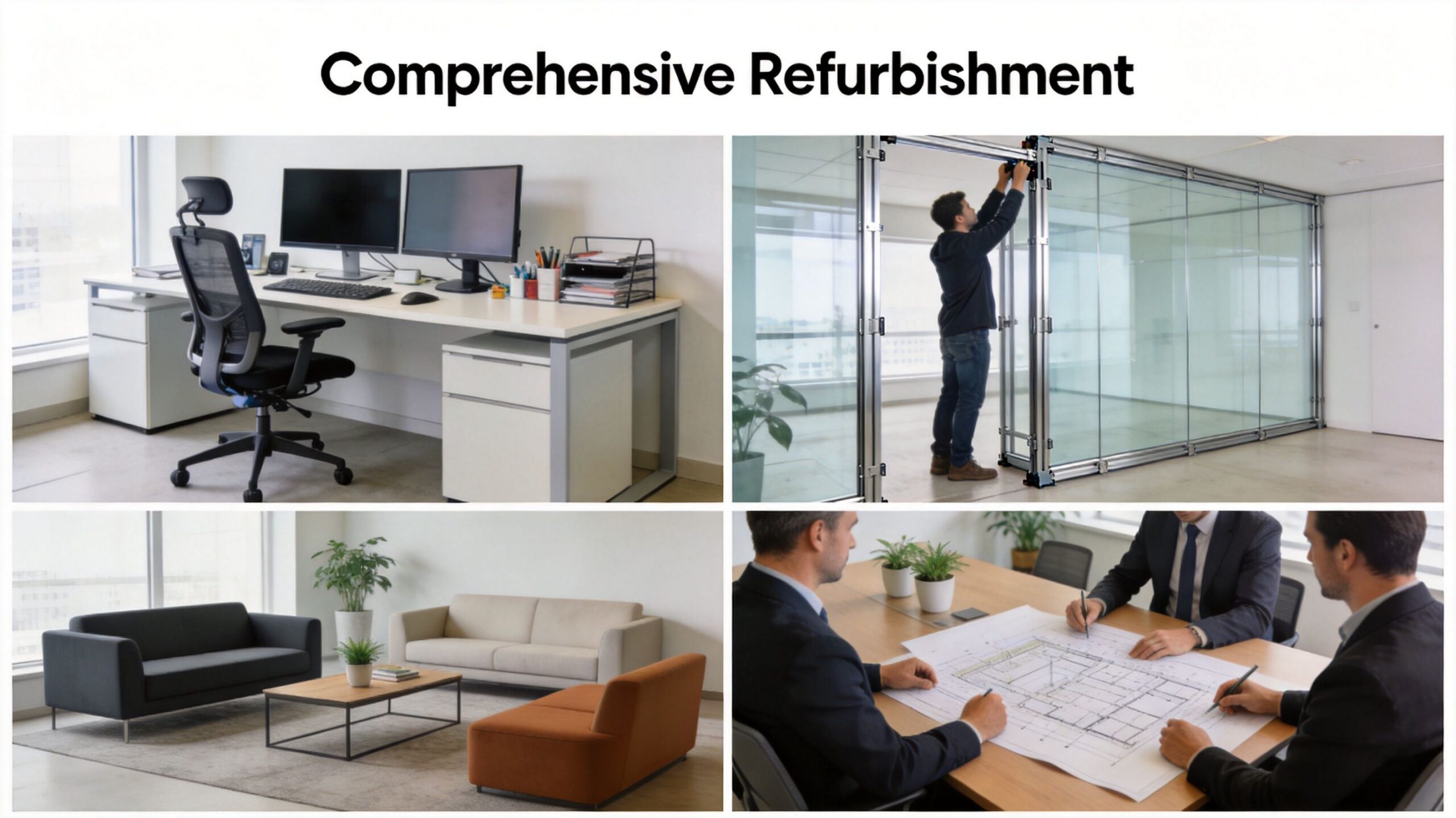
A common starting point is the internal layout. If teams are squeezed into the wrong areas or private discussions keep spilling into open plan space, zoning needs attention before finishes are chosen. Well-designed office partition systems can separate teams, create meeting rooms, and improve acoustics without making the floor feel shut in.
The core elements that shape the space
Most refurbishment projects include a mix of the following:
Partitioning and room creation
Solid and glazed partitions help define the office properly. They're useful when one open room is trying to do too many jobs at once.Glass partitions
These are a strong option when privacy is needed but the space still needs daylight and visual openness. They tend to work especially well around meeting rooms and leadership offices.Architectural wrapping
This is one of the most practical upgrades available. Doors, storage fronts, wall surfaces, and other tired elements can often be resurfaced rather than replaced, which keeps costs and disruption under better control.Lighting and power upgrades
Refurbishment often reveals that the layout has changed over time but the services haven't kept up. Better task lighting and better-positioned power make the office feel more deliberate and easier to use.Furniture and breakout areas
Not every space needs fixed construction. Sometimes a better furniture plan solves circulation and meeting pressure more effectively than more building work.
A lot of teams are also asking how smart systems fit into a refurbishment. For a practical overview, these smart office technology insights are useful if the brief includes booking systems, sensors, or more connected workplace tools.
What tends to work best in practice
Office pods have become a sensible answer where teams need privacy without major structural change. Products from Vetrospace, BlockO, and Framery can create enclosed settings for calls, video meetings, and focused work inside open-plan offices.
What works well is using pods for specific tasks. What doesn't work is using them as a substitute for proper planning. If the office lacks enough collaboration space, circulation is poor, or storage dominates the floor, pods alone won't fix that.
This short video gives a useful sense of how refurbishment elements come together on real projects.
The best refurbishments feel balanced. Open where they should be, private where they need to be, and never crowded for the sake of fitting more in.
That balance is usually where the value sits. Not in adding more pieces, but in making each part of the office do its job properly.
Your Step-by-Step Project Journey for 2026
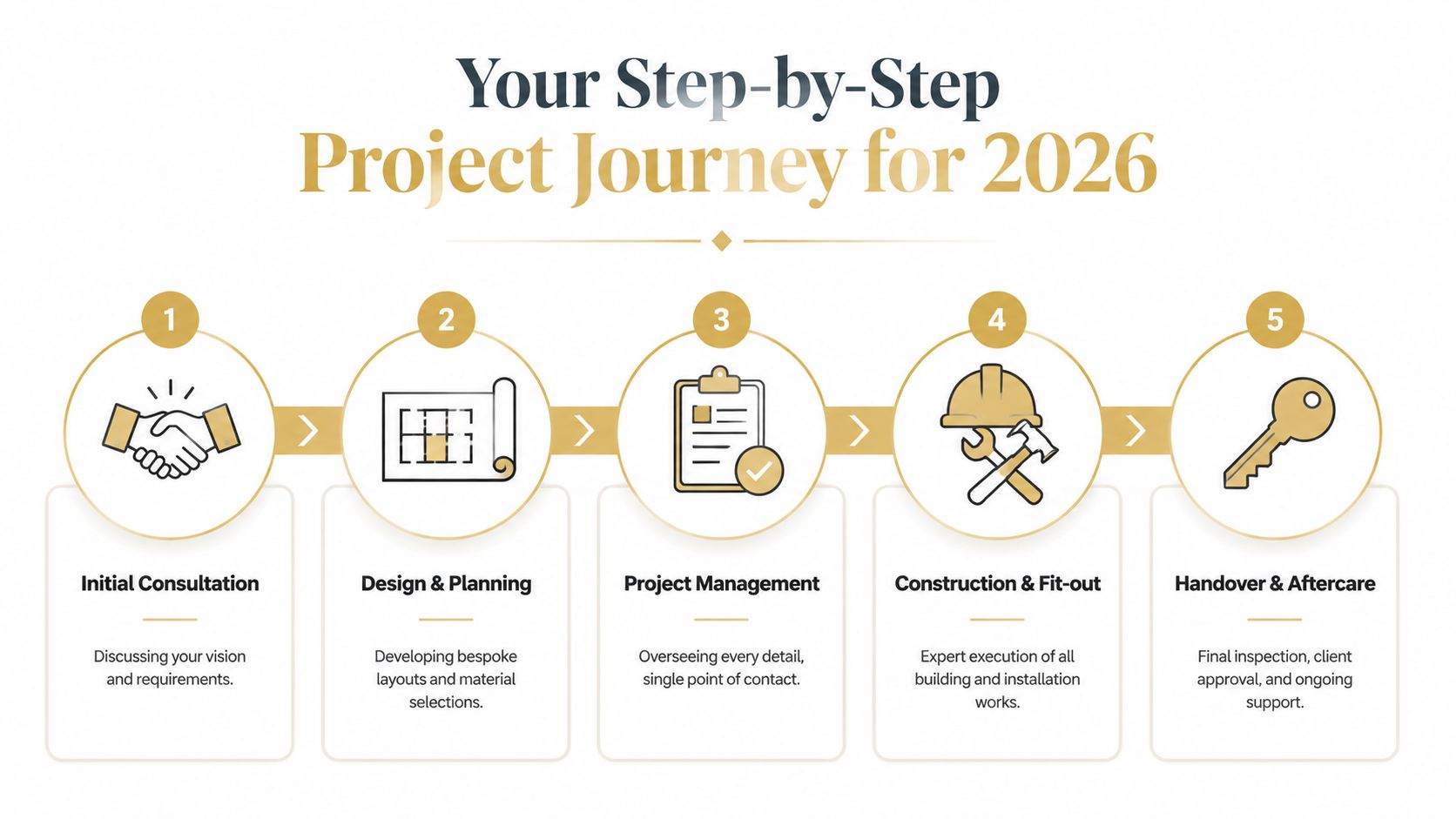
The smoothest refurbishments follow a clear route from brief to handover. That matters even more when the client is managing this kind of project for the first time. A tidy process reduces uncertainty and makes decisions easier at the right moment.
For businesses with teams spread across different sites, consistency helps. The same design-and-build structure that works in London also helps regional offices stay organised, especially when approvals, reporting lines, and timescales need to stay tight.
What happens first
Early stages are less about finishes and more about understanding the business properly.
Initial consultation
The first discussion usually covers what's not working now, what success looks like, how the office is used across the week, and what level of disruption is acceptable.Workplace review and space planning
This stage tests layouts against real behaviour. It looks at adjacency, privacy needs, circulation, storage, and capacity. A plan that looks good on paper still has to work on a busy Tuesday morning.Design development and visualisation
Once the layout is right, finishes, colours, materials, joinery, and feature elements can be developed. Visuals help clients judge proportion and tone before anything is built.
Good planning removes a lot of expensive indecision later.
What happens during delivery
Once the design is settled, the project becomes more technical and more logistical.
Quotation and scope confirmation
A clear cost breakdown matters here. Clients need to see what is included, what is provisional, and where choices might affect spend.Programme and sequencing
Live-site working, phased delivery, access windows, and noisy works are properly planned. If the office must remain operational, sequencing becomes central to success.Project management and installation
Joiners, decorators, flooring teams, electricians, partition installers, furniture suppliers, and specialist trades all need coordination. One point of responsibility keeps that manageable.Handover and aftercare
The final stage should include a proper review of finishes, snagging, operation of installed elements, and any follow-up support that helps the space settle in.
For businesses with links to regional hubs such as Bishop's Stortford, this joined-up method is often the difference between a calm delivery and a fragmented one.
A first major refurbishment can feel like a lot at the start. Once the project journey is laid out clearly, it becomes far easier to manage.
Budgeting and Timelines for Your Norfolk Project
Budget is usually the first concern, and rightly so. A refurbishment can range from a light refresh to a complex upgrade involving partitions, services, finishes, and specialist products. The sensible approach is to set priorities early so the budget goes where it has the strongest effect.
According to 2025 BCIS building cost information published by RICS, UK office refurbishment costs average between £250 and £500 per square metre. That figure can shift with location, the quality of the finish, and how much mechanical and electrical work is involved.
What affects cost most
The biggest cost drivers are usually:
Scope of works
Decoration and furniture changes are very different from new partitions, lighting alterations, and service upgrades.Specification level
Entry-level finishes keep spend under control. Premium finishes, bespoke joinery, and specialist glazing raise it.Building condition
Older offices often hide more unknowns, especially once ceilings, floors, or wall linings are opened up.Access and phasing
Working around live teams, restricted access, or out-of-hours programmes can add complexity.
| Specification Level | Typical Cost per sq m | Best For |
|---|---|---|
| Light refresh | £250 to £500 | Offices needing decoration, finishes updates, and selective improvements |
| Higher-spec refurbishment | Above the average range | Businesses seeking more extensive upgrades, premium finishes, or heavier services work |
How to think about programme
Timelines depend on scope, approvals, lead times, and whether the office stays occupied during the works. A simple refresh may move quickly. A more involved scheme needs longer for design sign-off, procurement, and staged installation.
What tends to slow projects down is late decision-making. Finish changes after orders are placed, layout changes after drawings are approved, and access restrictions that weren't agreed at the start all create drag.
The cheapest quote isn't always the lowest-cost project. Delays, omissions, and rushed changes usually show up later.
For office refurbishment norfolk projects, the most reliable budgets come from a measured survey, a settled brief, and a realistic view of what must happen while the business keeps running.
Navigating Planning and Building Regulations
Compliance is where many first-time refurbishment clients feel least confident. That's understandable. Building Regulations can look technical, but the practical point is simple. The office must be safe, energy-conscious, and capable of passing review without last-minute redesign.
This matters especially in older stock, mixed-use buildings, and city-centre premises where hidden issues can sit behind seemingly straightforward upgrades. Refurbishment is never just about what the finished office looks like. It's also about what sits behind walls, above ceilings, and along escape routes.
The rules that matter most
A useful local reference is this guidance on commercial office refurbishment in Norwich, which notes that Part B (Fire Safety) sets maximum travel distances for escape, typically 45m in a single direction in a sprinklered office. The same source also notes that non-compliance can lead to project delays and cost overruns of 15 to 20%, especially where older buildings contain issues such as unaddressed asbestos.
The same guidance highlights Part L (Conservation of Fuel and Power), which drives energy-efficient upgrades. A switch to LED lighting can achieve 50 to 60% energy savings, according to that Norwich refurbishment guidance.
How good teams avoid delays
The strongest projects deal with compliance early, not after the design is already fixed.
Survey first
Existing drawings are often incomplete or outdated. Measured surveys and condition checks reduce the chance of nasty surprises.Test escape routes against the layout
A good-looking plan can still fail if travel distances or door arrangements don't work.Check older materials carefully
Refurbishment in older offices needs a cautious approach, especially before demolition or intrusive works begin.Align services with the new use
New meeting rooms, denser occupation, and changed layouts can all affect lighting, ventilation, and power demands.
For projects in places such as Chelmsford, the regulations may feel routine to an experienced team, but they still need active management on every job. Compliance done properly doesn't just protect the programme. It protects the client from rework, rejection, and avoidable cost.
Choosing Your Partner and Seeing the Results
The right partner does more than deliver drawings or send trades to site. They bring structure, judgement, and enough practical experience to know when an attractive idea won't work well in a real office.
That matters because refurbishment is full of trade-offs. A cheaper finish may wear badly. A dense layout may look efficient but feel cramped within weeks. A contractor who only prices what's on the page may leave the client exposed when site conditions change.

What to look for in a refurbishment partner
A strong fit-out partner should offer:
Clear accountability
One lead team should own coordination, communication, and delivery.Transparent pricing
The quote should be readable, itemised, and honest about assumptions.Good questioning early on
If nobody asks how the office functions, the design probably won't solve the right problems.Realistic programme planning
Good teams don't just promise speed. They explain sequencing, lead times, and site constraints clearly.
For businesses operating near travel and commercial hubs such as Stansted, that level of control is often what keeps a complex programme manageable.
What a successful result usually looks like
The best finished spaces tend to share a few traits. They feel easier to move through. Noise is better controlled. Meeting spaces are more usable. The office looks more consistent because the design, services, and finishes were planned together rather than added in pieces.
There's also a wider brand effect. Once the space is complete, many businesses update welcome packs, signage, and leave-behind material so the physical workplace matches what clients receive off site. These ideas for printed marketing materials for businesses are useful when that final layer of presentation matters.
A good refurbishment should still feel like the same business. Just sharper, easier to use, and far more deliberate.
That's the result most facilities managers are aiming for. Not disruption for the sake of change. A workplace that finally supports the people using it every day.
Ready to transform your workspace? Speak to the GIBBSONN Interiors team today. If you're planning an office refurbishment, need bespoke pod solutions, or want practical interior support for your next project, Contact Us.