
Ever thought about how the actual walls, floors, and furniture in your office could give you a serious business advantage? What if choosing an environment friendly material for your next office update could slash your bills, attract top talent, and create a healthier, happier team? It’s not just a nice idea, it’s one of the smartest decisions you can make for 2026.
This is about creating a workspace that people genuinely love being in, a place that works as hard for your business as you do.
Table of Contents
- Why Your 2026 Workspace Needs to Be Greener
- What Exactly Is an Environment Friendly Material?
- The Real-World Benefits for Your Business and People
- Top Environment-Friendly Materials for Your 2026 Office
- Understanding Green Certifications (The Simple Way)
- Frequently Asked Questions
- Start Building Your Sustainable Workspace
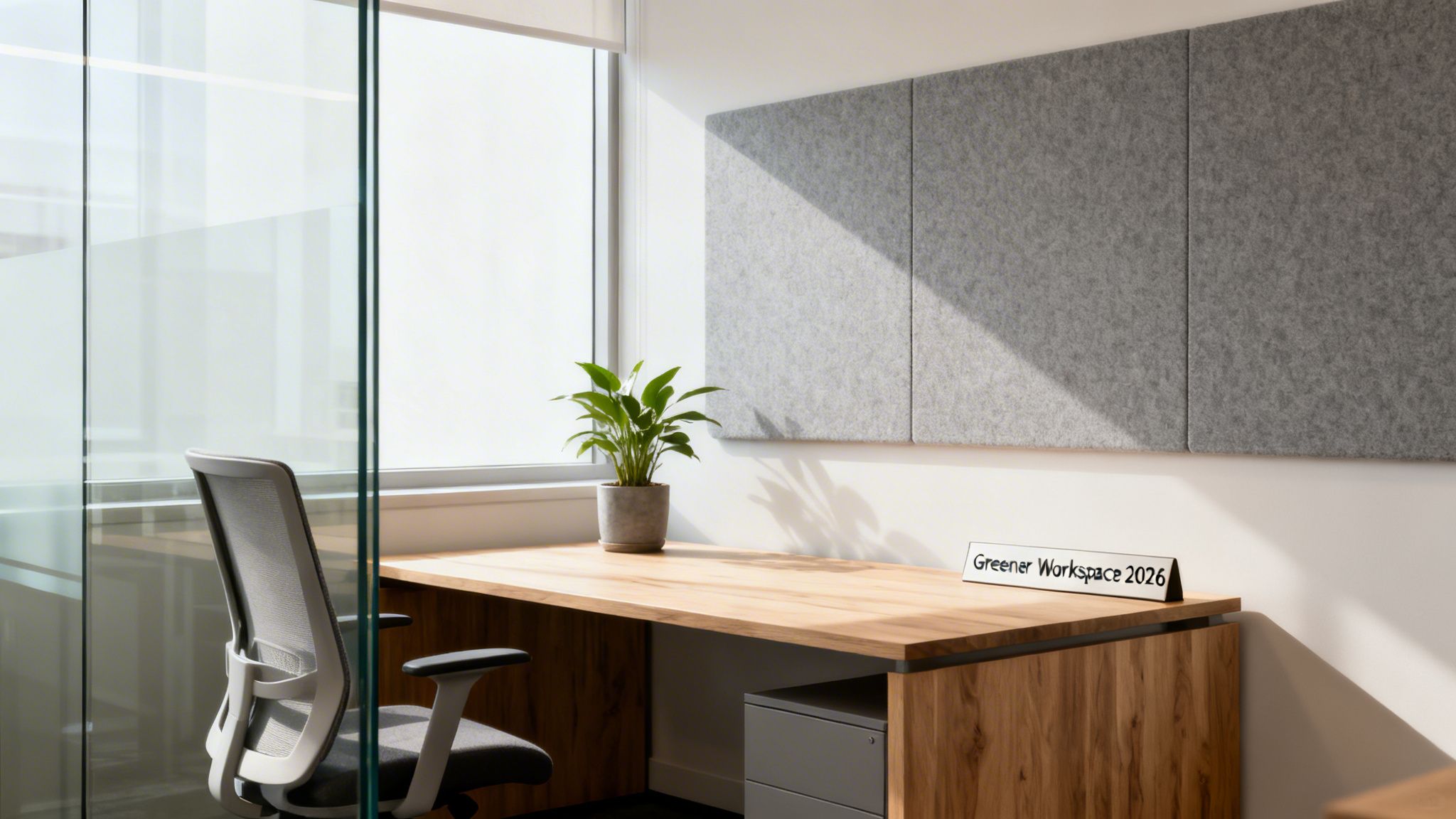
Your 2026 Greener Workspace Starts Here
When you’re planning an office refresh or a full fit-out for 2026, your mind is probably juggling budgets, timelines, and how to create a space that boosts productivity. But what if the very materials you build with could give you a powerful competitive edge? What if they could lower your energy bills, improve your team’s well-being, and genuinely impress clients and new talent?
This is exactly where specifying an environment friendly material comes into play. Far from being a niche concern, it’s now a central part of any modern, responsible business strategy. This guide is for forward-thinking business leaders, particularly in bustling areas like London, who want to build a workspace that’s not only stylish and functional but also fundamentally sustainable and healthy.
Let’s cut through the jargon. We’ll show you what really makes a material “green” and how these choices are now more accessible, affordable, and visually stunning than ever before.
What Is Driving the Shift to Greener Workspaces for 2026?
It’s not one single thing but a perfect storm of factors pushing businesses towards more sustainable practices. You’ve got rising employee expectations, real cost savings, and a much sharper awareness of corporate responsibility all coming together at once. Put simply, a greener office is now seen as a better office, for people, for the planet, and for profit.
The demand is undeniable. A 2023 report revealed that a massive 71% of global consumers had recently bought a product specifically because its packaging was sustainable. That same mindset has walked straight out of the supermarket and into the workplace. Your employees and clients now expect the companies they work with to share these values.
“Making sustainable choices is no longer just about feeling good, it’s about being smart. It impacts your brand, your running costs, and your ability to attract the best people.”
Why Environment Friendly Materials Matter Now
For businesses across Essex and Hertfordshire, the benefits of choosing sustainable materials for an office fit-out are too good to ignore. Let’s break down exactly why this is such a critical consideration for your next project, whether it’s a minor refresh or a major overhaul.
Here’s a quick snapshot of the key advantages.
Quick Look: Why Environment Friendly Materials Matter for 2026
| Benefit Area | What It Means for Your Business |
|---|---|
| Financial Savings | Lower energy bills from better insulation and lighting. Less money spent on replacing durable, high-quality materials over time. |
| Employee Wellbeing | Improved air quality from low-VOC products reduces health issues. Better acoustics cut down on distracting noise and stress. |
| Brand Reputation | Shows clients, partners, and future recruits that you’re a modern, responsible company. Helps you stand out in a crowded market. |
These aren’t just abstract ideas; they are real, measurable outcomes.
Whether you’re planning a full fit-out in a competitive commercial hub like Braintree or simply updating your current space, understanding these benefits is the first step. Now, let’s dive deeper into what these materials are and how you can actually use them.
What Exactly Is an Environment Friendly Material?
You hear the term ‘environment friendly material’ a lot these days, but what does it actually mean for an office fit-out? It’s not just a buzzword. It’s a complete shift in how we think about the spaces we work in.
Basically, an environment friendly material is any product chosen for having a smaller negative impact on our planet compared to the usual alternative. It’s about making smarter, more responsible choices for everything from your walls and floors to the furniture your team uses every day.
This means looking beyond the price tag or the colour swatch and understanding the whole story of a material, what we in the industry call its ‘lifecycle’.
The Lifecycle of a Material
To really get what makes a product sustainable, you have to trace its entire journey. It’s a bit like being a detective for building materials, uncovering clues at every stage to see if it’s had a ‘good life’ from creation to disposal.
We ask a few key questions to separate the genuinely sustainable from the merely “greenwashed”:
- Where did it come from? Was it harvested from a responsibly managed source, like timber from a certified forest? Or was it extracted in a way that caused serious damage to the environment?
- How was it made? We look at the manufacturing process. Did it use huge amounts of energy and water, or did it release harmful pollutants into the air and local rivers?
- How does it behave in your office? Once installed, does the material release harmful chemicals, known as Volatile Organic Compounds (VOCs)? This is a huge factor for indoor air quality and the long-term wellbeing of your staff.
- What happens when you’re done with it? At the end of its time in your office, can it be easily recycled, reused for another project, or will it just sit in a landfill for centuries?
Answering these questions honestly is how we build genuinely responsible and healthy workspaces for our clients, from bustling city centres to business parks in Chelmsford.
“A truly environment friendly material considers its impact from beginning to end, creating healthier spaces for people and a lighter footprint on the planet.”
Practical Examples in the Office
This might sound complex, but seeing it in practice makes it clear. Let’s compare some common choices you’d face during a typical office refurbishment.
| Material Type | Traditional Choice | Environment Friendly Alternative |
|---|---|---|
| Acoustic Panels | Foam or virgin polyester panels | Panels made from recycled PET plastic bottles |
| Paint | Standard paint with high VOCs | Low-VOC or zero-VOC paint |
| Flooring | Vinyl flooring made from new plastics | Carpet tiles made from recycled fishing nets |
The crucial thing to realise is that the environment friendly alternatives aren’t just a compromise. In our experience, they often perform better and add more value.
For instance, those acoustic panels made from recycled PET are incredibly effective at dampening noise in a lively, open-plan office. And low-VOC paints are essential for creating excellent indoor air quality, which directly impacts staff health and productivity. This thoughtful approach is fast becoming the standard for forward-thinking companies across Hertfordshire.
By choosing materials with a better lifecycle story, you’re not just making a sustainable choice for the planet. You’re investing in a higher quality, healthier, and more inspiring workspace for your people.
The Real-World Benefits for Your Business and People
Choosing environment friendly materials for your office fit-out goes far beyond a simple box-ticking exercise. It’s a strategic decision that delivers real benefits, influencing everything from your running costs to your team’s day-to-day happiness. This isn’t just about being green; it’s about building a smarter, more resilient, and genuinely caring workspace.
For your business, the financial argument for sustainable materials is now too strong to overlook. Making intelligent choices here can lead to significant savings over the lifetime of your office.
“Switching to sustainable materials is no longer about compromise. It’s about gaining a competitive edge through lower running costs, a stronger brand, and a healthier, more productive workforce.”
Boosting Your Bottom Line and Your Brand
One of the most immediate financial gains comes from improved energy efficiency. High-performance insulation, specialised window glazing, and even certain types of partitions can drastically cut down your reliance on heating and cooling. This translates directly into lower utility bills, month after month. You can dive deeper into this in our guide on the running cost of air conditioning.
Beyond energy, many sustainable materials are simply built to last. Opting for high-quality, durable products means spending less time and money on maintenance and replacements throughout your lease. It’s this focus on long-term value that’s driving huge growth in the UK’s green building materials market.
The numbers speak for themselves. According to a market analysis by Precedence Research, the UK green building materials market was valued at £12.36 billion in 2024 and is projected to nearly double, reaching an estimated £24.50 billion by 2033. This incredible expansion shows that an environment friendly material is fast becoming the new industry standard.
Of course, the benefits aren’t just financial. Embracing sustainability strengthens your brand, sending a clear signal to clients, partners, and potential new hires that you are a responsible, forward-thinking company. In a crowded marketplace, this can be a powerful differentiator, helping you attract and retain the best talent.
Creating a Healthier, Happier Workplace for Your Team
While the business case is strong, the positive impact on your people is where sustainable design truly shines. A healthy, happy team is a productive one, and the materials you surround them with play a fundamental role in creating that environment.
Here’s how an environment friendly material can directly improve employee wellbeing:
-
Better Air Quality: Traditional building products like certain paints, glues, and manufactured woods can release Volatile Organic Compounds (VOCs). These chemicals are known to cause headaches, irritation, and general tiredness. Choosing low-VOC or zero-VOC alternatives creates cleaner indoor air, which can reduce sick days and help everyone feel more focused.
-
Improved Acoustics: Open-plan offices are fantastic for collaboration but can quickly become noisy and distracting. Acoustic panels made from recycled materials, like PET bottles, are brilliant at absorbing excess sound. This helps reduce stress and allows people to concentrate, which is vital for deep work or private conversations.
-
Enhanced Comfort: Natural materials and superior insulation work together to create a stable indoor climate. By getting rid of those distracting hot and cold spots, you create a far more comfortable and pleasant place to work.
This focus on wellbeing is no longer a “nice-to-have”; it’s a key part of modern office design. When you invest in a healthier environment, you’re showing your team they are valued. That simple act boosts morale, strengthens loyalty, and makes for a more satisfying place to spend the working day.
Top Environment-Friendly Materials for Your 2026 Office
So, you’re on board with the idea that sustainable choices are smart business choices. But what does an environment friendly material actually look like when you’re fitting out a modern office? It’s not about compromising on style or performance. It’s about being deliberate and choosing innovative products that look fantastic, work brilliantly, and simply have a better story behind them.
Let’s walk through some of the standout options available for your 2026 office project, from the big structural pieces right down to the final finishing touches.
Sustainably Sourced Timber
Timber is a timeless choice, bringing a natural warmth and texture to any workspace. When it’s sourced responsibly, it’s one of the most sustainable building materials out there. In fact, the UK Government is actively encouraging its use, fully recognising timber’s massive potential for creating greener buildings.
This high-level support is driving some fantastic innovation right here in the UK. The government’s Timber in Construction Roadmap, for instance, is helping to build up local supply chains for high-performance wood products. This means UK companies can now produce engineered timbers like glulam beams, making truly local and sustainable construction a commercial reality.
Using products like cross-laminated timber (CLT) for structural work or as a stunning feature wall doesn’t just look good, it actively locks away carbon for the entire life of the building.
Recycled PET Acoustic Panels
We all know open-plan offices are great for collaboration, but noise can be a huge drain on productivity. This is exactly where acoustic panels made from recycled PET plastic bottles come in. Each panel can divert hundreds of single-use plastic bottles from landfill, transforming waste into a genuinely high-performance product.
These panels are also incredibly versatile. You can use them to line meeting rooms, create dedicated quiet zones, or even build standalone pods from innovative manufacturers like Vetrospace or BlockO. They’re available in a massive range of colours and shapes, so you can get a handle on sound without ever compromising your design vision.
When you start making choices like these, the benefits quickly add up, impacting your costs, your brand, and your people.
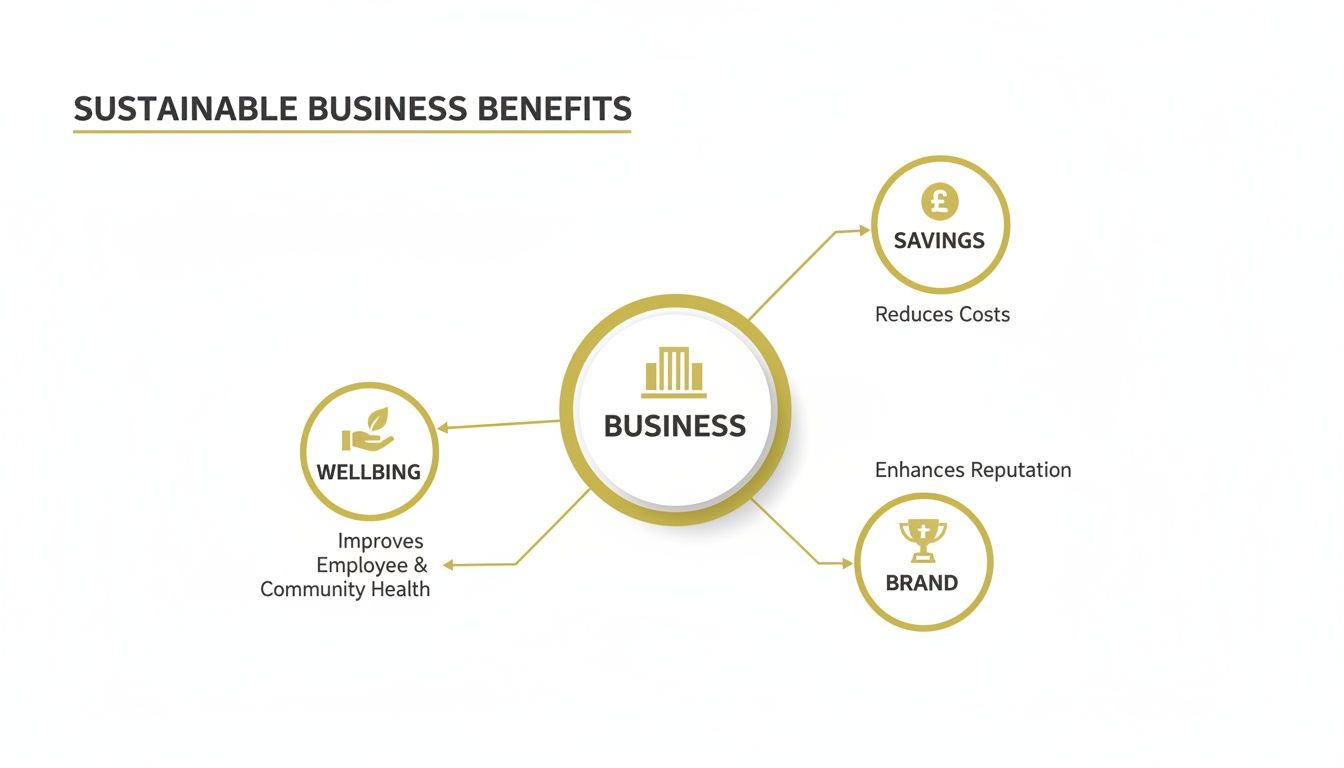
It just goes to show that opting for an environment friendly material is more than a green initiative; it’s a complete business strategy that creates a positive cycle of financial, cultural, and environmental wins.
Other Key Materials to Consider for 2026
Beyond timber and acoustics, there’s a whole world of sustainable options ready for your office refurbishment. Whether you’re planning a full refit in a location like Bishop’s Stortford or just upgrading a few key areas, there’s almost always a greener alternative.
A fantastic and easy place to start is with your finishes. Always make a point to specify low-VOC (Volatile Organic Compound) paints, glues, and sealants. This one simple switch makes a dramatic difference to your indoor air quality, creating a healthier, more pleasant environment for your team from the moment they walk in.
To give you a clearer picture of the possibilities, we’ve put together a straightforward comparison of some of the most popular materials we work with.
Comparing Popular Environment-Friendly Materials for 2026
Here’s a quick look at some common sustainable materials to help you decide what might be right for your office project.
| Material Type | Best Use in an Office | Key Benefit |
|---|---|---|
| Recycled Glass | Worktops, partitions, decorative splashbacks | Creates a unique, high-end look while diverting waste from landfill. |
| Low-VOC Finishes | Paint, glues, flooring sealants | Improves indoor air quality by reducing harmful chemical emissions. |
| Low-Carbon Concrete | Flooring, structural elements | Significantly reduces the huge carbon footprint of traditional concrete production. |
Thinking about how these could fit into your own workspace? It helps to get expert guidance, and you might find our deep dive on creating a sustainable office space a useful next step.
From stunning recycled glass countertops in a staff kitchen to innovative low-carbon concrete floors in a reception area, the possibilities are genuinely exciting. The key is to partner with a team that really understands the materials and can specify the right solutions to meet your aesthetic vision, budget, and sustainability goals.
Understanding Green Certifications (The Simple Way)
Once you start digging into environmentally friendly materials for your office, you’ll be hit with a wall of acronyms and logos. Terms like FSC and Cradle to Cradle will pop up, and you’ll hear your fit-out team talking about things like BREEAM and EPDs. So, what’s it all about?
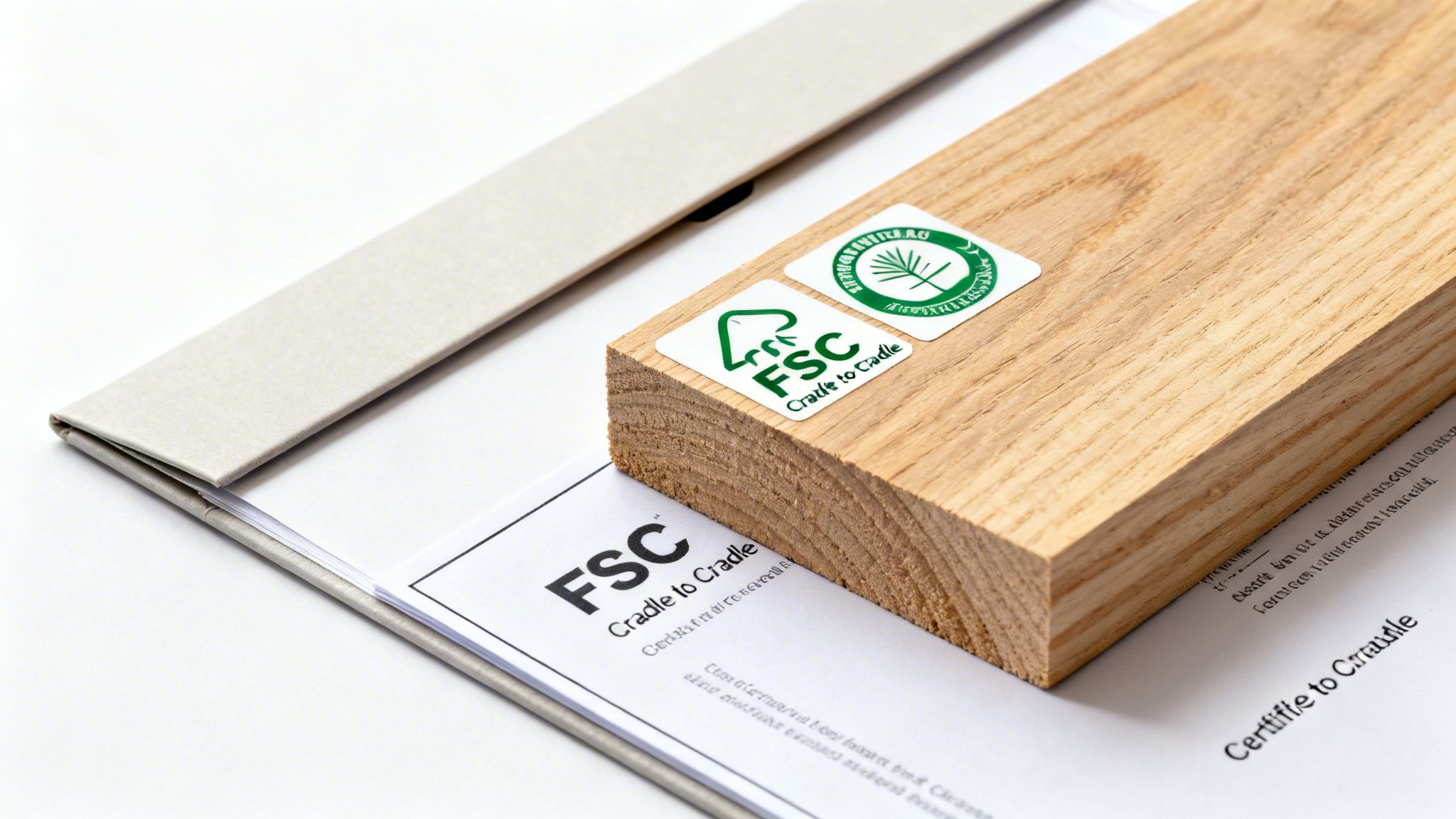
Think of them as a quality mark for sustainability. They are simply independent checks that prove a material lives up to its green claims. They cut through the marketing fluff and give you clear, trustworthy information, so you can feel confident in the choices you’re making for your fit-out.
“Green certifications are your guarantee. They provide independent proof that a material meets high environmental and ethical standards, so you know you’re making a genuinely responsible choice.”
Without these official stamps of approval, it’s all too easy to fall for ‘greenwashing’, where a product is marketed as eco-friendly without any real substance to back it up. Certifications are your best defence against that, ensuring total transparency and accountability from suppliers.
Key Material Certifications for Your 2026 Office
When you’re specifying materials, a few key certifications will appear time and time again. Getting to know what they mean will empower you to have much more productive conversations with your fit-out partner. It’s an essential piece of the puzzle, whether you’re working on a fast-paced office in Cambridge or a new corporate headquarters in Essex.
Here are the main ones to have on your radar:
- FSC (Forest Stewardship Council): This is the gold standard for any wood or paper product. If you see the FSC logo, it means the timber for your new partition or desk came from a responsibly managed forest, one that protects wildlife and is managed for the long haul.
- Cradle to Cradle Certified®: This one is incredibly forward-thinking. It goes beyond just sustainable sourcing and looks at a product’s entire lifecycle, checking its safety for people and the planet, and its potential for a circular future. A Cradle to Cradle certified product is designed to be completely and safely reused or recycled, generating zero waste.
- Environmental Product Declarations (EPDs): Think of an EPD as a nutritional label for a building product. It’s a transparent, independently verified report that details a product’s environmental impact across its entire life, from raw material extraction right through to disposal.
These labels apply directly to the materials themselves. By choosing products that carry them, you’re laying the foundation for a workspace with a genuinely lower environmental impact.
How Certifications Impact Your Whole Building in 2026
Beyond the materials you choose, there are certifications that assess your entire office fit-out project. Earning one is a powerful way to demonstrate your company’s commitment to creating a truly top-tier, sustainable workspace.
The two you’ll most likely encounter in the UK are BREEAM and LEED.
-
BREEAM is the world’s leading sustainability assessment method for buildings. Projects are scored against a tough set of criteria covering everything from energy and health to materials and waste. Using certified products earns you crucial credits towards a higher BREEAM rating, like ‘Very Good’ or ‘Excellent’.
-
LEED is another globally recognised green building certification system. It works in a similar way to BREEAM, using a points-based system to rate a building’s overall environmental performance. Again, your material choices are fundamental to achieving a high LEED score.
Achieving a high BREEAM or LEED rating for an office, perhaps one near a major hub like Stansted, is a fantastic accomplishment. It sends a clear, powerful message about your brand’s values and can even boost your property’s value. Choosing a certified environment friendly material is the first, essential step on that journey.
Frequently Asked Questions
When clients start exploring an environment friendly material for their office fit-out, a few questions nearly always come up. It’s completely natural to be curious about the costs, the style, and frankly, how to know if you’re making a genuinely ‘green’ choice.
Let’s walk through some of the questions we hear most often and clear a few things up.
Are Environment Friendly Materials More Expensive?
This is probably the biggest myth we have to bust, and the short answer is: not necessarily. While some brand-new sustainable technologies might carry a higher initial price, many eco-conscious materials are now on par with, or even cheaper than, their traditional counterparts.
The real trick is to look beyond the upfront invoice and think about the total cost of ownership. For instance, a higher-spec, energy-efficient insulation might cost a bit more to install. But think about the big savings you’ll see on your heating and cooling bills, year after year. Choosing durable, long-lasting materials also means you’re spending far less on repairs and replacements down the line. We can help you weigh these factors and find options that deliver fantastic long-term value.
Will Using These Materials Compromise on Style?
Absolutely not. In fact, we find the opposite is often true. The idea that ‘eco’ means sacrificing style is long gone. Today, sustainable materials come in a huge range of high-quality, stylish, and contemporary finishes.
You can have sleek partitions made from recycled glass or stunning reclaimed wood features that bring incredible warmth and personality to a space. Modern acoustic panels, often made from recycled plastics, are available in virtually any colour you can imagine. Many designers working on projects in areas like Milton Keynes find that the unique textures and backstories of these materials actually add a premium feel that you just don’t get with standard off-the-shelf products.
“Sustainable design is not about sacrifice. It’s about smart, stylish choices that create beautiful, functional, and responsible spaces.”
How Do I Know if a Material Is Genuinely Eco Friendly?
This is a brilliant and crucial question. With so much ‘greenwashing’ out there, the best way to be certain is to look for independent, third-party certifications. These labels aren’t just marketing fluff; they provide transparent, verified proof of a product’s environmental credentials.
A few key certifications to keep an eye out for are:
- FSC for any timber or wood-based products, ensuring they come from responsibly managed forests.
- Cradle to Cradle for products designed to be part of a circular economy, meaning nothing goes to waste.
- Environmental Product Declarations (EPDs) which give you a detailed breakdown of a product’s lifecycle impact.
Any partner worth their salt will work with reputable suppliers and should be able to provide all the documentation you need. Never hesitate to ask for the proof, it’s your right to feel confident in the materials you choose for your workspace.
Let’s Start Building Your Sustainable Workspace
Bringing a workspace to life that’s not only productive and healthy but also genuinely kind to the planet is more achievable than you might think. It’s about making smart choices, not sacrifices.
Whether you’re planning a complete office transformation in Hertfordshire or simply looking to integrate clever, bespoke pod solutions, our team has the hands-on experience to guide you. We specialise in turning the principles of sustainable design, using the best environment friendly material, into a practical reality for your business.
Ready to transform your workspace? Speak to the Gibbsonn Interiors team today.
Let’s have a conversation about how we can build an inspiring and sustainable environment that works for your team and your brand.
If you’re interested in digging deeper, a great next step is to see how we approach office furniture recycling and how it fits into the bigger picture of a circular economy. Together, let’s make your 2026 workspace your best one yet.