
A Practical Guide to Modular Office Furniture for 2026
Table of Contents
- What Exactly Is Modular Office Furniture?
- The Real-World Benefits of a Modular Workspace
- What Are the Building Blocks of a Modular Office?
- How to Plan Your Modular Office Space
- Our Design and Installation Process Explained
- Sustainability and the Long-Term Value of Modular Systems
- Frequently Asked Questions About Modular Furniture
Imagine your office wasn’t set in stone, but built with something more like LEGO blocks. That’s the simple idea behind modular office furniture. It’s a system of adaptable, freestanding pieces like desks, storage, and pods that you can move, reconfigure, or add to as your business changes. For any modern business, this is a real game-changer.
What Exactly Is Modular Office Furniture?
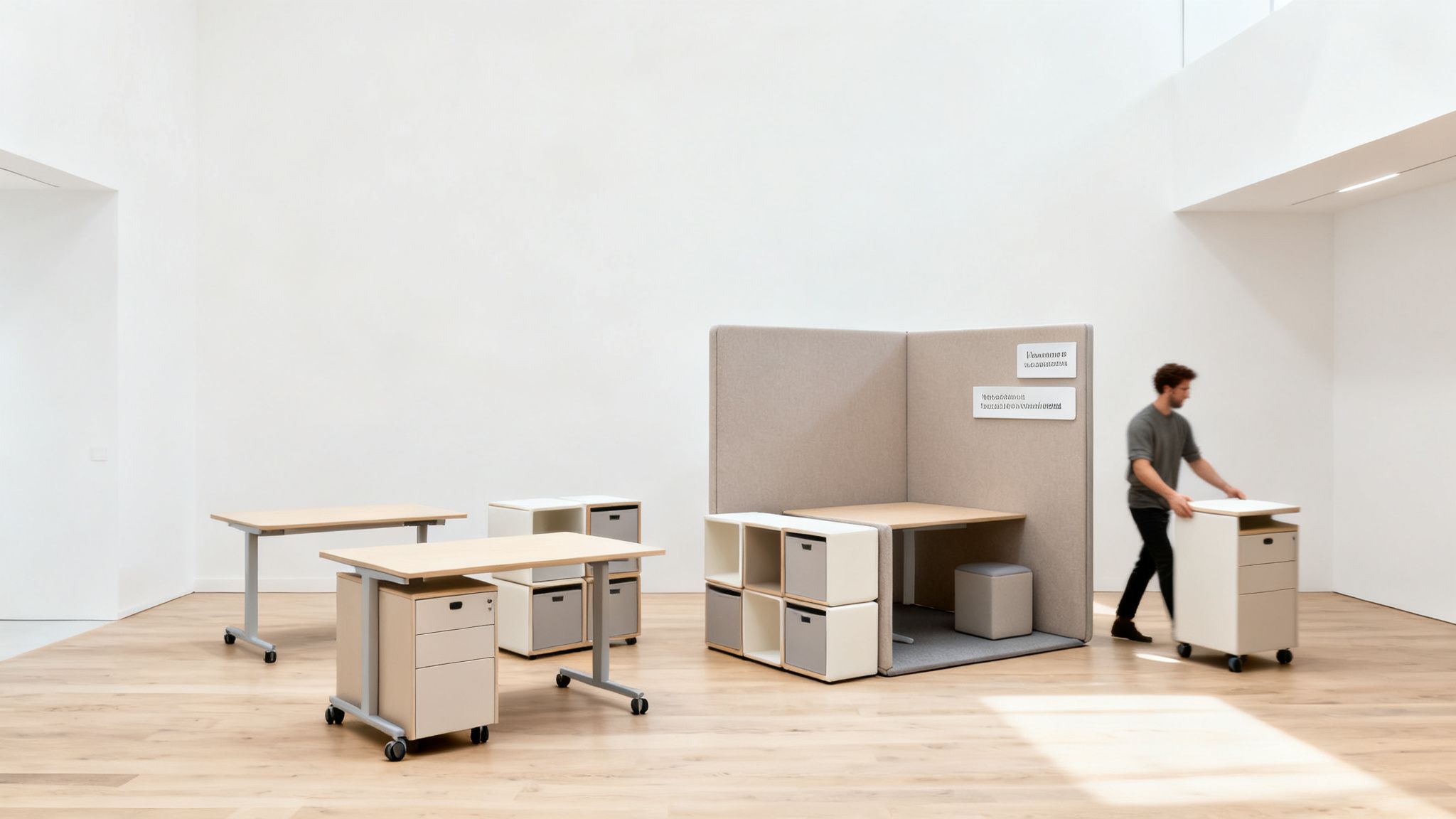
Unlike the traditional, fixed furniture of the past, which was often heavy and a nightmare to change, modular designs are all about being agile. Think of it less as a single purchase and more as a collection of individual parts designed to work together in almost endless combinations.
This approach means you can transform a wide-open collaborative area into a bank of focused, individual workstations almost overnight, without kicking off a major and disruptive fit-out project. For any company dealing with hybrid working or planning for future growth, this kind of built-in adaptability is priceless.
Why It Matters for Your Business
The real power of modular office furniture is that it grows and shifts right alongside you. A small start-up in Hertfordshire, for example, can begin with a simple, core setup and then seamlessly add new desks, acoustic partitions, or storage units as the team expands.
This solves a lot of the common headaches that hold businesses back:
- Changing Team Sizes: You can add or remove workstations with ease, without tearing up the entire office layout.
- New Project Needs: Need to create a temporary project zone or a pop-up collaborative hub? It can be done in hours, not weeks.
- Shifting Work Styles: Effortlessly adapt your space to support the natural rhythm of work, from quiet, deep-focus tasks to energetic team brainstorming sessions.
For businesses in bustling areas like Bishop’s Stortford, making the most of every single square foot is absolutely critical. Modular systems empower you to use your space far more intelligently.
“Modular furniture isn’t just about desks and chairs; it’s about creating a workplace that can react and adapt as quickly as your business does.”
To really see the difference, it helps to put modular systems side-by-side with the traditional furniture we’re all used to.
Modular vs Traditional Furniture at a Glance
This quick comparison table highlights the key differences and shows why so many forward-thinking organisations are making the switch.
| Feature | Modular Furniture | Traditional Furniture |
|---|---|---|
| Flexibility | Highly adaptable and easily reconfigurable. | Fixed, static, and permanent. |
| Installation | Quick to install, with minimal business disruption. | A slow process that often requires construction. |
| Cost | A smart, scalable long-term investment. | High upfront cost and very expensive to alter. |
Ultimately, choosing modular furniture is an investment in a workspace that not only serves your team today but is also ready for whatever tomorrow brings. It’s a much smarter way to think about your office environment, turning it from a static overhead into a dynamic, valuable asset.
The Real-World Benefits of a Modular Workspace
It’s one thing to talk about modular furniture in theory, but what really matters are the real results it delivers on the ground. For the business owners and office managers we work with across Hertfordshire, the benefits are practical, direct, and make a real difference to the balance sheet and team morale.
So, let’s move past the concepts and look at the key advantages a modular approach brings to your workspace.
Unmatched Flexibility for a Changing Business
The single biggest win with modular is its sheer adaptability. Businesses are living, breathing things. Teams grow, projects pivot, and new working styles emerge. Modular furniture means your office can evolve right alongside you, without the headache and cost of a major overhaul.
Picture this: you need to create a new department. In a traditional setup, you’d be looking at builders, dust, and serious disruption. With a modular system, you can reconfigure existing partitions and desks to carve out a dedicated new zone in a matter of hours. Your physical space stops being a limitation and starts being an asset.
Serious Cost-Effectiveness Over Time
While the upfront investment might look similar to traditional furniture, the long-term savings are where modular truly shines. Think about the costs of an office move or even a simple internal shuffle. Modular systems are designed to be taken apart, moved, and put back together, saving you from buying new furniture every single time your needs change.
This is a game-changer when it comes to end-of-lease dilapidations. Being able to easily remove partitions and workstations can slash your refurbishment bill. For businesses in high-opportunity areas like Stansted and Chelmsford, that’s a huge financial plus. It’s no surprise the UK Furniture & Modular Offices Market is valued at USD 15 billion; these solutions are now central to smart business planning. Some reports even show productivity can jump by up to 25% in these adaptable spaces. You can read the full research about the UK modular offices market to dig deeper into the trends.
“The true value of modular isn’t just in what it costs today, but in what it saves you tomorrow. It’s an investment in future agility.”
Faster Deployment with Less Disruption
Time is money. A lengthy office fit-out means downtime and lost productivity, period. Modular installation is drastically faster than traditional construction because the components are prefabricated. They arrive on-site ready for a clean, efficient assembly.
This approach minimises the noise, dust, and general chaos that plagues typical refurbishments. For our clients in places like London, this means their teams can carry on with their work with very little interruption. This is a massive operational advantage.
Better Acoustics and Happier Staff
Open-plan offices are brilliant for collaboration but notorious for noise and a lack of privacy. This is where modular solutions like acoustic meeting pods and booths really come into their own. They can be dropped into an existing layout to create instant, much-needed quiet zones.
These are perfect for:
- Focused Work: A sanctuary for tasks that demand deep concentration.
- Private Calls: Letting staff handle sensitive client calls without an audience.
- Small Meetings: Quick touchdown spaces for team huddles or video conferences.
This has a direct impact on employee wellbeing. When people have control over their environment and can find the right space for the task at hand, they’re less stressed and more engaged. A well-designed modular office with good ergonomic options shows you’re invested in your team’s success, which is vital for keeping top talent in a competitive market.
What Are the Building Blocks of a Modular Office?
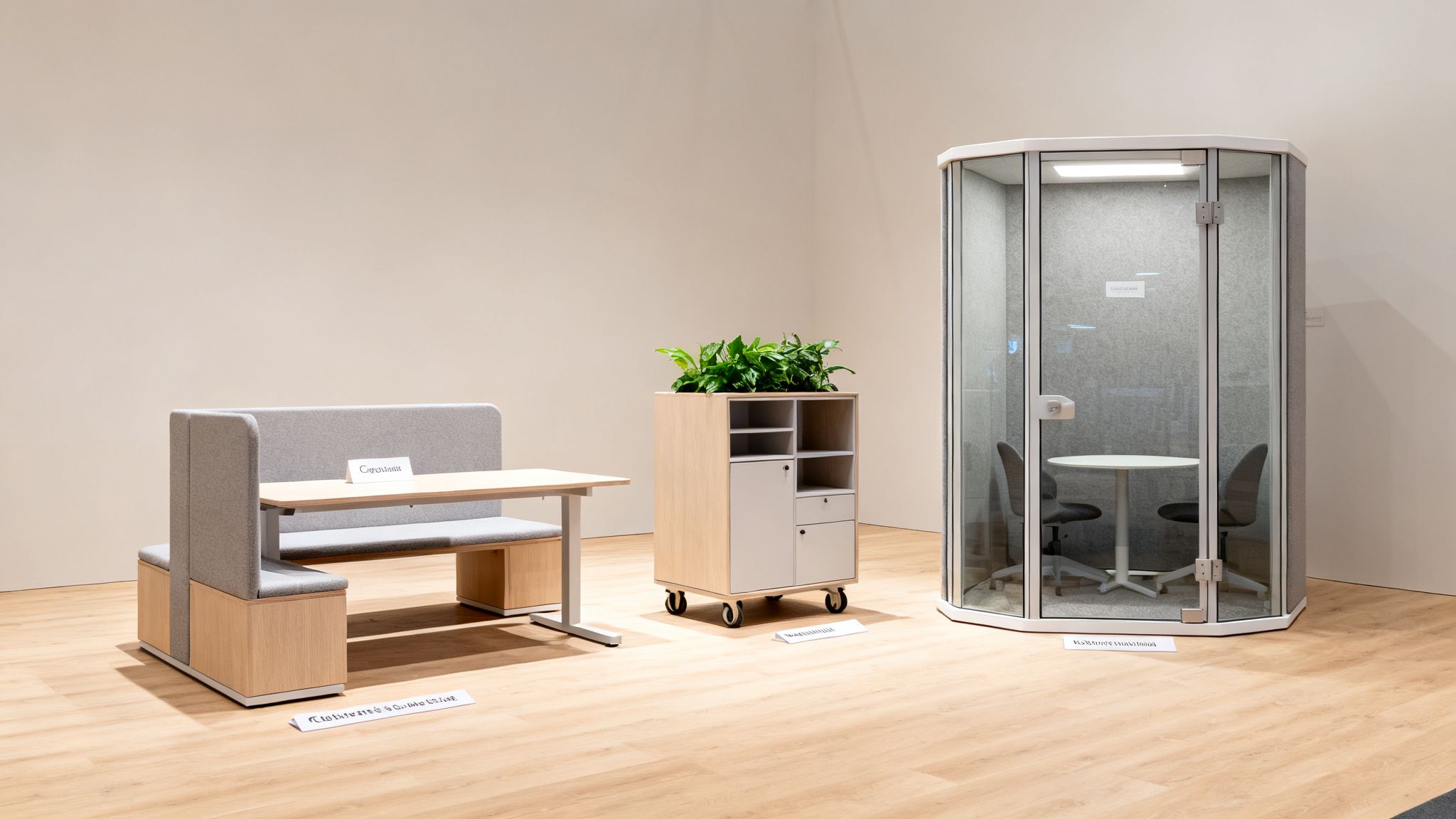
Now that you’ve got a feel for the benefits, let’s look at the actual building blocks you can use to assemble a truly agile office. Think of modular office furniture as a set of ingredients; each part has a specific purpose, but they all work together to create the perfect recipe for your team.
The real beauty here is that you can pick and choose what you need for today, knowing you can always add, subtract, or reconfigure things down the line. Let’s break down the main categories to help you picture what’s possible in your workspace.
Modular Desking and Workstations for 2026
Desks are the heart of most offices, and this is where modularity really shines. Modular desks are designed to be linked together, arranged in clusters, or used as standalone units, giving you complete command over your floor plan. They’re perfect for carving out different work environments all within the same open space.
You can easily set up:
- Benching Systems: Long, connected rows of desks that are brilliant for sparking conversation and teamwork.
- Hot-Desking Hubs: Unassigned, flexible workstations ideal for supporting a hybrid team that comes and goes.
- Focused Clusters: Small groups of desks arranged to give individuals a bit more personal space for deep work.
Because they’re so easy to reconfigure, you can adapt your layout as teams grow or projects shift, all without having to buy a whole new set of furniture. It’s a practical and cost-effective solution for businesses that need to make every square foot count.
Integrated and Mobile Storage Solutions
Let’s be honest, clutter is the enemy of productivity. Modular storage is the smart way to fight back. Forget those big, heavy filing cabinets that are bolted to one spot; modern modular storage is designed to be an active part of the office landscape.
Think of mobile pedestals on wheels that can be tucked under any desk, or low-slung cabinets that double as space dividers between teams. You can also find shelving units that seamlessly attach to desking systems, keeping essentials within arm’s reach while maintaining a clean, organised, and professional look.
“The best workspaces don’t just happen; they are built from smart, flexible components that support the people using them.”
Acoustic Meeting Pods and Booths
This is where modular systems truly show their strength, especially in the buzz of an open-plan office. Acoustic pods are essentially self-contained, sound-insulated rooms that you can simply drop into your existing layout. No construction required.
They create instant pockets of privacy and quiet, solving the single biggest complaint about open offices: noise. We partner with leading manufacturers like Vetrospace, BlockO, and Framery to deliver high-quality pods perfect for confidential calls, video conferences, or focused one-to-one meetings. If you’re exploring ways to bring more focus into your office, you might find our guide on how to choose the right office meeting pods for 2026 helpful.
Flexible Partitioning Systems
Sometimes you just need to create distinct zones without the permanence (and expense) of building walls. Modular partitioning systems are the answer. These can range from simple fabric screens that clip onto desks to elegant floor-to-ceiling glass walls that look like they’ve always been there.
Modern glass partitions, for instance, can define separate areas like meeting rooms or private offices while keeping that open, light, and airy feel everyone loves. Best of all? They can be taken down and moved if you need to redesign your layout in the future, offering a level of flexibility that traditional stud walls simply can’t match.
How to Plan Your Modular Office Space
So, you can see the potential of modular office furniture. Now for the exciting bit: planning how to make it work in your space. This isn’t just a shopping exercise for desks and chairs; it’s about crafting an environment that genuinely supports your team and helps your business hit its goals.
A truly successful modular plan kicks off with a simple question: “How does my team actually get things done?” Step back and watch the daily rhythm of your office. Are people desperate for quiet corners to concentrate, or are they constantly hunting for a free spot to huddle up and collaborate? Nailing this is the absolute foundation of a brilliant workspace.
Start with Your Team’s Needs
Before you even glance at a floor plan, you need a solid grasp of the different activities happening in your office day-to-day. This is the very heart of effective workplace consultancy.
Think about these key activities:
- Focus Work: Do your people have quiet, distraction-free zones for tasks that demand real concentration?
- Collaboration: Are there enough places for teams to gather, brainstorm, and hash things out, both formally and on the fly?
- Social Interaction: Where can your team build those crucial connections? A well-placed coffee point or a comfortable breakout lounge can make all the difference.
- Private Conversations: Can staff easily find a private spot for a confidential call or a one-to-one chat?
Understanding these behaviours lets you map out a floor plan with the right blend of zones, making sure everyone has the environment they need to do their best work.
Think About Tomorrow, Not Just Today
One of the biggest traps in office design is planning only for the here and now. The real magic of modular office furniture is its ability to change with you. When you’re planning, you have to be thinking about the future.
Ask yourself what the company might look like in three to five years. Are you expecting the team to grow? Could your ways of working shift? A future-proof design means picking a system you can easily reconfigure, add to, or scale back as your business evolves. This kind of forward-thinking saves an enormous amount of time and money down the line.
The UK office furniture market, which includes these incredibly flexible modular solutions, hit USD 2.2 billion in 2024 and is on track to reach USD 3.3 billion by 2033. That growth is fuelled by real savings; modular systems can slash reconfiguration costs by up to 40% compared to traditional construction. You can discover more insights about the UK office furniture market to get the full picture.
“A great office plan isn’t a rigid blueprint; it’s a flexible framework that empowers your team to thrive, no matter what changes come your way.”
Turning Your Vision into a Practical Layout
This is where it all comes together. At Gibbsonn Interiors, our job is to take your vision and your team’s real-world needs and translate them into a practical, hard-working floor plan. We map out how people will move through the space, ensuring everything flows naturally and efficiently. For our clients in places like Cambridge, making every square metre count is absolutely vital.
Our process ensures your new modular office isn’t just about looking good, but about high-level function. By carefully considering everything from acoustics and lighting to foot traffic, we create a balanced environment that boosts both productivity and wellbeing. You can learn more about our approach in our guide to creating an effective office layout design.
Our Design and Installation Process Explained
Bringing a modern, modular office to life might seem like a huge task, but our design and build process makes it feel anything but. We’ve refined it to be straightforward and completely stress-free. From the first chat to the final handover, we handle every detail, acting as your single point of contact so you can focus on what you do best: running your business.
We look at every project as a partnership. It all starts by getting to know you, your team, and what makes your business tick. This initial stage is all about listening, allowing us to build a crystal-clear picture of your goals, your challenges, and the culture you want to build.
Stage 1: The Initial Consultation
The whole journey kicks off with a simple conversation. Our team sits down with you to understand your vision, your budget, and your timeline. We’ll discuss everything from company culture and daily workflows to your ambitions for future growth.
This workplace assessment is absolutely crucial. We dig into how your teams actually use the space, identifying pain points and opportunities you might not have even considered. Whether you’re based in a busy part of Essex or need to get the most out of a compact office, this first step ensures the final design is built on a solid foundation of understanding.
Stage 2: Space Planning and 3D Design
Once we’ve pinned down the ‘what’ and the ‘why’, we get to work on the ‘how’. Our design team takes all those brilliant insights from our initial chats and starts crafting a practical, intelligent layout. Using advanced software, we create detailed floor plans that map out the flow of your new workspace, making sure every square foot works hard.
But we don’t stop at flat, 2D plans. We bring your new office to life with photorealistic 3D visuals. This is the exciting part where you get to virtually walk through your future space, see exactly how the modular furniture fits, and feel confident in every decision before a single item is ordered. It’s a vital step that removes all the guesswork.
The process flow below shows how we distil your needs into a layout that’s ready for whatever the future holds.
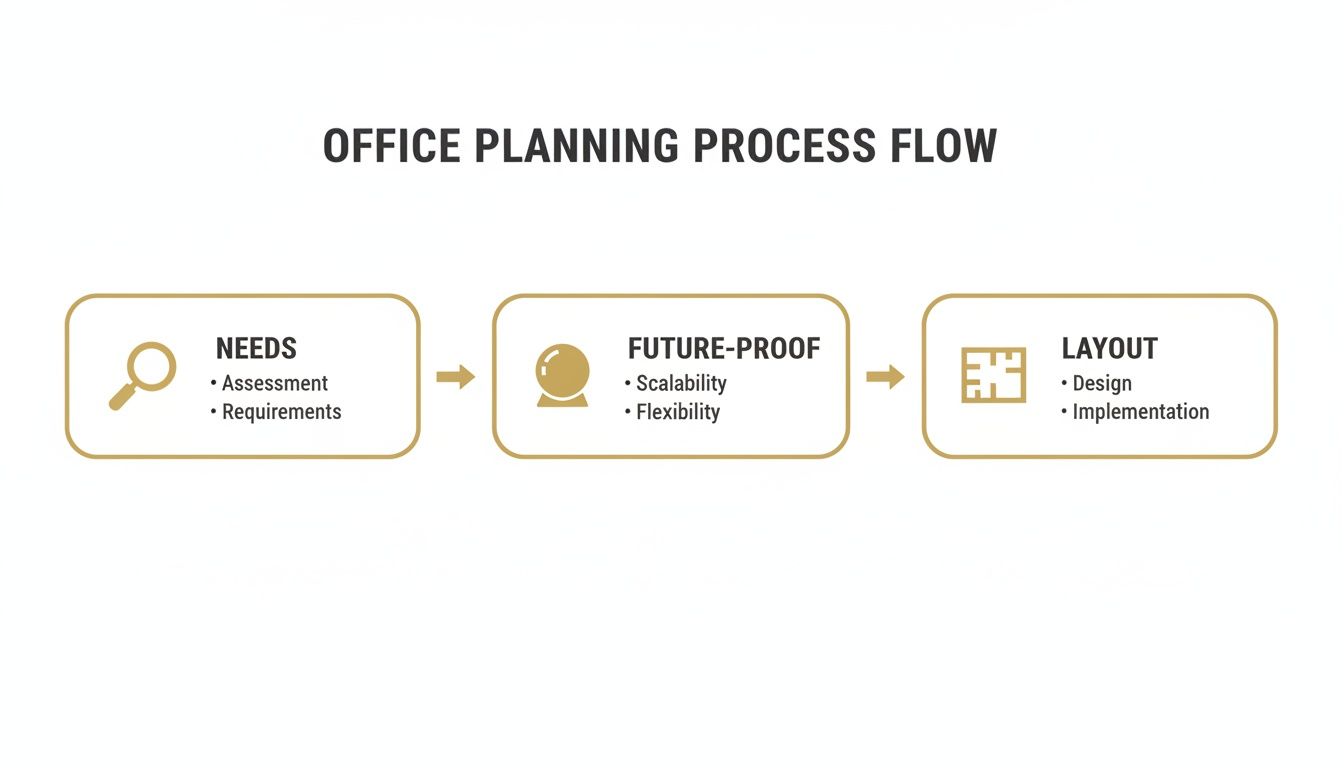
This structured approach means that every single element of the design is purposeful and tied directly to your business objectives right from day one.
“Our job is to turn your ideas into a physical space that works. We manage the complexity so you can enjoy the results without the stress.”
Stage 3: Project Management and Logistics
With the design approved and signed off, our dedicated project management team takes the reins. Think of them as the engine room of the operation, handling all the procurement and logistics with military precision. They coordinate with our trusted network of suppliers, manage delivery schedules, and make sure every part arrives on site, on time, and in perfect condition.
This seamless management is what sets us apart. We take full responsibility for every last detail, providing you with regular, clear updates so you always know exactly what’s happening. It’s a completely managed service designed for your peace of mind.
Stage 4: Installation and Handover
This is where the vision finally becomes a reality. Our skilled installation team gets to work, assembling your new modular office efficiently and professionally. We know that downtime costs money, so we meticulously plan the installation to cause the absolute minimum disruption to your daily operations. Our teams are tidy, considerate, and utterly focused on quality.
Once everything is perfectly in place, we conduct a thorough final inspection with you. We’ll walk you through every aspect of your new workspace, from the flexible desking to the acoustic pods, making sure it’s exactly as you envisioned. Only when you are 100% satisfied do we officially hand over the project. For businesses in places like Bishop’s Stortford, this commitment to quality and minimal disruption is key.
Sustainability and the Long-Term Value of Modular Systems
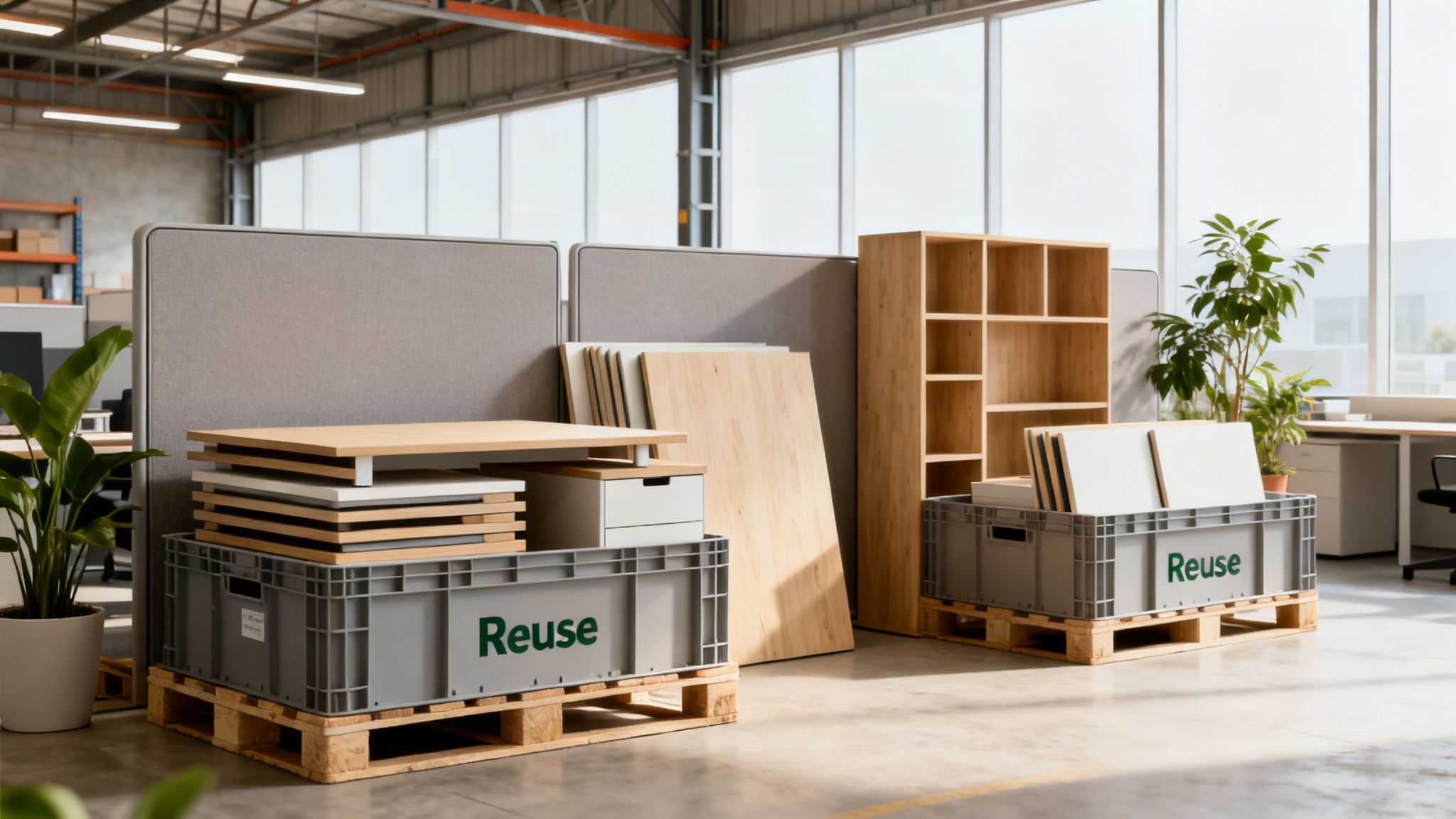
Choosing modular office furniture is more than a practical fix for today; it’s a savvy, sustainable investment in your company’s future. This approach completely flips the script on how you view your office assets, shifting from a disposable, “buy-and-replace” culture to one of genuine reuse and long-term value. For any environmentally conscious business, it’s a powerful way to shrink your footprint.
The thinking behind it is simple but incredibly effective. When your business needs to move, grow, or just rethink its layout, you don’t have to start from scratch. Modular pieces are designed to be easily taken apart, moved, and put back together in entirely new ways. This built-in reusability means a drastic reduction in landfill waste.
Built to Last: The Economic Case for 2026
Don’t mistake “modular” for flimsy or temporary. Modern systems are built to tough, commercial-grade standards, using materials engineered to handle the daily grind of a busy office and repeated reconfigurations. This focus on quality means your investment is safe for years to come.
This durability translates directly into a strong financial return. The initial investment pays for itself over time by simply getting rid of the need to buy new furniture every time your business evolves. You’re saving on future procurement costs, disposal fees, and the sheer disruption of a complete refit. It’s a key driver in the UK’s office furniture market, recently valued at around £2.5 billion annually, as more companies demand flexible, sustainable solutions.
“Thinking modular means seeing your furniture not as a one-off expense, but as a flexible asset that delivers value year after year.”
Connecting Value to Wellbeing
But the long-term value isn’t just about the numbers. A workspace that can genuinely adapt to support your team’s changing needs fosters a much more positive and productive atmosphere. When people have the right tools and spaces to do their jobs well, they feel more valued and engaged.
It creates a fantastic positive cycle:
- Adaptable spaces give productivity a real boost.
- Higher productivity improves business performance.
- A supportive environment helps you attract and keep the best talent.
Ultimately, choosing a modular system is a decision that benefits your balance sheet, the planet, and most importantly, your people. It’s a forward-thinking strategy for businesses in places like Braintree that want to build a truly resilient and responsible workplace. We explore this topic in much more detail in another article, and you can learn more about creating sustainable office spaces for 2026 right here.
Frequently Asked Questions About Modular Furniture
To wrap things up, let’s tackle some of the most common questions we hear about modular office furniture. We want to give you quick, clear answers so you can feel confident you’re making the right call for your workspace.
Is Modular Office Furniture Durable Enough for a Busy Office?
Absolutely. Any notions of flimsy, temporary furniture are long outdated. Modern modular pieces are built to demanding commercial-grade standards, using high-quality materials designed for the wear and tear of a busy workplace.
Manufacturers know these parts will be moved, reconfigured, and put through their paces. That’s why they’re engineered to withstand frequent use without losing their structural integrity. At Gibbsonn Interiors, we make it our business to only source from trusted suppliers, ensuring every single piece meets our own high standards.
How Long Does It Take to Install a Modular Office Setup?
This is where modular systems really shine: speed. Because all the components are pre-fabricated in a factory environment, the on-site assembly is dramatically faster and creates far less disruption than a traditional, construction-heavy fit-out.
Of course, the exact timeline will always depend on the size and complexity of your project. But as a rule, it’s a much quicker process. It means your team can get back to what they do best, sooner.
“The true test of office furniture isn’t just how it looks on day one, but how well it performs and adapts on day one thousand. Durability is non-negotiable.”
Can Modular Furniture Be Integrated into Our Existing Office?
Yes, and this is one of its most practical benefits. Modular furniture is the perfect solution for phased upgrades, which means you don’t have to commit to overhauling your entire office all at once.
You can seamlessly integrate new elements into your current layout to solve immediate problems. For instance, you could add a few acoustic pods to tackle a noise issue, introduce new desking clusters for a growing team, or use partitioning to carve out a new meeting space. It’s a smart way to address specific needs without the disruption and cost of a full-scale refurbishment.
Ready to transform your workspace? Speak to the Gibbsonn Interiors team today.