
Thinking about designing a new office space? It is about so much more than just picking out desks and chairs. A good design weaves your company culture, daily needs and future ambitions into the very fabric of your workspace. A successful design has a direct, positive impact on everything from productivity and employee wellbeing to how your brand is seen.
Your Guide to Designing a Modern Office Space
Welcome to our complete guide on how to design an office space that fuels your team and respects your budget. I have always believed a great office is one of the most important investments you can make in your people and your future. It is never just about looks. It is about creating an environment that genuinely supports different work styles, encourages teamwork and makes your team feel valued.
This guide will walk you through the Gibbsonn Interiors turnkey design and build process. We make the journey from a rough idea to a fully working workspace as simple as possible. We champion a clear, straightforward approach, whether your business is based in Bishop’s Stortford, Essex, or right in the heart of London.
Our process breaks the whole project down into logical, manageable stages, as you can see in the diagram below.
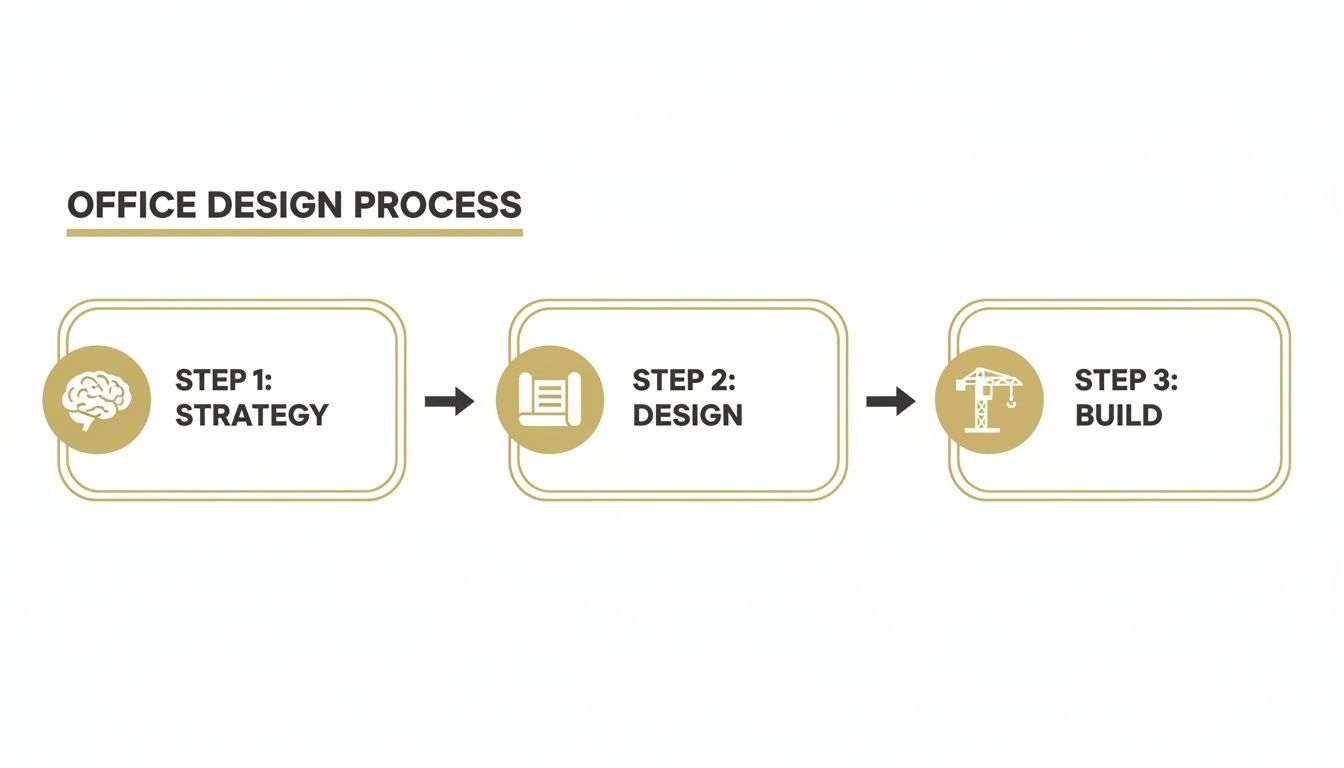
This simple flow from strategy to design to build ensures every single decision is purposeful and perfectly aligned with your business goals. From initial workplace strategy and space planning all the way through to material selection and the final project delivery, each step builds on the last.
Think of this article as your roadmap. The table of contents below links to each key section, so you can jump straight to the topics that matter most to you right now.
Table of Contents
- Building Your Workplace Strategy
- Mastering Your Office Space and Layout
- Choosing Your Materials Finishes and Furniture
- Navigating Budgets and Project Delivery
- Common Questions About Office Design
Ultimately, our goal is to give you the confidence and the expert knowledge to create a space that works just as hard as you do. We will be sharing practical, real-world advice and industry insights to help you sidestep common pitfalls and make informed choices. As you’ll see in resources from leading design publications like the Retail Design Blog, thoughtful, strategic design is absolutely critical for modern businesses.
Let’s get started on the process of transforming your workplace.
Nailing Your Workplace Strategy
Before a single wall comes down or a new desk gets ordered, the real work has to happen. A watertight workplace strategy is the foundation of any office design project that’s built to last. This is where we get past the paint colours and finishes and really dig into the ‘why’ behind it all. It’s about asking the right questions now to make sure the finished space doesn’t just look the part but actively works for your business.
First things first, what are you actually trying to achieve? Is the goal to stand out and attract the best talent in a competitive market like Cambridge? Or is it more about smashing down departmental silos to get people talking and collaborating more freely in your Chelmsford office? You need a clear objective.
Getting to Know Your People and Your Processes
A building is just a shell. It is the people inside and what they do all day that brings it to life. To design an office that really hits the mark, you have to start by understanding how your teams actually operate. That means taking a good, hard look at your current space to see what is working and what is causing daily headaches.
Are there obvious pain points? Maybe the sales team cannot hear themselves think on calls or the creative team has nowhere to pin up ideas and brainstorm properly. Spotting these issues is half the battle. Look for the bottlenecks, the dusty, underused corners and the ‘desire lines’. Those are the unofficial pathways people tread through the office that show you how the space really wants to be used.
Just as crucial is having one eye on the future. Where is the business headed in the next five years? A smart design has room for growth built-in so you do not find yourselves bursting at the seams before the paint is even fully cured. A bit of foresight now saves a lot of expensive reconfiguration work later.
“Think of your office as a business tool. A strategy built on real data ensures it’s sharp, effective, and perfectly tuned to your commercial goals. It’s the difference between a space that costs you money and one that makes you money.”
And let’s be clear: getting your staff involved is not just a nice-to-have, it is non-negotiable. They’re the ones who have to live and work in it, after all. Simple, anonymous surveys and informal workshops are fantastic for getting honest feedback. This is not about designing by committee. It is about uncovering valuable, on-the-ground insights you would never get otherwise.
- Surveys: Ask pointed questions about noise, meeting room availability and what one thing would make their day-to-day work easier.
- Workshops: Get teams together to chat about how they collaborate and what they really need to do their best work.
- Observation: Simply spend some time watching how different parts of the office are used (or not used) during a typical day.
This whole process does more than just gather data. It builds buy-in from your team. They feel heard and the final design is one that is genuinely for them. It is no surprise that studies from the Royal Institute of British Architects (RIBA) consistently find that post-occupancy evaluations are vital for measuring a project’s true success.
Aligning Your Space with Modern Ways of Working
The old nine-to-five, chained-to-a-cubicle model is a relic for many businesses. Your physical office has to support the way your company actually works, whether that is fully in-office, a hybrid mix or a fully agile setup.
Hybrid Working
This is the new normal for many, with staff splitting their time between home and the office. It completely changes the office’s purpose. It is no longer just a place to work. It is a hub for collaboration, culture and connection. This means you probably need fewer dedicated desks and a lot more flexible, multi-use zones. Think project areas, private booths for video calls and comfortable social spaces that feel more like a café than a canteen.
Agile Working
Agile is all about empowering people to choose the right setting for the task at hand. To make that work, you need to provide a real variety of spaces within the one office:
- Focus Zones: Quiet nooks for heads-down, concentrated work.
- Collaboration Hubs: Open or semi-private areas designed for teamwork.
- Social Spaces: Great kitchens and breakout areas that spark those informal, unplanned chats.
- Learning Areas: Flexible rooms that can be used for training, workshops or big presentations.
For businesses based in busy hubs like Stansted or London, creating a properly agile environment can be a huge competitive advantage. It helps you attract and keep talented people who expect and value that kind of autonomy. In our experience at Gibbsonn Interiors, we have seen time and again that a strategy done right leads directly to a more efficient, engaging and future-ready workspace.
Mastering Your Office Space and Layout
With a solid strategy in your back pocket, it’s time to get tangible. This is where we shift from the ‘why’ to the ‘where’ and ‘how’. We translate those big-picture ideas into a physical floor plan that actually works for your people. Getting the space planning right is non-negotiable if you want to design an office space that truly supports every part of your team’s day.
First up, you need to decide on the right type of layout. It’s a big decision as each style strikes a different balance between privacy, collaboration and sheer flexibility. The best choice comes down to your unique company culture and the kind of work your teams are doing.
Finding the Right Layout for Your Business
There are really three main paths you can go down when it comes to office layouts, each with its own character.
- Open-Plan: This one is a classic for a reason. By removing most of the interior walls you get a single, buzzing workspace. It is fantastic for sparking communication and building a real sense of community but let’s be honest, it can be a nightmare for noise and distractions if not managed well.
- Cellular Offices: Think of the traditional model with individual, private offices. This setup is a godsend for any work that demands deep focus and confidentiality which is why you will still see it in most legal or financial firms.
- Activity-Based Working (ABW): This is a much more dynamic and fluid approach. Instead of assigned desks, ABW provides a whole menu of different work settings. Staff choose where to work based on the task at hand. Maybe a quiet zone for heads-down work, a collaborative hub for a team huddle or a private booth for a sensitive call.
For instance, a fast-moving tech company might feel right at home with an ABW layout. It gives developers the quiet pods they need for coding while project teams can grab an open hub to whiteboard ideas. On the other hand, a law firm would almost certainly need the privacy and security that only cellular offices can provide for handling client-sensitive documents.
Nailing the Finer Details
Once you have landed on a general layout, the real work begins. Now you are getting into the nitty-gritty of space planning, mapping out exactly where every single element goes to create a flow that feels completely natural. A key part of this is departmental zoning. It is a fancy term for simply putting teams that collaborate often near each other. It sounds obvious but it makes a huge difference to workflow.
You also have to think carefully about circulation paths. These are the main arteries of your office, the routes people use to get around. They need to be wide enough to prevent bottlenecks and positioned logically to connect key areas like the entrance, meeting rooms and the all-important kitchen. It is also vital to build in a variety of work settings to give your team choice and control. You can dive deeper into this by checking out our guide on the best floor plans for modern offices.
Tackling the Acoustic Challenge in Modern Offices
Acoustic comfort is without a doubt one of the biggest headaches in modern office design, especially in open-plan spaces. A constant hum of background noise can absolutely kill productivity and send stress levels through the roof. A successful layout has to have a smart plan for managing sound.
“An office can look incredible, but if it sounds chaotic, productivity will plummet. Smart acoustic planning isn’t an optional extra; it’s a fundamental part of creating a high-performance workspace where people can actually do their best work.”
This is where modular solutions really come into their own. Brilliant products from innovators like Vetrospace and Framery let you drop freestanding, soundproof rooms right into an existing space without the cost and disruption of traditional construction. These pods are perfect for creating quiet focus booths, private phone call spots or small meeting rooms exactly where you need them. They deliver acoustic privacy on demand, letting you keep all the collaborative benefits of an open environment.
The shift towards flexible work is undeniable and it is changing how businesses see their office footprint. The UK now has 3,949 coworking locations as of Q2 2025, which shows just how much the old model of rigid, long-term leases is fading. For facilities managers and landlords, this highlights the need for adaptable solutions like architectural wrapping or modular pods. These can quickly create private, soundproof zones within open layouts to meet new demands. With office use peaking on Tuesdays at 52% and dropping to just 28% on Fridays, a data-led approach to space planning is the only way to make sure every square foot is working as hard as it can.
Choosing Your Materials, Finishes and Furniture
Once the layout is nailed down, we get to the really exciting part. This is where we start to inject your brand’s personality and culture into the space through the careful selection of materials, finishes and furniture. Every choice from here on out directly shapes the look, feel and daily function of your new office.
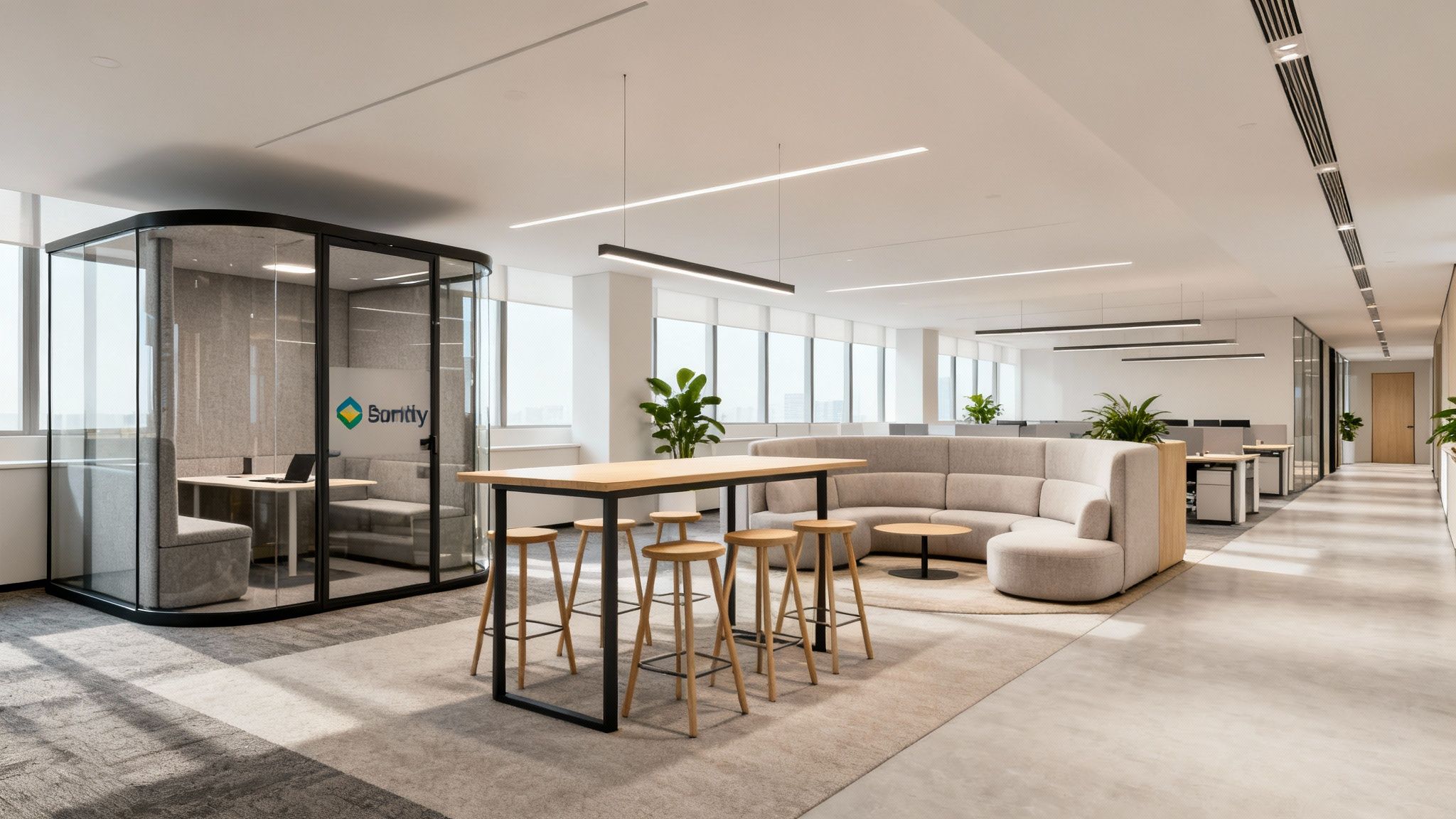
It is a bit of a balancing act. You have to weigh up aesthetics against durability, factor in employee wellbeing and of course keep a close eye on the budget. From the texture of the flooring underfoot to the quality of the light overhead, every single element plays its part in creating a workspace that is both inspiring and practical.
Materials That Make an Impact
The materials you choose set the entire tone. They say a lot about your company’s values, whether you are all about cutting-edge design, comfort or putting sustainability front and centre.
And on that note, sustainability is no longer just a ‘nice-to-have’. It is a major driver in UK office design. Back in 2023, over 40% of London leases were tied to buildings with high energy performance ratings. This has pushed demand for green certifications like BREEAM and WELL through the roof. With 57% of organisations now investing in smart building tech to cut costs, the message is loud and clear: sustainable choices are smart business choices.
Of course, beyond eco-credentials, durability is absolutely key. High-traffic areas need tough, robust materials that can handle daily wear and tear. The last thing you want is a space that looks tired after a year. This is where professional guidance really pays off, helping you find materials that are both beautiful and built to last. We have gone deeper into this in our article on creating sustainable office spaces.
Below is a quick-glance table to help you decide on the best flooring for different zones within your office, balancing aesthetics, durability and cost.
Comparing Popular Office Flooring Options
| Flooring Type | Best For | Pros & Cons |
|---|---|---|
| Carpet Tiles | General office areas, meeting rooms, quiet zones. | Pros: Great for acoustics, comfortable underfoot, easy to replace individual damaged tiles. Cons: Can stain, requires regular deep cleaning. |
| Luxury Vinyl Tile (LVT) | Canteens, breakout areas, reception, high-traffic corridors. | Pros: Extremely durable, huge range of designs (wood/stone effects), easy to clean. Cons: Can be a harder, colder surface. |
| Polished Concrete | Modern, industrial-style offices, reception areas. | Pros: Very hard-wearing, minimalist aesthetic, low maintenance. Cons: Poor acoustics, can be unforgiving if things are dropped. |
Choosing the right combination is key to creating a space that is not just visually appealing but also practical for the long haul.
Innovative Finishes for a Modern Look
Finishes are a brilliant way to refresh a space or stamp your brand’s character on it without the cost and chaos of a complete gut-out. One of the most effective tools in our arsenal is architectural wrapping.
This is a process where we apply high-quality, durable vinyl films to existing surfaces like doors, walls, reception desks and even old furniture. It is a fantastic, cost-effective way to completely change the look of your office with minimal disruption. For businesses in bustling areas like Stansted or Chelmsford, this means you get a high-end finish without the noise, dust and downtime of a traditional fit-out.
Colour psychology also has a massive role to play. The colours you choose can directly influence mood and productivity.
- Blues and Greens: We often use these to create a sense of calm and focus, making them perfect for deep-work zones.
- Oranges and Yellows: These energetic colours can spark creativity and conversation. Great for breakout areas and brainstorming hubs.
- Neutral Tones: Greys, whites and beiges provide a clean, professional canvas that lets your branding and accent colours really pop.
“Bringing natural elements into the office is one of the simplest yet most effective ways to boost morale. Things like natural light, real plants, and materials like wood and stone don’t just look good, they genuinely make people feel better and more connected to their environment.”
Furniture Focused on Wellbeing
Finally, furniture. This is where function and employee wellbeing really intersect. Ergonomics is not just a buzzword. It is a vital investment in your team’s health. A bad chair or a poorly positioned desk can lead to real discomfort and long-term health problems.
When picking out furniture, adjustability is your best friend. Ergonomic chairs with proper lumbar support, adjustable height and armrests are non-negotiable. We also cannot recommend sit-stand desks enough. Giving people the choice to switch between sitting and standing throughout the day is proven to improve comfort and fight off that afternoon fatigue.
It is also crucial to offer a variety of furniture to support different ways of working, from heads-down individual tasks to informal team catch-ups. This ‘activity-based’ approach ensures your office is a comfortable and supportive place for everyone to do their best work. For some great visual inspiration, it is always worth browsing the projects on design portals like Dezeen.
Navigating Budgets and Project Delivery
This is where the vision starts to become a reality. A solid budget and a clear project delivery plan are what separate a dream workspace from a stressful, over-budget headache. We believe in total transparency when it comes to costs and timelines. It is the only way to ensure your new space is finished on time, on budget and exactly as you imagined.
Talking about the financial side of an office fit-out can feel a bit daunting but it really does not have to be. Once we have a clear brief, we can give you a detailed breakdown of exactly where your investment is going. This covers everything from the big construction and mechanical services right down to the furniture and final finishes. This level of clarity allows you to make smart decisions and put your money where it will make the biggest impact.
Just as critical is a realistic project timeline. We map out every single phase, from getting materials and placing orders to the final installation and handover day. This detailed programme means everyone involved knows what is happening and when. This is absolutely vital for keeping disruption to your day-to-day business to a minimum.
Our Turnkey Design and Build Model
Here at Gibbsonn Interiors, we run a turnkey design and build model. What does that mean for you? It means you get one dedicated point of contact who manages the entire project, from the first sketch to the final handover. We take care of everything. We coordinate all the different trades, suppliers and schedules so you do not have to juggle a dozen different contacts.
This approach brings some huge benefits:
- Total Accountability: With a single team responsible for the whole project, there is no finger-pointing. The buck stops with us which guarantees a high standard of quality and a rock-solid commitment to the agreed schedule.
- Effortless Communication: You have one reliable contact for all your questions and updates. It makes the entire process simpler and a whole lot less stressful.
- Minimal Disruption: Our project managers are experts at planning work to cause as little disturbance as possible. This is an absolute must for businesses in busy locations like Braintree or Hertfordshire.
“Our design and build process is designed for one thing: your peace of mind. By managing every detail under one roof, we strip away the complexity and deliver a seamless experience. It lets you focus on running your business, not chasing contractors.”
This integrated approach is more valuable than ever in the current market. The UK office landscape is seeing a major comeback, with corporate leasing nearly hitting pre-pandemic levels. But the demand is not for just any space. It is overwhelmingly for high-quality, ESG-aligned offices that meet modern standards like BREEAM and WELL. In fact, a staggering 80% of Central London take-up in Q2 2025 was for Grade A stock, signalling a clear ‘flight to quality’.
For any business thinking about a refurbishment, this trend really highlights how important it is to invest in agile, productive and sustainable environments if you want to attract and keep the best talent.
Managing End-of-Lease Dilapidations
Another common challenge we help clients navigate is dealing with dilapidations at the end of a lease. This is your contractual obligation to return the property to its original condition. If it is not managed proactively, dilapidations can spring some nasty and often significant costs on you.
Our team can help you handle this process without the drama. By assessing the property and your lease terms early on, we can map out a strategy to carry out the necessary reinstatement works efficiently and cost-effectively. A proactive approach does not just save you money. It also ensures a smooth exit from your old premises, freeing you up to focus on the excitement of your new workspace. We have even put together a detailed guide to help you understand the typical costs involved in an office fit-out, which is a great place to start your planning.
Common Questions About Office Design
Embarking on a project to design an office space naturally brings up a lot of questions. It’s a significant investment and you want to be sure you are making the right choices for your business and your team. We have put together clear, straightforward answers to some of the most common queries we hear from our clients, drawing on our experience across Essex, London and Hertfordshire.
Our goal is to demystify the process, helping you feel confident and informed every step of the way.
How Long Does an Office Fit Out Typically Take?
This is often the first question on everyone’s mind. The honest answer? It really depends on the scale and complexity of the project. There is just no one-size-fits-all timeline.
A relatively simple refurbishment focused on cosmetic updates might take between 2 to 4 weeks. This could involve applying new architectural wrapping to refresh surfaces, installing new flooring and bringing in new furniture.
But a full CAT B fit-out in an empty shell is a different story entirely. When we are building new partition walls, installing meeting rooms and making adjustments to mechanical and electrical systems, the project timeline usually extends to between 8 and 16 weeks. For very large or complex spaces, it can sometimes be longer.
“The most important thing is a detailed and realistic programme from the outset. We map out every stage, which minimises disruption and allows you to plan with certainty, whether your business is in Bishop’s Stortford or Braintree.”
We always prioritise keeping your business operational. This often means working in carefully managed phases or scheduling noisier works outside of core business hours so your team can continue their work with minimal interruption.
What Is a CAT A vs a CAT B Fit Out?
You will hear these terms a lot in the world of commercial interiors, so it is useful to know exactly what they mean. Think of them as two distinct stages in preparing an office space for a tenant.
-
Category A (CAT A) Fit Out: This is the basic finish a landlord provides. Imagine a blank canvas. It will typically include raised floors, suspended ceilings, basic mechanical and electrical services and finished toilets. It is a functional but empty shell, ready for you to make your own.
-
Category B (CAT B) Fit Out: This is where we come in. A CAT B fit-out transforms that empty CAT A shell into a fully functional and branded workspace. It is the stage where we install everything your business needs to operate day-to-day.
A CAT B project covers all the elements that define your unique office environment, including:
- Partitioned offices and meeting rooms
- Kitchenettes and breakout areas
- Reception desks and branded feature walls
- All furniture, fixtures and equipment (FF&E)
- Specialist IT and AV installations
- Final finishes like paint, flooring and lighting
Essentially, CAT B is what turns an empty building into your office. At Gibbsonn Interiors, we specialise in delivering these comprehensive CAT B fit-outs, turning your vision into a workplace that truly reflects your company’s culture and operational needs.
How Can We Make Our Open-Plan Office Less Noisy?
Noise is one of the most common and disruptive challenges in modern open-plan offices but it is entirely manageable with a smart acoustic design strategy. You do not have to sacrifice collaboration for concentration.
The key is to create a layered acoustic solution that absorbs, blocks and masks sound. This involves a thoughtful mix of different elements, not just a single fix. We might use sound-absorbing materials like acoustic wall panels, baffles hanging from the ceiling and high-performance carpet tiles. Soft furnishings like sofas and curtains also play a surprisingly important role in dampening ambient noise.
However, one of the most effective solutions we implement for clients across locations like Cambridge and Stansted is installing modular meeting pods from leading manufacturers such as BlockO or Framery. These ‘rooms within a room’ are engineering marvels, offering superb sound insulation for private calls, video conferences and focused work.
These pods can be installed quickly without the disruption of traditional construction, providing instant acoustic privacy exactly where it is needed most. This approach allows you to maintain the open, collaborative feel of your main workspace while giving your team the quiet zones they need to be productive. For more inspiration on creating functional zones, it is always worth browsing professional resources like the Retail Design Blog.
Ready to transform your workspace? Speak to the Gibbsonn Interiors team today.