
- What Does a Workplace Strategy Consultant Really Do in 2026?
- The Real Pay-Off of a Smart Workplace Strategy
- How a Workplace Strategy Consultant Works
- Connecting Strategy to Reality with the Right Fit Out Partner
- How to Measure the Success of Your New Workplace
- Your Checklist for Choosing the Right Consultant
- Your Workplace Strategy Questions Answered
Think of a workplace strategy consultant as an architect, but for your company’s performance, not just its physical walls. They get to the heart of how your teams work, what they need to excel, and how your office can go from being a cost on a spreadsheet to a genuine business asset.
It’s all about making your office a strategic tool, not just a place to put desks.
What Does a Workplace Strategy Consultant Really Do in 2026?

Let’s move beyond the surface-level descriptions. It’s a common misconception that a workplace strategist is just there to help choose new furniture or a fresh colour palette. In reality, their role is far more fundamental, focusing on the very pulse of your organisation.
These experts specialise in aligning your people, your physical space, and your technology to drive your business goals forward.
They don’t operate on guesswork. Their process is built on gathering real-world data and evidence about how your office is actually functioning. This involves a mix of detailed observation, technology, and most importantly, speaking directly with your staff to uncover what’s working and what’s causing friction.
“A workplace consultant’s real job is to turn your office from a simple cost into a strategic asset that actively improves productivity, wellbeing, and your bottom line.”
Uncovering the Truth of Your Workspace
A skilled workplace strategy consultant uses several key methods to build an accurate picture of your environment. This is not about assumptions; it is about evidence-based discovery.
- Staff Workshops and Surveys: They facilitate engaging, interactive sessions with your teams. This is where they unearth the daily frustrations, the hidden workflow challenges, and the opportunities that only your people can see.
- Utilisation Studies: Using a combination of sensors and observational analysis, they track how different areas of the office are really used. You might be paying for a huge boardroom that sits empty 90% of the time, while your teams are desperate for small, quiet pods for focused calls.
- Workflow Analysis: They map out how information, communication, and people flow between teams and departments. This pinpoints bottlenecks and reveals opportunities to boost collaboration through smarter spatial design.
For businesses across Hertfordshire, this level of deep insight is crucial for creating an office that not only works but also helps attract and retain top talent in a competitive landscape.
From Data to Design
Once all this rich information is gathered, the consultant’s job is to translate it into a clear, actionable plan. They create what’s known as a “strategic brief”, a powerful document that becomes the blueprint for your new workspace.
This brief goes far beyond aesthetics. It defines precisely how the new design will support your specific business objectives.
For instance, the brief might recommend:
- Creating dedicated “quiet zones” with acoustic privacy to support deep, focused work.
- Designing flexible “collaboration hubs” that can be easily reconfigured for team projects and brainstorming sessions.
- Integrating specific technologies to make hybrid meetings seamless and inclusive for everyone.
This strategic foundation is invaluable, especially for companies in busy commercial centres like Bishop’s Stortford, where getting the maximum return on your property investment is paramount. A workplace strategy consultant provides the “why” behind every design decision, ensuring your new office is purpose-built for performance.
Core Focus Areas of a Workplace Strategy Consultant
Here’s a quick look at the key areas a consultant investigates to improve your office.
| Focus Area | What It Means for Your Business |
|---|---|
| People & Culture | Understanding your team’s work styles, their wellbeing, and what they need to be productive and engaged. |
| Space & Place | Analysing how your physical office is used, its shortcomings, and how it can be reimagined to support your goals. |
| Technology & Tools | Ensuring your team has the right digital infrastructure and tools to communicate and collaborate effectively, whether in-office or remote. |
By weaving these three elements together, a consultant creates a holistic strategy that truly works.
The Real Pay-Off of a Smart Workplace Strategy
Too often, an office is seen as just another line item on the budget. It’s rent, rates, and utilities, a necessary cost of doing business. But what if your workspace could be your most powerful asset? A smart, deliberate strategy moves beyond vague promises and delivers tangible results that directly fuel your bottom line.
Bringing a workplace strategy consultant on board is the first step in that direction. They have the expertise to help you shape an office that doesn’t just house your people but actively helps them, and your business, thrive.
Boost Your Team’s Productivity
Think about the daily frustrations that chip away at your team’s focus. The constant background noise, the hunt for a free meeting room, the lack of a quiet corner for concentration. A thoughtful workplace strategy tackles these productivity killers head-on.
A consultant’s job is to engineer an environment where work just flows. They will analyse your team’s unique workflows and design distinct zones for different tasks. This could mean creating dedicated quiet pods for deep, focused work, away from the buzz of the main floor, alongside vibrant, open hubs purpose-built for collaboration.
By removing these all-too-common barriers, you empower your teams to get more done with less friction. The result is faster project turnarounds, higher-quality output, and a more effective organisation from the ground up.
Improve Staff Wellbeing and Retention
In today’s competitive job market, an office that people genuinely want to be in is a massive advantage. A positive environment directly combats stress and burnout, which are huge factors in both retaining your best talent and attracting new stars. For any business in a competitive hub like London, this is not a “nice-to-have”, it is a necessity.
A workplace strategist looks at the complete human experience of the office, from the quality of the light and air to the acoustics and ergonomic comfort. They work to create a space that feels healthy, supportive, and simply pleasant to be in. It’s a clear signal that you see your employees as people, not just resources.
“Happy, healthy employees are more engaged and less likely to leave. Investing in a workspace that supports wellbeing isn’t a perk; it’s a core retention strategy.”
The impact is impossible to ignore: lower absenteeism, reduced staff turnover, and a much stronger, more cohesive company culture are all direct outcomes of a people-first workplace.
Make Every Square Foot Count
Property is one of the biggest overheads for any business, especially in areas like Essex where commercial rents can put a serious dent in your budget. A workplace strategy consultant ensures you’re not just paying for space, but using every bit of it intelligently.
They begin by analysing exactly how your office is used day-to-day, shining a light on underperforming assets. It’s amazing how often businesses are paying for huge boardrooms that sit empty 90% of the time, or have awkward layouts that create dead, unusable zones.
A consultant can help you reimagine the floor plan to fit more people comfortably, potentially saving you from a costly and disruptive office move. Or, they might identify how a more efficient, hybrid-friendly design could let you downsize, cutting your monthly rent and utility bills. It’s about turning a fixed cost into a flexible asset.
This strategic approach is fast becoming the norm. The UK market for workplace transformation services generated nearly £900 million in 2024 and is on track to exceed £2.3 billion by 2030. This explosive growth, detailed in full research on the consulting market, shows just how critical agile and efficient offices have become.
Ready to transform your workspace? Speak to the Gibbsonn Interiors team today.
Contact Us
How a Workplace Strategy Consultant Works
So, what does a workplace strategy consultant actually do? It’s far from guesswork or jumping on the latest design trend. It’s a structured, collaborative journey designed to get under the skin of your business and translate its unique DNA into a concrete, actionable plan for your office.
The process is methodical, moving from broad exploration to a detailed brief. Let’s pull back the curtain on the typical playbook a consultant follows to shape your future office, making sure every pound spent is an investment in your people and your goals.
This simple but powerful three-stage process is the backbone of any successful workplace transformation.
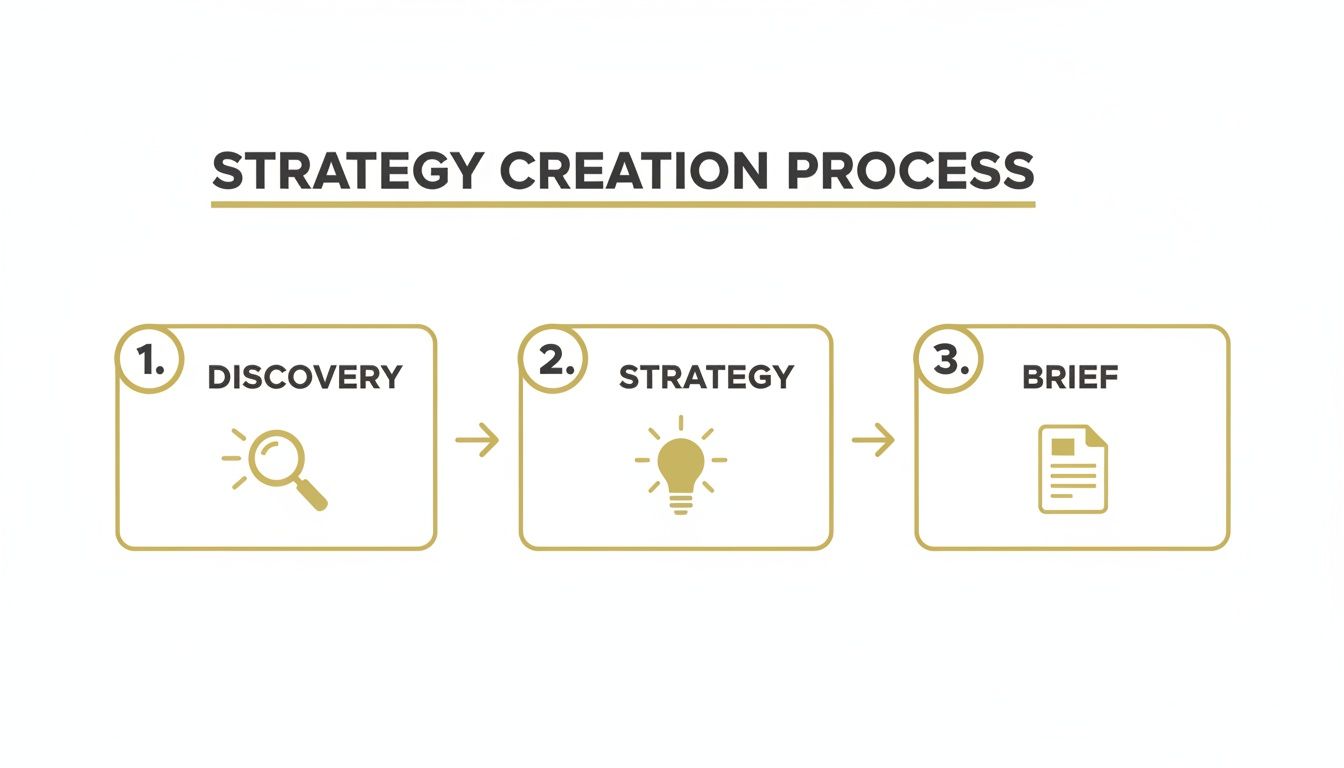
As you can see, the journey moves from understanding your business (Discovery), to developing tailored ideas (Strategy), and finally, to creating a rock-solid plan for your design and fit-out partners (Brief).
The Discovery Phase
The first step is all about deep immersion. A good consultant acts like a company detective, aiming to understand your organisation from the inside out. They don’t just chat with the C-suite; they engage with everyone to build a complete, 360-degree picture of how work really gets done.
This is where they gather the raw data that will inform every decision down the line. Common activities include:
- Leadership Interviews: To get a firm grasp on high-level business goals, current pain points, and the vision for the future.
- Employee Workshops: Facilitating group sessions to hear directly from the people on the ground about their daily frustrations and brilliant ideas.
- Online Surveys: Collecting hard numbers on work patterns, technology needs, and satisfaction levels across the entire company.
- Utilisation Studies: Using a mix of observation and sensor technology to see how your current space is actually used, pinpointing which areas are ghost towns and which are hopelessly overcrowded.
Getting this foundation right is absolutely critical. It ensures your investment is directly tied to improving staff performance, wellbeing, and retention.
The Strategy Phase
With a wealth of data from the discovery phase, the work shifts from gathering information to making sense of it. This is where sharp analysis turns into a clear, forward-looking strategy.
The consultant synthesises all the findings to identify key themes, challenges, and hidden opportunities. From there, they start developing genuinely bespoke options for your new workspace. This is not about picking a model from a catalogue; it’s about finding the perfect fit for your culture and objectives.
“The strategy phase is all about connecting the dots. It links your commercial ambitions and your team’s day-to-day needs to a physical design concept that genuinely supports both.”
For instance, they might propose a few distinct paths:
- An Activity-Based Working (ABW) Model: Creating a dynamic environment with a variety of spaces, like quiet focus zones, buzzing collaboration hubs, and relaxed social areas, that staff can choose from based on their task.
- A Bespoke Hybrid Setup: Designing an office that fluidly supports a mix of in-person and remote staff, with the right technology and space allocation to make the experience seamless for everyone.
- A Neighbourhood-Based Plan: Grouping teams or departments into “neighbourhoods” to foster a strong sense of community and identity while still allowing for flexible working.
Each option is presented with its own set of pros, cons, and budget implications, empowering you to make a fully informed choice. Developing these tailored concepts is the core of any good workplace strategy consulting service.
The Final Deliverables
The process culminates in a set of clear, tangible documents that form the master plan for your entire project. These are not just reports; they are the essential deliverables that bridge the gap between high-level strategy and on-the-ground execution.
These documents give your fit-out partner everything they need to bring the vision to life accurately and efficiently.
| Deliverable | What It Does For You |
|---|---|
| Strategic Brief | The definitive master document. It outlines the vision, project goals, design principles, and detailed space requirements for the new office. |
| Space Utilisation Report | The evidence-based analysis of your current office usage, providing the data that justifies the recommended changes. |
| Test Fit Plans | A series of initial floor plan sketches. These show how the new strategic concepts could be laid out in your actual space, making the vision tangible. |
Together, these documents ensure everyone, from the CEO to the project manager, is aligned. They prevent costly changes and misinterpretations down the line, making sure the final design is a perfect match for your business needs.
Connecting Strategy to Reality with the Right Fit Out Partner
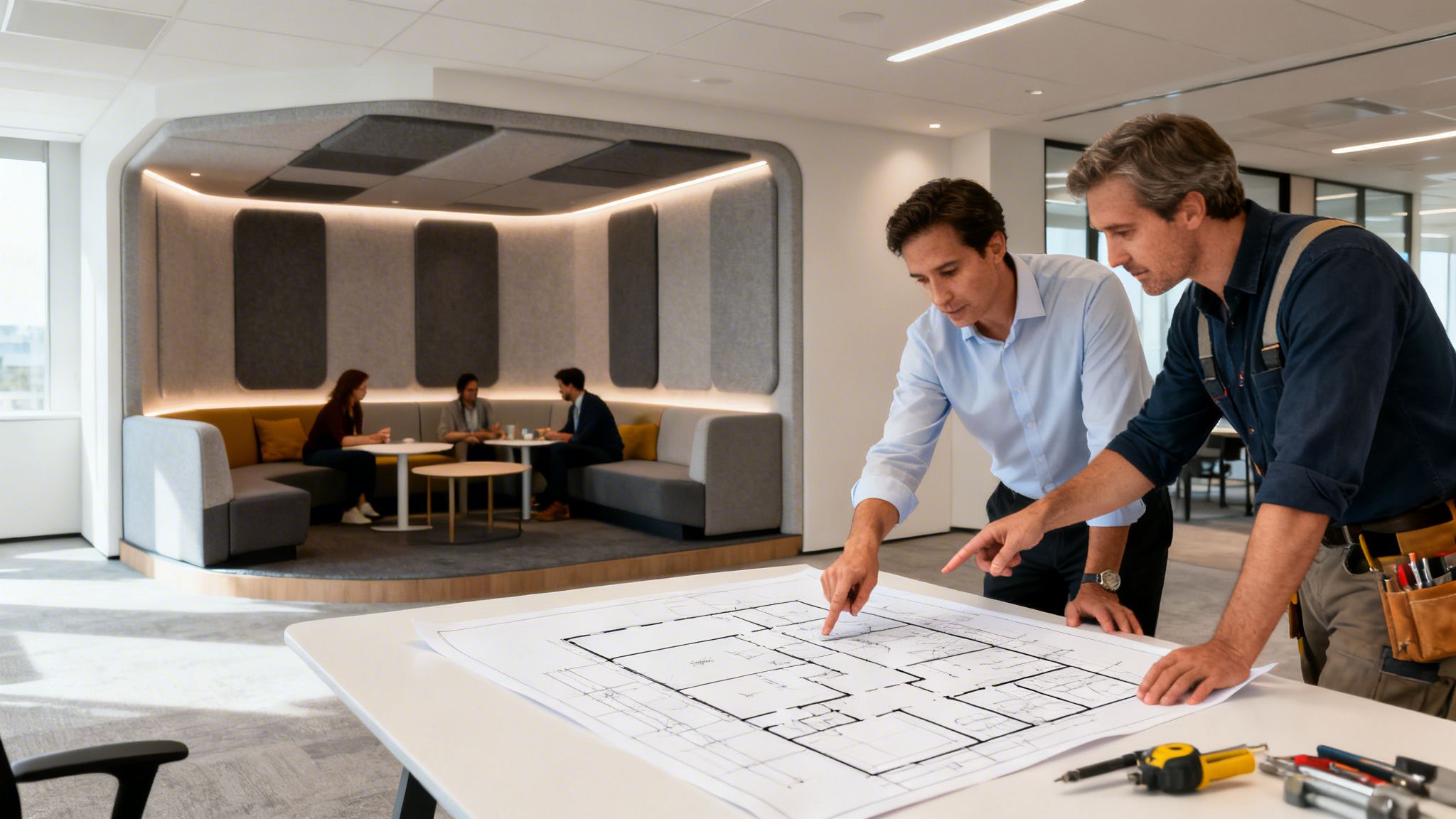
A brilliant workplace strategy is only ever as good as its execution. You can have the most insightful data and the cleverest floor plans, but if that vision gets lost in translation during the build, the whole project can fall flat. This is where the partnership between your workplace strategy consultant and your fit out firm becomes absolutely critical.
Think of it this way: the consultant is the architect drawing up the perfect blueprint for a high-performance engine. The fit out partner is the master mechanic who builds it piece by piece, ensuring every component works exactly as intended. Without that seamless collaboration, you risk getting an engine that looks the part but never truly performs.
From Blueprint to Build
The consultant’s strategic brief is the ‘why’ behind every single design decision. It details the specific business goals, the types of spaces your teams need, and the cultural feeling you want to achieve. The fit out partner, like us here at Gibbsonn Interiors, takes this ‘why’ and translates it into physical reality, figuring out the ‘how’.
This partnership is what turns abstract concepts into real, functional spaces. For instance, a strategic brief might call for:
- Acoustically treated quiet zones: The fit out team knows precisely which materials and construction methods will deliver the necessary sound-dampening qualities.
- Flexible collaboration hubs: They understand how to install the moveable walls, modular furniture, and integrated power sources that make a space genuinely adaptable.
- A brand-infused reception area: They have the expertise to bring brand guidelines to life through physical finishes, lighting, and custom joinery that makes an unforgettable first impression.
A strong connection between these two experts ensures the strategic intent behind every choice is honoured throughout the entire construction process. It’s the key to making sure the final space really works.
How the Partnership Works in Practice
A smooth workflow between your consultant and your fit out firm is what keeps a project on track, on budget, and true to its original vision. The consultant doesn’t just hand over a document and walk away; they stay involved, acting as a guardian of the strategy.
Meanwhile, the fit out team provides practical, on-the-ground feedback. They’re the ones who can spot potential construction challenges early on or suggest alternative materials that deliver the same result more cost-effectively, all without compromising the design’s purpose.
This ongoing conversation is what prevents expensive mistakes and stops the vision from being diluted by small, uninformed decisions along the way. It ensures the finished space not only looks beautiful but functions exactly as planned from day one. To get a better handle on this, check out our guide on finding the right office fit out specialists for 2026.
The Value of an Integrated Team
When the strategist and the builder work hand-in-glove, the entire project becomes more efficient and far less stressful. This integrated approach is rapidly becoming the standard as more businesses realise its immense value.
“The UK strategy consulting market was valued at £2.5 billion in 2024. It is projected to surge to £4.6 billion by 2035, showing just how much businesses are investing in getting this expert planning right.”
This incredible growth highlights the importance companies now place on creating workspaces that actively support their goals. A unified team is the best insurance you can have, guaranteeing that this significant investment delivers a space that is a genuine asset to your business. It’s the safest way to ensure your new office is a resounding success.
How to Measure the Success of Your New Workplace
The project is complete. The dust has settled, and your team is settling into a fantastic new office. But how can you be sure the time, money, and energy invested have truly paid off? Proving the value of a workplace transformation is fundamental for justifying the decisions you made and showing a tangible return.
This is where a great workplace strategy consultant proves their worth, helping you define what success looks like from day one. It’s never just about bringing a project in on budget; it’s about capturing the real-world impact on your people and, ultimately, your bottom line.
Going Beyond Just the Budget
While keeping a close eye on the finances is obviously crucial, the real measure of a new workplace lies in how it actively improves the way your business functions. A thoughtfully designed office should be a powerful catalyst for positive change, and tracking that change is precisely how you demonstrate its value.
To do this properly, you need to look at a combination of quantitative data, the hard numbers and stats, and qualitative feedback that captures people’s genuine feelings and experiences. The best practice is always to establish a clear baseline before the project kicks off. This gives you a powerful ‘before and after’ story to tell.
For example, running an employee satisfaction survey before a single wall comes down and then repeating it six months after everyone has moved in provides solid, undeniable evidence of the project’s impact on team morale.
Key Performance Indicators to Track
The specific metrics you’ll use to gauge success are known as Key Performance Indicators, or KPIs. An experienced consultant will work with you to select the KPIs that align perfectly with the goals you set out at the very beginning of the journey.
Here are a few powerful KPIs we often recommend tracking:
- Employee Satisfaction Scores: A straightforward way to see if your people are happier and more comfortable. Higher scores are a direct line to better morale and engagement.
- Staff Turnover Rates: A brilliant workplace is a magnet for top talent. A noticeable drop in the number of people leaving is a huge win, especially for firms in competitive hubs like Dartford.
- Absenteeism Rates: Has the new office had a positive effect on wellbeing? A reduction in sick days can show the environment is healthier, less stressful, and more supportive.
- Meeting Room Utilisation: Are the new collaborative zones actually being used as intended? Booking system data gives you a clear picture of whether the design is truly meeting your team’s needs.
By pulling together these different metrics, you get a holistic view of how your new space is performing. We explore this topic in much more detail in our guide on how to improve workplace productivity.
“Measuring success isn’t about ticking boxes. It’s about telling a story with data that proves your investment in your people and your space is paying off.”
Demonstrating a Clear Return on Investment
At the end of the day, board members and stakeholders want to see a clear return on investment (ROI). By diligently tracking the right KPIs, you can build an incredibly strong business case that connects your shiny new office directly to real financial gains.
Think about it this way: a 10% reduction in staff turnover could easily save your business £50,000 a year in recruitment and training costs. In the same way, a 5% boost in team productivity, perhaps measured by faster project turnarounds, could translate into thousands of pounds in additional revenue.
This data-driven approach shifts the conversation from subjective opinions (“I think the office feels better”) to concrete business outcomes. It proves that a well-designed office, guided by an expert workplace strategy consultant, is not just an expense, it is one of the smartest investments you can make in your company’s future.
Looking for bespoke pod solutions or interior support? We’re here to help.
Contact Us
Your Checklist for Choosing the Right Consultant
Feeling ready to bring a workplace strategy consultant on board? It’s a big decision. This person will become a close partner in shaping your company’s future, so finding the right fit is absolutely crucial.
To help you navigate this, we’ve put together a simple checklist covering what to look for and the key questions you should be asking. This is not about finding the cheapest quote; it’s about securing the right expertise to guide your investment. A great consultant pays for themselves many times over through the value they create.
Look for Proven Experience
First and foremost, you need a consultant with a strong, tangible track record. Don’t just take their word for it. Ask to see a portfolio of their completed projects and look for examples relevant to your industry, company size, and the specific challenges you’re facing right now.
A consultant who has successfully guided a company like yours through a similar transformation will already have a deep understanding of your unique pressures and opportunities. Their experience is your shortcut to a better outcome. According to data from Consultancy.uk, the UK management consulting market was valued at a massive £10 billion in 2023. You can get a sense of the landscape by reading the latest insights on the UK consultancy industry.
“Ask for case studies. Look for tangible results. The best consultants can prove their value with clear, data-backed success stories from past clients.”
Understand Their Process and Collaboration
Every consultant has their own way of working, so it’s vital to understand their methodology inside and out. Ask them to walk you through their process step-by-step, from the initial discovery phase to the final strategic brief. How do they gather data? How will they engage with your people?
Most importantly, you need to know how they collaborate with fit-out partners like Gibbsonn Interiors. The handover from strategy to build is where many fantastic projects can falter. A good consultant will have a clear, established plan for working alongside the design and build team to ensure the vision is executed flawlessly. This protects your investment and ensures a smooth, integrated process from start to finish.
Key Interview Questions for Your Potential Consultant
To get to the heart of a consultant’s capabilities and approach, you need to ask the right questions. We’ve compiled a few essential starting points to help you find the perfect partner for your project.
| Question Category | Example Question to Ask |
|---|---|
| Methodology | “Can you walk me through your typical process for a project of our size?” |
| Measuring Success | “How do you define and measure the success and ROI of a new workplace?” |
| Collaboration | “How do you work with fit-out partners to ensure the strategy is built correctly?” |
These questions will help you gauge not just their technical skills, but also how well they’ll integrate with your team and other partners.
Move Beyond the Price Tag
It’s always tempting to be swayed by the lowest quote, but when hiring a workplace strategy consultant, this is often a false economy. The real value isn’t in the upfront fee; it’s in the long-term benefits their expertise unlocks. A brilliant consultant can save you hundreds of thousands of pounds by optimising space efficiency, boosting productivity, and slashing staff turnover.
Choosing based on price alone risks a generic, cookie-cutter plan that misses the nuances of your business. Instead, focus on the value, experience, and cultural fit. Your goal is to find a partner who will help you create a workspace that drives your business forward for years to come, a goal we champion for clients across Braintree and beyond.
Ready to transform your workspace? Speak to the Gibbsonn Interiors team today.
Contact Us
Your Workplace Strategy Questions Answered
It’s completely understandable to have questions when you’re thinking about bringing in a workplace strategy consultant. This is a significant step for any business, and you need to have all the facts before you commit. We get it.
Here, we’ll tackle some of the most common queries we hear from businesses looking to make their workspace work harder for them. Let’s clear things up.
How Long Does a Workplace Strategy Project Take?
There’s no one-size-fits-all answer here, as the timeline really depends on the size of your organisation and the complexity of the project. That said, you can typically expect the initial discovery and strategy phase to take somewhere between 4 and 12 weeks. This is the crucial deep-dive period where the consultant gathers data, runs workshops, and maps out a detailed plan.
Once that strategy is signed off, the project moves into implementation, the physical fit-out or refurbishment. The length of this stage is determined entirely by the scope of the construction work, which could be anything from a few weeks for cosmetic changes to several months for a ground-up transformation. A good partner will lay out a clear, phased timeline from the start, so you’ll never be left guessing.
Is a Consultant Only for Large Corporations?
Not at all. While you often hear about large corporations using workplace strategists, we’ve seen small and medium-sized businesses (SMEs) get incredible value from this kind of expertise. In fact, when you’re a growing business, every pound spent and every team member’s performance matters immensely.
A consultant helps you make every inch of your space and every penny of your budget count. They provide the insight needed to create a professional environment that can attract and retain top talent, putting you on a level playing field with bigger competitors. Whether you’re moving into your first proper office in a business hub like Cambridge or refreshing your current space, their guidance is key to avoiding costly missteps and building a foundation for growth.
What’s the Difference Between a Consultant and a Designer?
That’s a brilliant question, and the distinction is vital. Here’s a simple way to think about it: the workplace strategist defines the ‘why’ behind your office, while the interior designer shapes the ‘what’ and the ‘how’.
The consultant is focused on the data and the human element. They analyse work patterns, team dynamics, and business objectives to create a strategic brief that answers questions like, ‘How can our space boost focused work?’ or ‘What layout will spark better collaboration?’. The designer then takes that brief and translates it into a tangible, aesthetic, and functional reality.
“At Gibbsonn Interiors, we bridge this gap by offering a full design-and-build service that starts with strategy. This ensures your beautiful new office is also a high-performing business tool from day one.”
How Much Does a Workplace Strategy Consultant Cost?
Costs can vary quite a bit, driven by the project scope, your company’s size, and the consultant’s depth of experience. Fees might be structured as a fixed project price, a day rate, or an hourly rate.
It’s an upfront investment, but it’s crucial to view it through the lens of long-term returns. When done right, this process leads to major savings through better space efficiency, proven productivity gains, and improved staff retention. Any reputable consultant will be completely transparent about their fees and provide a detailed proposal that outlines the expected return on your investment before you begin.
Ready to transform your workspace? Speak to the Gibbsonn Interiors team today.
Contact Us