
Ever wondered, ‘how much will my new office actually cost?’ and been given a vague, unhelpful answer? It’s a common frustration. This guide cuts through the noise. We’ll give you a clear, simple breakdown of what pricing per square foot really means for your project in 2026. Getting this right from the start is the key to creating a fantastic workspace for your team and brand, without any nasty financial surprises.
Table of Contents
- Your 2026 Guide to Office Fit Out Costs
- What Does Price Per Square Foot Actually Mean?
- What Drives Your Office Fit Out Price?
- How Location Impacts Your Fit Out Budget
- Real-World Budgeting Worked Examples
- How to Manage Your Budget and Get the Best Value
- Common Questions About Office Fit Out Pricing
Your 2026 Guide to Office Fit Out Costs
Think about it. You wouldn’t buy a new fleet of company cars without a clear price. Your workspace is an even bigger investment, so why treat it any differently? This guide is your handbook for getting to grips with the numbers so you can plan your budget with real confidence.
Getting a handle on pricing per square foot is the first step in turning a vague idea into a solid plan. It puts you in control of your investment from day one. Let’s make budgeting for your next project predictable and clear, especially for businesses across Essex and Hertfordshire planning their next move.
UK Office Fit Out Cost Benchmarks 2026 (Per Square Foot)
To give you a realistic starting point, here are some benchmark figures for 2026. Think of these as a guidepost to help you frame your first budget. The final cost will always depend on the level of detail, materials, and technology you choose.
The price per square foot is an industry standard metric. It gives you a top-level view so you can create an initial financial plan for your project.
| Specification Level | Typical Cost Range (£/sq ft) | Best For |
|---|---|---|
| Basic (Cat B) | £60 – £90 | Start-ups or budget-conscious firms needing a functional, tidy workspace. |
| Mid-Range | £90 – £150 | Growing businesses wanting a branded space with better finishes and features. |
| High-End | £150+ | Established companies looking for a premium, bespoke, and statement office. |
These benchmarks are a useful starting point, whether you’re fitting out a new office or refurbishing an old one. For a deeper dive into what these figures cover, check out our complete guide on the 2026 office fit out cost.
What Does Price Per Square Foot Actually Mean?
Ever been in a meeting and heard the term ‘price per square foot’ thrown around, feeling like you’re trying to understand a secret language? You’re not alone. Let’s break it down, because this simple metric is the key to understanding, comparing, and controlling your office fit out budget.
At its core, the price per square foot (often written as £/sq ft) is a simple calculation: it’s the total cost of your project divided by the total floor area. Think of it as the industry’s universal yardstick. It creates common ground, letting you compare quotes from different companies on a fair, like-for-like basis. Using this shared language is the first step towards a successful, clear project.
Why It’s the Go-To Metric
So, why has £/sq ft become the standard for everyone from architects to contractors? It’s because it brings clarity to a complex process. It lets you instantly check a proposal against industry averages, helping you spot if a quote is realistic or way off the mark.
More importantly, it gives you a solid foundation for your initial financial planning. Understanding this core measurement moves the conversation from guesswork to smart decisions. It helps you confidently discuss everything from the high-spec finishes in your new Cambridge hub to the budget for furniture and tech.
Getting Your Head Around Metres and Feet
Now, you might find that some quotes or drawings are in square metres (sq m). Don’t let that throw you off. Switching between the two is simple.
As a rule of thumb, one square metre is about 10.76 square feet. So, if you’re looking at a 200 sq m office, you’re actually working with a space of roughly 2,152 sq ft.
Getting comfortable with this conversion is a small but powerful skill. For example, a quote that comes in at £970 per square metre is the same as around £90 per square foot. Doing that quick bit of maths ensures you’re always comparing apples with apples. Whether you’re launching a flagship office in a major city like London or a smaller regional base, mastering this basic calculation puts you firmly in control.
What Drives Your Office Fit Out Price in 2026?
You’ve got your headline price per square foot figure, but what’s actually behind that number? An office fit out cost isn’t just a figure pulled from thin air. It’s a complex mix of different elements, each playing its own part in shaping your final budget.
Getting to grips with these key cost drivers is vital. It’s how you see exactly where your money is going, helping you make smart decisions on where to spend and where you might be able to save.
The Power of Specification
By far the biggest factor influencing your fit out cost is the specification level, or ‘spec level’ as we call it. Think of it like buying a new car. The basic model gets you from A to B just fine, but it’s the optional extras that really push the price up, like leather seats or a premium sound system. Office fit outs work the same way.
- Basic Spec: This is all about being functional and professional. The focus is on getting the essentials right with standard, hard-wearing materials and simple, effective layouts.
- Mid-Range Spec: This is the sweet spot for most growing businesses. It brings in better quality finishes, some branded elements, more feature lighting, and a greater variety of workspaces like quiet zones and collaboration areas.
- High-End Spec: This is where you want to make a real statement. We’re talking about bespoke joinery, premium materials like natural stone, advanced smart building technology, and unique architectural features.
The spec level you choose really sets the financial tone for the entire project.
This diagram helps show how the total project cost and the floor area combine to give you that final price metric.
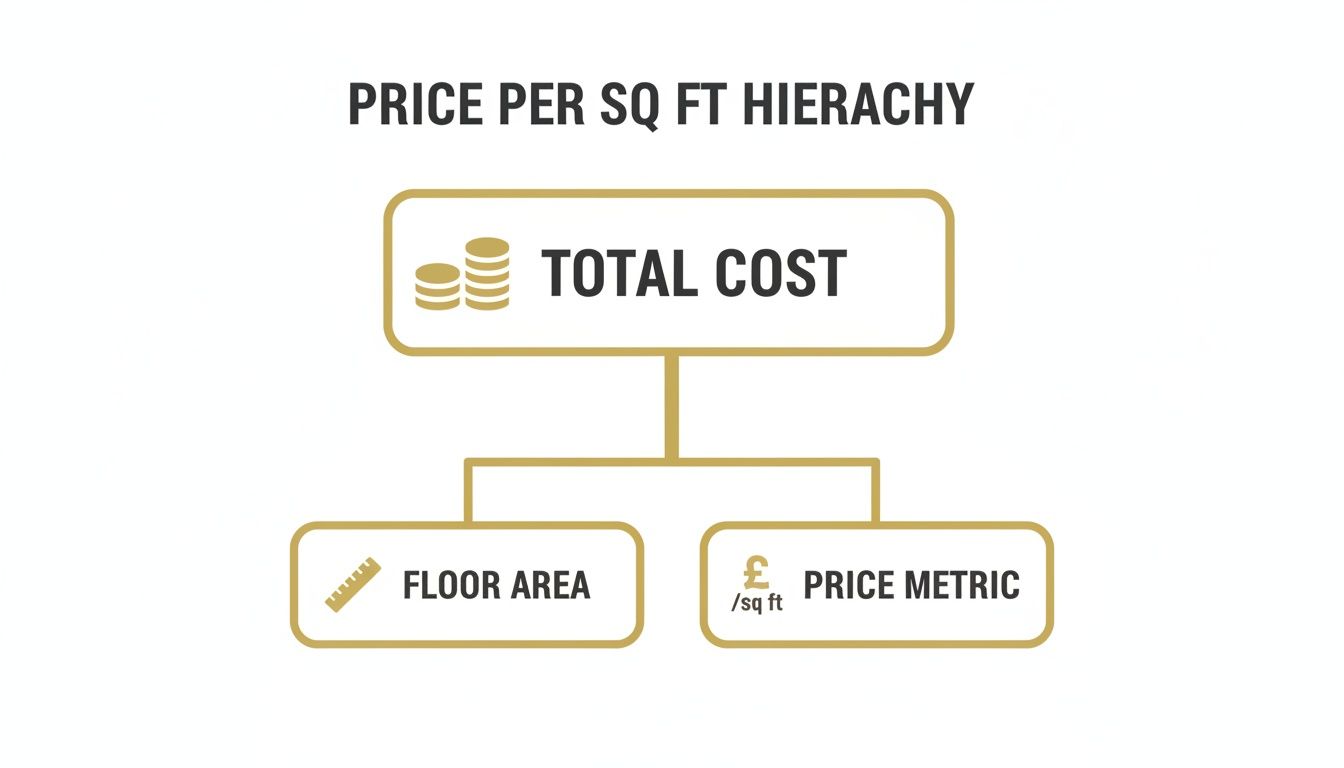
As you can see, the price per square foot is a simple metric that just balances the total cost against the size of your space.
Mechanical and Electrical (M&E) Systems
If an office has a heart and lungs, it’s the Mechanical and Electrical (M&E) systems. These are the critical services running behind the walls and above the ceilings. This hidden infrastructure makes a building comfortable, safe, and functional. M&E is a big cost and often takes up a major slice of the budget.
It covers everything from power and data cabling to lighting, air conditioning, ventilation, and fire safety systems. The complexity here can dramatically change the pricing per square foot. A simple open-plan office in Bishop’s Stortford will have very different M&E needs compared to a science lab that needs specialised cooling.
Core Construction and Finishes
This category is all about the things that shape the look and feel of your workspace. It’s where your brand personality truly comes to life. This table breaks down the main components that influence the final price per square foot.
| Cost Driver | What It Includes | Typical % of Budget |
|---|---|---|
| Partitions | Creating individual offices, meeting rooms, and breakout zones. | 10% – 20% |
| Finishes | Flooring (carpet, vinyl, wood), wall coverings (paint, graphics), and ceiling types. | 10% – 15% |
| Furniture & Tech | Desks, chairs, storage, meeting pods, plus all AV equipment and IT hardware. | 15% – 25% |
For instance, fitting out a space with full-height acoustic glass partitions will cost more than using standard plasterboard walls, but the result is a far more open and modern feel. Similarly, choosing bespoke furniture or high-end AV technology will naturally increase your cost per square foot. It’s worth noting that modular solutions, like acoustic meeting pods from manufacturers such as BlockO or Vetrospace, can offer great, flexible alternatives to fixed walls.
The Often-Overlooked Costs
Beyond the walls, floors, and furniture, there are several other key costs that you must factor into your budget to avoid any surprises.
These essential but less obvious costs include:
- Professional Fees: This covers the costs for your design team, project managers, and any specialist consultants needed for things like structural engineering or acoustics.
- Dilapidations: If you’re leasing your space, your contract likely requires you to return it to its original condition at the end of the term. This is a real cost that needs to be budgeted for.
- VAT: Value Added Tax is chargeable on most goods and services in the UK and must be accounted for in your total project cost.
- Contingency: This is your project’s safety net. It’s always wise to set aside 5-10% of your total budget for the unexpected. Whether it’s finding an issue during the strip-out or a last-minute design change, this fund is absolutely crucial.
Getting your head around all these parts is vital for any business planning a fit out, from those in the bustling commercial hubs of Hertfordshire to those setting up in quieter parts of the country.
How Location Impacts Your 2026 Fit Out Budget
We’ve all heard the estate agent’s mantra: “location, location, location.” But many business owners don’t realise how much this rule affects the budget for an office fit out. The price you’ll pay to transform your workspace is directly tied to where that office is. The price per square foot is definitely not a one-size-fits-all figure across the UK.
For example, a business in a prestige building will naturally invest in a higher quality fit out to match. It’s all about creating an environment that attracts top talent. Understanding these regional differences is the first step to planning a realistic budget for 2026. The UK commercial fit out market was valued at £9.8 billion in 2025 and is projected to grow to £12.1 billion by 2030, according to a report by Market Analysts UK.
The London Premium Explained
It’s no surprise that London is in a league of its own for property, and this has a major knock-on effect on fit out prices. Everything from higher running costs for contractors to logistical headaches like restricted site access adds to the final bill. Combine that with a constant demand for high-end finishes, and you can see why the price per square foot climbs so quickly in the capital.
Regional Variations Across the UK
While London often gets the headlines, there are big cost differences between other major UK business hubs. A project in a thriving city like Chelmsford will have a completely different cost profile to the same project in Manchester. These differences are driven by local labour rates, material supply chains, and the health of the regional economy.
To put things into perspective for your 2026 planning, here’s a general comparison.
| Region | Price Per Sq Ft (Mid-Spec) | Key Factors Influencing Cost |
|---|---|---|
| Central London | £120 – £180+ | High labour costs, logistical complexity, demand for premium spec. |
| Greater London/M25 | £100 – £150 | Still high demand but slightly lower operational costs than Zone 1. |
| Major Regional Cities | £90 – £130 | Strong local economies, good supply chains, competitive market. |
The table makes it clear: while London is the most expensive, other major cities still represent a big investment. Whether you’re planning a project in a key commuter town like Braintree or a major corporate centre, knowing these benchmarks is vital for setting a realistic budget from day one.
Why This Matters for Your Business
For our clients in growing business hotspots like Hertfordshire and Essex, getting to grips with these regional benchmarks provides a real strategic advantage. It empowers you to make informed decisions about where to invest and what level of specification will deliver the best value for your money. For example, you might decide a slightly higher spend on finishes is a worthy investment to stand out and attract talent in a competitive local market.
As you plan for 2026, it’s also smart to look at how prices have shifted over the last few years. This historical data gives you invaluable context, helping you anticipate future costs and plan with much greater accuracy. For a more detailed look into planning your project, you might find our guide on office refurbishment costs incredibly helpful.
Real-World Budgets: Two Fit-Out Examples for 2026
Benchmarks and averages are a great starting point, but seeing the numbers on a real project makes it all click. To show you how a price per square foot figure turns into a real fit-out budget, we’ll walk through two very different scenarios.
First, we’ll look at a typical project for a growing business, and then we’ll scale up to a larger corporate refurbishment. You’ll see how the size, spec, and complexity all shape the final number. Think of these as a practical blueprint to help you start your own budgeting.
Example 1: The Growing SME’s Mid-Specification Fit-Out
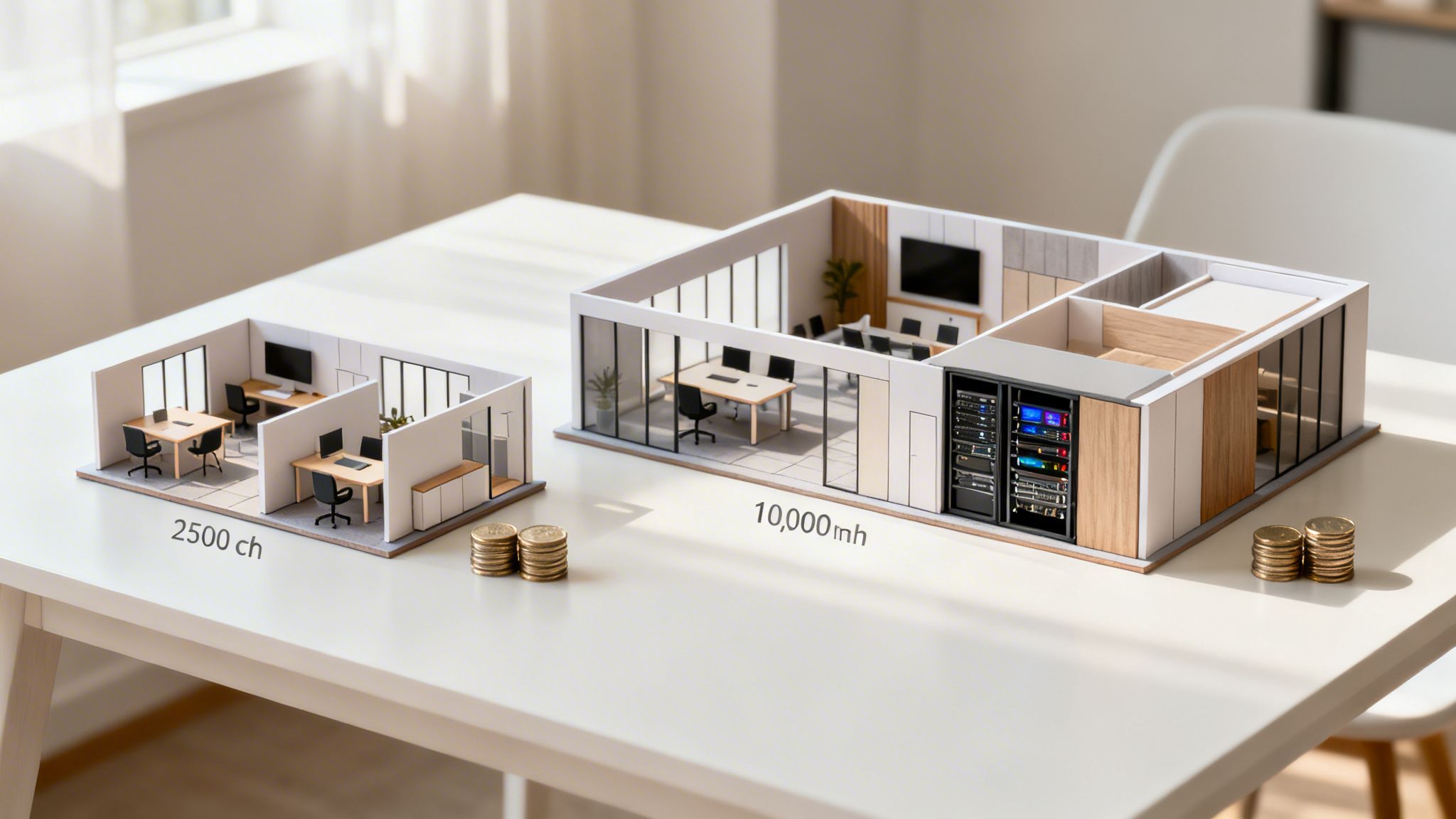
Let’s picture a growing marketing agency we recently worked with near Colchester. They’ve just leased a 2,500 sq ft space and need a modern, branded, and highly functional home for their 25-person team. Their goal was a solid mid-range specification.
The brief was clear: a welcoming reception, an open-plan work area, two glass-fronted meeting rooms, a private office, and a proper kitchen breakout space. They wanted a workspace that felt professional yet creative.
Here’s how we broke down the budget, using a mid-spec price per square foot of £85.
- Total Office Area: 2,500 sq ft
- Target Price Per Square Foot: £85
- Total Estimated Budget: 2,500 sq ft x £85 = £212,500
So, what does that £212,500 actually get you? It’s all about smart choices that deliver maximum impact.
| Cost Component | What It Delivers for the Budget |
|---|---|
| Partitions & Doors | Framed glass partitions for meeting rooms and the office, which keep that bright, open-plan feel. |
| Finishes | Durable, high-quality carpet tiles, a feature vinyl floor in the kitchen, and walls painted in brand colours. |
| Furniture | Good quality ergonomic desks and chairs, comfortable breakout furniture, and solid meeting room tables. |
This scenario proves that a mid-range budget, when planned properly, can create a fantastic, high-quality environment.
Example 2: The Corporate High-Specification Refurbishment
Now, let’s look at the other end of the scale. A corporate law firm in a major business hub like Milton Keynes is refurbishing their 10,000 sq ft floor. The primary drivers are creating a first-class client experience and attracting the very best legal talent.
Their vision is ambitious: a statement reception, a client suite of boardrooms packed with advanced AV tech, private offices for partners needing high acoustic privacy, and premium staff facilities. Every finish has to be exceptional.
For a high-end refurbishment like this, the price per square foot jumps significantly. We’ll use £160 as our benchmark.
- Total Office Area: 10,000 sq ft
- Target Price Per Square Foot: £160
- Total Estimated Budget: 10,000 sq ft x £160 = £1,600,000
With a budget of this size, the firm can achieve a truly world-class finish. Here’s where the money goes:
- Complex M&E: This involves sophisticated lighting control systems, enhanced air conditioning for server rooms, and extensive data infrastructure.
- Premium Finishes: The budget allows for natural stone flooring in reception, bespoke joinery for storage, and high-performance acoustic materials for confidentiality.
- Advanced Technology: A large slice of the budget is dedicated to fully integrated AV systems in the boardrooms, smart room booking systems, and top-tier security.
These two examples show the clear link between a project’s scope and its cost per square foot. By understanding this, you can start building a realistic budget for your own project, whether you’re in a growing Essex business park or a prime city-centre tower.
How to Manage Your Budget and Get the Best Value in 2026
Getting to grips with the pricing per square foot for a fit-out is just the starting line. The real art is actively managing that budget to get the most value. It’s where smart strategy meets financial reality, making sure your dream workspace doesn’t come with any nasty surprises.
This is about giving you the confidence to make informed decisions. Choices that stretch every pound and deliver a space that not only looks incredible but performs brilliantly for your business.
Engage a Partner Early
One of the best things you can do to protect your budget is to bring a design and build partner on board from day one. Involving experts at the very beginning helps you avoid costly mistakes and late-stage changes that can ruin a project.
An experienced partner can even look at a potential space before you’ve signed the lease, giving you realistic cost feedback. This early teamwork connects the design vision to your budget from the start, allowing for creative problem-solving when it’s most effective. For businesses in competitive areas like Hertfordshire, this foresight is key to a smart investment.
The Value of a Detailed Brief
A vague brief will always lead to a vague budget. It’s that simple. The single most important document you’ll create is your project brief. This is your chance to outline exactly what you need from the new workspace, from the number of meeting rooms to specific technology requirements.
A detailed brief removes guesswork and ambiguity, giving your design partner a clear blueprint. This allows them to provide a much more accurate price per square foot from the start. Your brief should cover:
- Headcount: Your current team size and realistic plans for growth.
- Work Styles: Do your teams need collaborative zones, quiet focus areas, or a mix of both?
- Brand Identity: What impression should the space make on your staff and visitors?
- Technical Needs: Specifics for IT infrastructure, AV equipment, and security systems.
Flexible Solutions and Value Engineering
Traditional construction isn’t your only option. Modern office design is filled with fantastic, flexible alternatives that are often more cost-effective. For example, modular meeting pods from innovators like the Finnish brand Vetrospace can provide acoustically private spaces without the disruption and permanence of building new walls.
These pods can be moved and reconfigured as your business grows, offering brilliant long-term value. Another key strategy is value engineering. This is where your design partner suggests alternative materials or construction methods to reduce costs without hurting the design or quality. It’s about making smart choices. For a deeper dive into the financial side of a project, our guide to procurement in construction for 2026 is an excellent resource.
Whether you’re managing a project in a high-demand area or just starting your journey, these principles will help you steer your project to a successful and financially sound conclusion.
Common Questions About Office Fit Out Pricing
We’ve covered the core parts of fit out costs, but it’s natural for more specific questions to come up. It’s a complex area, and getting clarity is crucial. Let’s tackle some of the most common queries we hear from our clients.
Does the Price Per Square Foot Include Furniture?
This is a question we get all the time, and the honest answer is: it depends on the quote.
When you partner with a design and build specialist like us, the quote is often fully comprehensive. It covers everything from major construction and M&E systems right through to the desks, chairs, and final IT cabling. You get one clear, all-in figure.
However, some quotes might only cover the core construction and finishes, which is known as a ‘Category B’ fit out. In that case, furniture and technology are listed separately. Always ask for a detailed cost breakdown to see exactly what is, and isn’t, part of that headline square foot price.
How Can I Make My 2026 Office Fit Out More Cost-Effective?
There are plenty of smart ways to manage your budget without compromising on a fantastic new workspace. The most direct way is often choosing a high-quality, mid-range specification over a premium, high-end one. The results can be just as impressive at a much more accessible price.
Other effective strategies we often explore with clients include:
- Reusing Your Assets: Can some of your existing furniture be cleverly used in the new design?
- Phasing the Project: If the budget is tight, could the work be planned in logical stages over time?
- Value Engineering: We can work with you to identify alternative materials that achieve a similar look and feel for less.
- Embracing Open-Plan: Fewer private offices and solid walls usually mean lower costs for construction, electrics, and ventilation.
Is a Design and Build Contract Better Value?
For most businesses, a design and build contract is absolutely the most cost-effective path. This is where a single company, like Gibbsonn, manages everything from the first sketch to the final handover, whether your project is in Dartford or elsewhere in the UK.
This integrated approach keeps the design and construction teams perfectly in sync from day one. It guarantees the creative vision is always achievable within your budget, giving you one expert point of contact and total peace of mind.
Ready to transform your workspace? Speak to the Gibbsonn Interiors team today.