
Office floor planning is about more than arranging desks. A smart layout is a powerful tool that shapes productivity, builds company culture and directly impacts your bottom line. It’s about creating an environment that actively drives your business forward.
Why Your Office Floor Plan is a Competitive Advantage
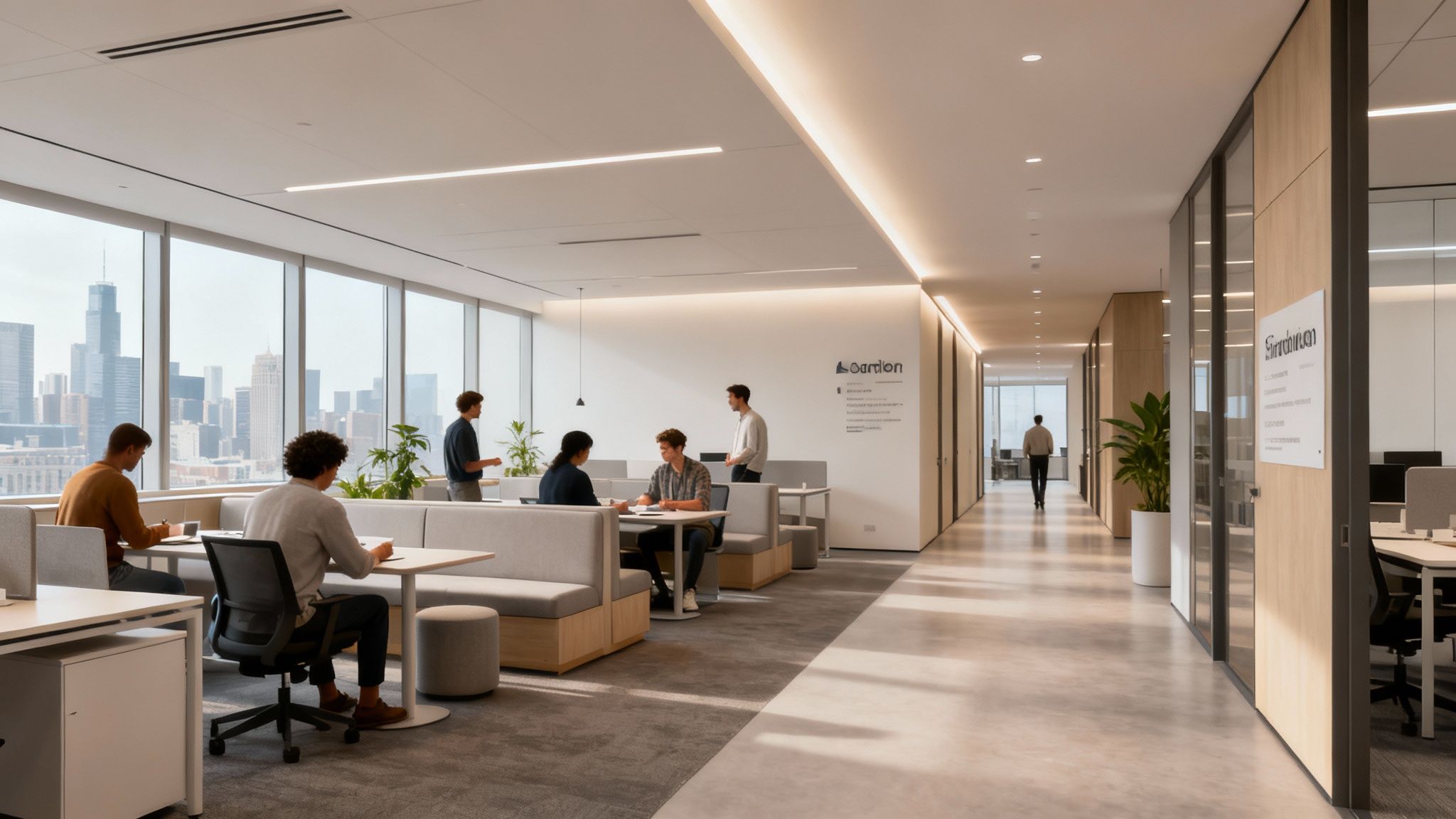
With hybrid working now standard the purpose of the office has changed. It’s no longer just a place to work but a destination for collaboration, innovation and connection. A well-thought-out office floor plan can be your secret weapon in the war for talent. In fact, research shows that employees in well-designed workspaces report 15-20% higher satisfaction with their environment.
A great layout isn’t about jumping on trends. It’s about understanding how your teams work and designing a space that empowers them. The right plan can solve some of today’s biggest business headaches.
- Boosting Productivity: When you create distinct zones for focused work, collaborative projects and social interaction you give people the freedom to choose the best environment for their task.
- Fostering Culture: Your office layout says a lot about your company’s values. An open, collaborative space shows you value teamwork while dedicated quiet zones show you value deep concentration.
- Optimising Costs: With around 40% of office space going unused on any given day a strategic plan ensures every square metre earns its keep. This avoids paying for empty desks and underused meeting rooms.
From Cost Centre to Strategic Asset
For too long office space was seen as a fixed overhead. But forward-thinking companies are flipping that script. They see their workspace as a dynamic asset that drives growth and delivers a real return on investment.
This means ditching outdated, one-size-fits-all layouts. The focus now is on creating adaptable, flexible environments that can evolve with your business. Whether you’re based in a bustling hub like London or a growing town like Bishop’s Stortford, the principles are the same: create a space that people want to be in.
A thoughtfully designed office floor plan does more than just look good. It enhances workflow, sparks innovation and makes your team feel valued. It transforms your physical space from a simple workplace into a real competitive advantage.
Ultimately, a successful office floor planning project aligns your physical environment with your strategic goals. It ensures your office is not just a place where work happens but a catalyst that helps it happen better. This guide is packed with practical insights to help you do just that.
Building a Data-Driven Project Brief
Before any walls come down or desks are ordered the most critical part of office floor planning has to happen: building the project brief. Jumping into design without a solid, data-backed brief is like setting sail without a map. It’s a recipe for expensive mistakes and a final layout that doesn’t work.
The aim is to get past assumptions and ground your plan in reality. A great brief isn’t just a wish list but a strategic document built from understanding your people, processes and future goals. Get this foundational step right and you’ll avoid costly revisions later.
Asking the Right Questions
First, you need to gather information directly from your teams. This means speaking with department heads and team leaders to understand their daily workflows, their frustrations and what they want from a new space. Generic surveys won’t cut it. You need to dig deeper with specific, open-ended questions.
Here are a few essential things to ask:
- Workflow & Adjacencies: Which teams constantly talk to each other? Are there any bottlenecks in the current layout that block collaboration?
- Work Modes: What’s the split between focused work and collaborative tasks? Does the team need more quiet zones or more dynamic project spaces?
- Pain Points: What’s the single biggest frustration with the current office? Is it the constant battle for meeting rooms, bad acoustics or nowhere for a casual chat?
- Future Growth: What are your predictions for team size over the next three to five years?
This gives you the human context that raw numbers can’t provide. It helps you design a space that solves real problems and supports the specific ways your teams need to work, whether they’re in Chelmsford or Cambridge.
Using Workplace Analytics
While conversations are vital, data gives you the objective truth about how your space is actually used. Simple workplace analytics can reveal surprising patterns and highlight gaps between what people think they do and what they really do. You don’t need complex sensors to get started.
You can begin by tracking a few key metrics:
- Occupancy Rate: On an average day, how many people are in the office? This is the most crucial metric for getting your footprint right in a hybrid world.
- Desk Utilisation: What percentage of desks are actively used? If you find only 60% of desks are occupied even on your busiest days you might have an opportunity to bring in hot-desking or use that space for something else.
- Meeting Room Usage: Are your large boardrooms always booked for two-person chats? Or is there a shortage of small, informal huddle spaces? Tracking this helps you create a more efficient mix of meeting areas.
By combining what your people say they need with data on what they actually do, you create a powerful, evidence-based foundation for your office floor plan. This data-driven approach removes guesswork and ensures your investment has the greatest impact.
Calculating Space for a Hybrid Workforce
Figuring out space requirements is no longer a simple case of headcount multiplied by square metres. With hybrid work you need a more nuanced approach that focuses on peak capacity and activity-based working.
Instead of the old one-desk-per-person rule think about a shared desk ratio (like 1.5 employees per desk) based on your average occupancy data. This frees up floor space that you can reinvest into spaces that draw people in: vibrant collaboration zones, private pods for video calls and comfortable social areas. To help you get started, our comprehensive office space planning checklist provides a structured framework for this process.
This detailed, data-informed brief becomes your guide throughout the project. It gets everyone on the same page, from your leadership team to your design partners, making sure you’re all working towards the same clear goals. It’s the single most important factor in creating a workspace that not only looks fantastic but performs brilliantly.
Designing for People: Smart Zoning and Flow
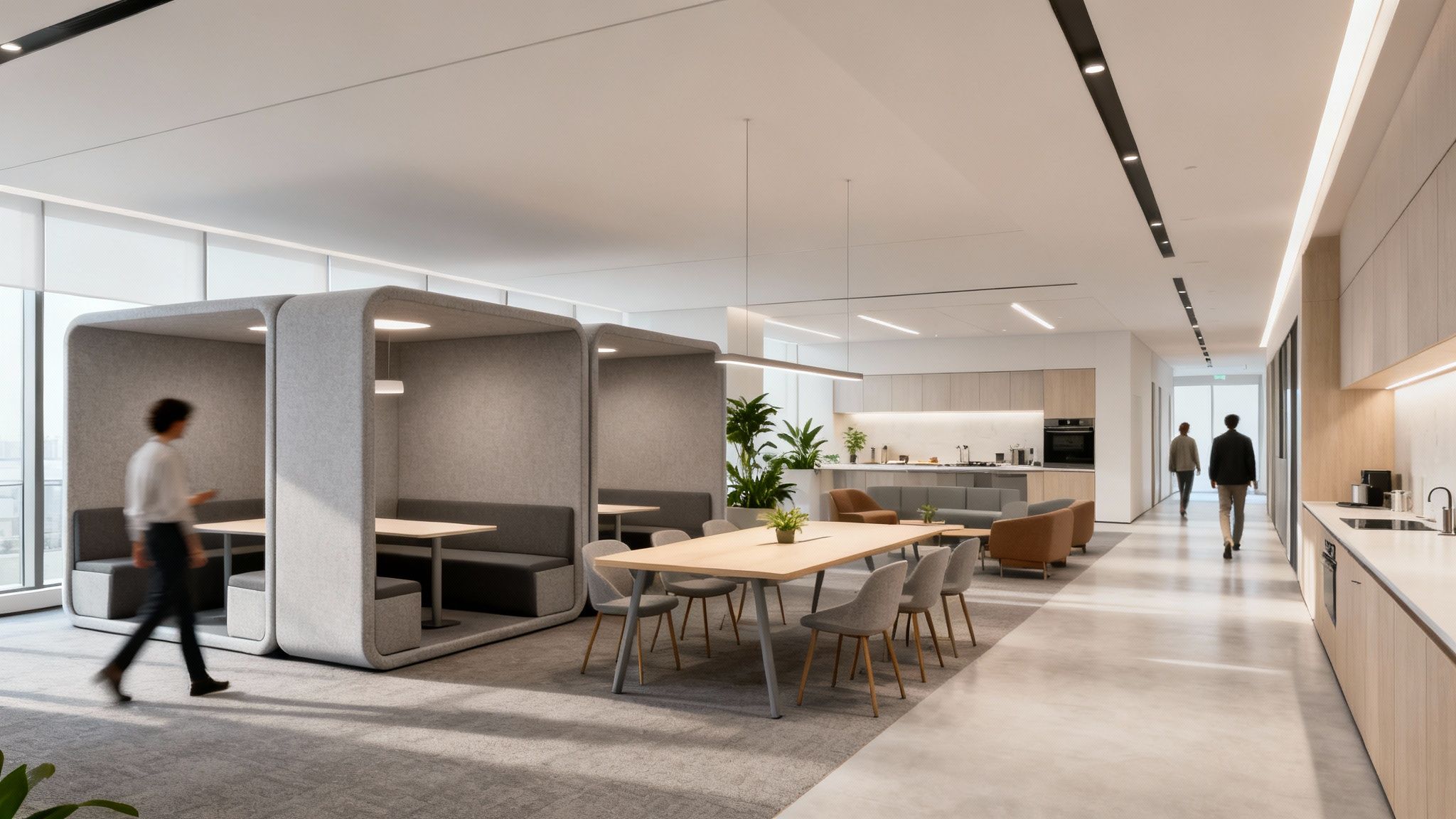
A truly effective office floor plan just works. People move through it naturally, finding the right space for the task at hand without thinking. This is the art of zoning and it’s about more than just separating departments. It’s about designing for human behaviour.
Good zoning creates a deliberate ecosystem in your office, carefully balancing different environments to support all work activities, from intense concentration to dynamic collaboration.
Creating Office Neighbourhoods
The best way to approach this is to stop thinking of your office as one big room. Instead, picture it as a collection of distinct neighbourhoods, each with its own purpose. Good office floor planning draws clear lines between these zones to cut down on disruptions and let people get on with their work.
Every modern office needs to think about three core zones:
- Focus Zones: These are the libraries of your office. They’re quiet, distraction-free areas built for deep concentration. Think individual workstations tucked away, quiet corners or dedicated rooms where noise is kept to a minimum.
- Collaboration Zones: These are your bustling town squares. You want energetic spaces for teamwork, brainstorming and spontaneous chats. This is where you’ll have project tables, whiteboarding walls and informal meeting spots.
- Social Zones: This is the office café. We’re talking breakout areas, kitchens and comfortable lounges designed for relaxing and interacting informally. It’s often where the most valuable conversations happen.
The secret to successful zoning is placement. You would never put a loud, collaborative project area right next to a quiet focus zone. On the other hand, putting the coffee machine along a main walkway is a classic trick to encourage chance encounters that lead to brilliant ideas.
The Importance of Circulation and Flow
Once you’ve defined your zones you need to connect them with clear, logical pathways. This is what we call circulation or flow. Get the circulation right and the office feels easy to navigate and accessible for everyone, avoiding frustrating bottlenecks.
When planning these routes you must consider UK building regulations and accessibility standards. Your main pathways must be wide enough for wheelchair users and fully comply with the Equality Act 2010. Keeping these main arteries clear isn’t just a compliance task but fundamental to creating a functional and welcoming space for everyone. This practical approach is central to how we go about designing office space.
Integrating Privacy in Open Plans
The biggest puzzle in modern office design is striking the right balance. How do you get the collaborative buzz of an open plan without sacrificing the need for privacy? This is where modular solutions have become a game-changer.
Acoustically sealed office pods, like those from Vetrospace, give you the best of both worlds. They can be dropped into an open-plan layout to create instant, soundproof sanctuaries for confidential calls, video meetings or intense focus work. This means you can keep that vibrant, open atmosphere while providing the private spaces people need.
This trend is reflected across the UK, with companies increasingly looking for larger, more flexible floorplates that can accommodate these modular solutions. In the City of London, for example, office spaces over 100,000m² grew by 291.6% in a decade as organisations consolidated into bigger layouts that support modern, agile working.
By thoughtfully zoning your space and ensuring seamless flow you create an environment that doesn’t just house your employees but actively helps them do their best work.
Optimising Workstations and Meeting Spaces
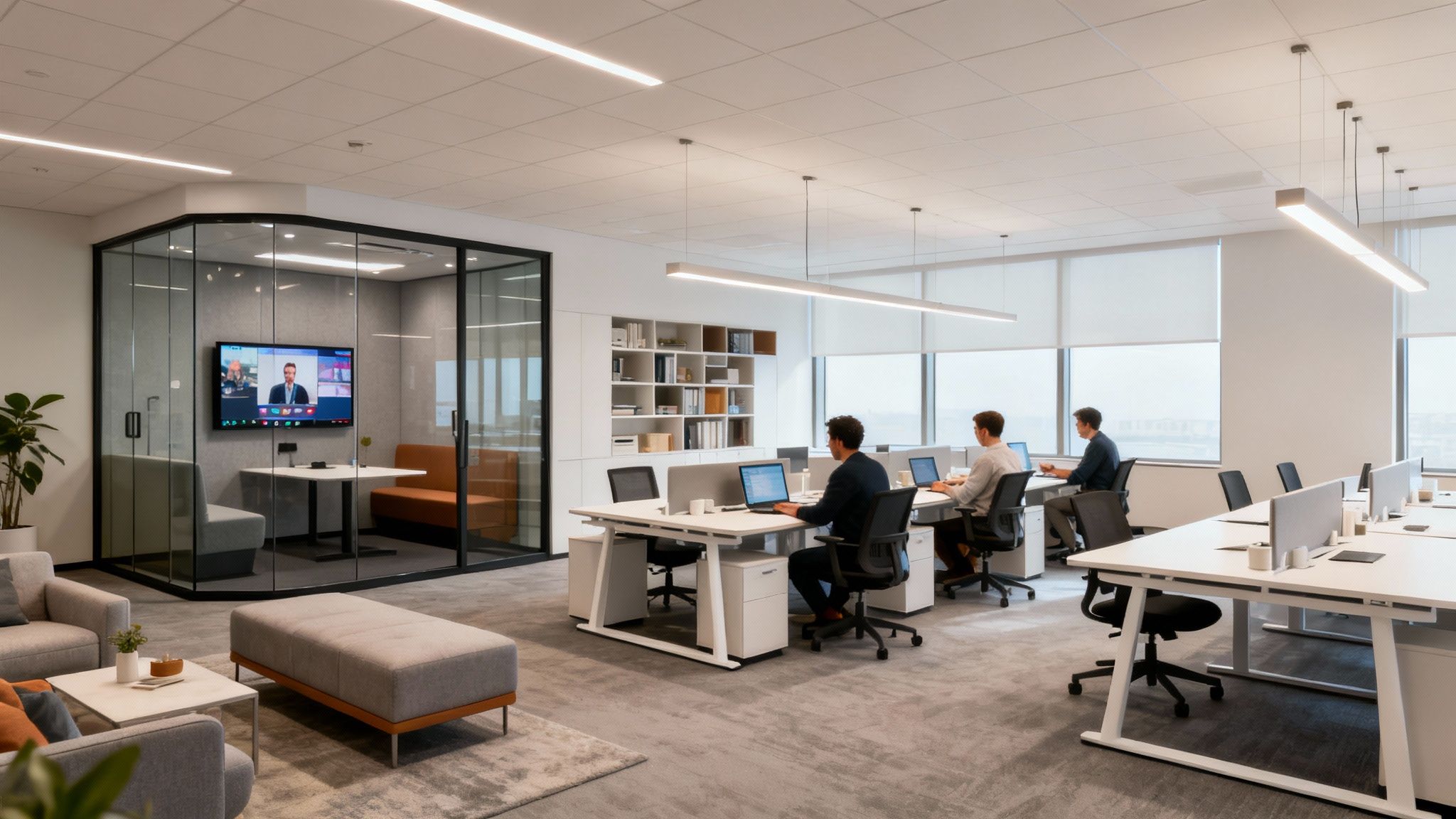
This is where the real work gets done, at desks and in meeting rooms. These spaces are the engine room of your business so getting them right in your office floor planning is critical. It’s about creating an environment that supports both deep focus and group collaboration.
The days of the monotonous cubicle farm are behind us. Today’s workspaces need to offer a variety of settings that cater to different tasks and work styles. This is especially true for businesses in areas like Braintree and Chelmsford, where a standout office is a key tool for attracting top talent.
Rethinking the Workstation
The humble desk has had a serious makeover. It’s no longer a personal island but one part of a wider workplace ecosystem. The goal now is to give people choice and flexibility, moving beyond the old one-size-fits-all approach.
Modern workstation layouts usually fall into a few camps:
- Collaborative Benching: Think long, shared tables that encourage communication. They’re space-efficient and brilliant for teams that need constant conversation but you have to manage the potential for noise.
- Team-Based Clusters: This is about arranging desks into small groups, often in pods of four or six. It helps create a ‘neighbourhood’ feel for specific teams while still being part of a wider open-plan space.
- Agile Hot-Desking: A flexible model where no one has an assigned desk. It’s fantastic for maximising space efficiency, especially with hybrid teams, but it relies on great booking technology and a culture of trust.
No matter which layout you choose ergonomics are non-negotiable. Providing properly adjustable chairs, monitor arms and sit-stand desks isn’t a luxury. It’s a fundamental investment in your team’s health and productivity. A comfortable employee is a focused one.
More Than a Boardroom
Just as the desk has evolved so has the meeting room. Relying solely on one large boardroom is an outdated strategy. Modern collaboration is often spontaneous and fast-paced and it almost always involves a mix of people in the room and joining remotely.
Your office floor plan should feature a mix of spaces designed for different kinds of interaction:
- Informal Huddle Rooms: Small, casual rooms for two to four people. They’re perfect for quick check-ins or impromptu brainstorming without booking a large conference room.
- Tech-Enabled Suites: These are mid-sized rooms kitted out with high-quality video conferencing gear, interactive whiteboards and excellent acoustics to make hybrid meetings seamless.
- Project ‘War’ Rooms: Dedicated spaces a team can ‘own’ for the duration of a project. They can leave work-in-progress on whiteboards and walls, creating an immersive hub for creativity.
The key is variety. When you offer a range of meeting spaces you empower your teams to choose the right environment for the job. This dramatically improves the quality and efficiency of their collaboration.
This shift has led many businesses to weigh up the pros and cons of built rooms versus modern, modular solutions like office pods.
Office Pods vs Traditional Meeting Rooms
Deciding between constructing permanent meeting rooms and integrating flexible office pods is a major decision in modern office floor planning. Each has distinct advantages and the right choice boils down to your budget, timeline and long-term strategy. A few well-placed office pods can provide instant acoustic privacy without the cost and disruption of major construction.
To help you weigh it up, here’s a practical comparison:
Office Pods vs Traditional Meeting Rooms
| Feature | Office Pods | Traditional Meeting Rooms |
|---|---|---|
| Flexibility | Highly flexible and can be moved as your business needs change. | Permanent and fixed, requiring significant construction to alter the layout later. |
| Installation | Quick and clean. Often installed in just a few hours with minimal disruption. | Involves noisy, dusty construction, leading to longer project timelines and more disruption. |
| Cost | Typically a lower initial investment with no dilapidation costs at the end of a lease. | Higher upfront cost for construction and you’ll pay to reinstate the space when you leave. |
In our experience, a blended approach often delivers the best results. You can use traditional rooms for larger, permanent fixtures like the main boardroom while integrating office pods to provide the flexible, on-demand private spaces that a modern workforce needs.
Future-Proofing Your Workspace for 2026 and Beyond
The one thing you can count on in business is change. Your team will grow, how people work will shift and new technology will always be around the corner. A static office floor plan, built only for today’s needs, can quickly become an expensive problem. Future-proofing is a practical strategy for creating a workspace that can adapt with your business.
This forward-thinking is about building in flexibility from day one. It means selecting solutions that allow for easy changes without the cost of a full renovation. By planning for tomorrow you’re saving yourself a huge amount of time, money and stress.
Embracing Agility with Modular Design
At the heart of any future-proof workspace is modularity. Think of it less like building with bricks and more like using LEGO. It’s about using adaptable systems that you can reconfigure as your needs evolve.
Here are the key elements of a modular approach:
- Moveable Walls and Partitions: A fantastic alternative to fixed stud walls. They give you the power to resize meeting rooms, create new project areas or open up the entire space with minimal fuss.
- Adaptable Furniture: Choosing furniture on castors is a game-changer. Mobile whiteboards, storage units and even workstations empower your teams to reshape their own environment.
- Scalable Technology: Your power and data infrastructure needs to be ready for change. Using raised access flooring or overhead power grids makes it much simpler to move desks around.
Planning for Compliance and Sustainability
A truly future-proofed office must also anticipate regulatory changes. In the UK, compliance is a constantly moving target and staying ahead is vital for any business, especially in markets like London or Hertfordshire.
Two major areas to watch are accessibility and energy efficiency. The Equality Act 2010 lays out clear standards for making your workplace accessible and this has to be a fundamental part of your office floor planning. On top of that, upcoming changes to Energy Performance Certificate (EPC) ratings are a huge driver of decisions.
With new rules on the horizon mandating a minimum EPC rating of ‘C’ by 2027 for non-domestic properties many older buildings will need significant upgrades. Planning for this now isn’t just smart but essential for your long-term viability.
This regulatory pressure is pushing the demand for high-quality, compliant office spaces. Recent London office market data from 2024 shows a clear flight to quality, with 73.6% of major transactions happening in premium Grade A buildings. Since prime regional development is at its lowest point since 2012 the need for intelligent refurbishments that meet these new standards has never been more critical.
Designing for Evolving Work Styles
Future-proofing also means looking ahead to how people will work. The shift to hybrid models has taught us that the office needs to be more than just a collection of desks. It must be a flexible hub that supports a range of activities.
Your office floor plan should handle potential shifts in headcount and work patterns. For instance, if your business pivots towards a more agile, project-based structure you’ll need fewer assigned desks and more collaborative zones.
Integrating modular office pods from specialists like BlockO or Framery is a brilliant way to build in this flexibility. They provide instant, private spaces that can be moved or repurposed as your team’s needs change. This proactive approach ensures the workspace you create today remains a valuable asset for years to come.
Bringing Your Vision to Life: The Fit-Out Process
You’ve sorted the detailed office floor planning and now for the exciting part. It’s time to bring that vision to life. The fit-out process is where drawings, mood boards and decisions take shape, transforming a space into a branded, functional environment.
This stage is a carefully choreographed process, moving from the final technical drawings to the moment we hand you the keys.
Success here comes down to seamless coordination. Getting the Mechanical, Electrical and Plumbing (MEP) services right from the start is critical. We need to ensure your layout works in harmony with the building’s power, data, ventilation and plumbing infrastructure. An integrated approach avoids expensive rework and guarantees your new workspace is ready from day one.
Minimising Disruption During Refurbishment
If you’re overhauling your current office while your team is still working the big challenge is keeping business running as usual. Minimising disruption isn’t just a nice-to-have but essential for morale and productivity.
This is where a phased approach is valuable. By breaking the project into manageable chunks we can tackle one area at a time while your team carries on in another. Clear communication and a strict timeline make a low-impact refurbishment possible, keeping noise and dust to a minimum.
The infographic below touches on the core ideas behind a workspace strategy that’s built to last.
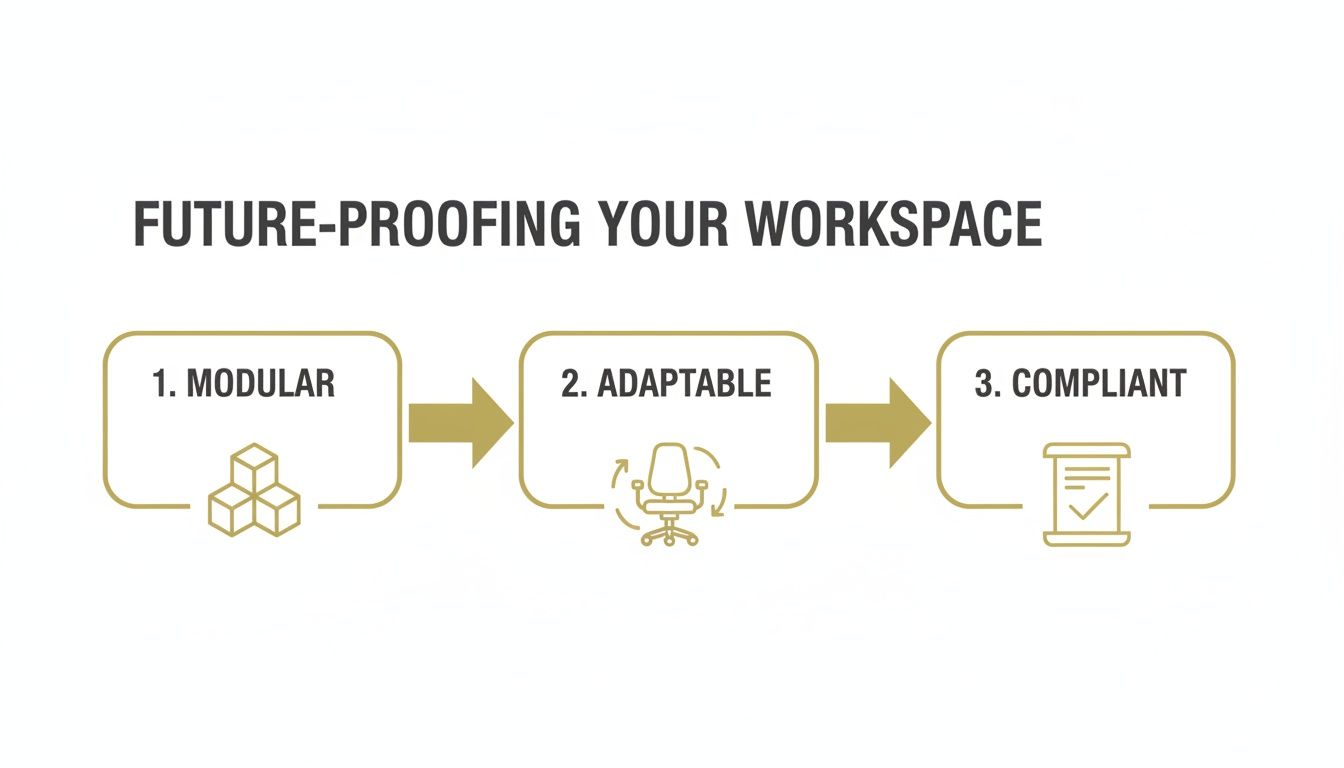
It’s all about designing for modularity and adaptability, ensuring your investment stays relevant for years.
The Power of a Single Point of Contact
Trying to manage an office fit-out yourself can quickly become a headache, juggling multiple contractors and suppliers. This is why a design-and-build model is so effective. It gives you one company and one point of contact responsible for the entire journey, from the first sketch to the final handover. Accountability is clear, communication is simple and the process is predictable.
This streamlined approach is more important than ever as UK businesses rethink their spaces. We’ve seen desk ratios shrink from 79 desks per 100 employees to just 56 post-pandemic, while desk usage has climbed to 49%. This trend creates a huge opportunity for fit-outs that cleverly blend fixed desks with flexible, collaborative zones. You can read the full research on office attendance and desk use to get a deeper insight.
A well-managed fit-out is predictable and smooth, turning a potentially stressful project into an exciting step forward. It’s about delivering your vision on time, on budget and exactly as you imagined it.
To help you stay on top of every detail, our comprehensive office fit out checklist is the perfect companion, providing a step-by-step guide to make sure nothing gets overlooked.
Common Office Floor Plan Questions
We get asked many questions about the details of office floor planning. Let’s get straight to the point and tackle some of the most common ones we hear. This should help you sidestep a few common pitfalls.
How Much Space Do I Need Per Employee?
There’s no magic number. The right answer depends on your company’s culture and how your teams work. The old way of thinking, cramming as many people in as possible, is over.
While a traditional office might have aimed for 8–10 square metres per person today’s hybrid-first plans are about variety and quality over density. You might find you need fewer dedicated desks but more collaborative hubs, quiet pods and breakout areas. The best approach is to stop counting heads and start analysing how your people use the space.
What Is the Biggest Mistake to Avoid?
The most common mistake we see is designing a perfect space for now with no thought for the future. A static layout that fits your current team like a glove can feel restrictive and outdated within a year or two.
Try to avoid fixed walls and built-in furniture where you can. Your best friends are modularity and flexibility. Think movable partitions, adaptable furniture and office pods that you can shift around. This agile approach ensures your workspace in places like Essex or Stansted can grow with your business, saving you a fortune on future refits.
The most effective floor plans aren’t rigid blueprints but adaptable frameworks. They give you structure but leave room for your business to grow and change direction without needing a complete overhaul every few years.
How Can I Improve Acoustics in an Open-Plan Office?
Acoustics can make or break an open-plan office. It’s not about achieving total silence but about creating comfort. The best way to do that is with a multi-layered approach.
Start with the basics: sound-absorbing materials. Things like acoustic ceiling baffles, fabric wall panels and even good quality carpet can do a brilliant job of soaking up ambient chatter.
You can also get clever with your furniture. High-backed sofas and strategically placed shelving units are great for breaking up sound waves. But the real game-changer is providing ‘escape’ spaces. Integrating acoustically sealed office pods for private calls and deep work is one of the most effective things you can do. It contains noise at the source and gives people the privacy they need.
Ready to transform your workspace? Speak to the Gibbsonn Interiors team today.