
Embarking on an office fit out is a big project for any organisation. Whether you’re moving to a new space in London, refurbishing an existing office in Bishop’s Stortford, or changing a layout in Cambridge, the process is complex with lots of moving parts. A misstep in the early stages can lead to budget overruns, delays and a workspace that doesn’t meet your team’s needs. The key to a successful change is careful planning and a structured approach. Without a clear roadmap, important details like regulations, tech infrastructure and end-of-lease duties can be missed, turning an exciting opportunity into a logistical nightmare.
This is where a complete office fit out checklist becomes an essential tool. It turns a huge project into a series of manageable steps. This guide is your roadmap, providing clarity for facilities managers, business owners and design partners. We will break down the process into nine core areas, from initial space planning and budgeting to the final handover. Following this checklist will ensure no detail is missed, helping you to handle complexities with confidence, reduce risks and deliver a functional, inspiring and future-proofed workspace. By systematically addressing each point, you can guarantee your project stays on schedule, within budget and perfectly aligned with your business goals, creating an environment where your team can thrive.
Table of Contents
- 1. Space Planning & Layout Design
- 2. Acoustic & Sound Management
- 3. Ergonomic Furniture & Workstation Setup
- 4. Electrical & Technology Infrastructure
- 5. Lighting Design & Controls
- 6. HVAC, Ventilation & Air Quality
- 7. Flooring, Colour Scheme & Branding Integration
- 8. Dilapidations Management & Lease Compliance
- 9. Meeting Spaces, Breakout Areas & Collaboration Zones
1. Space Planning & Layout Design
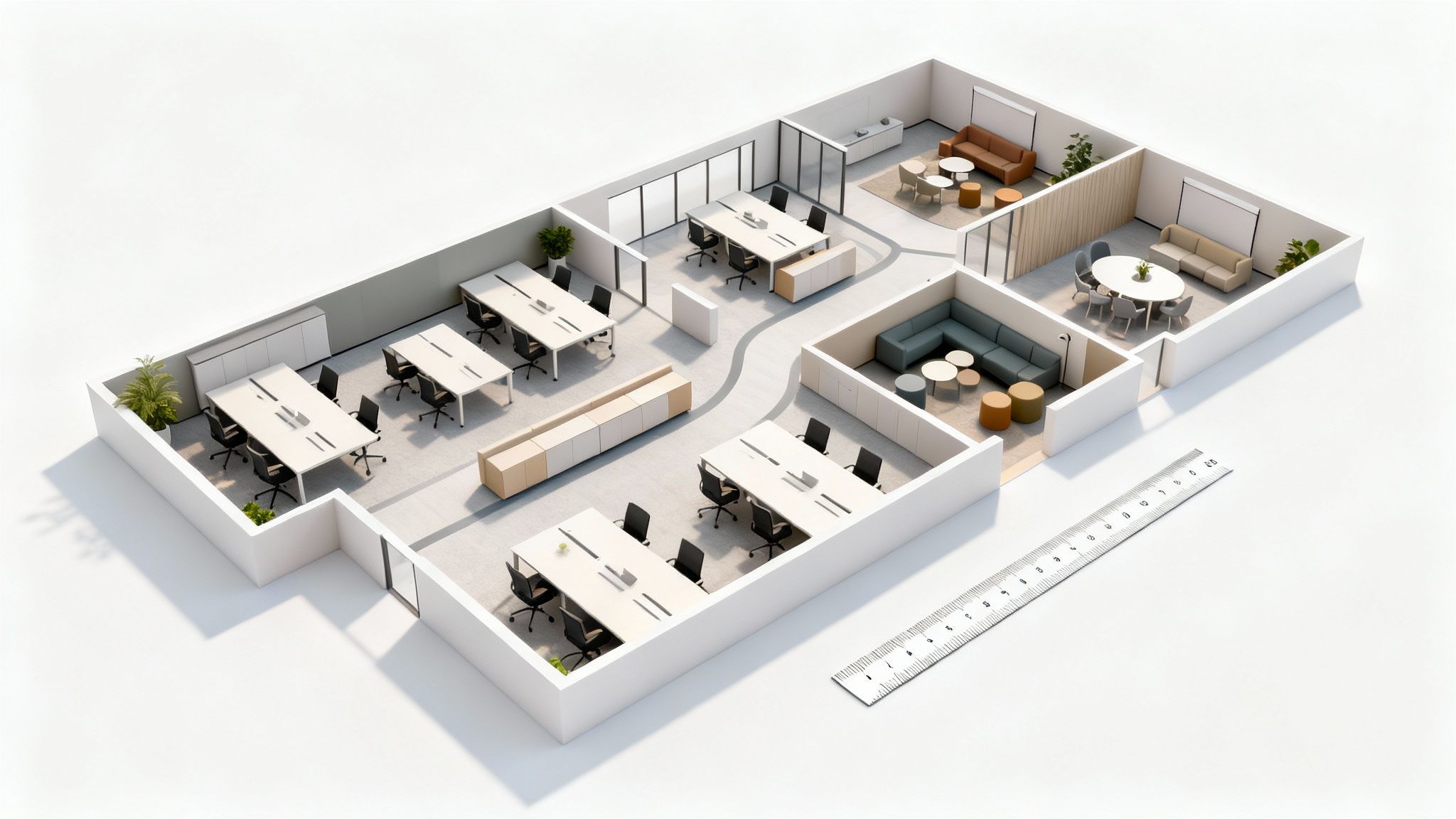
The first and most important item on any office fit out checklist is strategic space planning. This is the foundation of your entire project and it’s more than just deciding where to put desks. It involves a deep look at your company’s workflow, departmental needs, communication patterns and future growth plans. An effective layout optimises every square metre to boost productivity, encourage collaboration and support your unique company culture.
Why It’s a Crucial First Step
Without a well-researched plan, you risk creating a workspace that hinders rather than helps your team. For example, a pharmaceutical company must design its labs to meet strict safety rules and streamline access to special equipment. Similarly, a tech firm moving from assigned desks to activity-based working needs a layout with different zones for focused work, collaborative projects and informal meetings. Getting this step right ensures your physical environment directly supports your business goals. To get a better sense of how different zones come together, our insights into office design and space planning provide a deeper look into the principles involved.
Actionable Tips for Effective Layout Design
- Engage End-Users: Involve your staff in the early planning stages. Use surveys or workshops to understand their daily routines, pain points and what they need to work well. Their input is priceless for creating a truly functional space.
- Plan for Growth: A common mistake is designing only for your current headcount. Aim to build in 15-20% “headroom” for future expansion. This foresight prevents the need for expensive changes soon after completion.
- Embrace Flexibility: The modern workplace is dynamic. Use modular furniture, moveable partitions and multi-purpose zones that can adapt as your team’s needs change.
- Validate with Data: Don’t rely on assumptions. Use tools like occupancy sensors or heatmap data from your existing office to see how spaces are actually used. This evidence-based approach ensures your new design meets real demand.
2. Acoustic & Sound Management
Poor acoustics can be one of the biggest unseen problems for workplace productivity. Good acoustic and sound management is therefore a vital part of any office fit out checklist, focusing on controlling noise to create a comfortable and functional environment. This is about more than just soundproofing. It’s about strategically using materials and design to manage noise from outside and sound travelling inside, making sure confidential conversations stay private and focused work is possible even in a busy office.
Why It’s Crucial for a Productive Environment
In today’s varied workplaces, a one-size-fits-all acoustic solution doesn’t work. A legal firm in London, for example, needs spaces with high levels of speech privacy for sensitive client talks. An open-plan tech office in Cambridge, on the other hand, needs to absorb the buzz of collaboration without it becoming overwhelming. Neglecting acoustics leads to distractions, increased stress and a big drop in employee efficiency. A well-designed acoustic strategy ensures the soundscape supports the specific activities taking place, from deep concentration in quiet zones to energetic brainstorming in collaborative hubs.
Actionable Tips for Effective Acoustic Design
- Conduct a Pre-Fit Acoustic Audit: Before finalising your design, check your current or proposed space to identify key noise sources and problem areas. This gives you a baseline to inform your design choices and material specifications.
- Specify Appropriate Sound Ratings: Work with your fit out partner to define minimum Sound Reduction Index (SRI) ratings for partitions based on the activities planned for each area. A private office will need a much higher SRI than a casual breakout space.
- Combine Multiple Strategies: The most effective acoustic solutions layer different techniques. Combine sound absorption (using soft materials like panels and carpets to reduce echo), sound blocking (using dense partitions and doors) and sound isolation (separating structures to prevent vibration transfer).
- Test Performance Before Handover: As part of the final checks, insist on acoustic performance testing to confirm that the installed solutions meet the specified design criteria. This ensures there are no expensive surprises after your team has moved in.
3. Ergonomic Furniture & Workstation Setup
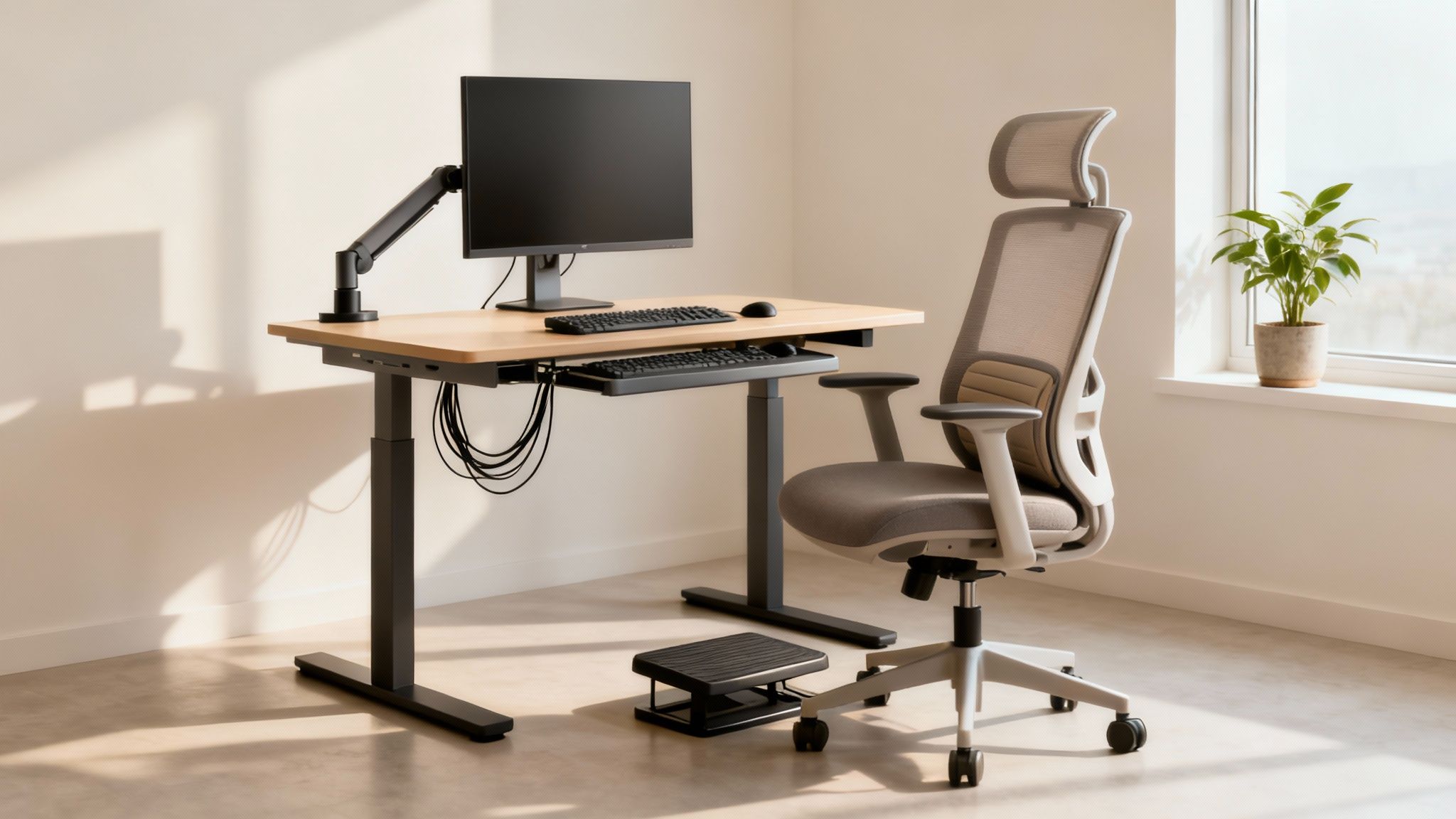
Investing in ergonomic furniture is a non-negotiable part of any modern office fit out checklist. This step is about more than just buying comfortable chairs. It involves the careful selection, specification and installation of furniture that actively promotes employee health and productivity. A well-designed ergonomic setup, from task chairs and monitor arms to height-adjustable desks, supports good posture and significantly reduces the risk of musculoskeletal issues and repetitive strain injuries.
Why It’s a Crucial Step
Prioritising ergonomics directly affects your team’s wellbeing and your company’s bottom line. Poor workstation setups contribute to absenteeism, reduced focus and lower morale. On the other hand, an ergonomically sound environment shows a commitment to staff welfare, boosts productivity and helps you meet your obligations under Health and Safety Executive (HSE) guidelines. For instance, a financial services firm can reduce costly sick days by providing ergonomic assessments and tailored equipment, making sure traders can stay focused during long hours. According to government data, musculoskeletal disorders are a leading cause of work-related illness in the UK, making this a critical area for any employer.
Actionable Tips for Effective Ergonomic Setup
- Prioritise Adjustability: Choose furniture that can be easily adjusted to suit a wide range of body types and preferences. Task chairs with adjustable height, armrests and lumbar support are essential, as are monitor arms that allow for correct screen positioning.
- Introduce Sit-Stand Desks: Implement height-adjustable desks to encourage movement and reduce sedentary behaviour. If budget is a concern, consider a phased rollout, starting with teams that spend the most time at their desks or by creating shared standing desk zones.
- Conduct User Assessments: Don’t assume one size fits all. Offer individual ergonomic assessments or consultations with specialists to address specific needs, especially for employees with existing health conditions.
- Provide Staff Training: The best ergonomic chair is useless if not used correctly. Organise brief training sessions to show staff how to properly adjust their workstations, chairs and monitors to achieve a neutral and supportive posture.
- Budget Appropriately: Allocate around 8-10% of your total fit out budget to high-quality ergonomic solutions from reputable manufacturers. This investment pays for itself through improved health, comfort and productivity.
4. Electrical & Technology Infrastructure
A modern office is powered by technology and a strong electrical infrastructure is the central nervous system that keeps it running. This part of your office fit out checklist goes far beyond simply installing sockets. It involves creating a complete network for power and data that supports everything from workstations and servers to WiFi access points and smart building systems. A well-designed infrastructure is scalable, safe and seamlessly integrated into the office design.
Why It’s a Crucial Step
Underestimating your power and data needs can lead to major operational problems, safety hazards and expensive retrofits. A tech company, for instance, needs a resilient WiFi mesh network and plenty of charging stations to support a highly mobile workforce. Similarly, a modern healthcare facility needs upgraded systems to handle telemedicine equipment and patient data securely. Planning this infrastructure correctly from the start ensures your workspace can handle today’s demands and adapt to tomorrow’s technological advances.
Actionable Tips for Effective Infrastructure Design
- Future-Proof Your Capacity: Audit your current IT and power requirements but plan for 3-5 years of growth. A common best practice is to specify over-capacity, typically around 150% of current needs, to accommodate future hardware and team expansion without major rework.
- Embrace Modularity: For maximum flexibility, choose systems like underfloor busbars, power poles and accessible cable trays. These modular solutions allow you to reconfigure layouts and add or move power and data points with minimal disruption as your business evolves.
- Prioritise Safety and Compliance: All electrical work must comply with UK regulations, specifically Building Regulations Part P (Electrical Safety). Using a certified contractor is essential to ensure the safety of your team and the validity of your insurance.
- Plan Cable Management: Carefully plan all cable routes to avoid unsightly clutter and trip hazards. Integrating cable management within furniture, using floor boxes and designing dedicated pathways maintains a clean and professional look.
- Integrate Smart Technology: Consider installing smart lighting and occupancy sensors from the start. These systems can significantly reduce energy consumption and lower utility costs, contributing to both your sustainability goals and your bottom line.
5. Lighting Design & Controls
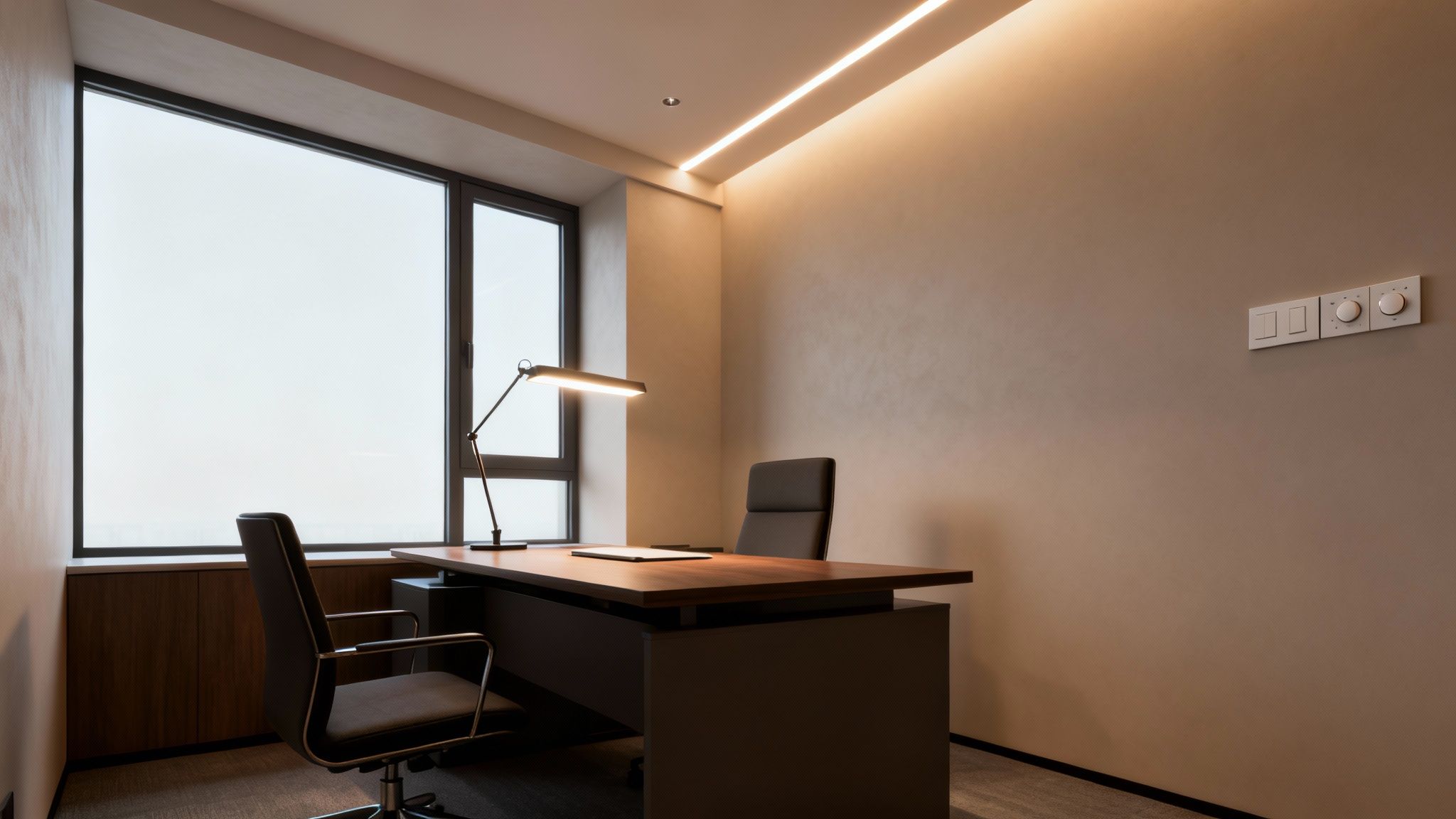
A crucial yet often underestimated part of any office fit out checklist is the strategic design of your lighting. This is more than just lighting up a space. It involves a sophisticated approach to both natural and artificial light to enhance mood, boost productivity and improve energy efficiency. A well-executed lighting plan considers everything from task-specific brightness and colour temperature to supporting employees’ natural circadian rhythms through automated controls.
Why It’s a Crucial Step
Poor lighting can lead to eye strain, headaches and decreased employee morale, directly impacting your bottom line. On the other hand, a dynamic lighting scheme supports different activities throughout the day, creating a more comfortable and stimulating environment. For example, a creative agency in London needs high-CRI (Colour Rendering Index) lighting for accurate colour work, while a healthcare facility may use biodynamic lighting that mimics natural daylight patterns to support patient wellbeing and staff alertness during long shifts. Getting this right ensures your workspace is not only functional but actively promotes health and focus.
Actionable Tips for Effective Lighting Design
- Integrate Early: Discuss lighting at the initial design stage, alongside the layout and architectural plans. This ensures natural light is maximised and electrical infrastructure is placed correctly from the start.
- Layer Your Lighting: Don’t rely on a single overhead source. Combine ambient (general), task (focused) and accent (decorative) lighting to create a flexible and visually interesting environment.
- Specify Correctly: Aim for a minimum of 500 lux for general office tasks, increasing to 750 lux or more for detailed, focused work. Use colour temperatures strategically: cooler tones (6500K) for concentration zones and warmer tones (3000K) for break areas.
- Embrace Smart Controls: Install occupancy sensors in meeting rooms and low-traffic areas to cut energy waste. Implement dimmers and scene-setting controls to give staff control over their immediate environment, a key factor in employee satisfaction.
6. HVAC, Ventilation & Air Quality
A crucial, though often overlooked, part of any office fit out checklist is the optimisation of heating, ventilation and air conditioning (HVAC) systems. This goes far beyond simply keeping the office warm in winter and cool in summer. It involves engineering an indoor environment that actively supports occupant health, prevents fatigue and boosts productivity through superior indoor air quality (IAQ), stable temperatures and effective humidity control.
Why It’s a Crucial Step
Poor air quality is directly linked to increased sick days, lower cognitive function and general discomfort. A well-designed HVAC system ensures a constant supply of fresh, filtered air, manages CO₂ levels and removes airborne pollutants. For a healthcare facility, this means using enhanced filtration to protect patients. Likewise, corporate offices are increasingly upgrading to systems with heat recovery ventilation to improve air quality and energy efficiency, a key lesson from the post-pandemic focus on workplace wellbeing. Investing in HVAC is investing in your team’s health and performance.
Actionable Tips for Effective HVAC & Air Quality
- Audit and Model: Before specifying new systems, conduct a thorough energy audit of the existing setup. Use energy modelling to predict the efficiency and running costs of proposed solutions, ensuring they meet your performance and budget goals.
- Target a High Standard: Aim for compliance with recognised standards like ASHRAE 62.1 or CIBSE guidelines. A tangible target is to install CO₂ sensors to maintain levels below 800 parts per million (ppm), which often requires demand-controlled ventilation.
- Implement Zonal Control: Specify variable air volume (VAV) systems to create different temperature zones. This allows boardrooms to be cooled during large meetings while keeping adjacent quiet zones at a more stable temperature, saving significant energy.
- Plan for Maintenance: Your system is only as good as its upkeep. Implement a strict filter maintenance schedule, with checks at least quarterly for standard offices and monthly for high-traffic or sensitive areas.
- Balance Mechanical and Natural: Where possible, design a system that integrates mechanical ventilation with natural options like operable windows. This hybrid approach builds resilience and can reduce energy consumption during mild seasons.
7. Flooring, Colour Scheme & Branding Integration
Far from being mere decorative afterthoughts, your choice of flooring, colours and branding elements fundamentally shapes the feel and functionality of your workspace. This step in the office fit out checklist is about making deliberate aesthetic choices that reinforce your brand identity, support specific work activities and create a cohesive, inviting atmosphere. It involves specifying materials that are durable, safe and aligned with your company’s culture and operational needs.
Why It’s a Crucial Step
The right finishes can transform a generic space into an environment that tells your company’s story. For a creative agency in London, this might mean using vibrant colours and distinctive flooring to define collaborative zones versus focus areas, fostering an energetic culture. In contrast, a professional services firm in Chelmsford might use a sophisticated, neutral palette and premium carpets to build client confidence and project an image of stability. These choices directly impact employee mood, client impressions and even practical considerations like acoustics and maintenance, making them integral to a successful fit-out.
Actionable Tips for Effective Finishes
- Zone by Function: Choose flooring based on the area’s purpose. High-traffic corridors need durable, easy-clean finishes like luxury vinyl tile (LVT), while quiet zones benefit from the sound-absorbing properties of modular carpet tiles.
- Prioritise Safety: Make sure that flooring in kitchens, tea points and bathrooms has adequate slip resistance to prevent accidents. This is a key health and safety consideration.
- Leverage Colour Psychology: Use colour strategically to influence behaviour and mood. Calming blues and greens are excellent for focus areas, while energetic yellows or reds can stimulate creativity in breakout spaces. Always start with your brand guidelines to ensure consistency.
- Integrate Your Brand Subtly: Branding goes beyond a logo in reception. Consider using your brand’s secondary colours in furniture fabrics, wall finishes or even custom manifestation on glass partitions. For more extensive branding applications, our guide on architectural wrapping offers innovative ideas for transforming surfaces.
- Test in Situ: Always test paint colours and material samples in the actual space before making a final decision. The same colour can look dramatically different under various lighting conditions, so it’s vital to see how it performs on-site.
8. Dilapidations Management & Lease Compliance
Often overlooked until the last minute, dilapidations management is a crucial part of any office fit out checklist, particularly when moving out of an old space. This process involves the systematic assessment and fixing of wear and tear to return a property to the condition specified in your lease agreement. Effectively managing this ensures you meet your legal obligations, avoid costly disputes with landlords and protect your business from unexpected financial penalties at the end of your tenancy.
Why It’s a Crucial Forward-Planning Step
Failing to plan for dilapidations can result in a significant, unplanned expense right when you are investing heavily in your new workspace. Landlords will serve a schedule of dilapidations, often with inflated repair costs, leaving unprepared tenants with little room for negotiation. A corporate tenant in London, for example, might face a six-figure claim for failing to remove partitioning installed a decade earlier. By proactively managing this process, you control the costs, timeline and quality of the reinstatement works, ensuring a smooth and financially predictable exit.
Actionable Tips for Effective Dilapidations Management
- Document Everything on Day One: Before moving a single piece of furniture in, commission a detailed schedule of condition. Photograph and document every existing scuff, crack and imperfection and have it formally agreed upon with the landlord. This evidence is your primary defence against unfair claims later.
- Budget from the Beginning: Don’t treat dilapidations as a future problem. From year one of your lease, start allocating funds to a sinking fund for end-of-tenancy repairs. This prevents a major financial shock when the lease expires.
- Plan Your Exit Well in Advance: Begin planning for reinstatement works 12-18 months before your lease ends. This gives you ample time to get competitive quotes from contractors, schedule the work without disrupting operations and negotiate with your landlord from a position of strength.
- Engage a Professional Surveyor: If a dispute arises or the claim is substantial, a chartered surveyor is a valuable ally. Their expert assessment can often challenge inflated costs proposed by the landlord’s surveyor, potentially saving your business thousands and ensuring compliance with standards set by institutions like the Royal Institution of Chartered Surveyors (RICS).
9. Meeting Spaces, Breakout Areas & Collaboration Zones
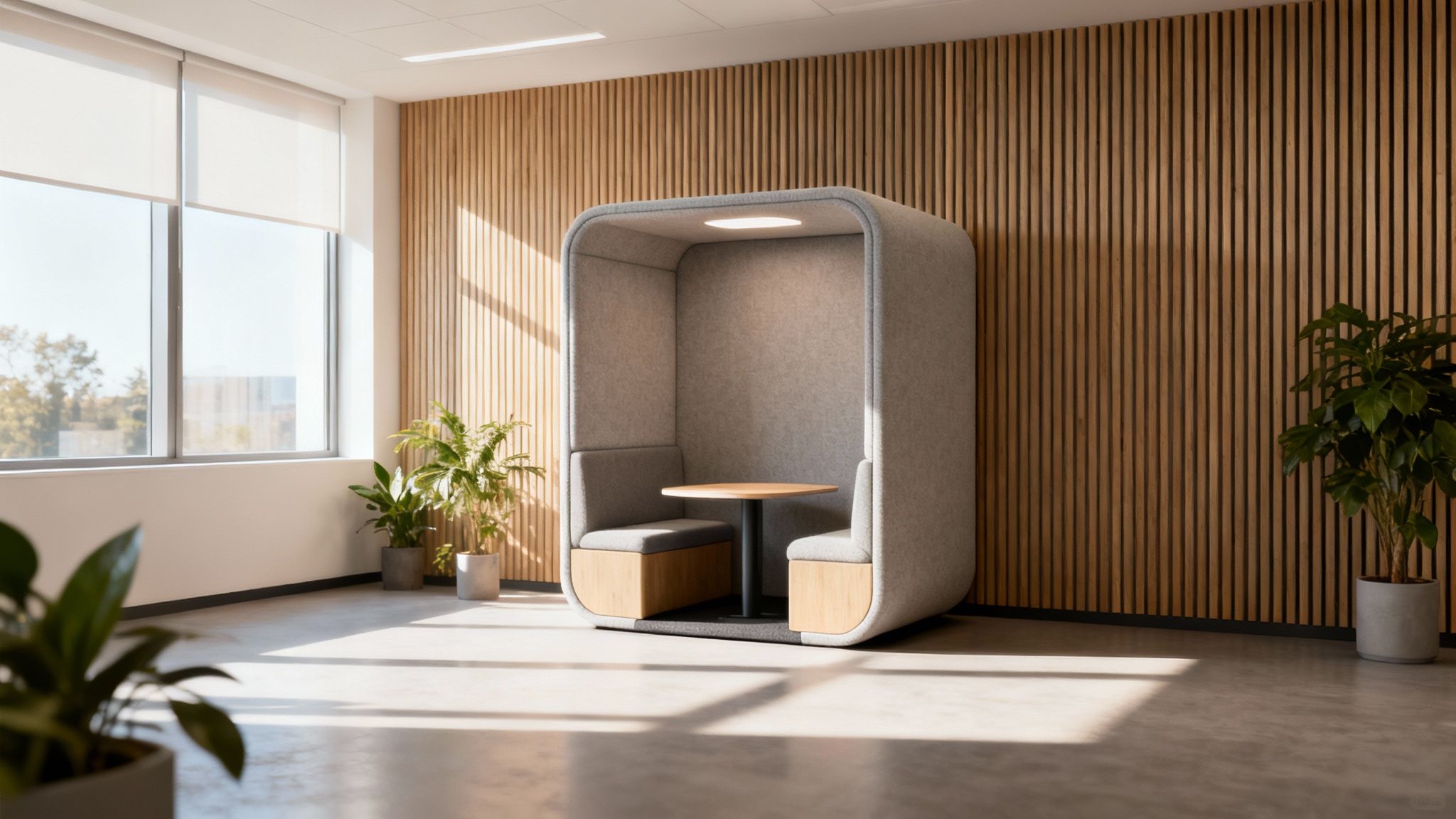
Beyond individual workstations, the success of a modern office depends on its shared spaces. This item in your office fit out checklist focuses on the strategic design of meeting rooms, breakout areas and collaboration zones. These are the spaces that facilitate teamwork, spark innovation and provide essential downtime, catering to the diverse needs of a dynamic workforce. From confidential client meetings to informal brainstorming sessions, a well-planned mix of these areas is fundamental to organisational culture and productivity.
Why It’s a Crucial Component
In the era of hybrid work, the office’s primary role has shifted from a place of individual task completion to a hub for connection and collaboration. Failing to provide a variety of well-equipped shared spaces can lead to a disjointed and inefficient environment. A creative agency needs vibrant breakout zones to encourage spontaneous idea-sharing, while a professional services firm requires acoustically sealed rooms for confidential client discussions. These purpose-built environments give employees the right setting for the right task, boosting engagement and making the office a desirable destination. Rethinking shared spaces is key and our insights on revolutionising workspace dynamics with freestanding booths and pods explore this concept further.
Actionable Tips for Effective Shared Space Design
- Provide a Diverse Mix: Offer a blend of formal meeting rooms, informal seating areas and quiet focus pods. A good ratio to aim for is one private pod or phone booth for every 8-10 open-plan workstations.
- Integrate Technology Seamlessly: Equip rooms with reliable video conferencing systems, interactive digital whiteboards and easy-to-use booking systems to eliminate friction and support hybrid teams.
- Prioritise Acoustics: Ensure meeting rooms and pods offer adequate sound insulation to prevent disruptions to surrounding work areas. Use soft furnishings and acoustic panels in open collaboration zones to manage noise levels.
- Separate Zones by Function: Position lively breakout and kitchen areas away from quiet, focused workstations. Co-locate collaboration zones near project teams to encourage organic interaction without causing widespread distraction.
Ready to transform your workspace? Speak to the Gibbsonn Interiors team today.
Ready to Transform Your Workspace?
Navigating the complexities of a commercial workspace transformation can feel like a monumental task. Yet, as we have explored throughout this extensive office fit out checklist, success is not a matter of chance. It is the direct result of meticulous planning, strategic decision-making and a deep understanding of how physical space impacts human performance and organisational goals. This checklist is more than a simple to-do list. It is a strategic blueprint designed to empower you, whether you are an SME in Bishop’s Stortford, a facilities manager in Cambridge or a landlord overseeing properties across London.
By moving beyond generic advice, we have equipped you with the actionable insights needed to make informed choices at every stage. From the granular details of space planning and acoustic management to the broader strokes of branding integration and HVAC systems, each point on this checklist is a critical component of a larger, interconnected ecosystem. Mastering these elements means creating a workplace that does more than just house your employees. It actively supports their wellbeing, enhances collaboration and drives productivity.
The journey from initial concept to a fully functional, inspiring office is built on several foundational pillars highlighted in our guide. Let’s recap the most crucial takeaways to keep at the forefront of your project:
- Holistic Planning is Non-Negotiable: A successful fit out begins long before the first wall is built. The most critical work happens during the briefing, budgeting and procurement phases. A detailed brief, informed by employee feedback and future business goals, is your project’s North Star.
- Compliance is Your Safety Net: Navigating UK building regulations, health and safety legislation (like CDM 2015) and accessibility standards is not just a legal requirement. It is a fundamental aspect of responsible project management that protects your team, your investment and your reputation.
- The Human-Centric Focus Wins: Remember that you are designing for people. Prioritising elements like ergonomic furniture, biophilic design, optimal lighting and superior air quality is a direct investment in your most valuable asset. A workplace that promotes wellbeing is a workplace that retains talent.
- Future-Proofing is Essential: The modern office is dynamic. Your electrical and technology infrastructure must be robust and scalable to accommodate future growth and technological advancements. Thinking ahead now prevents costly retrofitting later.
- Dilapidations Require Proactive Management: For tenants, understanding your end-of-lease obligations from the outset is crucial for financial planning and a smooth exit strategy. Engaging with a dilapidations expert early can save significant time and money.
This comprehensive office fit out checklist serves as your guide, but the real transformation happens when these principles are applied with expertise, precision and a creative vision. The ultimate goal is to create a destination, a space where your team feels valued, connected and empowered to do their best work. Armed with this knowledge, you are no longer just managing a construction project. You are curating the future of your organisation.
Ready to turn your detailed checklist into a stunning and functional reality? The expert team at GIBBSONN Interiors specialises in managing every aspect of the office fit out process, ensuring a seamless and successful transformation for businesses in Essex, Hertfordshire and beyond. Let us handle the complexities so you can focus on what you do best.