
Before you move a single desk or pick a paint colour, the most important part of designing office space is understanding what your business actually needs. This first, crucial step is all about creating a clear project brief that turns your company culture and ambitions into a workable plan. It’s about building the vision before you build the walls.
Table of Contents
- Defining Your Vision Before You Begin
- Smart Space Planning and Office Zoning
- Designing for People: Ergonomics and Wellbeing
- Weaving in Technology to Future-Proof Your Workspace
- Managing Your Office Fit Out Project
- Got Questions About Designing Your Office Space?
Defining Your Vision Before You Begin
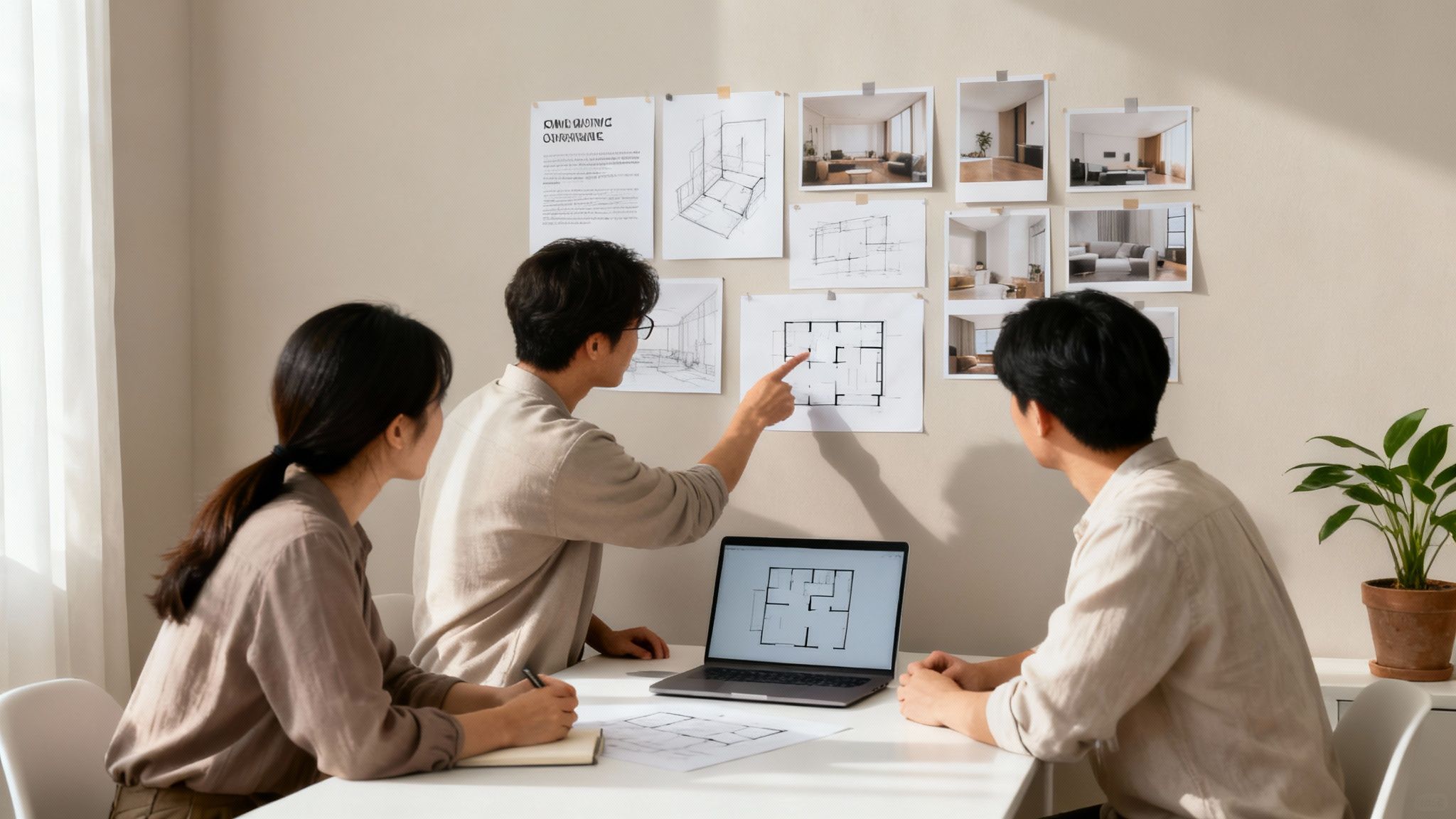
A successful office design project starts long before the first hammer swings. It begins with a deep-dive understanding of your company’s identity, how you operate day-to-day and where you see yourself in the future. Without this clarity, even the most stylish refurbishment can fall flat and fail to deliver real value.
Think of this initial stage as drawing a detailed map for your project. By investing time upfront to set your objectives you avoid expensive wrong turns and make sure the final result is a workspace that genuinely supports your team and business goals. This is especially true for companies in competitive hubs like London and Cambridge where the office environment is a massive factor in attracting and keeping the best talent.
Assembling Your Project Brief
Your project brief is the most critical document in the entire design process. It’s the rulebook for your design partner and the yardstick you’ll use to measure success. A solid brief goes beyond just looks; it gets to the heart of how your business really works.
To put together a brief that has real substance you need to pull in perspectives from across the company. This isn’t just a job for senior managers. Getting honest feedback from department heads and the people on the ground gives you priceless information about daily workflows, frustrations and what they need to do their best work.
A truly comprehensive brief should include:
- Company Vision and Goals: What’s the main driver for this project? Are you trying to encourage more collaboration, boost employee wellbeing, impress new clients or just make room for a growing team?
- Brand and Culture: What vibe are you going for? Should it feel buzzy and creative or calm and focused? The design needs to be a physical expression of your company’s personality.
- Functional Requirements: Get specific about the kinds of spaces you need. Think individual workstations, team project areas, formal meeting rooms, quiet zones for deep work and social breakout spaces.
- Headcount and Growth Projections: How many people does the office need to accommodate right now and what about in the next five years? Planning for future growth is key to making a smart, long-term investment.
Analysing Workflows and Identifying Pain Points
Before you can design a better future you have to understand the present. Take a good look at your current office layout. Where are the bottlenecks? What drives your employees mad? Just watching how teams actually use or avoid their environment can reveal all sorts of hidden problems.
Try running simple surveys or holding informal workshops. Ask questions like:
- “What’s the most frustrating thing about our current office layout?”
- “Where do you go when you need to concentrate without being interrupted?”
- “Do you have enough space for collaborative work with your team?”
The answers will point you straight to the areas that need fixing. You might find out the sales team desperately needs more private spots for calls or that the marketing team has nowhere to properly brainstorm. This kind of insight is gold dust for your design partner, letting them create targeted solutions that solve real, everyday problems.
This analysis ensures your new office design is more than just a cosmetic upgrade. It becomes a strategic tool that removes barriers to productivity and makes the daily experience better for your team. By grounding your vision in real-world data and employee feedback you lay the foundation for a workspace that isn’t just beautiful but truly functional.
Smart Space Planning and Office Zoning
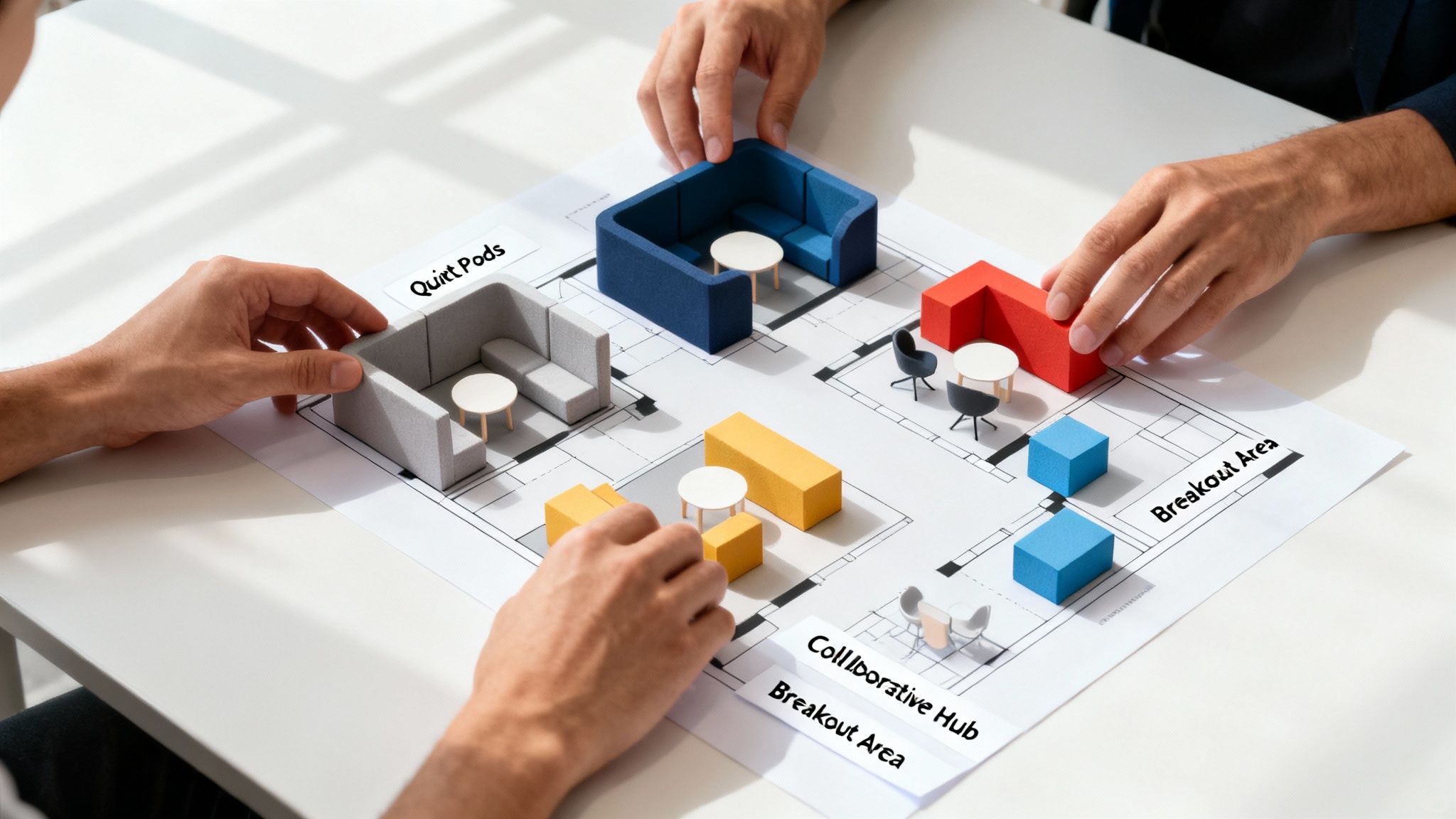
With a solid brief in your hands the exciting part begins: turning your vision into a practical, three-dimensional layout. This is where we get down to the brass tacks, moving from ideas on paper to the physical arrangement of your workplace.
Smart space planning isn’t just a game of Tetris with desks. It’s about crafting a dynamic environment that genuinely supports every single way your team needs to work. The key to this is a concept we rely on heavily: zoning.
This is all about deliberately creating different areas or zones, each with a distinct purpose. By thoughtfully separating noisy, collaborative hubs from quiet, focused nooks you build an office that works for everyone. It’s a powerful way to make every square foot count, especially as businesses in places like Bishop’s Stortford look to get the most out of their commercial spaces.
Creating a Functional Layout with Zoning
The modern office has to be a multi-tool, not a one-trick pony. Long gone are the days of a single, uniform sea of desks. Instead, the best office designs use zoning to support a whole variety of work styles and activities throughout the day.
I often tell clients to think of their office as a small town with different neighbourhoods. Each one has its own character and purpose but they all connect to form a cohesive, functioning community.
Your office ‘neighbourhoods’ might look something like this:
- Focus Zones: These are your library-quiet areas, designed for deep concentration. Think individual workstations or single-person acoustic pods, offering a real sanctuary from the buzz of the main office.
- Collaboration Hubs: Open, energetic spaces designed for teamwork to happen organically. We equip these zones with whiteboards, large screens and flexible furniture that encourages people to gather, brainstorm and solve problems together.
- Social and Breakout Spaces: Comfortable, informal areas with soft seating, quality coffee machines and a more relaxed atmosphere. These are absolutely crucial for building team culture and giving staff a place to properly recharge.
- Private Meeting Areas: Enclosed rooms or larger pods that provide confidentiality for client calls, sensitive HR discussions or formal presentations.
By intentionally designing distinct zones you empower your team to choose the right environment for the task at hand. This simple shift from assigned seating to activity-based working can dramatically improve efficiency and morale.
Mapping Circulation for a Seamless Flow
How people move through an office has a massive impact on its usability, something that’s often overlooked. Good circulation planning creates clear, intuitive pathways that guide staff and visitors around the space without causing disruptions. The goal is to make getting from A to B feel completely natural and effortless.
A poorly planned layout on the other hand can lead to constant distractions, with people cutting through quiet zones just to get to the kitchen or a meeting room. This is why mapping out high-traffic routes is so important. Main pathways should be wide and direct while access to focused work areas should be less direct to minimise foot traffic and noise.
Designing for Agility and Future Growth
Your business isn’t static and your office shouldn’t be either. Designing for agility means creating a space that can adapt to changing team sizes, new projects and evolving work patterns. Modular furniture, movable partitions and reconfigurable workstations are fantastic tools for this.
This approach is becoming the new standard as UK companies rethink their property needs. This trend highlights the need for clever, adaptable design that does more with less.
By investing in flexible solutions from the start you future-proof your workspace. This saves you from the cost and disruption of major refurbishments down the line and ensures your office continues to support your business as it grows. For organisations in growth areas like Essex and Hertfordshire this kind of flexibility isn’t just a benefit; it’s an essential business strategy.
Designing for People: Ergonomics and Wellbeing
A brilliant office design is about so much more than aesthetics. It’s about creating an environment that actively supports the health, comfort and productivity of your team. This is where we really get into the human side of designing office space from the chairs people sit on to the quality of the air they breathe.
When you put ergonomics and wellbeing first you’re not just buying furniture; you’re investing in your people. A workspace that’s comfortable and properly designed reduces physical strain, lowers stress levels and sends a clear message that you care about their health. This translates into happier staff, fewer sick days and better focus all around.
For businesses in Hertfordshire creating an office that promotes wellbeing has become a powerful tool for attracting and retaining the best talent.
Ergonomics: The Foundation of a Healthy Workspace
In simple terms, ergonomics is the science of making things comfortable and efficient for people. In an office setting it’s all about preventing the aches, pains and strains that come from spending hours at a desk. Things like poor posture, screen glare and repetitive movements aren’t just minor complaints; they’re real issues that can seriously dent productivity.
The solution starts with getting the fundamentals right and that means choosing the right kit. An ergonomic setup isn’t a luxury anymore, it’s a core requirement for a modern workplace.
Here are the key components you absolutely need to get right:
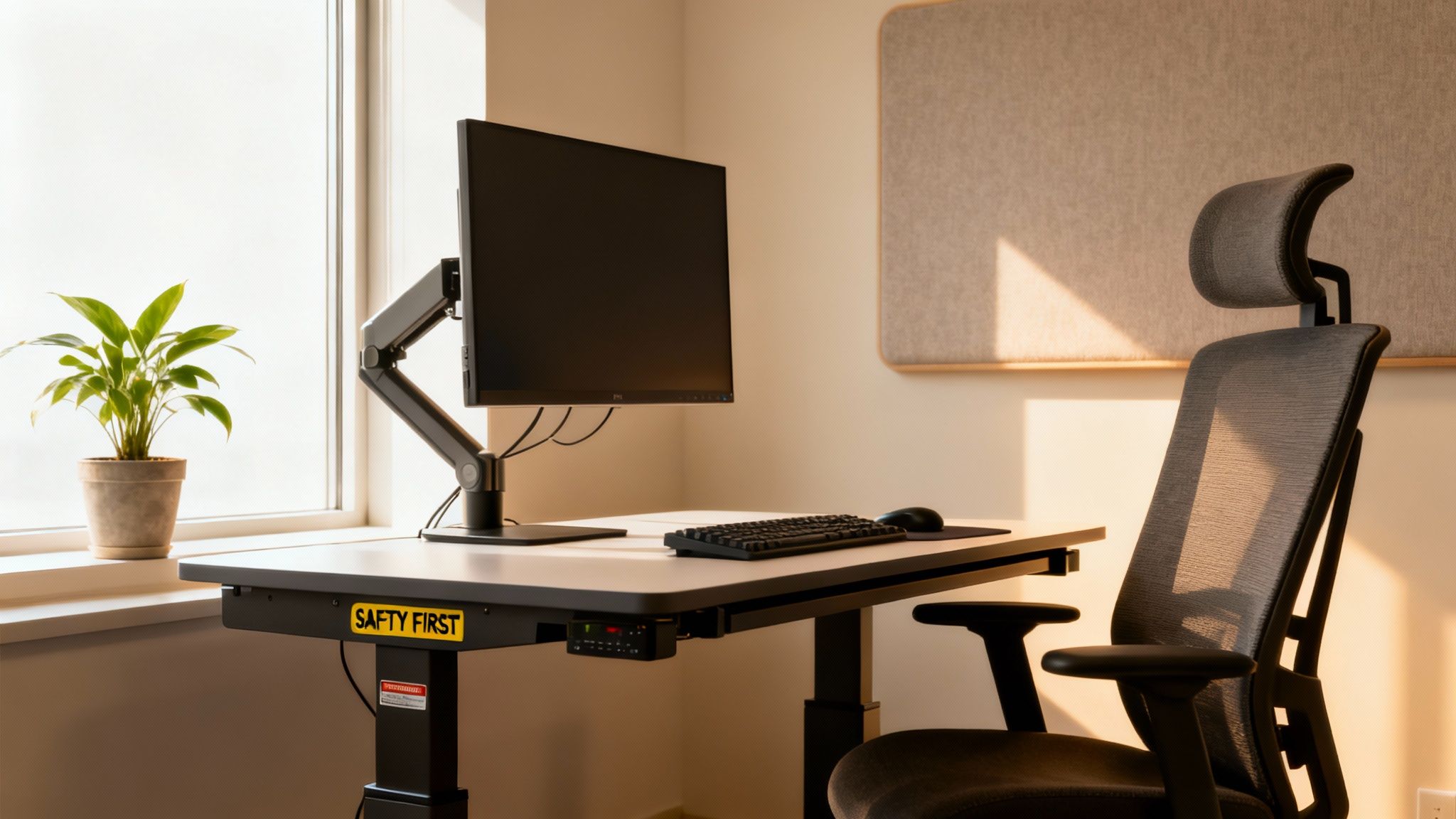
- Supportive Chairs: Look for full adjustability. Height, backrests and armrests are a must. Good lumbar support isn’t negotiable; it’s essential for maintaining the natural curve of the spine and preventing back pain.
- Adjustable Desks: Sit-stand desks are fast becoming the industry standard and for good reason. They give people the freedom to change their posture throughout the day, boosting circulation and cutting down the health risks of being sedentary.
- Correct Monitor Placement: Screens should be positioned at eye level and roughly an arm’s length away. This simple adjustment prevents the neck and eye strain that plagues so many office workers. Monitor arms are a fantastic investment for giving each person total control over their screen position.
An ergonomic workspace is a proactive investment in your team’s health. It goes beyond just comfort; it actively reduces the risk of long-term musculoskeletal issues which is a major cause of employee absence in the UK.
Managing Acoustics for Better Concentration
Noise. It’s easily one of the biggest complaints in any open-plan office. The constant buzz of conversations, ringing phones and people moving about can make it almost impossible to concentrate on deep, focused work. Getting your acoustics right is crucial for creating a calm, productive atmosphere where people can actually get things done.
A good acoustic strategy uses a blend of techniques to absorb, block and cover sound. This isn’t about making the office silent or sterile. It’s about intelligently controlling noise so that different activities can happen side-by-side without causing constant disruption.
Acoustic Solutions for Different Office Zones
Choosing the right acoustic treatment depends entirely on the space you’re dealing with. Here’s a quick rundown of some common solutions and where they work best.
| Acoustic Solution | Best For | Key Benefit | Considerations |
|---|---|---|---|
| Acoustic Panels | Open-plan areas, meeting rooms | Absorbs sound reverberation, reducing echo and background noise. | Aesthetically versatile, can be integrated into wall and ceiling designs. |
| Acoustic Pods | Private calls, focused work | Provides a quiet, enclosed space without permanent construction. | Brands like Framery or BlockO offer high-tech options. |
| Sound Masking | Large, open-plan offices | Adds a subtle, unobtrusive background sound that makes speech less intelligible. | Must be professionally calibrated to be effective and not annoying. |
By layering these solutions you can create distinct acoustic zones that support every type of work, from quiet focus to lively collaboration.
Bringing Nature In with Biophilic Design
Biophilic design is a concept built on a simple truth: humans have an innate need to connect with nature. When we bring natural elements into the office it has a proven, positive impact. It’s been shown to reduce stress, spark creativity and improve overall wellbeing.
And it’s about far more than just dotting a few pot plants around.
A proper biophilic approach weaves nature into the very fabric of the office. This could include:
- Maximising Natural Light: Designing the layout with large windows and open sightlines that let daylight penetrate deep into the space.
- Natural Materials: Using wood, stone and other organic textures for flooring, walls and furniture to create a tactile connection to the outdoors.
- Living Walls and Plants: Large-scale greenery not only looks incredible but also helps improve air quality and provides a calming visual anchor.
Even small gestures can make a big difference. Ensuring everyone has a view of the outdoors or using colour palettes and patterns inspired by nature can have a surprisingly powerful effect. As the leading architectural resource ArchDaily often showcases, spaces that connect us with the natural world are simply better places for us to be. This human-centric thinking is at the absolute heart of great office design.
Weaving in Technology to Future-Proof Your Workspace
Designing an office just for today is a rookie mistake; you have to design it for tomorrow. A truly modern workspace has technology woven into its very fabric, not just bolted on as an afterthought. This is all about future-proofing your investment and creating an environment that can actually grow and change with your business.
Taking a forward-thinking approach to tech ensures your office remains a valuable asset for years. It genuinely supports new ways of working, helps attract top talent and saves you from the headache of constant, expensive upgrades. This is particularly vital for businesses in fast-growing areas like Stansted that need to stay sharp and competitive.
Building a Robust Tech Infrastructure
Long before you even think about picking out furniture you need a rock-solid plan for power, data and connectivity. This is the backbone of any future-ready office. In today’s hybrid world your team simply expects a flawless experience whether they’re at their desk, in a meeting room or dialling in from home.
This means planning for high-speed internet everywhere. It also means installing plenty of easily accessible power and data points. Think about integrated power sockets in sofas, wireless charging pads built right into desks and floor boxes that can be moved around as your layout evolves.
A strong infrastructure is also the foundation for high-quality audiovisual (AV) equipment. Your meeting rooms must have user-friendly systems for video conferencing, with reliable cameras and crystal-clear microphones that make collaborating with remote colleagues feel effortless.
A well-planned tech infrastructure is invisible when it works perfectly but a constant source of frustration when it doesn’t. Getting it right from the start is non-negotiable for productivity and employee satisfaction.
Embracing Flexibility and Adaptability
The modern workplace is always changing. Your office design needs to reflect that reality by being inherently flexible. The real goal is to create a space that you can easily reconfigure to meet the shifting needs of your projects and teams, all without needing a major, disruptive refurbishment.
This is where modular solutions really come into their own.
- Reconfigurable Furniture: Desks on castors, movable whiteboards and lightweight seating allow teams to quickly create custom setups for different tasks, from collaborative workshops to focused project sprints.
- Modular Walls: Demountable partition systems are a brilliant alternative to fixed stud walls. They let you create or remove private offices and meeting rooms with minimal fuss, giving you ultimate control over your floor plan.
- Architectural Wrapping: Services like our bespoke architectural wrapping can rapidly update the look of tired surfaces, from doors to reception desks. It’s a seriously cost-effective way to refresh your branding or interior style without a full strip-out.
This kind of adaptability gives you a significant competitive edge. It’s no surprise the UK flexible office space market is booming. Businesses that offer dynamic, responsive workspaces are simply better positioned to thrive. You can read more about the growth of the UK flexible office market here.
Choosing Sustainable and Durable Materials
Future-proofing isn’t just about tech and flexibility; it’s also about sustainability. Making conscious choices about the materials you use has a lasting impact on both the environment and your long-term operational costs.
When you select durable, high-quality materials your investment stands the test of time, cutting down on the need for frequent replacements and repairs. This focus on longevity is a core principle of sustainable design.
What’s more, prioritising materials with strong environmental credentials like those with recycled content or low volatile organic compounds (VOCs) can significantly improve your building’s sustainability rating. Achieving a higher BREEAM or EPC rating isn’t just good for the planet; it can lead to lower running costs and appeal to environmentally conscious clients and employees. Businesses across the UK, including in hubs like Chelmsford and Braintree, are increasingly seeing sustainability as a key part of their brand identity.
Managing Your Office Fit Out Project
This is where the magic really starts to happen. All the meticulous planning and design work begins to take shape, turning from lines on a page into a physical, tangible reality. Overseeing an office fit out or a major refurbishment is a complex dance of logistics but with the right partner and a clear roadmap it’s a genuinely exciting and rewarding process.
Ultimately this phase is all about transforming blueprints into an inspiring, functional workspace. A well-managed project is one that hits its deadlines, stays on budget and causes the least amount of disruption to your day-to-day business. Think of it as a close collaboration between you and your fit out partner, one built on trust, open communication and a shared vision.
Choosing the Right Fit Out Partner
Let me be frank: selecting the right contractor is probably the most important decision you’ll make once you get to the construction stage. You’re not just hiring builders; you’re entrusting your vision to a partner who needs to get it, communicate flawlessly and have a solid portfolio of high-quality work to back it all up.
My advice is to look for a company that can manage the whole project from concept to completion, giving you a single, accountable point of contact. This “design and build” model cuts through so much of the potential stress and confusion. When you’re vetting potential partners don’t be shy. Ask to see case studies, speak to their previous clients and get them to walk you through their project management process in detail.
A great partner will also act as a guide, helping to value engineer the project. This means finding clever, cost-effective ways to achieve the look and feel you want without blowing the budget on unnecessary expenses.
Budgeting and Timeline Planning
Nobody enjoys nasty surprises, especially when they involve money and deadlines. That’s why getting into the detail of budgeting and timeline planning is non-negotiable before a single hammer is swung. Any credible fit out partner will provide a completely transparent, itemised quotation that breaks down every anticipated cost from the construction itself to the furniture, tech and professional fees.
It’s crucial to be realistic with your budget. From experience I always recommend setting aside a contingency fund of around 10-15% of the total project cost. This isn’t about planning to fail; it’s about being prepared for the unexpected issues that can crop up, giving you flexibility and peace of mind. To get a better handle on the numbers you can explore our in-depth guide to understand the cost of an office fit out.
Alongside the budget you’ll need a detailed project timeline, often called a “programme of works”. This document should map out every key milestone from the first day on-site to the final handover, ensuring everyone knows what’s happening and when.
Clear financial planning and a realistic timeline are the bedrock of a successful fit out. They prevent the common pitfalls of cost overruns and delays, ensuring your project is delivered as promised.
Navigating Compliance and Regulations
When you’re designing office space in the UK, navigating building regulations isn’t just about ticking boxes. It’s about guaranteeing the safety, health and accessibility of the environment for every single person who uses it. Your fit out partner must be an expert here, responsible for securing all necessary approvals and ensuring the finished space is 100% compliant.
There are several key areas they’ll manage:
- Building Regulations: These are the big ones, covering everything from structural integrity and fire safety to ventilation and energy efficiency standards.
- Health & Safety (HSE): The construction site itself must adhere to strict Health and Safety Executive guidelines to protect everyone involved.
- The Equality Act: The design must be inclusive, providing accessible routes, facilities and features for people with disabilities.
This legal framework is especially critical in refurbishment projects. It’s a fascinating trend, but right now a large percentage of new office activity in the UK involves refurbishing existing buildings rather than constructing new ones. This means more projects are tackling the challenge of bringing older structures up to modern codes. If you’re interested in these market dynamics you can discover more insights about interior design industry trends on ibisworld.com.
Communication and Project Handover
Consistent, clear communication is the glue that holds the entire fit out project together. Regular site meetings and progress reports are essential. They keep you in the loop, allow you to ask questions as they arise and ensure the final result stays perfectly aligned with your original vision.
The last step is the handover and it’s much more than just being given a set of keys. A professional handover involves a detailed walk-through of the new space, a comprehensive handover pack containing all manuals and warranties and a clear process for identifying and fixing any minor imperfections, known in the trade as “snags”.
A seamless handover is the final, satisfying piece of the puzzle. It marks the successful completion of your project and leaves you with a beautifully realised workspace, ready to support your business and your team for years to come.
Got Questions About Designing Your Office Space?
Stepping into an office design project is exciting but it almost always brings up a flurry of questions. It’s completely normal. To give you a bit more clarity as you get started we’ve answered some of the most common queries we hear from clients right here in the UK.
What’s the Real Cost of an Office Fit Out in the UK?
This is the big one and the honest answer is: it varies hugely. The final figure really hinges on where your office is, the quality of finishes and furniture you choose and just how complex your vision is.
For a rough idea, a straightforward ‘Category B’ fit out could start from around £40 per square foot. But if you’re aiming for a high-spec, completely bespoke design with premium materials and cutting-edge tech in a prime spot like London that figure could easily climb past £150 per square foot.
So, what pushes the price up or down?
- The quality of finishes and materials you select.
- The specification of the furniture and ergonomic kit.
- Your specific IT, data and audiovisual requirements.
- The extent of any structural changes or heavy-duty mechanical and electrical work.
Because no two projects are ever the same the best starting point is always a proper chat. It lets us get to grips with what you want to achieve and build an accurate, transparent budget that’s right for you.
How Long Does an Office Refurbishment Actually Take?
The timeline for any office refurbishment is tied directly to its size and complexity. The real secret to hitting your moving-in date without the last-minute panic is meticulous planning from day one.
If you’re looking at a smaller refresh, say for an office under 5,000 sq ft, you can probably pencil in 4 to 6 weeks for the design and planning stage. The on-site build and installation would then typically follow, taking another 6 to 8 weeks.
For bigger, more involved projects, anything over 10,000 sq ft for instance, you naturally need to allow more time. Here the design process could stretch to 8 to 12 weeks with the fit out itself taking anywhere from 12 to 20 weeks to get over the line. At Gibbsonn we map everything out in a detailed project schedule from the very beginning so you have complete clarity on the timeline from the get-go.
What’s the Difference Between a Cat A and Cat B Fit Out?
You’ll hear the terms ‘Cat A’ and ‘Cat B’ thrown around a lot in office fit out discussions. The distinction is simple but it’s a crucial one to understand.
Category A Fit Out: Think of this as the landlord’s blank canvas. It’s a clean, functional but ultimately empty shell. A Cat A fit out typically includes the essentials like raised flooring, suspended ceilings and the basic mechanical and electrical services. The shared areas like lobbies and lifts will also be finished to this standard.
Category B Fit Out: This is where the magic happens and where we step in. A Cat B fit out is the process of taking that empty Cat A shell and transforming it into a fully functioning workspace that’s built entirely around your team and your brand.
This stage covers everything needed to bring your vision to life: building meeting rooms and private offices, installing kitchens and breakout zones, fitting all the flooring and custom lighting, adding your unique branding and bringing in all your furniture. We manage the whole Cat B process for businesses in places like Bishop’s Stortford, turning an empty space into your team’s new home.
Ready to transform your workspace? Speak to the Gibbsonn Interiors team today.